Can You Burn Garden Waste Safely?
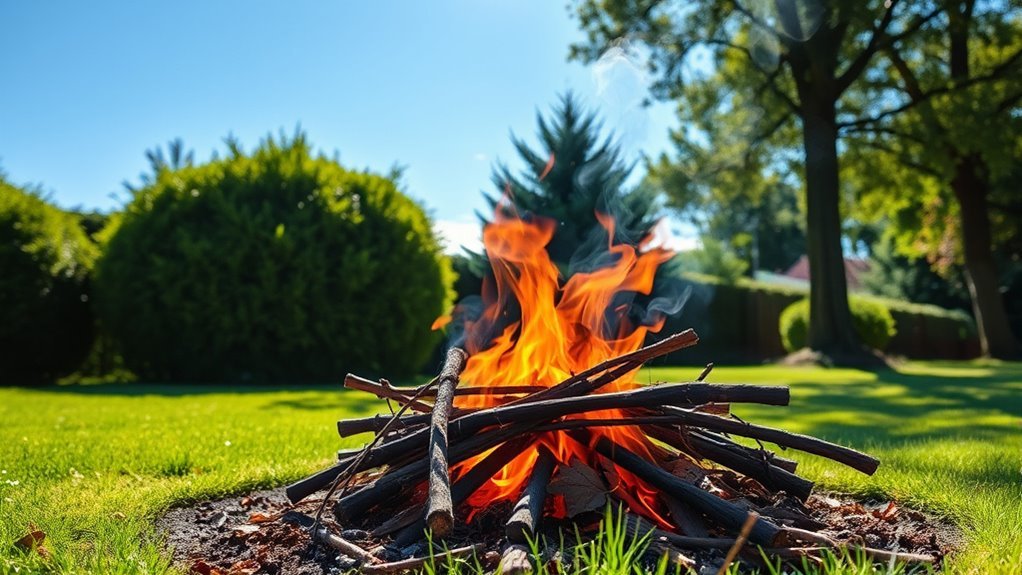
You can burn garden waste safely by following key guidelines to protect your property and the environment. Keeping your burn pile under 8 feet wide and at least 25 feet away from any buildings is a good start. This simple step helps prevent fires from spreading unexpectedly.
Only burn dry yard debris like leaves or branches—never plastics or treated wood. Burning the wrong materials can release harmful chemicals into the air, so it’s best to stick with natural waste.
Try to burn during daylight hours when you can keep an eye on the fire easily. Always have tools and water nearby just in case.
And remember, never leave the fire unattended. Taking these precautions makes burning garden waste safer and smarter.
If you want to learn smarter ways to manage garden waste, more useful tips await. There are plenty of alternatives and tricks that can help you handle your yard debris better.
Key Takeaways
- Burn only dry yard debris like leaves and branches. Avoid household garbage and treated wood to prevent harmful emissions.
- Keep the burn pile within an 8-foot diameter. Make sure it’s at least 25 feet from homes or any combustible structures.
- Always have a shovel and water hose ready. Never leave the fire unattended while it’s burning.
- Burn after 8 a.m. and finish at least an hour before sunset. Also, check the weather conditions to ensure safe fire management.
- Follow local regulations closely. And if you can, consider alternatives like composting or chipping to protect air quality and reduce waste.
How to Burn Garden Waste Safely: Essential Rules and Tips
When you burn garden waste, make sure your pile stays within an 8-foot diameter and is at least 25 feet away from any homes or combustible structures to keep things safe and compliant.
Only burn dry yard debris like leaves, branches, and palm fronds—never household garbage, plastics, or treated wood, as these harm air quality and clean air efforts.
Burn only dry yard debris—never household trash or treated wood—to protect air quality and clean air efforts.
Always check the weather and burn yard waste during the right conditions: after 8 a.m. and at least an hour before sunset.
Keep a burn barrel or open pile manageable, and have tools like a shovel and water hose ready.
Never leave the fire unattended, and regularly inspect for smoldering spots afterward to prevent wildfires and protect your community’s clean air.
Top Alternatives to Burning Garden Waste for a Healthier Yard
Burning garden waste isn’t the only way to manage your yard’s debris, and exploring other methods can benefit both your garden and the environment. Instead of using a burn, you can compost garden waste to return nutrients to your soil while reducing landfill waste.
Grasscycling by leaving clippings on your yard nourishes the soil naturally. Chipping branches into mulch helps retain moisture and suppress weeds.
If you must dispose of paper, consider a garden incinerator, which produces less smoke. Always check with your local council about curbside pickup options before you burn yard waste.
When you do use fire, make sure to keep a bucket of water nearby and avoid burning treated lumber, which releases harmful chemicals. Being cautious helps protect your yard and community.
Frequently Asked Questions
Am I Allowed to Burn Garden Waste in My Area?
You need to check your local regulations and any burn bans before burning garden waste. If allowed, follow rules like distance from buildings, burning only dry materials, and having safety equipment ready to keep things safe.
Can You Burn Your Yard Waste?
Can you burn your yard waste? Yes, you can, but only dry, natural vegetation in small piles. You’ll need to follow safety rules, keep water nearby, and never leave the fire unattended to avoid risks.
What Are the Rules for Burning in Ohio?
You must follow local Ohio rules: only burn garden waste, not household trash, keep fires attended with water nearby, burn on calm days, avoid dry or windy conditions, and always check for burn bans or specific ordinances first.
Can You Burn in Virginia Right Now?
You can’t just light up your yard like a bonfire festival right now in Virginia. Check local burn bans and air quality—restrictions often change daily. Always follow safety rules to avoid turning your garden into a wildfire!
Conclusion
Remember when you tried burning garden waste last spring and the smoke nearly chased you back inside? That’s a clear sign—burning isn’t always the safest or smartest choice.
Studies show that burning releases harmful pollutants that can affect your health and neighbors. It’s more than just a nuisance; it can be a real health hazard.
Instead, think of your garden as a living puzzle. Using alternatives like composting or mulching fits the pieces together better. These methods keep your yard healthy and safe for everyone to enjoy.
So, can you burn garden waste safely? Generally, it’s best to avoid burning because of the risks involved. Composting and mulching are safer, eco-friendly options that help recycle nutrients back into the soil. This way, you protect your health, your neighbors, and the environment while making your garden thrive.