How You Can Be Buried Legally in Your Garden
To be buried legally in your garden, the first thing you need to do is check your state and local laws.
Make sure home burials are allowed where you live. You’ll also want to get any necessary permits from health departments or zoning authorities before moving forward.
Next, pick a burial spot that’s away from water sources and property lines. This helps avoid any legal or environmental issues.
It’s also important that the spot complies with local zoning rules.
When it comes to preparing the body, do so respectfully.
Use approved containers if your area requires them.
And don’t forget—keeping detailed records of the burial site is essential.
If you’re curious about the full process and what else to consider, keep exploring these important steps.
It’s all about making sure everything is done properly and respectfully.
Key Takeaways
- Verify state and local laws to ensure home burials are permitted in your area. It’s important to know the rules before you make any plans.
- Obtain necessary permits and approvals from county and health departments before burial. This step helps you avoid any legal issues down the road.
- Choose a burial site away from water sources and property lines. Make sure it also complies with local zoning laws to keep everything above board.
- Document burial details, including location and depth. This way, you can prevent any future legal disputes or confusion.
- Prepare the body respectfully. Also, check if a burial container is legally required where you live—it varies by location.
Check Local Laws and Get Permission for Garden Burial
Before you plan a garden burial, make certain your state allows home burials, since some, like Indiana, California, and Washington, prohibit them. You’ll need to review local zoning laws carefully, as they regulate burial sites on private property.
In some areas, like Oregon, obtaining county permission through a Type I Zoning Determination Application is mandatory. Confirm your legal right to bury on your land, especially if creating a family cemetery.
Don’t forget to consult local health departments to guarantee you meet health regulations throughout the burial process. Once approved, record burial details such as location and depth to avoid future disputes or access issues.
Taking these steps guarantees your garden burial complies with the law and respects community standards. It’s all about making sure everything’s done right and respectful.
Choose Your Burial Spot and Prepare the Body
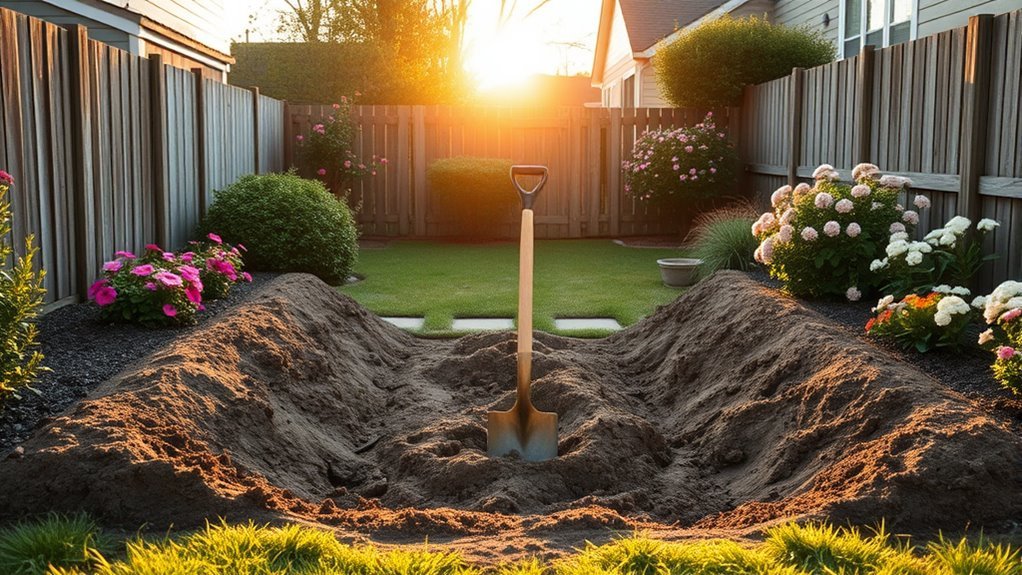
When selecting your burial spot, make sure it complies with local zoning laws by staying clear of water sources and property boundaries as required. Choose a burial site on private property that’s registered and documented to avoid future legal issues.
Before burial, prepare the body by bathing and dressing it, keeping it cool with dry ice until the burial.
Prepare the body by bathing, dressing, and keeping it cool with dry ice until burial.
Check with health departments about any permits required, which might include submitting a detailed site plan. While many states don’t mandate a burial container on private property, eco-friendly options like wicker or cardboard are encouraged.
Visualize your burial spot with:
- A peaceful garden corner shaded by trees
- A spot well away from wells or streams
- A simple, natural burial container nestled in earth
Frequently Asked Questions
Can I Legally Be Buried in My Backyard?
Yes, you can be buried in your backyard if you follow local laws, get necessary permits, and guarantee the burial is on your property, usually for family members only. Always check zoning rules and maintain proper distances from wells.
Can a Person Be Buried in Their Garden?
Like a modern-day Pilgrim settling new ground, you can be buried in your garden if local laws allow. You’ll need permissions, follow health rules, and keep clear records to honor both law and legacy.
What Are the Benefits of Burying Someone in My Backyard?
You benefit from a personal, meaningful space to honor your loved one, save on funeral costs, enjoy flexible ceremonies, and choose eco-friendly options—all while staying close to their memory in a familiar, comforting environment.
Do They Take the Clothes off a Body Before Cremation?
They don’t always take clothes off before cremation; you can choose to have the body cremated with clothes or a shroud. Just make sure the materials are safe and allowed by the crematory and local laws.
Conclusion
You might think burying a loved one in your garden is a simple, peaceful choice, but it’s also a legal maze you can’t ignore. While the idea feels intimate and natural, it clashes with rules designed to protect everyone’s health and property.
So, before you dig that spot, make sure you’ve checked local laws and got the right permissions. It’s important to balance respect for the departed with legal boundaries.
Keeping your garden a place of peace, not conflict, means understanding the regulations around burial. Always ensure you follow the proper steps so your loved one rests legally and respectfully in your garden.