How to Clean Garden Stones in 10 Easy Steps
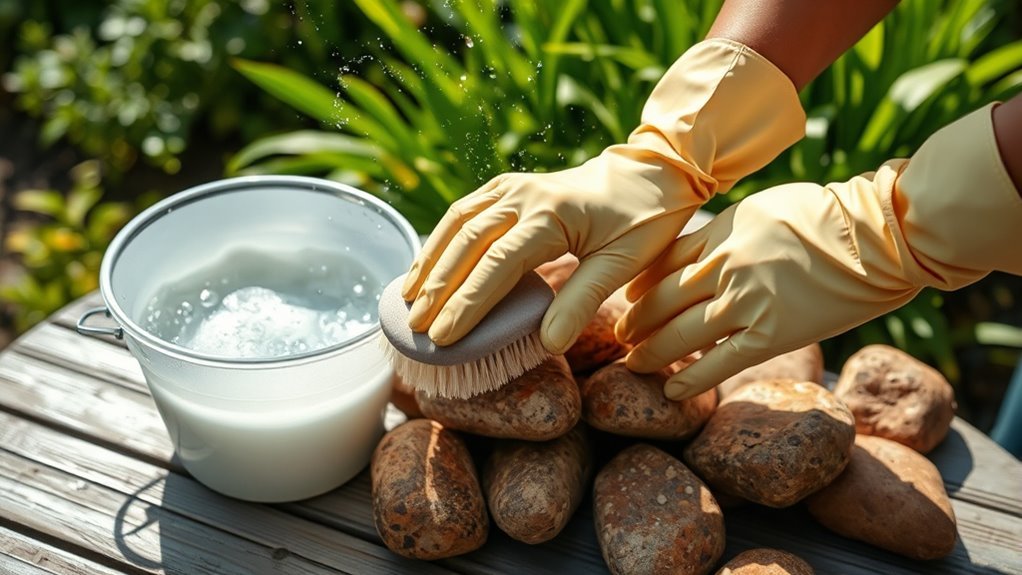
To clean your garden stones effectively, start by gathering essential tools like a stiff brush, mild detergent, gloves, and a hose. Cleaning garden stones involves removing dirt, debris, and weeds to restore their natural beauty. Begin by clearing away loose debris and rinsing the stones to loosen grime.
Next, apply a mild detergent or natural cleaners such as vinegar. Scrub gently to remove moss, algae, or stubborn stains. Rinse thoroughly to avoid leaving any residue that could attract more dirt.
Allow the stones to dry completely before applying a sealant to protect them from future damage. Following these steps will help maintain your garden stones’ appearance and safety. Use these tips regularly to keep your garden stones looking great over time.
Why Clean Garden Stones?
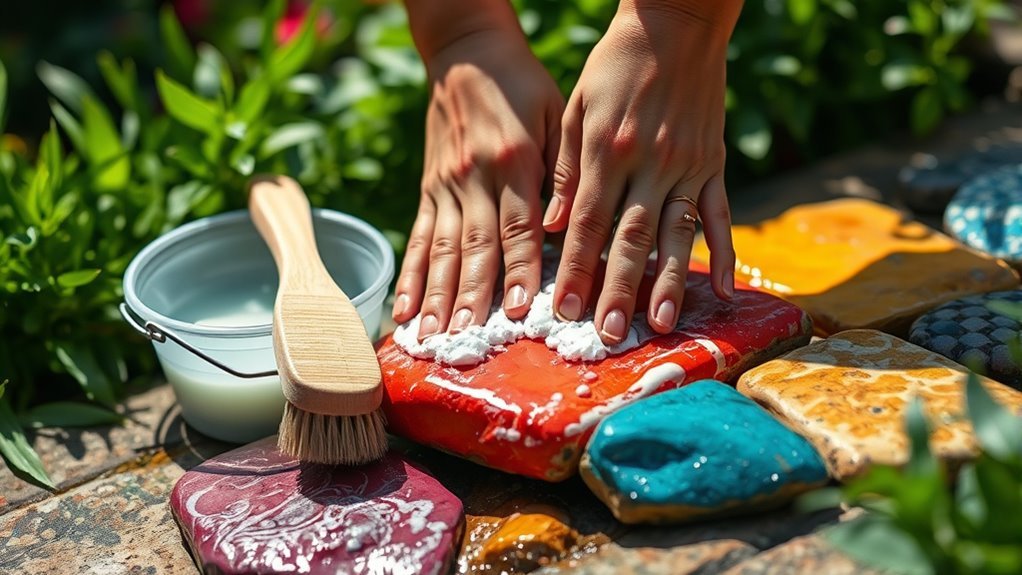
Although garden stones are durable, you should clean them regularly to keep your outdoor space looking fresh and inviting. Dirt, moss, and algae can quickly accumulate, making your stones slippery and unsightly. If you ignore this buildup, it can cause staining and even damage over time.
Regular cleaning prevents these issues and helps maintain the natural beauty of your stones. Plus, clean stones improve safety by reducing the risk of slips and falls. When your garden stones look their best, your entire outdoor area feels more welcoming and well-maintained.
Taking the time to clean them also extends their lifespan, saving you money on replacements. So, keeping your garden stones clean isn’t just about aesthetics—it’s about preserving your investment and ensuring a safe, pleasant space.
Gather Your Cleaning Tools
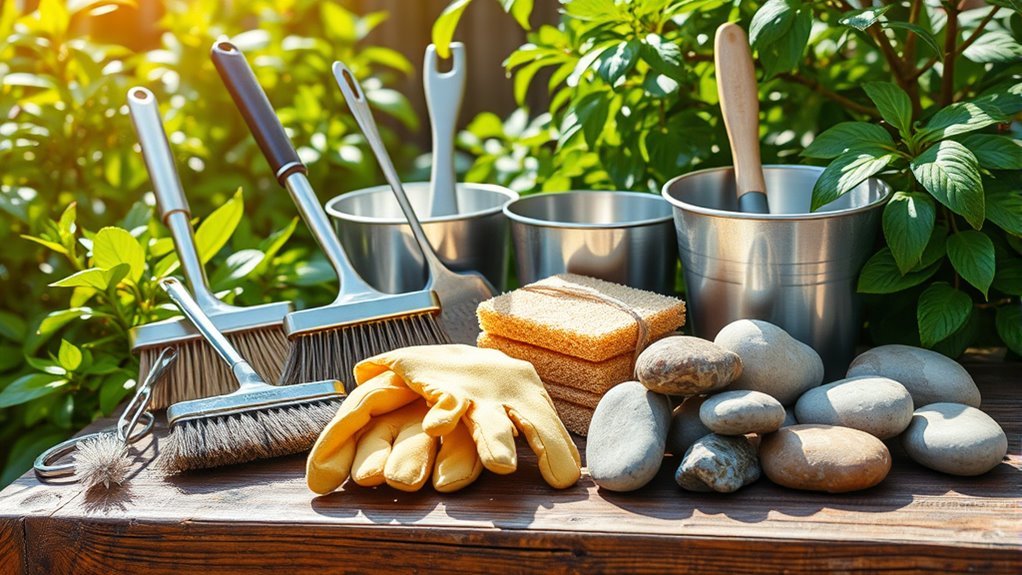
Before you begin cleaning your garden stones, gather the right tools to make the job easier and more effective. You’ll need a stiff-bristled brush to scrub away grime without damaging the stones.
Start by collecting the right tools, like a stiff-bristled brush, for effective and safe stone cleaning.
A bucket filled with warm water and mild detergent will help loosen dirt.
Have a garden hose or a spray bottle ready for rinsing afterward.
Gloves will protect your hands from dirt and cleaning agents, while knee pads or a cushion can make kneeling more comfortable.
If you’re dealing with stubborn moss or algae, consider a plastic scraper or a specialized stone cleaner.
Preparing these tools in advance guarantees you won’t have to stop midway, letting you clean your garden stones efficiently and thoroughly.
Clear Away Dirt and Debris
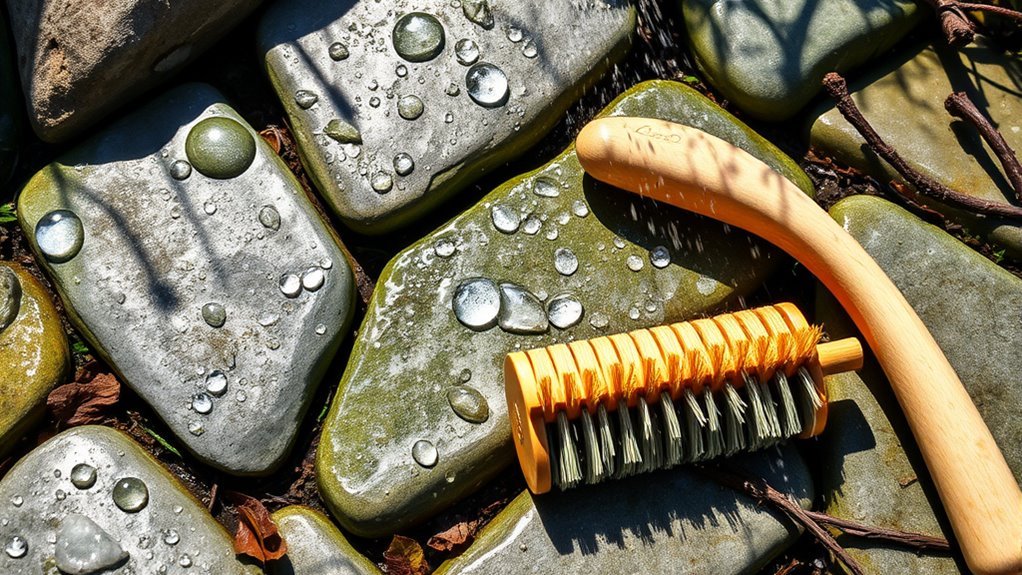
Start by removing any loose dirt and debris from your garden stones to make the cleaning process easier. Use a stiff broom to sweep away dust and small particles effectively.
Don’t forget to clear away weeds growing between the stones to keep the area tidy.
Remove Loose Surface Debris
To effectively clean garden stones, you’ll want to remove any loose dirt, leaves, and debris from the surface first. Start by picking up larger items like twigs and leaves by hand. This prevents clogging or spreading dirt around when you proceed further.
Next, give the stones a gentle shake or tap if possible to dislodge dust and smaller particles resting on top. If you notice stubborn dirt patches, try brushing them off lightly with your hand or a soft cloth.
Clearing away this loose debris helps ensure the cleaning process is more efficient and prevents grime from settling deeper. Taking this initial step makes the stones ready for a more thorough cleaning without extra mess or effort.
Use a Stiff Broom
Once you’ve cleared away loose debris, grab a stiff broom to sweep off the remaining dirt and grime from your garden stones.
Using firm, deliberate strokes, brush across the stones’ surfaces to dislodge stubborn particles that a softer broom might miss. Focus on corners and edges where dirt tends to accumulate.
Make sure to sweep in multiple directions to reach crevices and uneven areas effectively. The stiff bristles will help lift dirt without damaging the stones.
This step not only improves the stones’ appearance but also prepares them for deeper cleaning methods.
Remember to periodically shake out your broom to remove trapped debris, ensuring it remains effective throughout the process.
With clean stones, your garden will look tidier and more inviting.
Clear Away Weeds
How do you keep your garden stones looking pristine after sweeping? The next step is to clear away weeds. Weeds not only spoil the look of your stones but also trap dirt and moisture, making cleaning harder.
Start by pulling out any visible weeds by hand, making sure to get the roots to prevent regrowth. For stubborn weeds growing between stones, use a weeding tool or a knife to carefully loosen and remove them.
After removing the weeds, clear away any remaining dirt and debris with a brush or blower. This prevents buildup that can stain or damage your stones over time.
Regularly clearing weeds keeps your garden stones neat, making your cleaning routine quicker and more effective.
Rinse Garden Stones to Loosen Grime
You’ll want to start by rinsing your garden stones with water to loosen stubborn grime. Use a moderate water pressure—too strong can damage the stones, while too weak won’t be effective.
Aim the spray at different angles to break up dirt and prepare the stones for deeper cleaning.
Importance Of Initial Rinsing
Before tackling stubborn dirt and grime, start by rinsing your garden stones thoroughly. This initial rinse loosens loose dirt, dust, and debris, making the deeper cleaning process more effective. When you rinse first, you prevent grime from spreading or embedding further into the stone’s surface.
It also allows you to assess the stones’ condition and identify tough spots needing extra attention. Skipping this step can mean wasting time scrubbing unnecessarily or using harsh cleaners where a simple rinse would suffice.
Best Water Pressure Levels
Although rinsing garden stones is essential, choosing the right water pressure makes all the difference in effectively loosening grime without damaging the surface. You want enough force to clear dirt but not so much that it chips or erodes the stones.
Here’s a quick guide to help you pick the best water pressure levels:
- Low pressure (500-1000 PSI): Ideal for delicate stones or older surfaces to prevent damage.
- Medium pressure (1000-2000 PSI): Works well for most garden stones, balancing cleaning power and safety.
- High pressure (2000+ PSI): Use cautiously on very sturdy stones; excessive pressure can cause cracks or pitting.
Adjust your pressure washer accordingly and test a small area first to ensure you’re loosening grime effectively without harm.
Techniques To Loosen Dirt
When rinsing garden stones to loosen grime, start by directing a steady stream of water across the surface to break up dirt and debris. Focus on areas with stubborn stains or moss buildup, letting the water soak in for a few minutes.
If you have a garden hose with adjustable pressure, use a moderate setting to prevent damaging the stones while effectively loosening grime.
For tight spots, consider using a soft brush or broom to gently scrub while rinsing. This combination helps dislodge dirt trapped in crevices.
Avoid harsh scrubbing that could erode the stone’s surface. After rinsing, inspect the stones for any remaining dirt and repeat the process if necessary.
This technique saves time and prepares the stones for deeper cleaning if needed.
Use a Mild Detergent on Garden Stones
Since garden stones often collect dirt and grime, using a mild detergent helps you remove buildup without damaging their surface. You’ll want to choose a detergent that’s gentle yet effective, ensuring the stones maintain their natural look.
Start by mixing a small amount of mild detergent with warm water in a bucket. Then, apply the solution to the stones using a soft cloth or sponge.
Keep these tips in mind when using a mild detergent:
- Avoid harsh chemicals that can erode or discolor the stones
- Test the detergent on a small, hidden area first to check for any adverse reactions
- Rinse the stones thoroughly with clean water to remove any detergent residue
This approach keeps your garden stones clean and protected.
Scrub Garden Stones to Remove Moss and Algae
You’ll want to tackle moss and algae by scrubbing your garden stones with the right tools and cleaning solutions. Using a stiff brush and a mix of water and mild detergent works well for most surfaces.
Let’s explore the best scrubbing techniques and cleaning mixtures to get your stones looking fresh again.
Effective Scrubbing Techniques
Although moss and algae can stubbornly cling to garden stones, scrubbing them away effectively restores your stones’ natural beauty. To get the best results, start by wetting the stones with water; this softens the growth and prevents dust from spreading.
Use a stiff-bristled brush to tackle the moss and algae, applying firm, circular motions for thorough removal. Don’t rush—patience pays off when scrubbing stubborn patches.
Keep these tips in mind for effective scrubbing:
- Work in small sections to ensure even cleaning
- Scrub along the stone’s texture to avoid damage
- Rinse frequently to check your progress and prevent residue buildup
Following these techniques helps you keep your garden stones clean and vibrant without causing harm.
Best Cleaning Solutions
Once you’ve mastered scrubbing techniques, choosing the right cleaning solution can make removing moss and algae even easier. A mixture of equal parts water and white vinegar works well for most garden stones, killing moss without harsh chemicals.
For tougher stains, try a diluted bleach solution—one part bleach to ten parts water—but be sure to rinse thoroughly and protect nearby plants.
You can also use specialized stone cleaners available at garden centers, which are designed to remove algae while preserving the stone’s surface.
Always test your solution on a small, hidden area first to avoid damage.
Apply your chosen cleaner, let it sit for 10–15 minutes, then scrub and rinse with water.
This approach keeps your stones clean and looking their best.
Apply Vinegar or Natural Cleaners
A simple and effective way to clean garden stones is by applying vinegar or other natural cleaners. These substances break down dirt, algae, and stains without harsh chemicals.
Before you start, dilute vinegar with water—usually a 1:1 ratio works well to prevent damaging the stones.
Then, apply the solution evenly using a spray bottle or a brush.
Keep these tips in mind when using natural cleaners:
- Test on a small area first to ensure no discoloration
- Avoid applying on plants nearby to prevent damage
- Let the solution sit for 10-15 minutes to loosen grime
Using vinegar or natural cleaners saves money and protects your garden’s environment while keeping your stones looking fresh.
Rinse Stones to Remove Residue
How do you guarantee all the vinegar or natural cleaner is fully removed from your garden stones? Start by thoroughly rinsing the stones with a hose or bucket of clean water. Use a steady flow to wash away any leftover solution that might cause staining or damage over time.
Thoroughly rinse garden stones with clean water to remove all vinegar or natural cleaner residue and prevent damage.
Focus on every stone, ensuring no spots are missed, especially crevices where residue can hide. If you notice stubborn areas, gently scrub again with a soft brush while rinsing.
Avoid using high-pressure washers unless stones are sturdy, as they can chip delicate surfaces.
Proper rinsing prevents buildup and keeps your stones looking fresh. Once the residue is gone, your stones are ready for the next step in maintenance.
Dry Stones Before Sealing
Before sealing your garden stones, make sure they’re completely dry to guarantee the sealant adheres properly. Moisture trapped beneath the sealant can cause bubbling, peeling, or ineffective protection.
To dry your stones effectively, follow these steps:
- Spread the stones out in a single layer to promote even drying.
- Choose a warm, sunny day to speed up evaporation naturally.
- Use a clean, dry cloth to wipe off any remaining surface moisture if needed.
Avoid rushing this step, as sealing damp stones can compromise the finish and longevity.
Giving your stones ample time to dry ensures the best results when you move on to seal them, keeping your garden looking fresh and well-maintained.
Seal Garden Stones to Protect and Maintain
Once your stones are completely dry, you’ll want to apply a sealant to protect them from weathering and stains. Sealants create a barrier against moisture, dirt, and UV rays, keeping your stones looking fresh longer.
Choose a sealant suited for your stone type and outdoor conditions. Apply evenly with a brush or sprayer, and allow it to dry fully before use.
| Sealant Type | Best For | Application Tips |
|---|---|---|
| Penetrating | Natural stone | Apply 2 coats, dry 24 hours |
| Acrylic | Decorative stones | Use thin layers, quick drying |
| Epoxy | High-traffic areas | Requires careful mixing |
| Silicone | Water resistance | Reapply annually |
Sealing extends your stones’ life and keeps maintenance easier.
Frequently Asked Questions
Can Garden Stones Be Cleaned During Winter?
Yes, you can clean garden stones during winter, but you’ll want to avoid freezing temperatures to prevent damage. Use warm water and a mild brush, and don’t forget to dry them thoroughly to stop ice from forming.
How Often Should Garden Stones Be Cleaned?
You should clean your garden stones at least twice a year, ideally in spring and fall.
If they get dirty faster, you can clean them more often to keep them looking fresh and prevent moss or algae buildup.
Are Pressure Washers Safe for All Garden Stones?
Pressure washers aren’t safe for all garden stones. You should avoid using them on delicate, porous, or softer stones like sandstone or limestone, as high pressure can cause damage.
Test a small area first to be sure.
Can Bleach Be Used on Garden Stones?
You shouldn’t use bleach on garden stones—it’s like trying to clean with a rotary phone in the digital age. Bleach can damage stones and harm plants, so stick to gentler cleaners for safer, lasting results.
How to Prevent Garden Stones From Staining?
You can prevent garden stones from staining by sealing them with a stone sealer, regularly rinsing off dirt and organic debris, avoiding harsh chemicals, and placing stones where water drains well to reduce moisture buildup and algae growth.
Sealing the stones creates a protective barrier that helps repel stains and moisture.
Regular cleaning prevents the accumulation of dirt and organic matter, which can cause discoloration.
Choosing a well-drained location minimizes water exposure, reducing the chances of algae and mold development.
Conclusion
Cleaning your garden stones not only boosts your outdoor space’s appearance but also helps prevent moss and algae buildup, which can increase slip hazards by up to 50%. By following these 10 easy steps, you’ll keep your stones looking fresh and safe year-round.
Remember, sealing them after drying extends their life and reduces future cleaning needs. With just a little effort, your garden stones will stay beautiful and durable for seasons to come.
Incorporating regular maintenance and proper cleaning techniques ensures your garden stones remain attractive and functional. Clean garden stones contribute significantly to the overall aesthetic and safety of your outdoor area.