How Do You Get Rid of Rats in Your Garden?
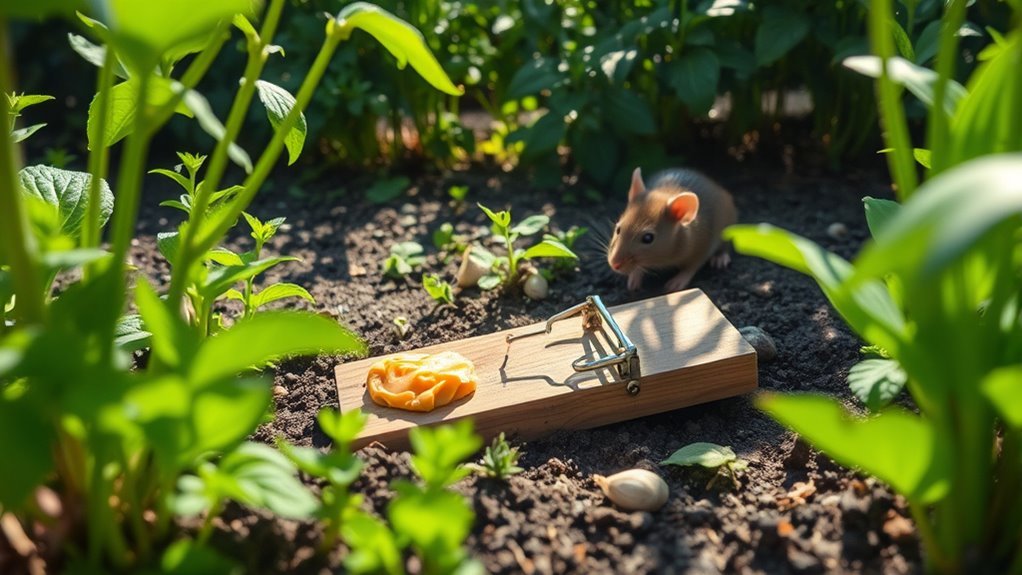
To get rid of rats in your garden, start by spotting signs like droppings, gnaw marks, or burrows. Identifying these key indicators is essential for effective rat control and prevention. Use humane traps with peanut butter bait and avoid glue traps.
Keep your garden tidy by removing clutter, trimming grass, and sealing gaps in fences or sheds. Plant strong-scented herbs like mint or sprinkle cayenne pepper as natural repellents. Secure compost and pet food to cut their food supply.
Taking these steps helps control rats, and there’s plenty more you can do to protect your garden. Regular maintenance and vigilance are crucial to keeping your garden rat-free.
Signs of Rats in Your Garden
Before you can tackle a rat problem, you need to know what to look for. Check your garden for gnaw marks on wooden structures, plants, or vegetables—rats love to chew. You’ll spot droppings near food sources, usually dark and pellet-shaped.
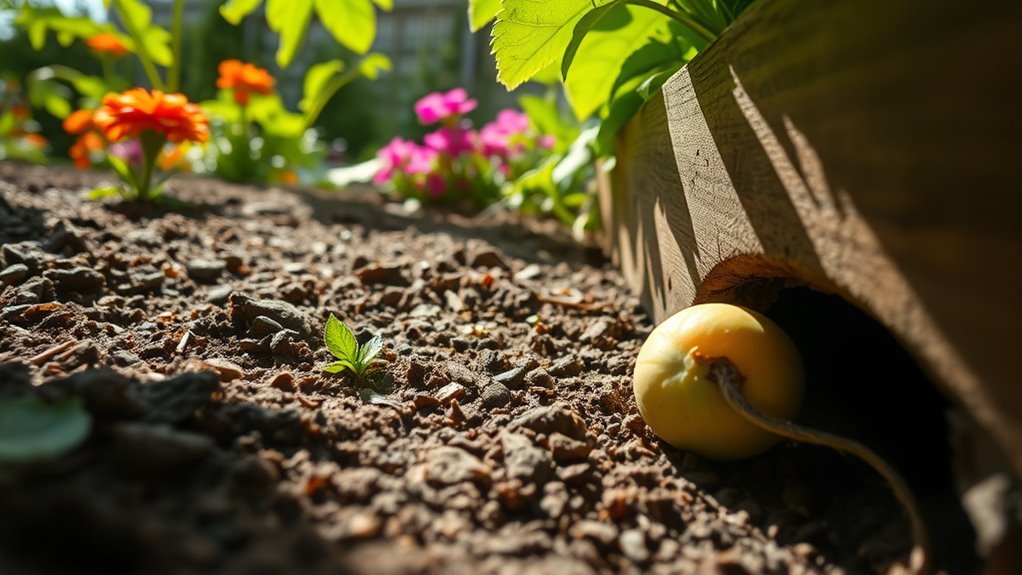
Look for burrows or tunnels in soil, especially near compost piles or under sheds. Rats leave greasy rub marks along walls or fences where they frequently travel. Listen for scratching or scurrying sounds at night, as rats are typically nocturnal.
You might also notice damaged fruits or vegetables with bite marks. If you see footprints in dusty or muddy areas, that’s another clue. Identifying these signs early helps you react before the rats multiply and cause more harm to your garden.
Best Safe Traps to Catch Garden Rats

When dealing with garden rats, choosing safe traps is essential to protect both your plants and local wildlife. Live-catch traps are a great option—they capture rats without harming them, letting you release them far from your garden. Look for traps with sensitive triggers to guarantee quick capture.
Snap traps designed specifically for rats can be effective if placed carefully to avoid accidental harm to pets or beneficial animals. Bait them with peanut butter or dried fruit for best results.
Avoid glue traps, as they cause unnecessary suffering and can trap unintended creatures.
Always check traps frequently to prevent prolonged distress. By selecting humane and targeted traps, you manage your rat problem effectively while respecting the ecosystem around your garden.
Easy Garden Changes to Deter Rats
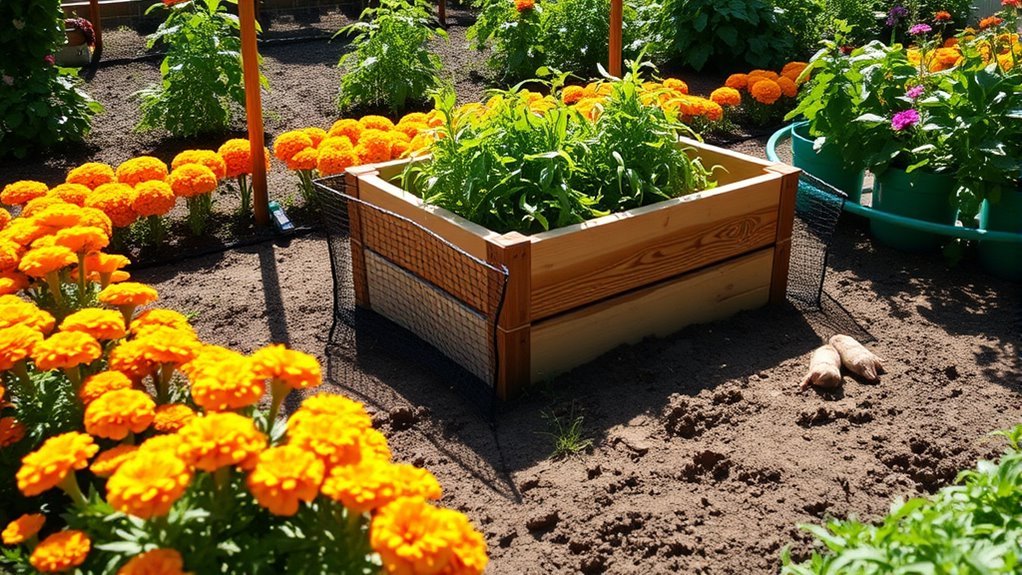
Although traps can help control rats, making simple changes to your garden can prevent them from settling in altogether. Start by removing clutter like piles of wood, leaves, or unused pots where rats can hide. Keep your grass trimmed short and avoid dense shrubbery near your home.
Seal any holes or gaps in fences and garden sheds to block entry points. Store pet food and birdseed in sealed containers, and clean up fallen fruits or vegetables promptly to eliminate food sources.
Consider installing raised garden beds with wire mesh underneath to deter burrowing. Finally, guarantee your compost bin is securely covered and not easily accessible. These straightforward adjustments make your garden less inviting, reducing the chances of rats making themselves at home.
Natural Remedies and Plants That Repel Rats
Making physical changes to your garden can considerably reduce rat activity, but pairing these efforts with natural remedies offers an even stronger defense.
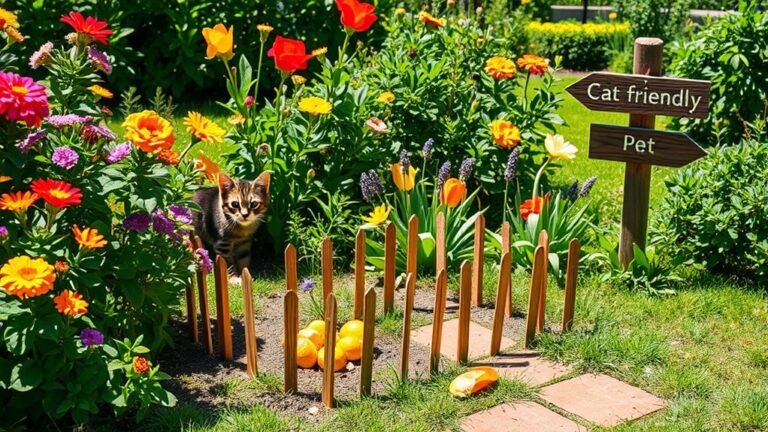
You can plant herbs like mint, lavender, and rosemary, which rats dislike due to their strong scents. Garlic and onions also deter rats effectively, so consider adding them around the garden’s perimeter.
Additionally, sprinkling cayenne pepper or black pepper near entry points can keep rats at bay.
Another natural option is placing cotton balls soaked in peppermint oil in areas where rats are active; the smell repels them without harmful chemicals.
These remedies work best when combined with garden maintenance, creating an environment that’s both uninviting and inhospitable to rats, helping you protect your plants naturally and safely.
Preventing Future Rat Problems in Your Garden
To keep rats from returning to your garden, you need to stay proactive and vigilant. Start by sealing any holes or gaps in fences, sheds, and garden walls where rats could enter.
Keep your garden tidy by regularly removing fallen fruit, debris, and weeds that provide shelter or food.
Store compost and pet food in sealed containers, as these attract rodents.
Trim overgrown shrubs and branches to reduce hiding spots and make your garden less inviting.
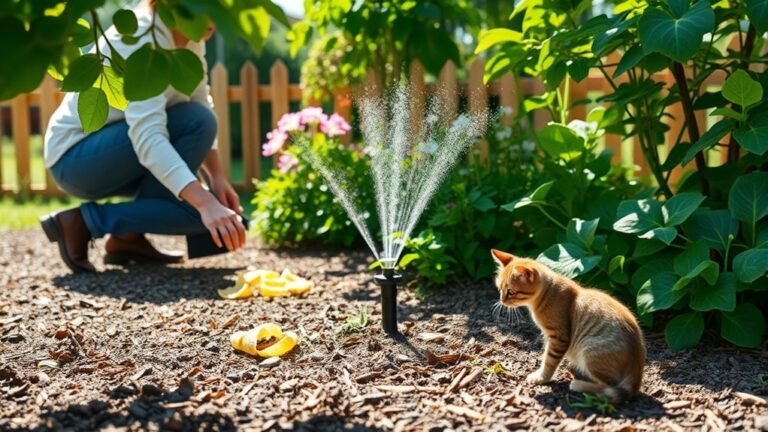
Installing motion-activated lights or sprinklers can also deter nocturnal visitors.
Finally, inspect your garden frequently for signs of rats, such as droppings or gnaw marks, so you can act quickly if you notice any activity.
These preventive steps help protect your garden from future rat problems effectively.
Frequently Asked Questions
Can Rats Damage My Garden Plants or Vegetables?
Yes, rats can damage your garden plants and vegetables by chewing stems, roots, and fruits.
They’ll dig up soil and eat seeds, which can ruin your crops and make it harder for your garden to thrive.
Are Rats Dangerous to Pets in My Garden?
Yes, rats can be dangerous to your pets. They might carry diseases or cause bites if threatened.
You should keep your garden clean and monitor your pets closely to minimize any risks from rat encounters.
How Quickly Do Rats Reproduce in Garden Environments?
Rats reproduce rapidly, with females having up to 12 litters a year. Each litter can have 6 to 12 pups, so you’ll see their population explode in just a few months if you don’t act quickly.
What Diseases Can Rats Transmit in Outdoor Areas?
You can catch diseases like leptospirosis, hantavirus, salmonella, and rat-bite fever from rats in outdoor areas. They carry these germs through urine, droppings, and bites, so watch out and stay cautious.
Is Professional Pest Control Necessary for Severe Rat Infestations?
You can try DIY methods, but for severe rat infestations, you’ll need professional pest control. Experts act faster and safer, preventing damage and disease risks that you might overlook or mishandle on your own.
Conclusion
Don’t let rats turn your garden into their playground. By spotting signs early and using safe traps, you can take back control. Making simple changes and planting natural repellents act like a fortress, keeping these unwelcome guests at bay.
With a little effort, your garden will once again bloom free and wild, a sanctuary where rats are just a distant shadow. Stay vigilant, and your green space will thrive, rat-free and full of life. Effective rat control in your garden ensures a healthy environment and peace of mind.