3 Quick Steps to See If My Garden Is South Facing
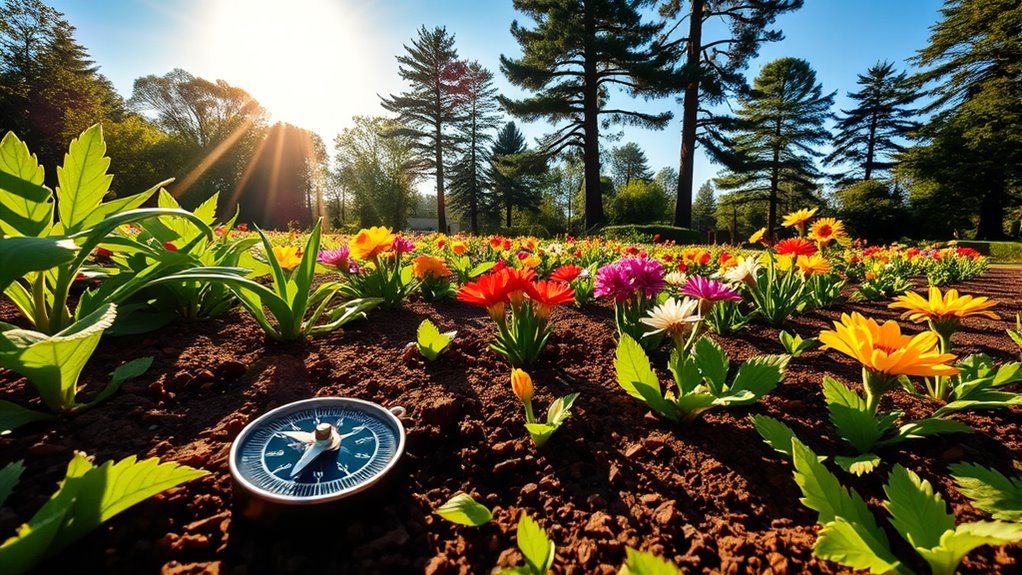
First, grab a compass or use your smartphone’s compass app to find north, then see which way your garden faces—south will be opposite. Using a compass is one of the easiest and most reliable methods to determine if your garden is south facing.
Next, watch the sun move across your garden; if it gets strong, consistent sunlight from late morning to afternoon, it likely faces south. South-facing gardens typically receive more direct sunlight throughout the day, which is great for many plants.
Finally, check shadows around midday; if they point north, that confirms a south-facing garden. Shadows are a natural indicator of direction and can help you identify your garden’s orientation quickly.
Keep going to discover more ways to pinpoint your garden’s direction with ease.
Use a Compass or Smartphone to Find Your Garden’s Direction

To find your garden’s direction, grab a compass or open the compass app on your smartphone.
Stand in the center of your garden, holding the compass flat in your hand. Make sure you’re away from any metal objects that could interfere with the reading.
Slowly rotate until the compass needle points north. Once you know where north is, you can determine the other directions: south will be directly opposite.
Note the direction your garden faces by aligning yourself with the compass.
You don’t need to be exact; a general sense of direction is enough to proceed.
This simple step gives you a clear understanding of your garden’s orientation, setting the stage for identifying if it’s south facing or not.
Spot Sun Patterns to Identify a South Facing Garden
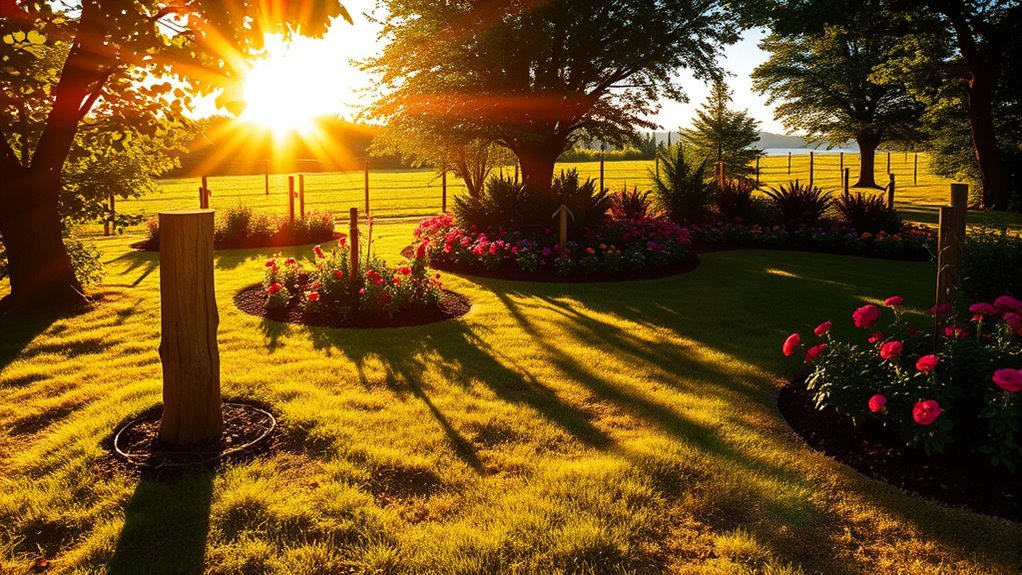
After figuring out your garden’s direction with a compass or smartphone, pay attention to how the sunlight moves across your space throughout the day.
A south-facing garden receives sunlight from mid-morning until late afternoon, with the sun rising in the east and setting in the west, passing through the southern sky.
You’ll notice strong, consistent sunlight hitting the garden for most of the day, especially around noon when the sun is at its highest point.
In contrast, north-facing gardens get less direct sunlight.
To spot these patterns, observe where shadows fall and how long the sun stays on different parts of your garden.
Tracking these sun patterns over a day or two helps you confirm if your garden truly faces south.
Look for Landscape Features and Shadows to Confirm Garden Direction
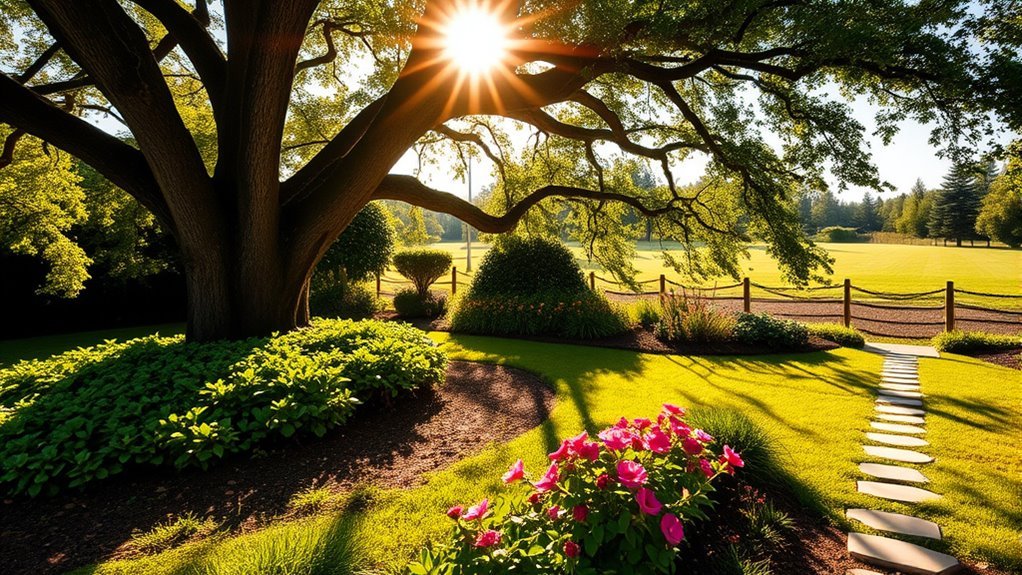
While sunlight patterns give you a good clue, observing landscape features and the direction of shadows can confirm your garden’s orientation with certainty. Check nearby landmarks like roads or fences, which often run north-south or east-west, helping you gauge direction.
Notice where shadows fall during midday; if shadows point north, your garden likely faces south.
Observe tall trees or buildings: their shadows will stretch opposite the sun’s position, so in the northern hemisphere, midday shadows fall north. You can also use a stick and mark its shadow tip every 15-20 minutes; the shadow moves from west to east, with the shortest shadow indicating true south.
Combining these observations gives you a reliable method to confirm if your garden truly faces south.
Frequently Asked Questions
Can a South-Facing Garden Improve Plant Growth?
Yes, a south-facing garden can boost your plants’ growth since it gets more sunlight throughout the day. You’ll enjoy warmer soil, longer growing seasons, and healthier, more vibrant plants thriving in that bright environment.
What Are the Benefits of a South-Facing Garden?
You’ll enjoy up to 6 hours more sunlight daily in a south-facing garden, boosting plant growth and fruit yields.
You’ll also save energy by naturally warming your outdoor space and extending your growing season considerably.
How Does a South-Facing Garden Affect Home Energy Use?
A south-facing garden helps you reduce energy costs by maximizing sunlight, warming your home naturally in winter.
It also supports solar panels’ efficiency, so you’ll use less heating and electricity throughout the year.
Are South-Facing Gardens Better for Vegetable Gardening?
Yes, south-facing gardens are better for vegetable gardening because they get more sunlight throughout the day. You’ll enjoy longer growing seasons and healthier plants, which means bigger, tastier harvests for your efforts.
Can Trees Block Sunlight in a South-Facing Garden?
Yes, trees can block sunlight in a south-facing garden, reducing light by up to 70%.
You’ll want to trim branches or choose planting spots that avoid heavy shade to keep your veggies thriving and healthy.
Conclusion
Just like a sailor trusts the stars to navigate, you can trust these simple steps to find your garden’s true direction. Using your compass or phone, watching the sun’s daily dance, and noting shadows will reveal if your garden faces south.
With this knowledge, you’ll nurture your plants as if guided by an ancient wisdom, turning your outdoor space into a vibrant sanctuary bathed in perfect sunlight. Your garden’s journey starts now—embrace it!
By following these quick steps to see if my garden is south facing, you ensure your plants receive the ideal light they need to thrive.