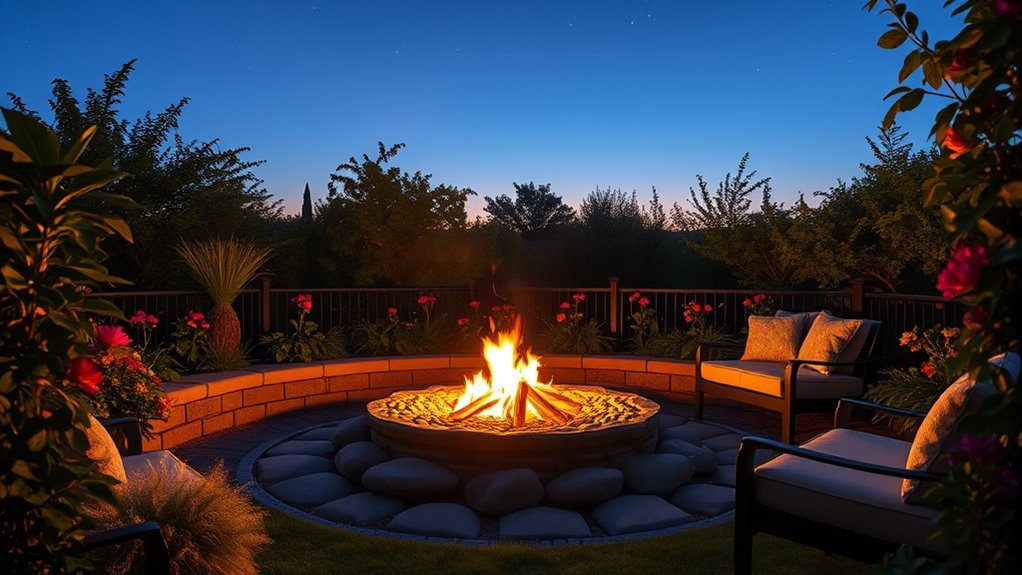
How to Safely Have a Fire in Your Garden
To safely have a fire in your garden, start by choosing a flat spot at least 10 feet away from any structures. Clear all flammable debris within a 3-foot radius to prevent accidental spreading. Using a sturdy fire pit made of metal or stone is essential for containing the flames.
Keep safety tools like water and a fire extinguisher nearby at all times. Always burn seasoned hardwood and avoid using flammable liquids to ignite or maintain the fire. Control the fire size to keep it manageable and safe.
Supervise children and pets closely whenever the fire is burning. Before leaving the area, make sure the fire is fully extinguished. Follow these basics, and you’ll be ready to enjoy your fire safely with more helpful tips ahead.
Choose the Right Spot for Your Garden Fire
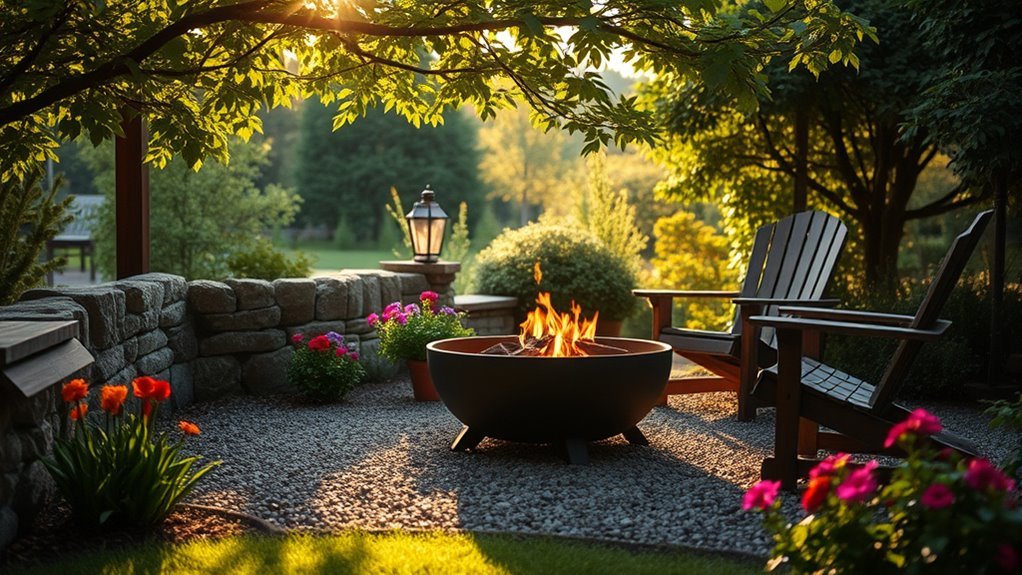
Where should you place your garden fire to keep it safe? Start by picking a spot that’s flat and stable to prevent your fire pit from tipping over. Make sure it’s at least 10 feet away from any structures, fences, or overhanging branches.
Choose a flat, stable spot at least 10 feet from structures and overhanging branches for your garden fire.
Avoid areas with dry grass, leaves, or other flammable materials nearby. You want a clear space free of clutter and debris for safety. Choose a location with good airflow but away from strong winds that could spread sparks.
If possible, set your fire on bare soil, gravel, or a fire-resistant surface. This helps contain the fire and reduces the chance of it spreading.
Taking these steps will help you enjoy your garden fire without unnecessary risks.
Know Local Fire Regulations and Permits
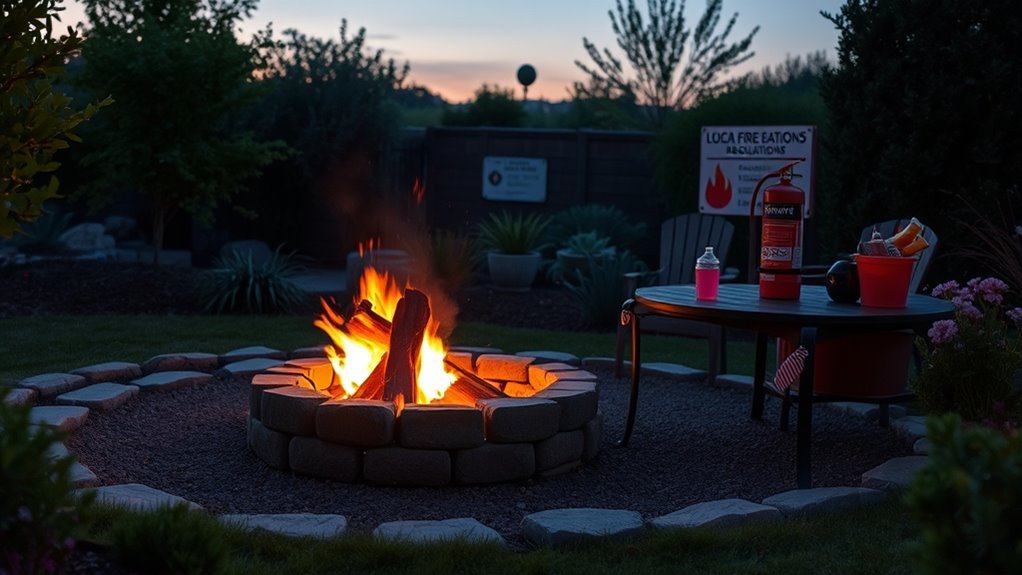
Before lighting your garden fire, check your local fire laws to make sure you’re following all rules. You might need to get a permit, so contact your local authority to find out what’s required.
Staying informed helps you avoid fines and keeps your fire safe.
Check Local Fire Laws
Although having a fire in your garden can be enjoyable, you need to check local fire laws to stay safe and legal. Fire regulations vary widely depending on where you live, so it’s essential to understand the specific rules in your area.
Some places restrict open flames during dry seasons or have distance requirements from buildings and property lines.
You might also find limitations on the size and type of fire allowed. By checking local fire laws, you avoid fines, legal trouble, and potential hazards.
Start by visiting your city or county government website or contacting your local fire department.
Staying informed helps you enjoy your garden fire responsibly without unexpected interruptions or risks.
Obtain Necessary Permits
After checking local fire laws, you’ll want to secure any permits required to have a fire in your garden. These permits guarantee you’re following safety standards and can prevent fines or shutdowns. Contact your local fire department or municipal office to find out what’s needed.
Different areas have varying rules based on fire risk and season.
Here’s a quick guide to typical permit requirements:
| Permit Type | When It’s Needed |
|---|---|
| Small Recreational | For contained fires under 3 feet |
| Large Open Fires | For fires over 3 feet or bonfires |
| Seasonal Restrictions | During high fire-risk periods |
Obtaining the right permit keeps you compliant and ensures a safe, enjoyable fire experience in your garden.
Choose a Safe Fire Pit for Your Garden Fire
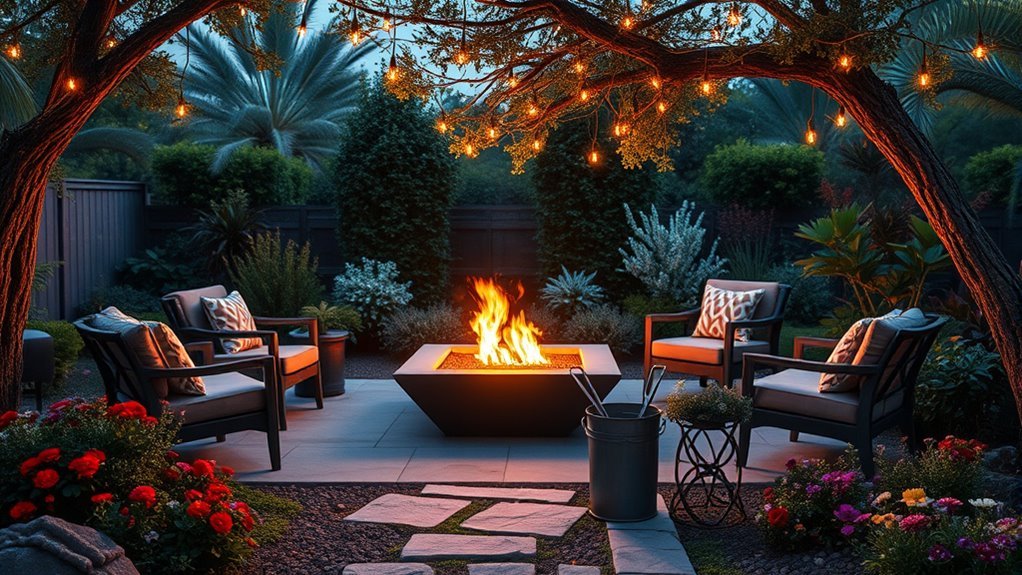
When you choose a fire pit for your garden, focus on materials and design that contain the fire securely and withstand outdoor conditions. Opt for fire pits made from durable materials like steel, cast iron, or stone, as they resist heat and weather damage better than cheaper options.
Look for models with a spark screen or lid to prevent embers from escaping.
Consider the size and depth of the pit to keep flames contained safely. Avoid fire pits with plastic components or thin metal that can warp or melt.
Portable fire pits are convenient but ensure they’ve stable bases to prevent tipping.
Prioritize safety features without sacrificing style, so your fire pit enhances your garden while keeping you and your surroundings protected.
Prepare Your Fire Area to Prevent Fire Spread
Before lighting your fire, clear away any nearby vegetation to reduce the risk of sparks spreading.
Surround your fire pit with non-flammable materials like gravel or stone to create a safe barrier.
Make sure you keep a safe distance between the fire and anything that can catch fire easily.
Clear Surrounding Vegetation
Taking a few essential steps to clear surrounding vegetation can considerably reduce the risk of your garden fire spreading uncontrollably. Start by removing dry leaves, twigs, and dead plants within at least a three-foot radius around your fire pit or fire area.
Trim back low-hanging branches and overgrown shrubs to create a clear space. This reduces fuel that fire can easily catch.
Make sure grass is cut short and watered if possible, as dry grass ignites quickly. Avoid piling any flammable garden debris nearby.
Clear away any mulch, pine needles, or bark that can carry sparks. By maintaining this cleared zone, you create a safer environment for your fire and minimize the chances of it jumping to nearby plants or structures.
This simple step is crucial for controlling your garden fire safely.
Use Non-Flammable Materials
Clearing vegetation reduces nearby fuel, but you also need to prepare the actual fire area with non-flammable materials to keep the fire contained. Use gravel, sand, or stone to create a solid base around your fire pit or fire bowl. These materials won’t catch fire or spread flames, providing a safe boundary.
Avoid placing your fire directly on grass, mulch, or wooden surfaces, as these can ignite easily. If you’re using a fire pit, ensure it rests on a non-flammable platform like concrete or paving stones.
Additionally, keep a small metal or stone barrier around the fire’s edge to prevent embers from escaping.
Maintain Safe Distance
Although fire adds warmth and ambiance, you must keep a safe distance between your fire and any flammable objects or structures. This helps prevent accidental fires and protects your home and garden.
Clear the area around your fire pit by removing dry leaves, sticks, and other combustible materials. Position your fire at least 10 feet away from buildings, trees, and fences.
Here’s a quick guide to safe distances:
| Object Type | Minimum Distance | Reason |
|---|---|---|
| Buildings | 10 feet | Prevents structural fire |
| Trees | 15 feet | Avoids catching branches |
| Flammable Items | 20 feet | Reduces fire spread risk |
Use the Right Wood and Fire Starters
When you choose the right wood and fire starters, you guarantee a safer and more enjoyable fire experience. Opt for seasoned hardwoods like oak, maple, or ash—they burn longer and produce less smoke.
Avoid softwoods like pine or cedar, as they contain resins that can create sparks and unpleasant fumes.
Also, steer clear of treated or painted wood, which release toxic chemicals when burned.
For fire starters, use natural options such as dry twigs, pine cones, or commercial firelighters made from non-toxic materials.
Avoid using gasoline, lighter fluid, or other flammable liquids, as they’re dangerous and unpredictable.
Follow Proper Fire Lighting Techniques
You’ll want to start by choosing safe fire starters that ignite easily without producing harmful fumes.
Next, arrange your wood so air can flow freely, helping the fire catch and burn evenly.
Following these steps sets a solid foundation for a controlled and enjoyable garden fire.
Choose Safe Fire Starters
Selecting the right fire starters is essential to lighting your garden fire safely and efficiently. Avoid using flammable liquids like petrol or alcohol, as they can cause dangerous flare-ups. Instead, opt for natural starters such as dry twigs, pinecones, or commercial firelighter cubes designed for outdoor use.
These ignite steadily, giving you better control during lighting. You can also use crumpled newspaper or cardboard, but keep these materials dry and avoid glossy or colored prints to reduce harmful fumes.
When lighting, place the fire starters under your kindling and ignite them carefully with a long match or lighter to keep your hands safe.
Always have water or a fire extinguisher nearby just in case. Choosing safe fire starters helps prevent accidents and guarantees a pleasant, worry-free garden fire experience.
Arrange Wood Properly
Although lighting a fire might seem straightforward, arranging the wood properly is key to ensuring it burns efficiently and safely.
Start by placing a small pile of kindling in the center, using dry twigs or small sticks.
Then, build a teepee shape by leaning larger pieces of wood around the kindling, leaving enough space for air to circulate.
Good airflow helps the fire catch and keeps it burning steadily.
Avoid packing the wood too tightly, as this can smother the flames.
You can also try the log cabin method—stacking wood in a square with kindling in the middle—to create a longer-lasting fire.
Always keep safety in mind by arranging the wood away from flammable materials and maintaining control over the fire’s size.
Keep Safety Tools and Equipment Nearby
When lighting a fire in your garden, having safety tools and equipment within reach is essential to prevent accidents from escalating. Keep a bucket of water, a garden hose, or a fire extinguisher close by so you can quickly tackle any unexpected flare-ups.
A sturdy pair of fire-resistant gloves will protect your hands when adjusting logs or handling hot tools.
Having a metal shovel or rake on hand helps you control the fire’s edges or smother embers that stray. Make sure these items are easily accessible and not buried under other gear.
Preparing your safety station before lighting the fire means you won’t waste precious time searching for tools if the situation changes suddenly.
Staying ready keeps you and your garden safe.
Keep Your Fire Under Control to Reduce Smoke and Sparks
To keep your fire safe and enjoyable, you need to manage its size and fuel carefully. Avoid piling on too much wood at once, as large fires produce excessive smoke and flying sparks. Instead, add small amounts of dry, seasoned wood gradually to maintain a steady, controlled flame.
Wet or green wood creates more smoke, so only burn properly dried materials. Keep your fire pit or ring clear of debris that might catch stray sparks. If sparks do escape, dampen the area around the fire to prevent accidental ignition.
You can also use a spark screen to minimize flying embers. By controlling the fire’s size and fuel, you reduce smoke and sparks, making your garden fire safer and more pleasant for everyone.
Supervise Children and Pets Around Your Garden Fire
Since fires can be unpredictable, you should always keep a close eye on children and pets around your garden fire. Make sure they stay a safe distance away and understand the dangers. Establish clear boundaries and explain the rules before lighting the fire.
Never leave them unattended, even for a moment. Keep a fire extinguisher or water source nearby in case of emergencies.
| Safety Tip | Why It Matters |
|---|---|
| Set clear boundaries | Prevents accidental falls |
| Explain fire dangers | Helps kids understand risks |
| Supervise constantly | Stops unexpected mishaps |
| Keep pets restrained | Avoids sudden close encounters |
| Have water nearby | Quick response to sparks or flames |
Fully Extinguish Your Fire Before Leaving
Keeping a close watch on children and pets around your garden fire helps prevent accidents, but your responsibility doesn’t end there. Fully extinguishing your fire before leaving is vital to avoid devastating wildfires and property damage.
Always take the time to douse the flames completely.
Here’s how you can make certain your fire is out:
- Pour water slowly over the fire, soaking all embers and ashes.
- Stir the remains with a stick or shovel to expose hot spots.
- Feel the area carefully with the back of your hand to check for heat.
- Repeat watering and stirring until the fire is cold to the touch.
Frequently Asked Questions
Can I Use Charcoal Instead of Wood for My Garden Fire?
Yes, you can use charcoal instead of wood for your garden fire. Charcoal burns hotter and cleaner, but make sure to use it in a well-ventilated area.
Never leave the fire unattended for safety.
How Do Weather Conditions Affect My Garden Fire Safety?
You should avoid lighting a fire on windy or dry days because sparks can spread quickly.
Humid, calm weather reduces risks, so check the forecast first to keep your garden fire safe and enjoyable.
What Are the Best Fire-Resistant Plants Around a Fire Pit?
You’ll want to plant fire-resistant species like lavender, rosemary, succulents, and ornamental grasses. These plants won’t easily ignite and provide a safe, attractive barrier around your fire pit, helping reduce fire risk effectively.
Can I Cook Food Directly Over a Garden Fire?
You can cook food directly over a garden fire—but don’t rush. Make sure the fire’s reduced to glowing embers first.
Cooking over open flames can burn food quickly, so patience and careful heat control are key.
How Often Should I Clean My Fire Pit?
You should clean your fire pit after every use to remove ashes and debris. Regular cleaning prevents buildup, improves airflow, and reduces fire hazards.
Deep clean it at least once a season for ideal safety and performance.
Conclusion
By following these steps, you’ll keep your garden fire safe and cozy, like a warm hug on a chilly night. Always choose the right spot, follow local rules, and never leave your fire unattended.
Keep safety tools close, use proper wood, and fully extinguish the flames before you walk away.
With care and attention, your garden fire will be a glowing centerpiece, not a flicker of danger. Remember, maintaining fire safety in your garden is essential to enjoy a relaxing and secure outdoor experience.