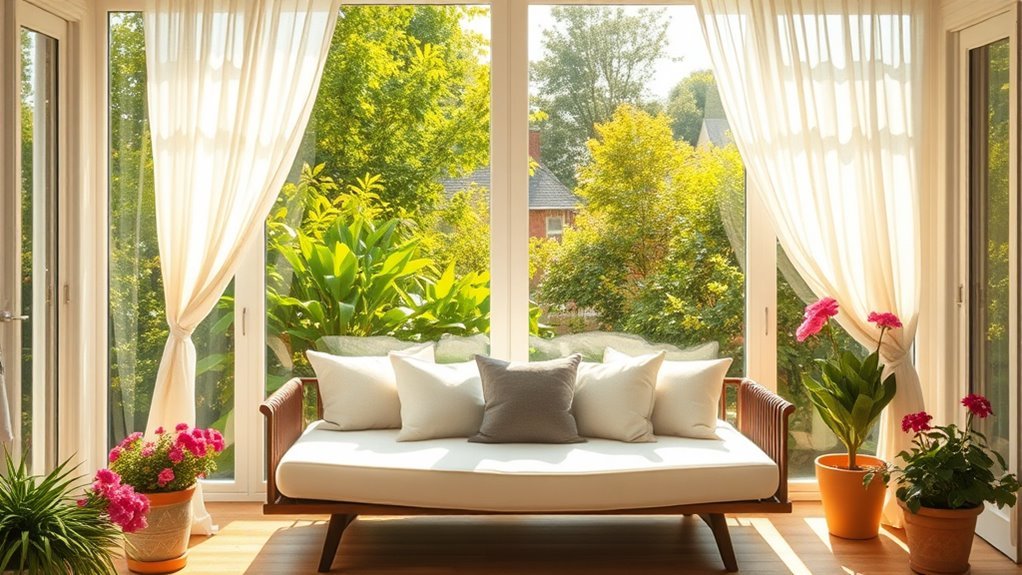
Can You Sleep in a Garden Room?
You can definitely sleep in a garden room if you make it cozy and safe. A garden room can be a perfect bedroom retreat with the right setup. Start with a good bed or sofa bed, add soft furnishings, and keep the space clutter-free.
Insulate well with double-glazed windows and thermal curtains to maintain comfort. Proper insulation helps regulate temperature throughout the year. Ventilate properly to avoid dampness and use soundproofing to reduce noise.
Choose the right furniture and confirm all wiring and safety measures are in place. This ensures both comfort and security while you sleep. Keep going to discover how to make your garden room an ideal bedroom retreat.
Can You Sleep Comfortably in a Garden Room?
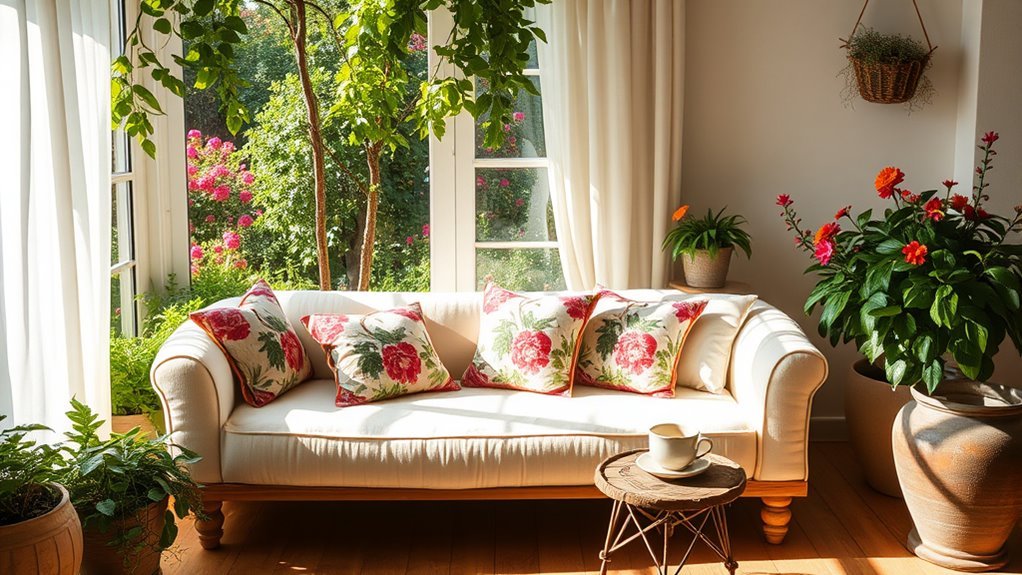
Although garden rooms are often designed as versatile spaces, you can definitely sleep comfortably in one with the right setup. Start by choosing a quality bed or a cozy sofa bed to guarantee proper support.
Make sure you have adequate lighting and easy access to power outlets for charging devices.
Ensure good lighting and convenient power outlets to keep your devices charged and your space bright.
Adding soft furnishings like rugs, cushions, and curtains will help create a warm, inviting atmosphere.
Keep your garden room tidy and clutter-free to promote relaxation.
Pay attention to ventilation by opening windows or using a fan to maintain fresh air throughout the night.
With these simple adjustments, your garden room can become a snug, peaceful retreat where you can rest well without needing a traditional bedroom.
How to Insulate and Control Temperature in Your Garden Room
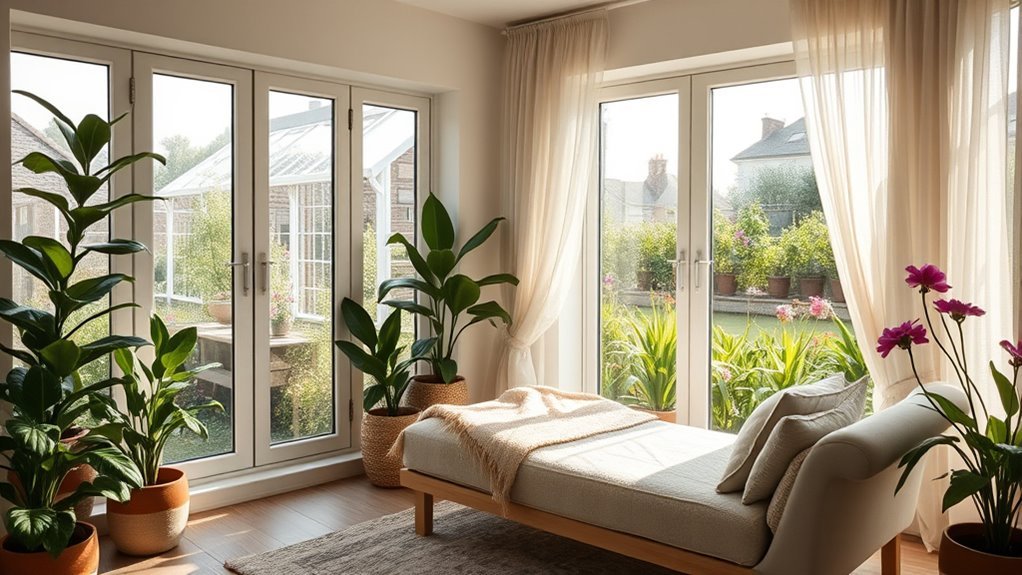
Once you’ve set up a comfortable sleeping space in your garden room, the next step is to make sure it stays cozy year-round. Proper insulation is key—start with insulated wall panels and double-glazed windows to keep drafts and cold spots at bay.
Add thermal curtains or blinds to help regulate heat loss. For temperature control, consider a portable heater or an energy-efficient air conditioner depending on your climate.
| Insulation Method | Temperature Control Option |
|---|---|
| Insulated wall panels | Portable electric heater |
| Double-glazed windows | Split air conditioning unit |
| Thermal curtains/blinds | Electric underfloor heating |
These choices will help maintain a stable temperature so you can enjoy your garden room through every season.
What Are the Best Ventilation Options for Garden Rooms?
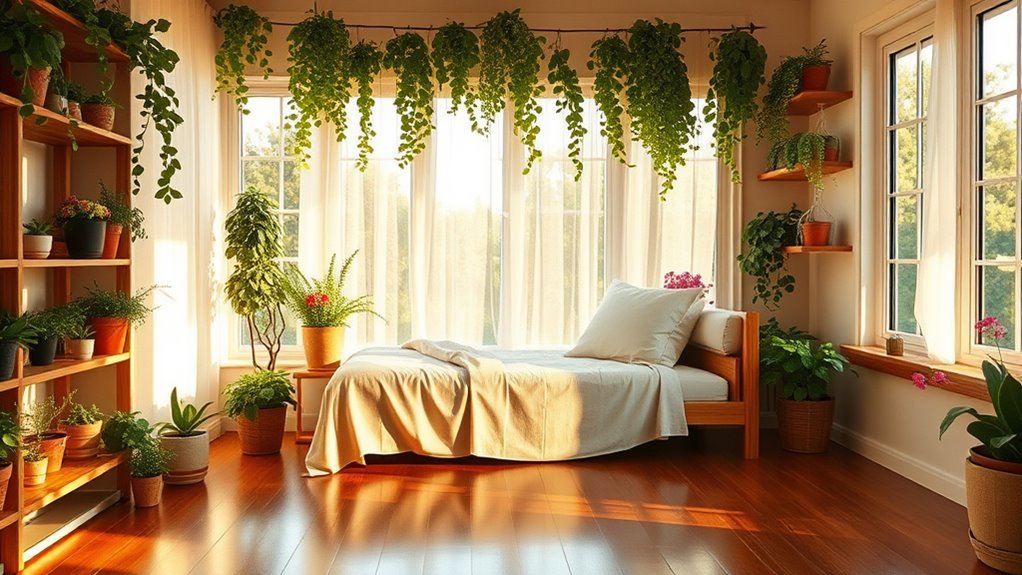
Good ventilation is essential to keep your garden room fresh, comfortable, and free from dampness. Without proper airflow, moisture can build up, leading to mold and stale air.
Proper ventilation prevents dampness, mold, and stale air, keeping your garden room fresh and comfortable.
To guarantee you breathe easy, consider these top ventilation options:
- Windows and doors: Opening them regularly lets fresh air circulate naturally.
- Trickle vents: Installed in windows, these allow constant airflow without major heat loss.
- Roof vents or skylights: These help hot air escape, improving air movement.
- Mechanical ventilation systems: Options like extractor fans or heat recovery ventilators maintain airflow efficiently.
How to Soundproof Your Garden Room for Better Sleep
Proper ventilation keeps your garden room comfortable during the day, but nighttime calls for a quiet, peaceful environment to help you sleep well.
To soundproof your garden room, start by sealing gaps around doors and windows with weatherstripping or acoustic sealant.
Consider installing double-glazed or laminated glass windows to reduce outside noise.
Adding heavy curtains or blackout blinds can further dampen sound.
For walls, attach acoustic panels or use soundproof drywall to minimize noise transmission.
Placing thick rugs or carpets on the floor also helps absorb sound.
Don’t forget to insulate the ceiling if possible, as noise can travel from above.
With these steps, you’ll create a tranquil space where external sounds won’t disturb your rest, allowing you to enjoy better, uninterrupted sleep in your garden room.
Choosing Bedroom Furniture for Your Garden Room
While garden rooms often serve as multi-purpose spaces, choosing bedroom furniture requires careful consideration to maximize comfort and functionality. You want pieces that fit the space without overcrowding it, and that can withstand varying temperatures and humidity.
Start by selecting a comfortable bed that suits the size of your garden room.
Next, consider storage solutions that keep clutter at bay without taking up too much space.
Don’t forget lighting—opt for fixtures that create a cozy ambiance.
Finally, choose materials that handle outdoor conditions well.
Keep these tips in mind when selecting furniture:
- Compact bed frames or foldable options
- Multi-functional storage units
- Soft, breathable bedding
- Weather-resistant materials like treated wood or metal
This approach guarantees your garden room feels inviting and practical.
Legal and Safety Tips for Sleeping in a Garden Room
Selecting the right furniture helps create a comfortable garden room, but you also need to take into account legal and safety factors before using it as a sleeping space.
First, check local building codes and regulations to verify your garden room complies, especially regarding insulation, ventilation, and fire safety. You might need planning permission depending on its size and location.
Next, make sure your garden room has proper electrical wiring installed by a professional to avoid hazards. Install smoke detectors and consider carbon monoxide alarms if you use any heating devices.
Confirm windows provide adequate emergency exits and natural light.
Lastly, check for dampness or structural issues that could affect health or safety overnight. Prioritizing these factors keeps your garden room safe and legally sound for sleeping.
Final Tips for Creating a Cozy Garden Room Bedroom
To create a cozy garden room bedroom, focus on maximizing comfort and warmth with soft bedding and proper insulation.
You’ll also want to enhance privacy and ambiance using curtains, lighting, and thoughtful decor.
These final touches can turn your space into a relaxing retreat you’ll love sleeping in.
Maximizing Comfort and Warmth
Even if your garden room has great natural light and ventilation, you’ll want to focus on the details that boost comfort and warmth. Start by adding thick rugs or carpets to keep the floor cozy underfoot. Layer your bedding with insulated duvets and soft blankets to trap heat.
Consider thermal curtains or blinds to reduce heat loss during cooler nights. Don’t forget to incorporate a portable heater or an electric radiator for quick warmth when needed.
Here are key tips to maximize comfort and warmth:
- Use rugs or carpets on cold flooring
- Layer bedding with insulated duvets and blankets
- Install thermal curtains or blinds
- Add a portable heater or electric radiator
These steps ensure your garden room bedroom stays snug and inviting all year round.
Enhancing Privacy and Ambiance
While natural light and warmth make a garden room inviting, maintaining privacy and setting the right ambiance are just as important for a cozy bedroom. Use curtains or blinds that block views without sacrificing light during the day. Sheer fabrics offer privacy while keeping things airy.
Add soft, warm lighting like fairy lights or bedside lamps to create a relaxing atmosphere when the sun goes down. Incorporate natural elements—plants, wood accents, or earth-toned decor—to blend the indoor and outdoor feel seamlessly.
Consider soundproofing options if outside noise disrupts your sleep.
Finally, personalize the space with cozy textiles like cushions and throws to make it feel truly yours. These details will help you transform your garden room into a private, peaceful retreat perfect for rest.
Frequently Asked Questions
Can I Use a Garden Room Year-Round for Sleeping?
Yes, you can use a garden room year-round for sleeping if it’s properly insulated, heated, and ventilated. You’ll want to make sure it’s weatherproof and comfortable during colder months to enjoy it all year long.
What Are the Best Flooring Options for Garden Room Bedrooms?
Step onto clouds with cushioned vinyl or cozy carpet, perfect for garden room bedrooms.
You’ll love engineered wood for warmth and style, while laminate offers easy care.
Choose flooring that hugs your feet and invites comfort.
How Do I Decorate a Garden Room for Better Relaxation?
You’ll want to use soft, calming colors, add cozy textiles like cushions and throws, incorporate plants for freshness, use warm lighting, and keep clutter minimal.
These touches create a peaceful, inviting garden room perfect for relaxing.
Are Garden Rooms Suitable for Children to Sleep In?
A garden room can be a cozy nest for your child, but you’ll need to guarantee it’s well-insulated, safe, and childproofed.
With proper setup, it’s a peaceful retreat where they’ll sleep soundly and dream big.
Can Pets Sleep Comfortably in a Garden Room?
Yes, your pets can sleep comfortably in a garden room if you guarantee proper insulation, ventilation, and temperature control.
Adding cozy bedding and familiar toys will help them feel secure and relaxed in the new space.
Conclusion
So, can you sleep in a garden room? Absolutely—if you don’t mind the occasional squirrel as a roommate or the enchanting midnight chorus of crickets. With the right insulation, ventilation, and a bit of soundproofing, you’ll feel like you’re camping… indoors.
Just remember to choose cozy furniture and follow safety tips, unless you want your garden room adventure to turn into a surprise wilderness experience.
Sweet dreams, right outside your back door! Sleeping in a garden room can be a unique and comfortable experience when you prepare your space well.