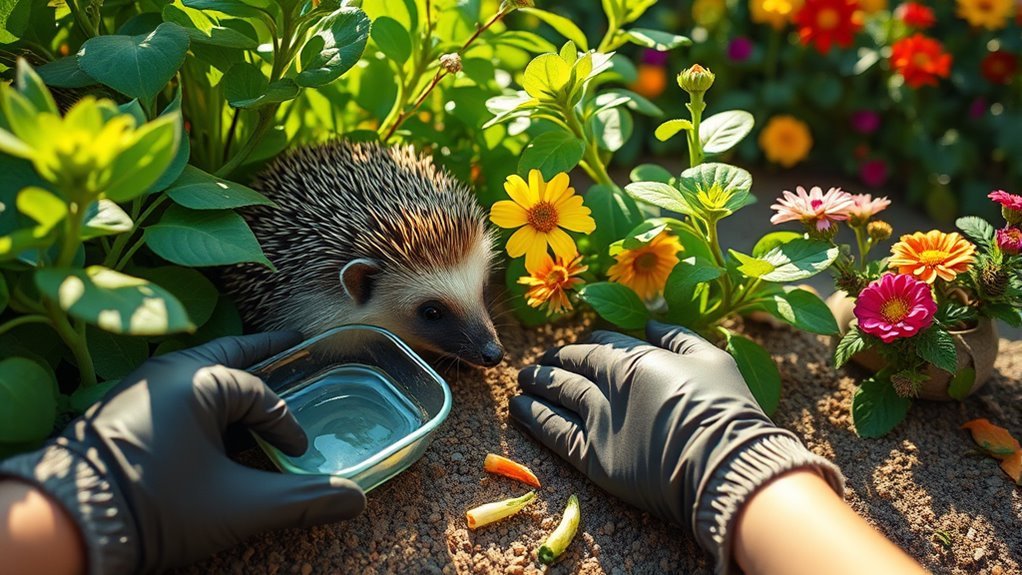
3 Steps to Do If You Find a Hedgehog in Your Garden
If you find a hedgehog in your garden, it’s important to know how to safely care for and support these small visitors. First, check if the hedgehog needs help by looking for wounds, lethargy, or signs of parasites.
Next, make your garden safe by creating small gaps in fences, avoiding pesticides, and ensuring escape routes from ponds. These steps help keep hedgehogs protected and comfortable in your outdoor space.
Finally, provide food like wet cat or dog food and shelter with wooden boxes or log piles in quiet spots. Keep these steps in mind to better support these small visitors and discover more ways to care for them.
Check If the Hedgehog Needs Medical Help

How can you tell if the hedgehog needs medical help? Look for obvious signs like wounds, bleeding, or difficulty moving. If the hedgehog seems lethargic, unusually thin, or has labored breathing, it probably needs attention.
Check its eyes and nose for discharge, as that can signal illness. If you find it out during the day, that’s unusual since hedgehogs are nocturnal and might be unwell. Avoid handling it too much, but if it’s cold or shivering, gently warm it.
If you spot ticks or parasites, the hedgehog may need treatment. In any of these cases, contact a local wildlife rescue or vet experienced with hedgehogs. Acting quickly can make a big difference in its recovery.
Make Your Garden Safe for Hedgehogs
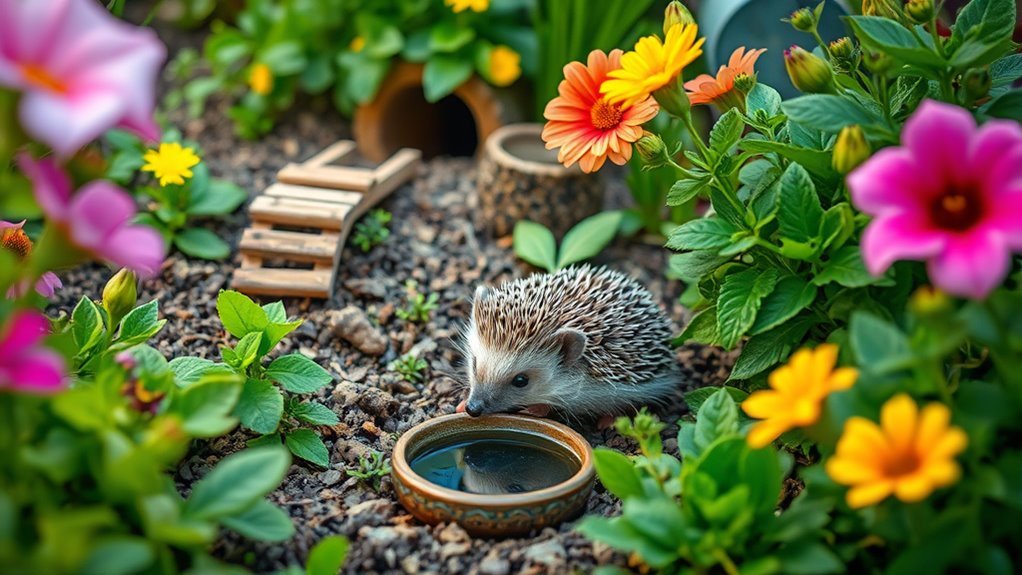
Since hedgehogs often visit gardens searching for food and shelter, you can take simple steps to make your outdoor space safer and more welcoming for them.
First, create small gaps or holes (about 13cm by 13cm) in fences or walls to allow hedgehogs to move freely between gardens.
Avoid using pesticides and slug pellets, as these can harm hedgehogs or reduce their food sources.
Keep netting and garden waste tidy to prevent them from getting tangled or trapped.
Also, make sure any ponds have gentle sloping sides or escape routes so hedgehogs can get out if they fall in.
Provide Safe Food and Shelter for Hedgehogs
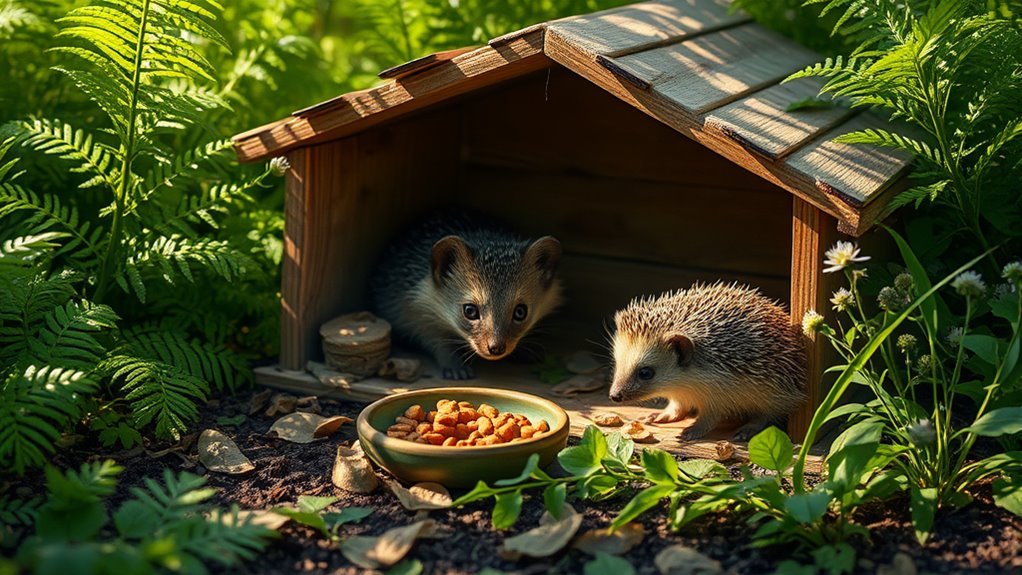
A reliable source of food and a safe shelter can make a big difference for hedgehogs visiting your garden. You can offer them wet cat or dog food and fresh water, avoiding milk or bread, which can harm them.
Creating a simple shelter from wooden boxes or log piles offers protection from predators and harsh weather. Place it in a quiet, shaded corner.
| Food Type | Shelter Option | Placement Tips |
|---|---|---|
| Wet cat/dog food | Wooden box | Shaded, quiet corner |
| Fresh water | Log pile | Near natural cover |
| Avoid milk/bread | Hedgehog house | Off the ground |
| Insect-friendly plants | Leaf piles | Away from busy areas |
| Cat/dog food supplements | Straw bedding | Dry, insulated |
Frequently Asked Questions
How Can I Identify Different Species of Hedgehogs?
You can identify different hedgehog species by noting their size, color, and spines.
Check for regional traits, like the European hedgehog’s brownish spines versus the African pygmy’s smaller size and lighter color.
Are Hedgehogs Legal to Keep as Pets in My Area?
Laws about keeping hedgehogs as pets vary like a patchwork quilt across regions. You’ll need to check local regulations carefully because in some places, it’s legal, while in others, it’s strictly prohibited to protect wildlife.
What Is the Best Time of Year to Find Hedgehogs in Gardens?
You’ll find hedgehogs in gardens mostly from late spring to early autumn. That’s when they’re active, searching for food and mates.
During winter, they hibernate, so spotting them then is rare. Keep an eye out!
How Do Hedgehogs Hibernate and When Do They Wake Up?
You know what they say, “Early bird catches the worm.” Hedgehogs hibernate by curling up in a nest, lowering their body temperature.
They usually wake up around March or April when temperatures rise and food returns.
Can Hedgehogs Carry Diseases That Affect Humans or Pets?
Yes, hedgehogs can carry diseases like ringworm and ticks that might affect you or your pets. You shouldn’t handle them without gloves, and always wash your hands afterward to stay safe and avoid spreading germs.
Conclusion
If you spot a hedgehog in your garden, don’t wait—act like you’re saving a tiny, spiky superhero! Check if it’s hurt like a detective on a mission. Then, turn your garden into a hedgehog paradise, a fortress of safety.
Finally, offer food and shelter so cozy it feels like a five-star hotel for these little creatures. With your help, your garden will become the ultimate hedgehog haven, buzzing with life every night!
By following these simple steps, you create a safe environment that supports hedgehog health and happiness. Your garden will truly become a welcoming hedgehog haven where these charming animals can thrive.