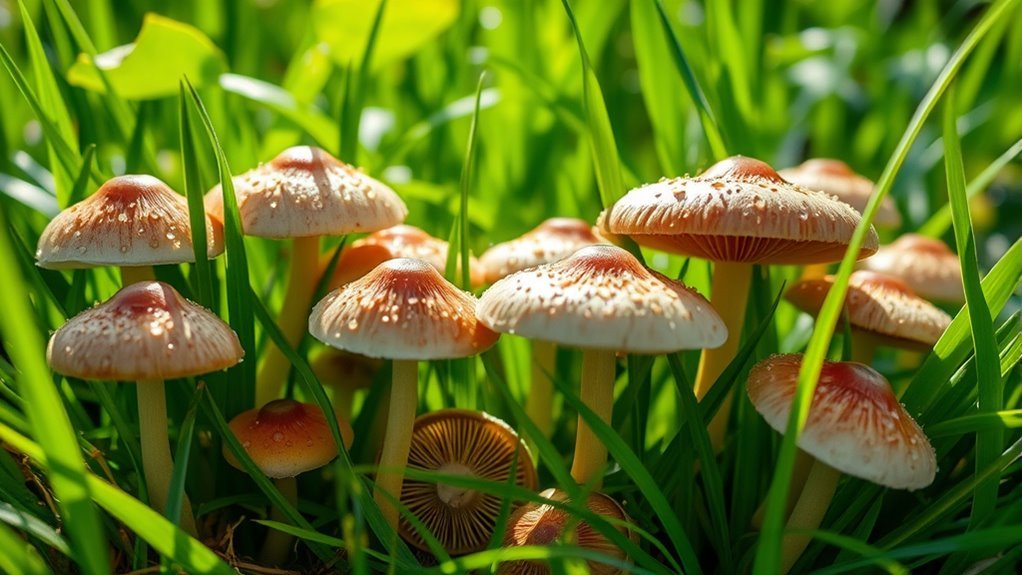
Why Do Mushrooms Grow Naturally in My Garden?
You see mushrooms naturally growing in your garden because fungi thrive on decaying organic matter like leaves, wood, and compost in your soil. Moisture, shade, and poor drainage create the damp, nutrient-rich environment fungi love.
These conditions help mushrooms break down debris, enriching your soil. While usually harmless, their presence signals active soil life and moisture levels.
If you want to understand how they impact your garden and how to manage them, there’s more to explore.
Why Do Mushrooms Grow Naturally in Garden Soil?
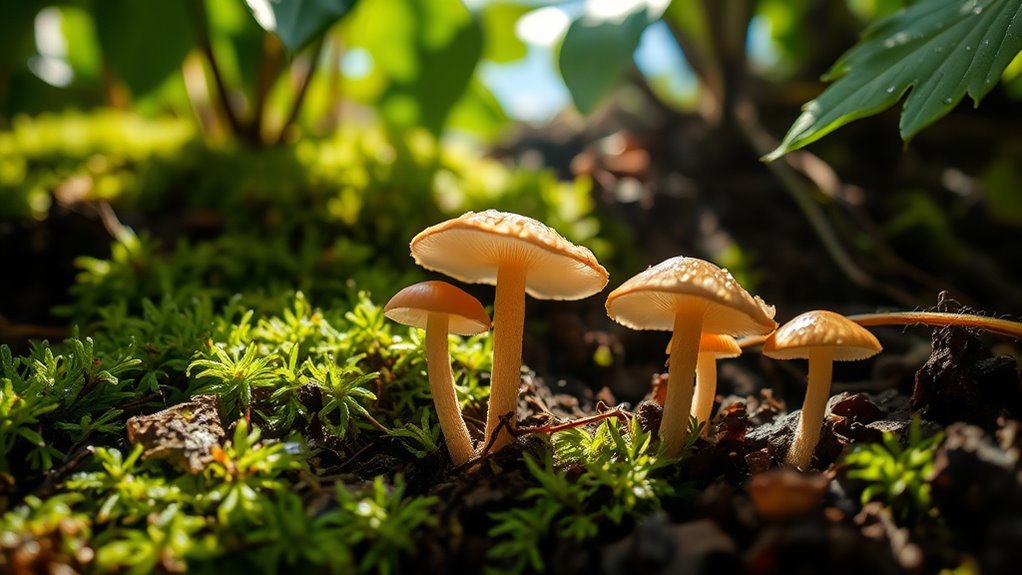
Although you mightn’t notice them at first, mushrooms often grow naturally in garden soil because they thrive on decomposing organic matter. When leaves, wood, and other plant debris break down, mushrooms use this material as a food source.
Mushrooms naturally grow in garden soil by feeding on decomposing leaves, wood, and plant debris.
You’ll find that fungi play an essential role in recycling nutrients back into the soil, which benefits your plants.
Mushrooms aren’t parasites; they don’t harm living plants but instead help maintain soil health by breaking down dead matter.
If your garden soil contains plenty of organic debris, it creates the perfect environment for their growth.
How Do Moisture and Shade Encourage Mushroom Growth?
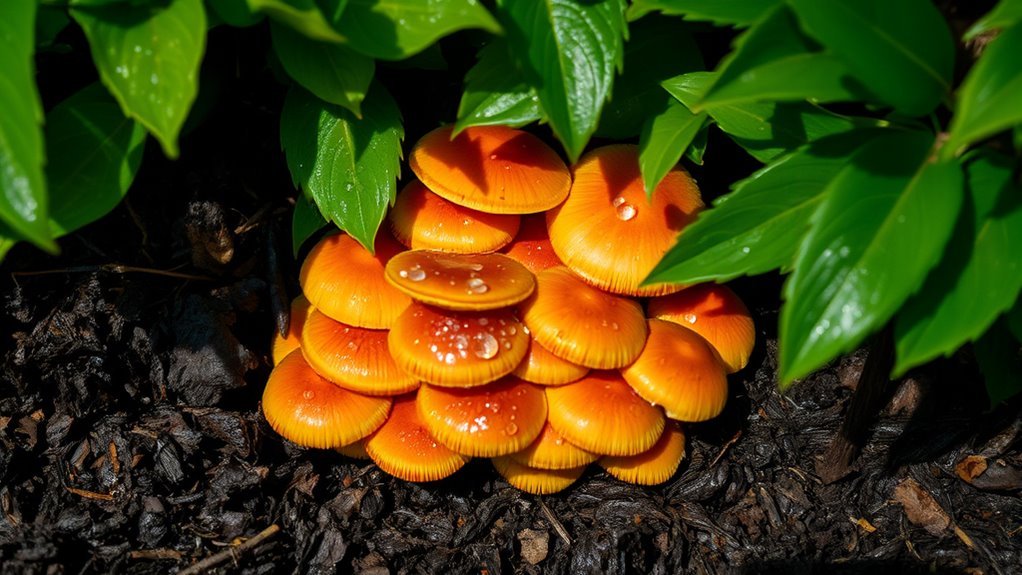
Because mushrooms depend on moisture to thrive, damp and shaded areas in your garden create ideal conditions for their growth. When your garden soil stays consistently moist, it provides the hydration mushrooms need to develop and spread.
Shade plays a vital role by reducing evaporation, helping the soil retain that moisture longer. Plus, shady spots often stay cooler, which many mushroom species prefer.
If your garden has dense tree cover, shrubs, or structures that block sunlight, these create a microenvironment perfect for mushrooms to flourish. By maintaining moist, shaded areas, you unintentionally support the fungal life cycle.
What Garden Materials Attract Mushrooms the Most?
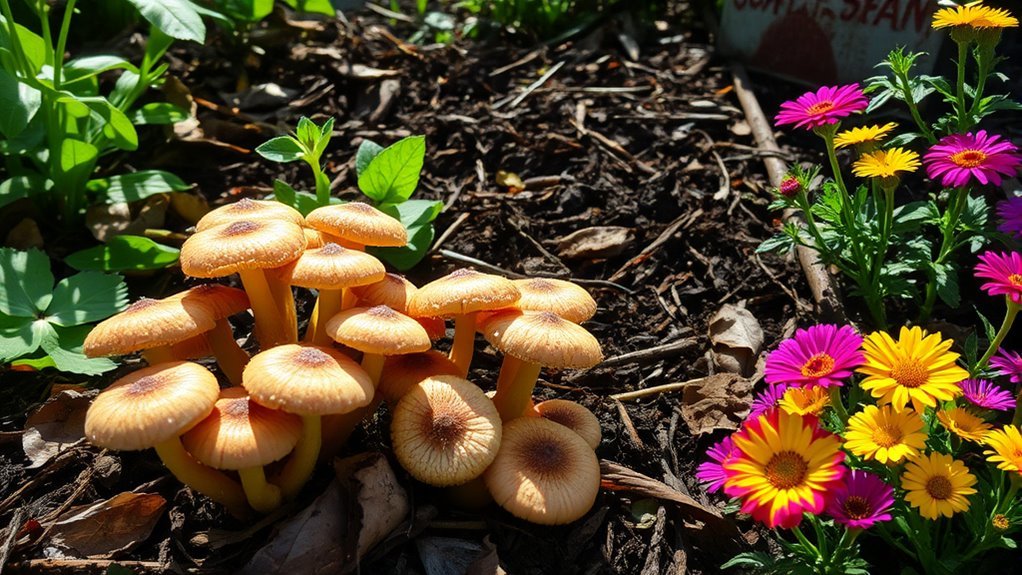
You’ll notice mushrooms popping up where decaying organic matter is abundant.
Moisture-rich soil and areas with wood chips or mulch also create perfect conditions for their growth.
Understanding these materials can help you manage or encourage mushrooms in your garden.
Decaying Organic Matter
When you notice mushrooms popping up in your garden, they’re usually thriving on decaying organic matter. Leaves, fallen branches, wood chips, and compost heaps create perfect feeding grounds for fungi. Mushrooms break down these materials, recycling nutrients back into the soil.
If you’ve recently added mulch or left garden debris to decompose, it’s no surprise to see mushrooms appear. Even buried roots and old plant material beneath the surface support fungal growth.
By providing this organic matter, you’re unintentionally inviting mushrooms to colonize your garden.
While they might look unusual, these fungi play a crucial role in maintaining soil health and fertility. So, when you spot mushrooms, remember they’re nature’s recyclers, working hard on the decayed remnants in your garden.
Moisture-Rich Soil Conditions
Organic matter doesn’t just feed mushrooms—it also helps retain moisture, creating ideal conditions for their growth. When your garden soil holds moisture well, mushrooms find it easier to thrive. Certain materials attract mushrooms more than others because they keep the soil damp longer.
Compost, peat moss, and leaf litter are prime examples. These materials enhance water retention and provide the damp environment mushrooms love.
Here’s a quick look at common garden materials and their moisture retention, which directly influences mushroom attraction:
| Garden Material | Moisture Retention | Mushroom Attraction Level |
|---|---|---|
| Compost | High | High |
| Peat Moss | High | High |
| Leaf Litter | Medium | Medium |
| Sandy Soil | Low | Low |
Using moisture-rich materials encourages mushrooms in your garden naturally.
Wood Chips And Mulch
Although wood chips and mulch might seem like simple garden coverings, they play an essential role in attracting mushrooms by providing both nutrients and moisture. When you spread wood chips or organic mulch in your garden, they create a damp, nutrient-rich environment perfect for fungal growth.
Mushrooms thrive on decomposing wood and plant matter, so these materials act as a natural food source.
Plus, mulch helps retain soil moisture, which mushrooms need to flourish.
If you want to reduce mushrooms, avoid piling thick layers of wood chips or mulch near plants.
But if you’re curious about mushrooms or want to encourage their natural appearance, using wood-based mulch is a simple way to invite fungi into your garden ecosystem.
What Role Do Mushrooms Play in Your Garden Ecosystem?
Since mushrooms often pop up unexpectedly in your garden, you might wonder what purpose they serve. Mushrooms act as nature’s recyclers, breaking down dead organic matter like leaves, wood chips, and plant debris.
By decomposing this material, they return valuable nutrients to the soil, which your plants can then absorb.
You’ll also find that mushrooms form symbiotic relationships with certain plants through mycorrhizal networks. These underground connections help plants access water and nutrients more efficiently, boosting their growth.
While mushrooms themselves don’t harm your garden, their presence indicates active biological processes supporting a balanced ecosystem.
What Does Mushroom Growth Reveal About Soil Health?
When you see mushrooms popping up in your garden, it often signals healthy soil rich in organic matter. These fungi break down dead plant material, helping release nutrients that boost soil fertility.
Paying attention to mushroom growth can give you clues about how well your soil supports plant life.
Indicators of Soil Fertility
If you spot mushrooms popping up in your garden, it often signals healthy soil teeming with organic matter and beneficial microbes. Mushrooms act as natural indicators, showing that your soil supports a balanced ecosystem where nutrients cycle efficiently.
Their presence points to good moisture levels and adequate aeration, both *vital* for plant growth. Here’s what mushroom growth reveals about your soil fertility:
| Indicator | What It Means | Benefit for Plants |
|---|---|---|
| Presence of fungi | Active microbial life | Nutrient cycling |
| Moisture retention | Well-balanced water content | Healthy root environment |
| Organic matter | Rich in decomposed material | Enhanced nutrient supply |
| Soil aeration | Good oxygen availability | Root respiration support |
Noticing mushrooms? Your garden soil is likely in great shape!
Role of Organic Matter
Although mushrooms might seem like simple garden visitors, they reveal a lot about the organic matter in your soil. When you see mushrooms popping up, it means your soil is rich in decomposing organic material like leaves, wood, and plant debris.
These fungi break down this matter, recycling nutrients and improving soil structure, which helps your plants thrive.
Their presence shows that your soil has a healthy balance of moisture and nutrients, essential for sustaining life underground. If mushrooms are thriving, it’s a sign your soil is alive and working efficiently.
When Should You Be Concerned About Garden Mushrooms?
You don’t always need to worry about mushrooms popping up in your garden, as many are harmless and even beneficial. However, you should be concerned if you notice a sudden, large outbreak that wasn’t there before, especially near your home’s foundation or on edible plants.
Some mushrooms indicate excessive moisture or decaying roots, which could signal underlying garden problems.
Also, if you have pets or children, you need to identify mushrooms carefully since some species are toxic when ingested. Mushrooms with brightly colored caps or unusual shapes deserve extra caution.
Ultimately, if the mushrooms persist despite dry weather or garden maintenance, it’s wise to investigate further, as this could point to deeper soil or drainage issues that might harm your plants or structures.
How Can You Safely Remove Unwanted Garden Mushrooms?
When unwanted mushrooms appear in your garden, taking prompt and safe action can prevent them from spreading. First, wear gloves to avoid direct contact, as some mushrooms can be toxic. Gently pull the mushrooms out at the base, making sure to remove the entire stem and cap to stop regrowth.
Dispose of them in a sealed bag to prevent spores from spreading. Avoid using chemical fungicides, as they can harm beneficial soil organisms.
Next, reduce moisture by improving drainage and watering less frequently. Rake up organic debris like fallen leaves or mulch, which provide food for mushrooms.
Finally, aerate your soil to discourage fungal growth. These steps help you safely manage mushrooms without damaging your garden ecosystem.
How Can Garden Mushrooms Benefit Your Plants and Soil?
Because mushrooms form symbiotic relationships with plants, they play a vital role in improving soil health and boosting plant growth. When mushroom mycelium spreads through the soil, it breaks down organic matter, releasing essential nutrients that your plants need. This natural recycling enriches the soil, making it more fertile.
Mushrooms also enhance water retention, helping your garden stay hydrated during dry spells. Additionally, they create a network that improves soil structure, allowing roots to access oxygen and nutrients more efficiently.
By encouraging beneficial fungi, you support a balanced ecosystem that can suppress harmful pathogens, reducing plant diseases.
What Common Mushroom Types Appear in Home Gardens?
Although mushrooms can sometimes catch you by surprise, several common types frequently appear in home gardens. Knowing what you’re looking at helps you appreciate their role and avoid any harmful ones.
Here are some typical garden mushrooms you might find:
- Fairy Rings (Marasmius oreades): Circular clusters that often show up in lawns.
- Shaggy Ink Cap (Coprinus comatus): Recognizable by their tall, shaggy white caps.
- Puffballs (Lycoperdon species): Round, white mushrooms that release spores when touched.
- Honey Fungus (Armillaria mellea): A parasitic type that can harm trees but also signals decaying matter.
Frequently Asked Questions
Are Garden Mushrooms Edible or Toxic to Pets and Children?
You shouldn’t let pets or children eat garden mushrooms because many can be toxic. Since it’s hard to tell which are safe, keep them away and remove mushrooms promptly to prevent accidental poisoning.
Can Mushroom Spores Spread to Neighboring Gardens?
Yes, mushroom spores can easily spread to neighboring gardens through wind, water, animals, or gardening tools.
If you want to control their spread, you’ll need to manage moisture and organic material carefully in your garden and nearby areas.
Do Certain Weather Conditions Trigger Mushroom Growth Spikes?
Yes, certain weather conditions like warm temperatures combined with high humidity or recent rain can trigger mushroom growth spikes.
You’ll notice more mushrooms popping up quickly after these moist, mild weather spells.
How Long Do Mushrooms Typically Last After Appearing?
You’ll find mushrooms usually stick around for about a few days to a week before they start to wither.
They’re like a flash in the pan—quick to show up and just as quick to disappear.
Can Mushroom Growth Indicate Nearby Tree or Plant Diseases?
Yes, mushrooms can indicate nearby tree or plant diseases because they often grow on decaying roots or wood.
If you spot mushrooms, you should check for root rot or other fungal infections affecting your plants’ health.
Conclusion
You might be surprised to learn that over 10,000 mushroom species thrive in garden environments worldwide. Their presence signals healthy, nutrient-rich soil working hard beneath the surface. While some mushrooms might seem unwanted, they play a vital role in breaking down organic matter and supporting plant growth.
So, next time you spot mushrooms popping up after rain, remember—they’re nature’s little helpers, quietly boosting your garden’s health and significance. Mushrooms growing naturally in your garden are a sign of a balanced ecosystem and contribute to soil fertility, making them an essential part of your garden’s natural cycle.