How to Build Raised Garden Beds in 5 Simple Steps
To build raised garden beds in five simple steps, start by choosing a sunny spot with good drainage and easy access. Raised garden beds help improve soil quality and make gardening easier. Keep the bed width around 4 feet to ensure you can reach the center comfortably.
Next, select rot-resistant wood like cedar and gather essential tools such as a saw and drill. Cut and assemble the frame using galvanized screws, and add corner braces for extra strength and durability.
Line the inside with landscape fabric to prevent weeds, then fill the bed with a rich soil mix and water it thoroughly. Maintain healthy plants through regular care and watering. There’s plenty more to explore for the best gardening results.
Select the Ideal Location and Size for Your Raised Garden Bed
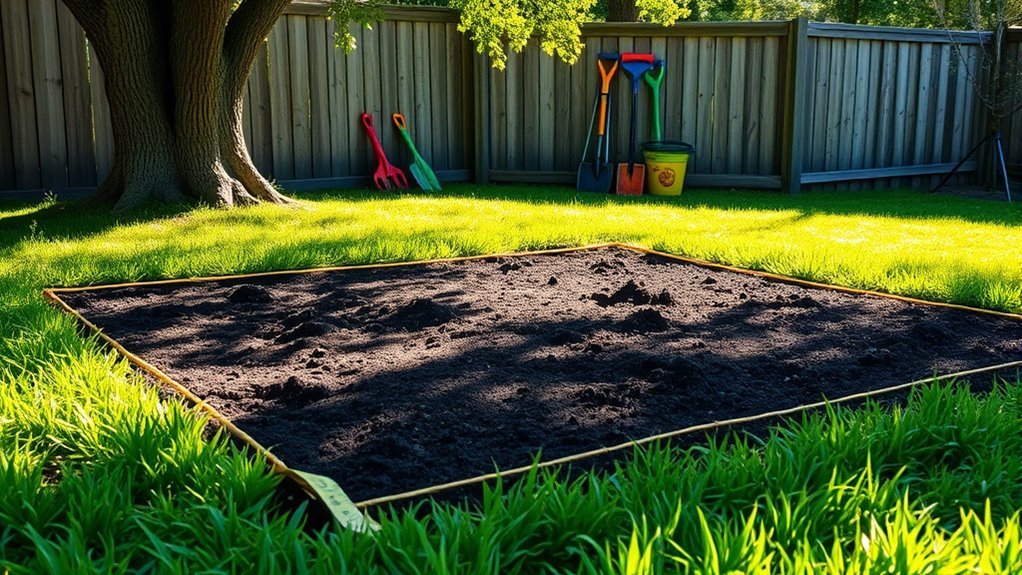
Before you start building, choose a spot that gets at least six hours of sunlight daily and has good drainage. Your plants will thrive best in a location where water doesn’t pool after rain, so avoid low-lying areas.
Also, pick a place that’s easy to access for watering, weeding, and harvesting to keep your gardening routine enjoyable.
When deciding on size, consider the space you have and how much you want to grow.
A bed about 4 feet wide lets you reach the center from both sides without stepping inside, which keeps the soil healthy. Length can vary but keep it manageable.
Choose Materials and Tools for Building Raised Garden Beds
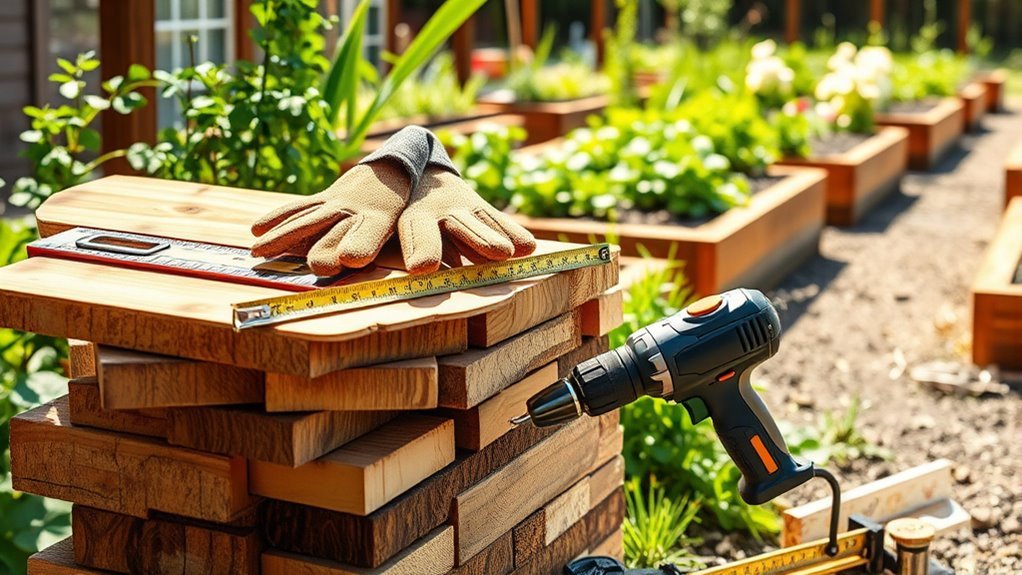
When selecting materials and tools for your raised garden bed, focus on durability and ease of use to guarantee a sturdy structure that lasts through seasons. Opt for rot-resistant wood like cedar or redwood, which naturally withstand moisture and pests. Avoid treated lumber that may leach harmful chemicals into your soil.
Alternatively, recycled composite materials offer longevity and low maintenance.
As for tools, gather a saw, drill, measuring tape, and screwdriver to prepare for assembly. Don’t forget gloves and safety goggles to protect yourself while working.
Choose fasteners such as galvanized screws or nails that resist rust. Selecting the right materials and tools upfront simplifies your building process and assures your garden bed remains strong and safe for years to come.
Build and Assemble Your Raised Garden Bed Frame
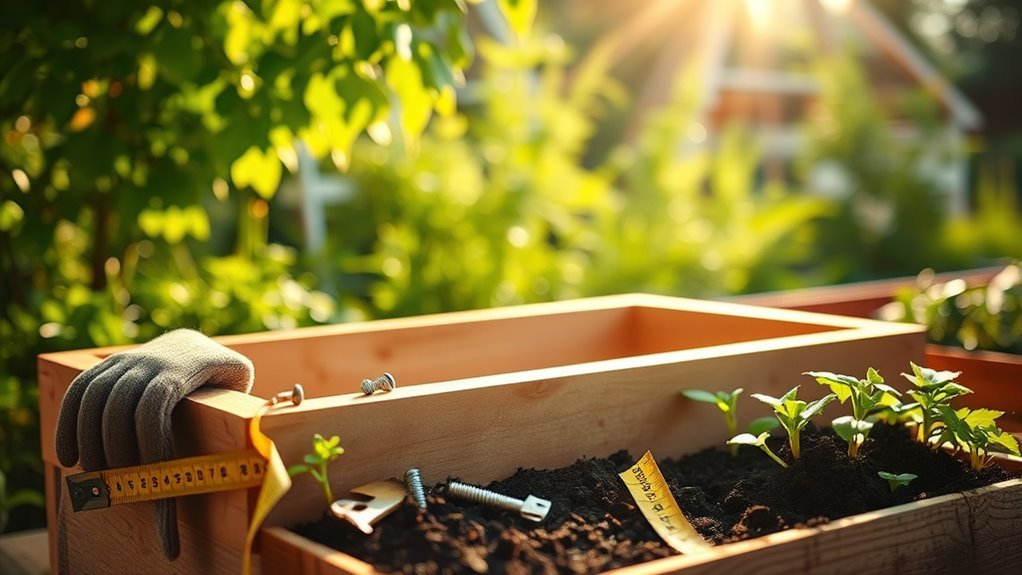
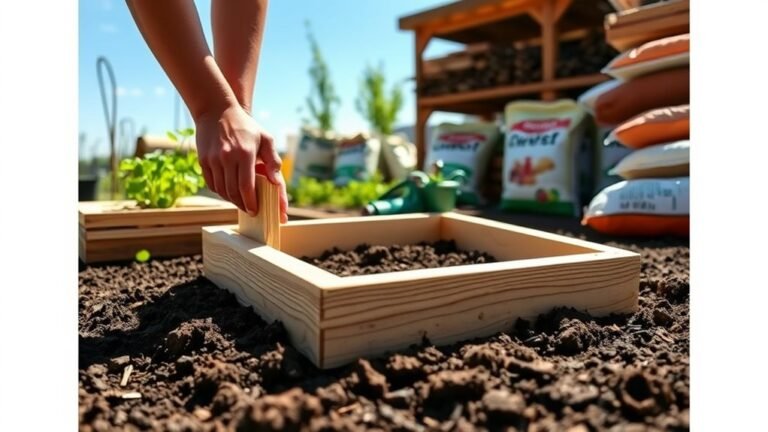
Although building your raised garden bed frame may seem intimidating at first, you’ll find the process straightforward if you follow each step carefully. Start by measuring and cutting your chosen wood to the desired lengths.
Arrange the boards on a flat surface to form the rectangular or square shape of your bed.
Use a drill to pre-drill holes at the corners, preventing the wood from splitting.
Then, secure the boards together with screws or galvanized nails, ensuring the frame is square by checking the diagonals.
If you want extra stability, add corner brackets or braces inside each corner.
Finally, sand any rough edges to avoid splinters.
With your frame assembled, you’re ready to move on to preparing and filling your raised bed.
Prepare and Fill Your Raised Bed With Quality Soil
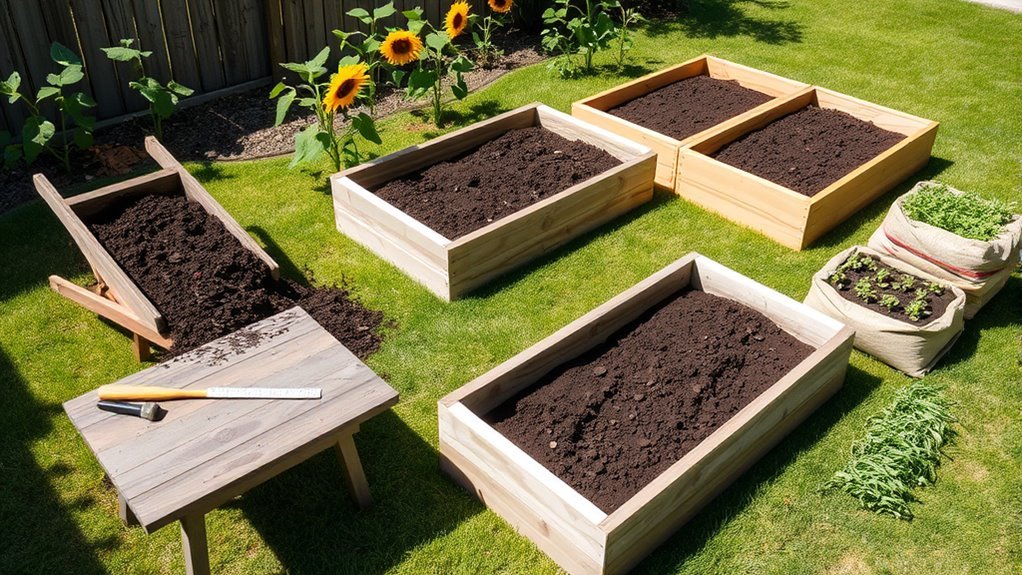
Since your frame is securely assembled, you can now focus on preparing the bed for planting by filling it with high-quality soil. Start by laying down a weed barrier or landscape fabric at the bottom to prevent unwanted growth.
Next, choose a rich soil mix that includes compost, peat moss, and vermiculite or perlite for good drainage and aeration. Avoid using garden soil alone, as it can compact and limit root growth.
Fill your raised bed with this mix, leaving about an inch of space from the top to allow room for watering.
Gently level the soil and water it thoroughly to help it settle.
Now, your bed is ready for seeds or seedlings, providing an ideal environment for healthy plant growth.
Maintain Your Raised Garden Bed for Healthy Growth
How can you guarantee your raised garden bed continues to thrive throughout the growing season? Regular maintenance is key.
Start by watering consistently, making sure the soil stays moist but not soggy.
Check your plants daily for signs of pests or disease and act quickly to prevent spread.
Remove weeds promptly to reduce competition for nutrients and water.
Add a layer of mulch to retain moisture and regulate soil temperature.
Periodically top off your bed with compost or organic fertilizer to replenish nutrients.
Prune and harvest plants as needed to encourage healthy growth.
Finally, rotate crops each season to prevent soil depletion and reduce pest buildup.
Frequently Asked Questions
Can Raised Garden Beds Help Prevent Soil Erosion?
Yes, raised garden beds help prevent soil erosion by keeping soil contained and reducing runoff. You’ll find they stabilize the soil, especially on slopes, and protect your plants while maintaining better moisture levels for healthier growth.
What Plants Grow Best in Raised Garden Beds?
You’ll find leafy greens, tomatoes, peppers, herbs, and root vegetables grow best in raised beds. They thrive in well-drained soil with good sunlight, and you can easily manage nutrients and moisture for healthier plants.
Raised beds provide excellent drainage and warmth, creating an ideal environment for these plants. The controlled soil conditions allow for better root development and growth.
Additionally, raised beds help reduce soil compaction and make it easier to control pests. This leads to stronger, more productive plants throughout the growing season.
How Do Raised Beds Affect Watering Needs?
When rain misses your raised beds, you’ll need to water more often since they drain faster.
You’ll find yourself checking soil moisture daily, ensuring your plants stay hydrated without drowning in soggy soil.
Can I Build a Raised Bed on Concrete?
Yes, you can build a raised bed on concrete. Just make sure to add a drainage layer, like gravel, and use untreated wood or other materials.
This prevents waterlogging and keeps your plants healthy while supporting proper drainage.
Are Raised Beds Suitable for Urban Gardening?
Raised beds are your urban garden’s best friend, letting you grow fresh veggies even in tight spots. They save space, improve soil quality, and keep pests at bay, making city gardening a rewarding breeze for you.
Conclusion
Now that you’ve learned how to build raised garden beds in five simple steps, you might wonder if it really makes gardening easier and more productive. The truth is, raised beds improve soil drainage, reduce weeds, and keep plants healthier—proving their worth.
By selecting the right spot, materials, and soil, and maintaining your bed, you’re setting yourself up for success. So go ahead, get your hands dirty, and watch your garden thrive! Raised garden beds are the key to better growth, easier maintenance, and a more enjoyable gardening experience.