7 Effective Tips to Deter Pigeons From Your Garden
To deter pigeons from your garden, start by stopping feeding them and cleaning up any spilled seeds. This helps reduce what’s attracting them in the first place.
Using feeders with narrow openings is a smart move, too, and try placing them where pigeons can’t easily get to.
Another great tip is to install nesting boxes designed for smaller birds. You can also fit spikes or nets on ledges to block pigeons without harming other wildlife.
Adding reflective objects or noise makers creates an uncomfortable environment for pigeons, encouraging them to stay away.
Want more proven tips to protect your garden and encourage songbirds? There’s plenty more to explore that will help keep your garden peaceful and full of beautiful birds.
Key Takeaways
- Stop feeding pigeons and remove or relocate bird feeders to reduce food attraction.
- Use narrow-opening or tube feeders with baffles to restrict pigeon access.
- Install spikes or nets on ledges and railings to physically block pigeons.
- Hang reflective objects or predator decoys to visually scare pigeons away.
- Place nesting boxes with small entrances to encourage smaller birds instead of pigeons.
Stop Feeding Pigeons and Secure Food Sources
If you want to keep pigeons out of your garden, stop feeding them and secure all food sources. Feeding encourages larger flocks, making pigeon control harder.
To effectively stop pigeons, remove bird feeders from your garden or relocate them at least 50 feet away to minimize access. Make sure to clean up spilled seeds or food regularly, as even small crumbs can attract pigeons.
Don’t leave pet food outside since it also draws these birds in. Secure your trash bins with tight-fitting lids to avoid giving pigeons easy access to edible litter.
Choose Bird Feeders That Keep Pigeons Away
How can you enjoy feeding smaller birds without attracting pigeons? Choose bird feeders designed to keep pigeons away by restricting access to larger birds.
Opt for feeders with narrow openings or small perches that only smaller birds can use. Tube feeders with baffles effectively deter pigeons while welcoming finches and other smaller birds.
Elevate feeders or hang them in dense foliage, where pigeons rarely venture.
| Feeder Type | How It Deters Pigeons |
|---|---|
| Narrow-opening feeders | Limits access to smaller birds only |
| Tube feeders with baffles | Blocks pigeons but allows finches |
| Elevated feeders | Keeps pigeons from easily reaching seeds |
These bird feeders help you deter pigeons and create a safer feeding spot for smaller birds.
Provide Nesting Boxes for Smaller Birds
When you provide nesting boxes with small entrance holes, you encourage smaller birds to settle in while keeping pigeons out. By choosing birdhouses designed for smaller birds like chickadees and wrens, you effectively deter pigeons, since they prefer larger, open nests.
Position these nesting boxes in dense foliage or elevated spots to make them less accessible to pigeons. This helps you address your pigeon problem more naturally.
Use materials suited for smaller species and include narrow perches to limit access for bigger birds. Regularly clean and maintain your nesting boxes to prevent pigeons from taking over with their nesting materials.
Install Spikes and Nets to Keep Pigeons Away
Installing spikes and nets on ledges, roofs, and railings can effectively keep pigeons from landing and nesting in your garden. When you install spikes, make sure they’re spaced properly to deter pigeons while letting smaller birds visit safely.
Bird Netting serves as a physical barrier that blocks access to balconies and garden structures where pigeons tend to roost. These humane options prevent harm while addressing your pigeon problem.
Regularly check your spikes and nets to keep them free of debris and working well. By combining these methods, you’ll maximize your success in keeping pigeons away.
With proper installation and maintenance, spikes and Bird Netting provide a long-term, gentle solution to protect your garden from unwanted pigeons without causing them distress.
Use Visual and Noise Deterrents to Scare Pigeons
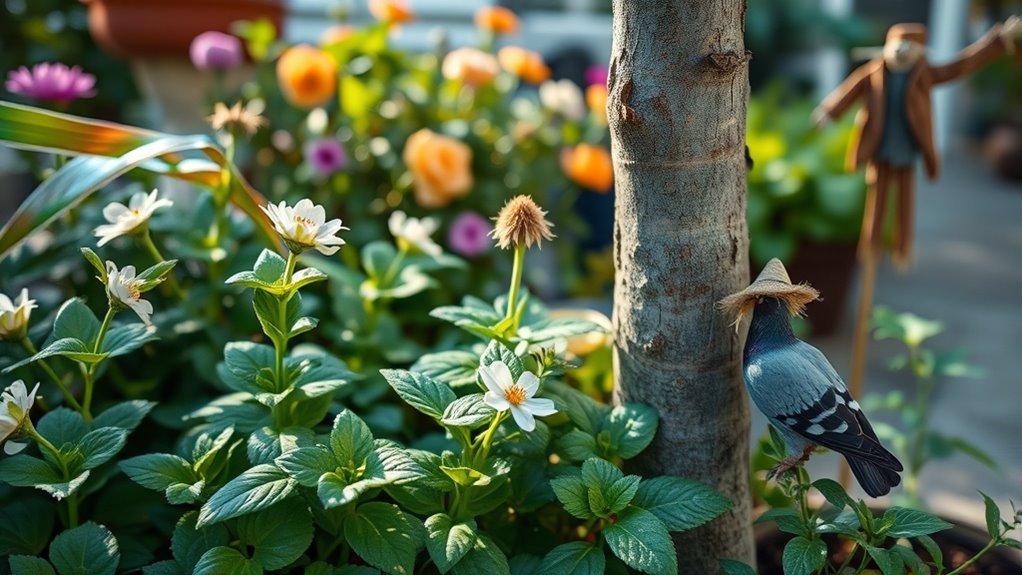
Though pigeons can become persistent visitors, you can effectively scare them away by using visual and noise deterrents. Hang reflective objects like old CDs or aluminum foil to create shifting light that unsettles pigeons.
You might also try a hawk bird scarer kite or place owl decoys around your garden to mimic natural predators. These provide strong visual deterrents that pigeons don’t like.
For noise deterrents, consider installing wind chimes or other sound-making items. These create an environment pigeons find uncomfortable.
Motion-activated devices that emit sudden sounds or movements can really startle pigeons and keep them from coming back.
Create Natural Barriers to Keep Pigeons Out
If you want to keep pigeons out of your garden, creating natural barriers is a smart approach. Start by planting thorny bushes or prickly plants that pigeons prefer to avoid. This makes your garden less inviting.
You can also incorporate climbing plants on trellises to block potential nesting or roosting spots. Plus, they add some nice visual appeal.
Using tall grasses and dense shrubs strategically helps to obstruct pigeons’ sightlines and access points. By varying plant heights and types, you create a more complex landscape.
This complexity discourages pigeons from settling in open areas. These natural barriers work together to make your garden a challenging environment for pigeons.
And the best part? You reduce their presence effectively without using harsh chemicals or traps.
When to Call Professionals for Pigeon Issues
Natural barriers can really help cut down on pigeons in your garden. But sometimes, these tricks just don’t do the job, especially if the problem sticks around.
Natural barriers often reduce pigeons, but persistent problems may need more than simple tricks.
If you’re facing a serious pigeon infestation even after trying different deterrents, it might be time to call in the pros. Pest control experts can set up effective solutions like bird spikes or netting, even in tricky spots. And the best part? They do it without hurting the birds.
They also know how to safely deal with the health risks from pigeon droppings. Plus, they make sure everything is done by the book, following laws like the Wildlife and Countryside Act.
When pigeon problems start affecting public health or spread across your community, experts can offer a coordinated and legal way to handle it. So, don’t hesitate to get professional help if your own efforts aren’t cutting it or things are getting worse.
Frequently Asked Questions
How to Deter Pigeons From Garden but Not Other Birds?
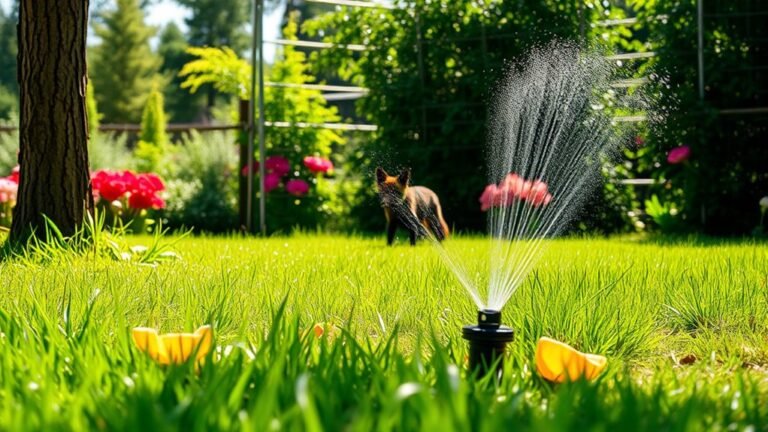
You can deter pigeons by using wheat-free bird food, choosing smaller feeders with limited perches, adding dense foliage for shelter, employing motion-activated sprinklers, and regularly cleaning up spilled seeds to keep pigeons away while welcoming smaller birds.
How to Repel Pigeons Permanently?
You can repel pigeons permanently by combining bird spikes, netting, and reflective tape with regular garden maintenance. Remove food sources and use natural repellents like vinegar. Consistent effort keeps pigeons away without harming other birds.
What Smell Does a Pigeon Hate?
Imagine walking into a room full of fresh peppermint; pigeons hate that smell. You’ll find they also avoid vinegar, WD40, chili powder, eucalyptus, and predator urine scents—they all scream, “Danger! Stay away!” to them.
What Is the Best Pigeon Deterrent?
The best pigeon deterrent combines bird spikes and reflective objects to block landing spots and scare them visually. You can also add motion-activated sprinklers for surprise, making your garden uninviting without harming the birds.
Conclusion
By taking these simple steps, you can transform your garden from a pigeon playground into a peaceful sanctuary. Imagine your garden as a quiet haven where smaller birds sing freely, and unwanted pigeons find no welcome.
Don’t let these persistent visitors rule your space—act now with spikes, feeders, and natural barriers. These effective tips will help keep your garden pigeon-free and enjoyable.
If things get out of hand, calling in professionals will help restore the calm. Your garden deserves to thrive, free and beautiful, without the nuisance of pigeons disrupting the peace. Taking action with these proven methods ensures your garden remains a lovely retreat for you and all the birds you want to welcome.