Why Are Mushrooms Growing in My Garden?
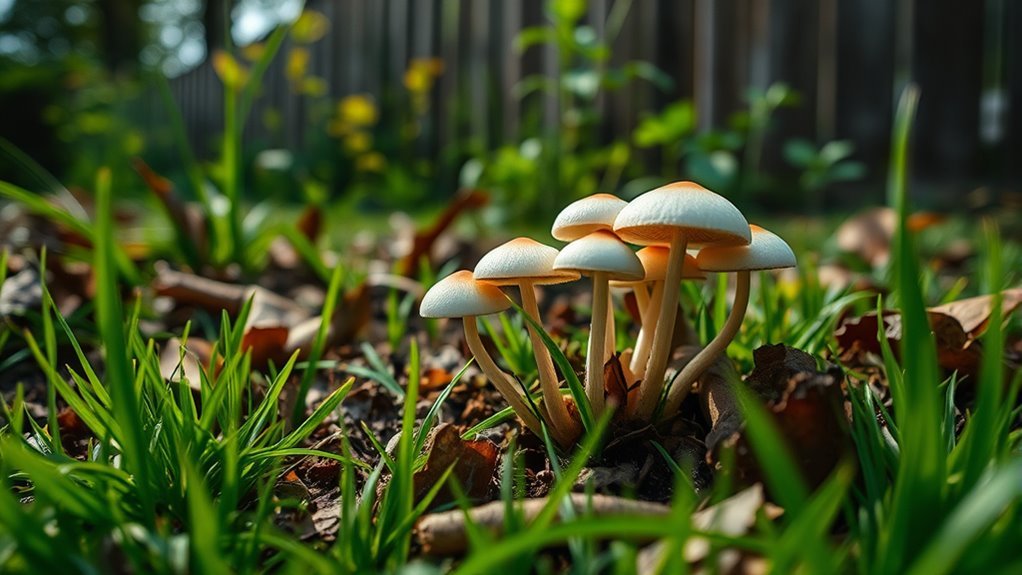
Mushrooms are growing in your garden because your soil provides the perfect conditions for them to thrive. They love moist, shaded spots with plenty of decaying organic matter.
This kind of environment encourages fungal growth, which is actually a good thing since fungi help break down material and recycle nutrients. So, seeing mushrooms can be a sign that your soil is healthy and active.
That said, mushrooms can also hint at some potential issues like excess moisture or soil compaction. If you want to manage or reduce their growth, you can improve drainage and aeration in your garden.
It’s all about finding the right balance. Keep exploring to learn how to keep your soil healthy while controlling those pesky mushrooms effectively.
Key Takeaways
– Mushrooms grow because of decaying organic matter that provides essential nutrients in your garden soil.
They love feeding on old leaves, wood chips, and other natural debris you might have around.
– High moisture levels and cool, shaded areas create the perfect spot for mushrooms to pop up.
If your garden stays damp and doesn’t get much sun, it’s basically a mushroom playground.
– Acidic or compacted soil can also promote mushroom growth.
This might be a sign that your soil has some issues that need attention.
– There are beneficial mycorrhizal fungi in the soil that help your plants out.
These fungi also cause mushrooms to appear, so seeing mushrooms isn’t always a bad thing.
– Overall, mushrooms are a sign of a healthy, active soil ecosystem.
They’re busy recycling nutrients and breaking down organic material, which is great for your garden.
Why Mushrooms Grow in Your Garden
Although mushrooms might seem like unwelcome guests, they grow in your garden because decaying organic matter, like dead roots and wood, provides them with the nutrients they need. The right environmental conditions, such as high moisture and cool, shaded areas, encourage mushroom growth.
Different types of mushrooms thrive in your soil, including beneficial mycorrhizal fungi, which form advantageous relationships with plant roots. These fungi improve plant health by enhancing nutrient and water absorption.
Mushrooms play an important role in breaking down organic matter, recycling nutrients, and improving soil quality. Their presence often signals a healthy, active soil ecosystem.
But, spotting mushrooms can also highlight soil issues like compaction or pH imbalances. Understanding this helps you appreciate how mushrooms contribute to your garden’s overall soil health and plant robustness.
How to Manage and Prevent Mushroom Growth
Mushrooms contribute to soil health, but you might want to keep their growth in check to maintain your garden’s appearance and prevent overcrowding. To manage mushroom growth, regularly remove excess mushrooms by mowing or raking. This controls mushrooms growing without harming beneficial mycelium.
Improving soil drainage and aeration helps prevent mushroom growth, so scarify lawns and add sand to reduce overly wet conditions. Monitor moisture levels and reduce decaying material, as these promote mushroom growth.
Adjusting soil pH with lime can create less favorable conditions, since acidic soils encourage mushrooms. If mushrooms crowd your plants, remove excess mushrooms promptly and assess your soil management. By balancing organic material, moisture, and soil pH, you can improve soil and effectively manage mushroom growth in your garden.
Frequently Asked Questions
Should I Remove Mushrooms From My Garden?
You don’t have to remove mushrooms unless they crowd your plants or pose a risk. If they’re poisonous, wear gloves and dispose of them safely. Otherwise, let them be—they indicate healthy soil beneath your garden.
How Do I Get Mushrooms to Stop Growing in My Garden?
Don’t beat around the bush—improve drainage, aerate your soil, and cut back on watering. Remove decaying matter, rake debris regularly, and adjust soil pH with lime. These steps will help keep mushrooms at bay.
Do Mushrooms Mean Bad Soil?
No, mushrooms don’t mean you have bad soil. They often show your soil is rich in organic matter and moisture. Just watch for excessive growth, which might signal nutrient imbalances or too much moisture in your garden.
Is It Okay if Mushrooms Are Growing in My Garden?
Yes, it’s okay if mushrooms are growing in your garden; they often indicate healthy soil and help decompose organic matter. Just keep an eye on moisture and remove them if they start crowding your plants.
Conclusion
Mushrooms popping up in your garden aren’t just random guests—they’re nature’s cleanup crew, breaking down organic matter and enriching your soil. They play a key role in keeping your garden healthy by recycling nutrients.
While they might seem like unwelcome visitors, you don’t have to let them overstay their welcome. By managing moisture and clearing debris, you can keep their growth in check.
Think of mushrooms as tiny gardeners working behind the scenes. With a little care, you can keep your garden thriving without losing control. Managing mushrooms in your garden helps maintain a balanced ecosystem, ensuring your plants get the nutrients they need without unwanted overgrowth. So, next time you see mushrooms growing in your garden, remember—they’re a natural sign of healthy soil and can be managed easily with simple steps.