How to Get Rid of Midges in Your Garden Fast
To get rid of midges in your garden fast, you need to tackle the problem from all angles. Midges love breeding in stagnant water and organic debris, so the first step is to find and eliminate these spots. Removing standing water and keeping your garden clean is key to stopping their life cycle.
Next, improve drainage and make sure the soil, especially in pots, doesn’t stay too wet. Midges thrive in damp conditions, so drying things out helps a lot.
You can also set up apple cider vinegar traps mixed with dish soap near the problem areas. These traps work great to catch adult midges and reduce their numbers quickly.
Natural repellents like citronella or lavender oils are another way to keep midges away.
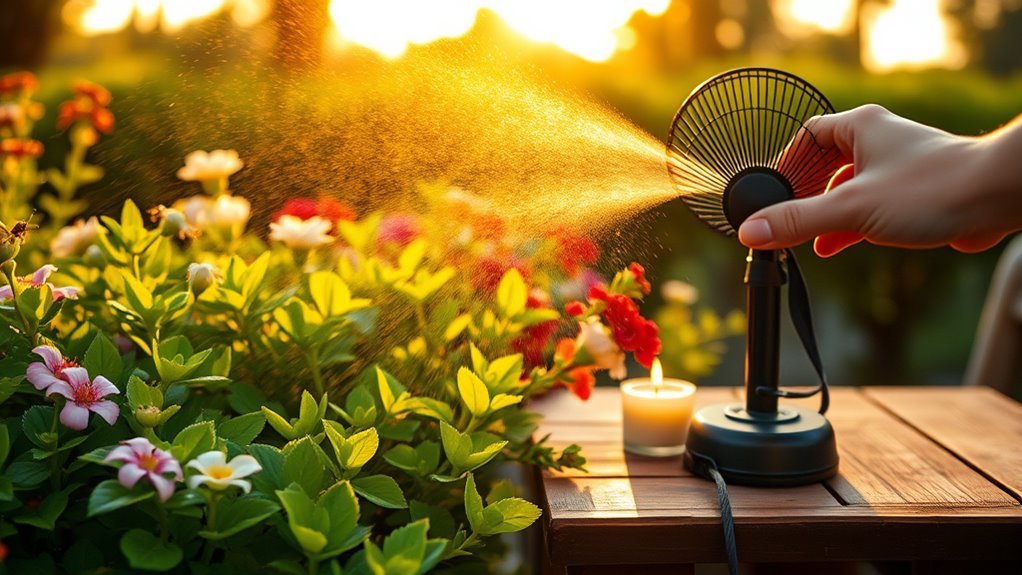
Plus, increasing air circulation with fans disrupts their activity and makes your garden less inviting.
Keep up with these steps, and you’ll soon discover even more ways to protect your garden from midges. It’s all about consistency and staying one step ahead!
Key Takeaways
- Identify and remove stagnant water to eliminate midge breeding grounds quickly. This is the first step to stop them from multiplying.
- Apply diatomaceous earth directly to breeding areas to kill larvae effectively. It’s a natural way to tackle the problem without harsh chemicals.
- Set up vinegar traps with apple cider vinegar and dish soap near breeding sites. These traps lure midges in and prevent them from spreading.
- Use essential oils like citronella or lavender as natural repellents to deter midges. Plus, they make your garden smell great!
- Improve garden drainage and remove organic debris to reduce midge habitats rapidly. Keeping your garden clean helps keep midges away for good.
Find and Get Rid of Midge Breeding Spots in Your Garden
Since midges thrive in moist environments, the first step to controlling them is to identify and eliminate their breeding spots. You need to inspect your garden thoroughly for standing water near ponds, marshes, or poorly maintained drainage systems. These water sources are ideal for midge breeding.
Eliminate stagnant water by improving drainage and removing organic debris like decaying leaves. These attract midges and provide safe spots for larvae. Don’t forget to check potted plants, making sure their soil isn’t too wet and that drainage holes work properly.
To tackle larvae directly, you can apply diatomaceous earth in breeding areas. It dehydrates and kills them without harming your plants. By carefully inspecting and managing these conditions, you can effectively reduce the midge population in your garden.
Set Up Vinegar Traps and Use Natural Repellents to Control Midges
Although eliminating breeding spots is essential, setting up vinegar traps and using natural repellents can give you immediate relief from midges in your garden.
Create a simple DIY solution by mixing apple cider vinegar with a few drops of dish soap in a shallow container—this attracts and drowns midges effectively. Place these traps near areas where you’ve removed stagnant water and breeding sites for best results.
To further control midges, use natural repellents like citronella, lavender, or eucalyptus essential oils. Diffusers or candles spread these scents and keep midges at bay.
Combining vinegar traps with good air circulation from fans disrupts midge movement, enhancing your control efforts. By integrating these methods, you’ll quickly reduce midge populations and enjoy a more comfortable garden.
Frequently Asked Questions
What Smells Do Midges Hate?
Midges hate strong scents like citronella, eucalyptus, lavender, peppermint, and citrus. You can use essential oils, candles, or sprays with these smells to keep them away quickly. Burning sage or rosemary also helps repel them.
Why Does My Garden Have so Many Midges?
Your garden’s like a magnet for midges because it holds too much moisture and decaying matter, creating a perfect breeding ground. Damp soil and standing water invite swarms, especially near underground streams or poorly drained spots.
What Month Do Midges Go Away?
Midges usually go away by September as temperatures drop, but in warmer areas, they might stick around longer. You’ll notice their numbers decline considerably after the first frost, naturally reducing their presence in your garden.
Does Vinegar Get Rid of Midges?
You know what they say, “kill two birds with one stone.” Yes, vinegar does get rid of midges by attracting them. Add dish soap to trap and drown them quickly, keeping your garden midges-free in no time.
Conclusion
So, you’ve found the midges’ secret hideouts and set up vinegar traps like a mad scientist—congratulations! Now you’re basically the garden’s superhero, minus the cape (though you can totally wear one).
Those pesky midges don’t stand a chance against your natural repellents and detective skills. Keep at it, and soon your garden will be midge-free, giving you the perfect excuse to enjoy your outdoor space without performing the “swat dance” every five seconds.
Getting rid of midges in your garden fast is all about persistence and using the right methods, like vinegar traps and natural repellents. With a little patience, you’ll create a peaceful, bug-free zone that’s perfect for relaxing or entertaining. So go ahead, reclaim your garden and say goodbye to those annoying midges for good! Victory is sweet!