10 Tips for Making a West Facing Garden Good
To make your west-facing garden thrive, focus on choosing heat-tolerant plants with waxy or drought-resistant leaves and avoid shade lovers. These plants are better suited to handle the strong afternoon sun typical of west-facing spaces. Incorporating shade structures like pergolas or sails can protect tender plants from intense heat.
Improve your soil with compost and mulch to retain moisture and keep roots cool. This helps your garden withstand dry spells and reduces water evaporation. Adding reflective surfaces can brighten shaded spots, enhancing light availability.
Plan your layout to balance sun exposure effectively. Adjust your care routine with the changing seasons to support plant health year-round. Creating microclimates within your garden promotes lasting vibrancy. More tips can help you master these challenges and enjoy a flourishing west-facing garden.
Challenges of West-Facing Gardens

Although west-facing gardens enjoy plenty of afternoon sun, they also face unique challenges you need to take into account. The intense sunlight in the late afternoon can cause soil to dry out quickly, forcing you to water more frequently.
This heat can also stress plants that aren’t sun-tolerant, leading to wilting or scorched leaves.
Shade tends to be limited in the morning, which means you won’t benefit from cooler, gentler light early in the day.
Additionally, evening shadows from fences or buildings can create uneven light patterns, making it tricky to arrange your garden layout.
You’ll need to manage these factors carefully to keep your garden thriving despite the harsh afternoon sun and shifting light conditions.
Choose Plants That Thrive in West-Facing Gardens

You’ll want to pick plants that can handle the strong afternoon sun typical of west-facing gardens.
Focus on varieties known for their heat tolerance and ability to thrive with plenty of sunlight.
This approach helps guarantee your garden stays vibrant even during the hottest parts of the day.
Sunlight Requirements
Because west-facing gardens receive strong afternoon sunlight, you should select plants that can handle intense, direct light and warmer temperatures. Look for species with thick, waxy leaves or those adapted to drier conditions since they’ll better withstand bright sun exposure. Avoid shade-loving plants that wilt easily in harsh light.
Instead, choose varieties that maintain vibrant foliage and steady growth under these conditions. Pay attention to the sun’s angle and duration—plants closer to structures may get some shade, so you can mix sun-loving and semi-tolerant species.
Also, consider how the sunlight shifts through seasons to ensure your garden stays balanced year-round.
Meeting these sunlight requirements helps your west-facing garden thrive, reducing stress on plants and boosting their resilience.
Heat-Tolerant Plant Varieties
When selecting plants for your west-facing garden, focus on heat-tolerant varieties that can withstand intense afternoon sun and high temperatures. These plants thrive despite the challenging conditions, ensuring your garden stays vibrant and healthy.
You’ll want to pick species that not only survive but flourish in the heat, reducing your watering needs and maintenance efforts.
Consider adding these heat-loving plants to your garden:
- Lavender: Drought-resistant with fragrant purple blooms.
- Sedum: Succulent that stores water and tolerates dry soil.
- Daylilies: Colorful perennials that handle heat and sun well.
Choosing these will help your garden resist wilting and maintain beauty throughout hot afternoons, making your west-facing garden a success.
Use Shade Structures to Protect Tender Plants
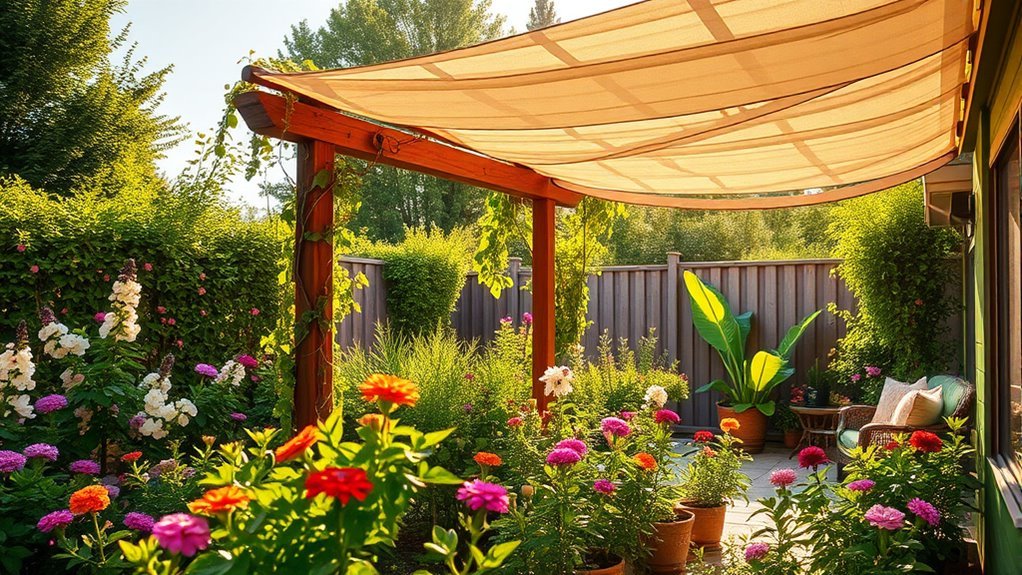
Although west-facing gardens benefit from afternoon sunlight, intense heat can stress tender plants. To protect them, use shade structures like shade cloths, pergolas, or garden umbrellas. These create a cooler microclimate, reducing sunburn and water loss.
You can drape lightweight fabrics over frames or install retractable awnings to adjust shade as needed. Position shade to block the strongest afternoon rays without completely cutting off light, ensuring plants still get enough sun to thrive.
Shade structures also shield delicate seedlings and young plants during peak heat hours.
Improve Soil to Retain Moisture Longer
Protecting your plants from intense afternoon sun is just one step to keep them healthy in a west-facing garden. Another essential aspect is improving your soil to hold moisture longer, so your plants don’t dry out quickly.
You’ll want to focus on enhancing soil structure and organic content. Here’s how:
- Add organic matter: Mix compost or well-rotted manure into the soil to boost water retention and nutrient supply.
- Incorporate water-absorbing materials: Use coconut coir or peat moss to increase moisture-holding capacity.
- Improve soil texture: Loosen compacted soil with aeration tools to help water penetrate and stay accessible to roots.
Add Mulch to Keep Roots Cool and Moist
You’ll want to add mulch to your west-facing garden to keep roots cool and retain moisture.
Choosing the right type of mulch and applying it correctly can make a big difference in how well your plants thrive.
Let’s explore the benefits, types, and proper techniques for mulching effectively.
Benefits of Mulch
Since west-facing gardens receive intense afternoon sun, adding mulch can make a significant difference in keeping your plants healthy. Mulch acts as a protective layer, regulating soil temperature and retaining moisture, which is essential during hot afternoons. It helps prevent soil erosion and reduces the need for frequent watering, saving you time and effort.
Plus, mulch suppresses weed growth, so your plants don’t have to compete for nutrients.
Here are key benefits you’ll notice when you add mulch:
- Keeps roots cool and moist by insulating the soil
- Reduces water evaporation, conserving moisture
- Minimizes weed growth, making garden maintenance easier
Types of Mulch
Choosing the right type of mulch can make a big difference in how well your west-facing garden thrives. Organic mulches like shredded bark, straw, or compost not only keep roots cool and moist but also improve soil health as they break down.
If you want a low-maintenance option, inorganic mulches such as gravel or rubber chips help retain moisture without decomposing.
Keep in mind that light-colored mulches reflect heat, which can be beneficial in a hot west-facing garden. Dark mulches absorb heat, which might warm the soil too much during summer afternoons.
You can also mix mulch types to balance moisture retention and temperature control. Whatever you pick, adding mulch helps protect your plants from heat stress and conserves water, essential for west-facing gardens exposed to intense afternoon sun.
Proper Mulching Techniques
Although adding mulch is a simple step, applying it correctly makes all the difference in keeping your west-facing garden healthy. Mulch helps retain moisture and cools the soil, protecting roots from harsh afternoon sun. To get the most from your mulch, avoid piling it too close to plant stems—it can cause rot.
Aim for a 2-3 inch layer to balance moisture retention without suffocating the soil. Refresh mulch annually to maintain its benefits.
Here are some proper mulching tips for your garden:
- Spread mulch evenly around plants, leaving a small gap near the base.
- Use organic mulch like bark or compost to improve soil quality.
- Check moisture levels regularly to ensure mulch isn’t drying out or becoming waterlogged.
Water Smartly to Beat the Evening Heat
How can you keep your west-facing garden thriving despite the evening heat? Watering strategically is key. Since your garden faces the harsh afternoon sun, it loses moisture quickly, so watering early in the morning helps plants absorb water before the heat sets in.
Avoid watering during peak afternoon hours; it causes evaporation and wastes water. If mornings aren’t an option, water late in the evening once the temperature drops to minimize water loss.
Use drip irrigation or soaker hoses to deliver water directly to roots, reducing surface evaporation.
Check soil moisture regularly to avoid overwatering, which can harm plants and attract pests.
Use Reflective Surfaces to Brighten Shade
You can brighten shaded spots in your west-facing garden by choosing reflective materials like light-colored stones or mirrors.
Place these surfaces where they catch the afternoon sun to bounce light into darker areas.
This simple trick helps make your garden feel more open and inviting.
Choosing Reflective Materials
Why settle for dull shadows when you can brighten your west-facing garden with reflective materials? Picking the right ones can amplify natural light and make your space feel more inviting. Start by choosing materials that suit your garden’s style and maintenance level.
For a sleek look, consider polished metals like stainless steel or aluminum, which bounce light and add sparkle. If you want something natural, opt for light-colored stones or pale gravel.
Mirrors or glass panels can also work wonders by reflecting light into darker corners.
Here are three reflective material options to contemplate:
- Polished metal sculptures or planters
- Light-colored stones or gravel pathways
- Mirrors or glass panels strategically positioned
These choices help you brighten shaded areas without extra effort.
Strategic Surface Placement
Placing reflective surfaces thoughtfully can transform dark corners of your west-facing garden into bright, lively spots. Position mirrors or polished metal panels opposite sunlit areas to bounce light into shaded zones. Light-colored walls or paving near plants help amplify sunlight, boosting growth.
Even small reflective ornaments can create focal points that brighten your space. Consider how surfaces angle sunlight throughout the day for maximum effect.
| Surface Type | Placement Idea | Effect |
|---|---|---|
| Mirrors | Opposite sunlit wall | Bounce sunlight into shade |
| Polished metal | Near seating areas | Add sparkle and light |
| Light-colored walls | Surround shaded beds | Increase overall brightness |
| White paving | Adjacent to plant borders | Reflect low sunlight |
| Reflective ornaments | Scattered in shaded flowerbeds | Create light spots |
Plan Your Garden Layout Around Sun Patterns
Understanding how the sun moves across your west-facing garden helps you decide where to position plants for ideal growth. Since the afternoon sun is intense, you’ll want to place sun-loving plants where they get the most direct light, while shade-tolerant species should go where the sun’s less harsh.
Mapping the sun’s path allows you to create microclimates that benefit different plants.
Consider these tips:
- Position taller plants or structures on the east side to avoid shading sun-loving plants in the afternoon.
- Use sun maps or apps to track light patterns throughout the year.
- Group plants with similar light needs together to simplify care and optimize growth.
Add Heat-Tolerant Features to Your West-Facing Garden
Because west-facing gardens receive strong afternoon sun, you’ll need to incorporate heat-tolerant features that can withstand high temperatures and reduce stress on your plants.
Start by choosing drought-resistant plants like lavender, succulents, or ornamental grasses that thrive under intense heat.
Add mulch around your plants to retain moisture and keep roots cool.
Consider installing shade structures, such as pergolas or shade sails, to protect delicate plants during peak sun hours.
Using reflective materials like light-colored stones or gravel can help lower soil temperature.
Incorporate water features like small fountains or birdbaths to increase humidity and create a cooler microclimate.
Maintain Your West-Facing Garden Through Seasonal Changes
As the seasons change, your west-facing garden will face varying temperatures, light levels, and moisture conditions that require adjustments to keep plants thriving. You’ll need to tailor your care routine to these shifts to guarantee your garden remains vibrant year-round.
Start by adjusting watering schedules—plants usually need more water during hot, dry summers and less in cooler, wetter months.
Next, protect sensitive plants from harsh afternoon sun or cold winds by using shade cloths or windbreaks.
Finally, prepare your soil by adding mulch in autumn to retain moisture and regulate temperature, then refresh it in spring to support new growth.
- Adjust watering based on seasonal moisture needs
- Use shade and wind protection when necessary
- Mulch in autumn and refresh soil in spring
Frequently Asked Questions
What Are the Best Times to Plant in a West-Facing Garden?
You should plant in early spring or late summer to take advantage of cooler temperatures and avoid harsh afternoon sun in your west-facing garden.
This timing helps your plants establish strong roots before heat peaks.
How Can I Attract Pollinators to a West-Facing Garden?
You can attract pollinators by planting nectar-rich flowers like lavender, sunflowers, and coneflowers. Provide water sources, avoid pesticides, and include native plants.
These steps will make your west-facing garden buzzing with bees and butterflies.
What Are Eco-Friendly Pest Control Options for West-Facing Gardens?
You’ll find ladybugs and neem oil work wonders for eco-friendly pest control.
Coincidentally, your west-facing garden’s afternoon sun helps these natural predators thrive, keeping pests in check without harming your plants or the environment.
Can I Grow Vegetables Successfully in a West-Facing Garden?
Yes, you can grow vegetables successfully in a west-facing garden. You’ll get plenty of afternoon sunlight, perfect for heat-loving crops like tomatoes and peppers.
Just guarantee good soil, regular watering, and proper spacing for healthy growth.
How Do I Protect My West-Facing Garden From Strong Winds?
You don’t want your plants flying off like superheroes, so you’ll need windbreaks like hedges or fences.
You’ll also want sturdy stakes and dense shrubs to shield your garden from those relentless gusts.
Conclusion
Tending a west-facing garden might seem tricky, but with the right care, it can bloom like a sunset glowing warmly at day’s end. By choosing resilient plants, adding shade and mulch, and planning around the sun’s path, you’ll create a vibrant, thriving space.
Keep improving your soil and using reflective surfaces to brighten darker spots. These strategies will help you manage the intense afternoon sun and occasional heat stress effectively.
With these tips, your garden will flourish through every season, turning challenges into a beautiful, rewarding oasis. Incorporating these west-facing garden tips ensures a lively, sustainable, and visually stunning outdoor area.