7 Effective Tips to Deter Cats From Your Garden
You can deter cats from your garden by using natural scents like citrus peels, rue, or essential oils. These smells are unpleasant to cats, so placing them around your garden can help keep these curious visitors away.
Just remember to refresh them regularly to maintain their effectiveness.
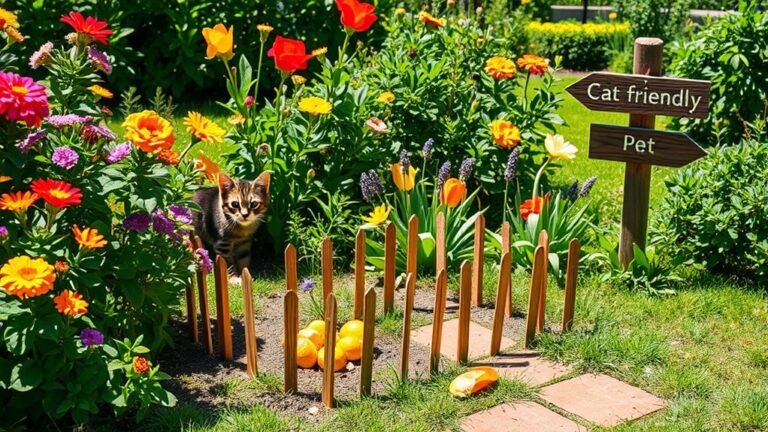
Another great way to protect your garden is by creating physical barriers. Try burying chicken wire, scattering pine cones, or installing fencing to block cats from entering.
These simple measures can make your garden less inviting to them.
For added protection, consider using motion-activated sprinklers or ultrasonic devices near entry points. These tools startle cats without causing harm, encouraging them to stay away.
Don’t forget to team up with your neighbors! Sharing strategies can make everyone’s gardens safer and more enjoyable.
Keep an eye on your deterrents and adjust as needed, so you can enjoy a peaceful garden free from unwanted feline visitors.
Key Takeaways
- Use natural scents like fresh citrus peels, rue, and essential oils to repel cats from garden areas. These smells are not only effective but also safe for your plants.
- Install physical barriers such as buried chicken wire, lattice fencing, or scattered pine cones to deter cat entry. They create a challenge for cats without harming them.
- Employ motion-activated sprinklers or ultrasonic repellents near garden entry points to startle and discourage cats. It’s a smart way to keep them away without constant supervision.
- Coordinate with neighbors to share deterrent strategies and maintain a community-wide approach to cat management. When everyone pitches in, the results are much better.
- Regularly monitor garden activity and adjust deterrent methods based on observed cat behavior and effectiveness. This helps you stay one step ahead and keep your garden safe.
Why Cats Damage Gardens and How to Protect Yours
Although cats are beloved pets, their natural behaviors can wreak havoc on your garden. Cats instinctively dig and scratch in garden beds, uprooting seedlings and disturbing soil where you want plants to grow.
They also like to lie on taller plants, which can bend or crush them, damaging your carefully tended patches. Cat urine is another problem—it contains pheromones that attract more cats, making it harder to keep cats away.
Plus, cat waste can contaminate soil, posing health risks due to parasites like toxoplasmosis. To protect your garden, you need to deter cats effectively by understanding these behaviors.
Taking steps to keep cats away from your garden beds helps guarantee your plants grow healthy and your outdoor space stays beautiful and safe. It’s all about knowing what cats do and how to gently discourage them.
Use Natural Scents to Keep Cats Away From Your Garden
Protecting your garden from cats doesn’t have to involve harsh measures. You can use natural deterrents like scents that cats find unpleasant, keeping your garden safe without harming delicate plants.
Keeping cats out of your garden can be gentle and natural with scents they dislike.
Here are three effective options:
- Scatter fresh citrus peels around your garden every few days—the strong aroma repels cats. Make sure to refresh regularly for best results.
- Plant herb rue nearby; its strong odor naturally deters cats while blending well with your garden’s greenery.
- Use essential oils like eucalyptus, lavender, or peppermint in a spray. Reapply often, especially after rain. You can also sprinkle garlic cautiously around borders, but avoid contact with delicate plants.
These natural scents provide a safe, eco-friendly way to keep cats at bay without resorting to harmful chemicals or physical barriers. It’s a simple and gentle approach that works well!
Create Physical Barriers to Block Cats From Your Garden
Three simple physical barriers can effectively keep cats out of your garden and protect your plants from unwanted digging or trampling. Start by burying chicken wire beneath your garden beds with the sharp edges facing upward. This creates an uncomfortable surface that will deter cats from digging.
Next, install lattice fencing around your garden to block cats from jumping over and accessing your plants. You can also scatter pine cones or lava rocks to create uneven, uncomfortable surfaces that cats avoid.
These physical barriers work together to protect your garden while allowing your plants to thrive. By combining these methods, you’ll make your garden less appealing to cats, keeping them away without harming them or your plants.
Set Up an Outdoor Cat Toilet in Your Garden
When you set up an outdoor cat toilet in your garden, you create a designated spot that encourages cats to relieve themselves away from your plants. This helps deter cats from damaging other garden areas.
To make it effective, follow these tips:
- Fill the outdoor cat toilet with sand or soil mixed with catnip to attract cats. Just make sure it’s placed away from busy zones to protect your plants.
- Provide a covered shelter to offer privacy for the cats and shield the toilet from rain. This way, the area stays usable no matter the weather.
- Regularly clean the toilet to manage odors and keep things hygienic. This will encourage cats to stick to this spot.
Use Motion-Activated Devices to Keep Cats Away
You can use motion-activated devices like sprinklers and ultrasonic noise repellents to keep cats out of your garden. These tools startle cats without causing harm, making your garden less inviting.
With regular upkeep, they’re an effective, eco-friendly way to protect your plants. Plus, they’re pretty easy to set up and maintain. It’s a smart choice if you want to keep your garden safe without hurting the animals.
Ultrasonic Noise Repellents
Although cats are curious creatures, you can keep them out of your garden by using ultrasonic noise repellents. These devices emit high-frequency sounds that deter cats without bothering you.
To maximize their effectiveness, place ultrasonic noise repellents near entry points where cats often sneak in. Many models use motion sensors to activate a brief sound burst, startling cats and encouraging them to stay away.
Here’s how to use them effectively:
- Position repellents strategically at common entry points alongside physical barriers.
- Choose motion-activated devices to guarantee sound only plays when needed.
- Perform regular maintenance to keep batteries charged or devices plugged in.
Combining ultrasonic noise repellents with other methods makes your garden less inviting to cats. It’s a simple way to protect your space without causing harm.
Motion-Activated Sprinklers
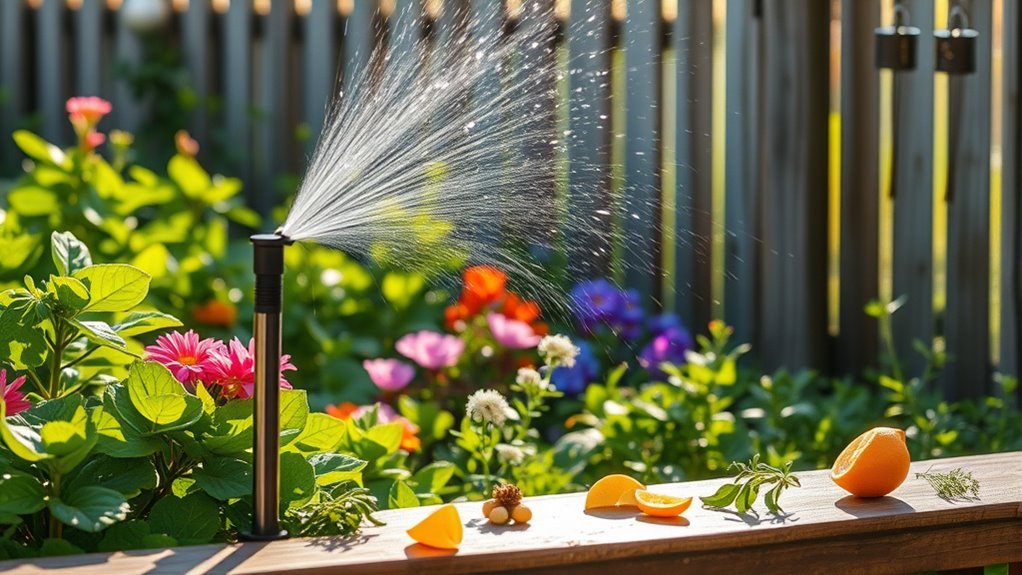
Because motion-activated sprinklers detect movement and release a quick burst of water, they startle cats and discourage them from entering your garden. These devices act as a humane deterrent that effectively keeps the cats away without causing harm.
You can adjust the sensitivity to suit your garden’s needs, ensuring they respond only to feline intrusions and not to smaller animals or wind. Besides reducing feline intrusions, motion-activated sprinklers also water plants nearby, making them a practical addition to your garden.
They cover wide areas and are weather-resistant, so you won’t need frequent maintenance. By placing them near entry points or frequently visited spots, you’ll create an effective barrier that keeps curious cats out while maintaining a healthy garden environment.
Skip Harmful or Useless Cat Repellents
Don’t use mothballs, coffee grounds, or harsh chemicals—they can harm your plants and pets. Methods like cayenne pepper or plastic forks might work briefly but usually won’t stop cats for long.
Instead, focus on safe, effective options that protect your garden without causing damage. Trust me, it’s better for everyone that way!
Harmful Repellents To Avoid
When you’re trying to keep cats out of your garden, it’s important to steer clear of harmful repellents that can endanger both your plants and the animals. Some methods might seem effective but cause more harm than good. Avoid these:
- Mothballs and essential oils – Both contain toxic chemicals that can poison cats and damage your plants.
- Coffee grounds – Though they may deter cats, they alter soil pH and attract pests, risking your garden’s health.
- Cayenne pepper and ammonia – These irritate cats’ senses and can harm other animals or humans nearby without guaranteeing long-term results.
Using these harmful repellents puts your garden and pets at risk, so choose safer, proven alternatives instead. It’s really worth it to keep things safe and healthy for everyone.
Ineffective Deterrent Methods
While steering clear of harmful repellents is important, you’ll also want to be aware that some popular deterrent methods simply don’t work well over time. Cats quickly adapt to cayenne pepper, and plastic forks can be easily moved or dislodged.
Coffee grounds may harm plants and pets without effectively keeping cats away. Orange peels lose their scent fast, and vinegar’s strong smell fades quickly, making them ineffective deterrents.
| Method | Reason for Ineffectiveness |
|---|---|
| Cayenne Pepper | Cats adapt quickly |
| Plastic Forks | Easily moved or dislodged |
| Coffee Grounds | Harmful, not effective |
| Orange Peels & Vinegar | Lose scent rapidly, short-term effect |
Maintain Deterrents and Coordinate With Neighbors to Protect Your Garden
To keep your garden free from curious cats, you’ll need to regularly refresh natural deterrents like citrus peels and fragrant herbs. Their effectiveness fades over time, so don’t forget to replace them often.
You can also use plastic mats to keep cats away by making the surface uncomfortable. To maximize success, coordinate with neighbors to deter cats across your community. This way, you create a larger barrier.
Here are three key steps to protect your garden:
- Replace natural deterrents often to maintain their scent and effectiveness.
- Work with neighbors to share deterrent strategies and set up community-wide tools like motion-activated sprinklers.
- Educate neighbors about humane cat management and establish designated cat areas to divert cats from your garden.
Together, you’ll keep cats away and protect your plants more effectively.
Frequently Asked Questions
What Is the 3-3-3 Rule for Cats?
The 3-3-3 rule means your new cat takes three days to adjust, three weeks to explore comfortably, and three months to fully settle in. You’ll need patience as your cat gradually feels safe and shows its true personality.
What Can I Put in My Garden to Repel Cats?
Did you know cats avoid citrus scents? You can put orange or lemon peels in your garden to repel them. Adding rosemary or planting Coleus Canina also helps, plus rough mulch creates surfaces cats hate walking on.
How Do I Stop Neighbour’s Cats in My Garden?
You can talk to your neighbors about their cats, suggesting humane solutions like TNR programs. Use natural deterrents like citrus peels, install barriers, and try motion-activated sprinklers to stop their cats from invading your garden.
What Smell Do Cats Absolutely Hate?
Imagine a fortress of citrus and herbs guarding your space—cats absolutely hate the sharp tang of lemon, orange peels, rue, garlic, and vinegar. You’ll keep them away by releasing these scents, which sting their sensitive noses.
Conclusion
By weaving these tips into your garden care, you’ll build a fortress that gently whispers, “Not today, curious cats.” Like a well-tuned symphony, natural scents, barriers, and motion sensors work together to protect your blooms without harm.
Keep your defenses fresh and team up with neighbors, turning your garden into a no-cat zone where plants can dance freely in the breeze—safe, vibrant, and utterly cat-free.
Your garden’s peace is in your hands! With these effective tips to deter cats from your garden, you can create a beautiful, thriving space that stays cat-free. Remember, combining natural deterrents and community effort makes all the difference. So go ahead, enjoy a garden where your plants flourish and curious cats stay away for good.