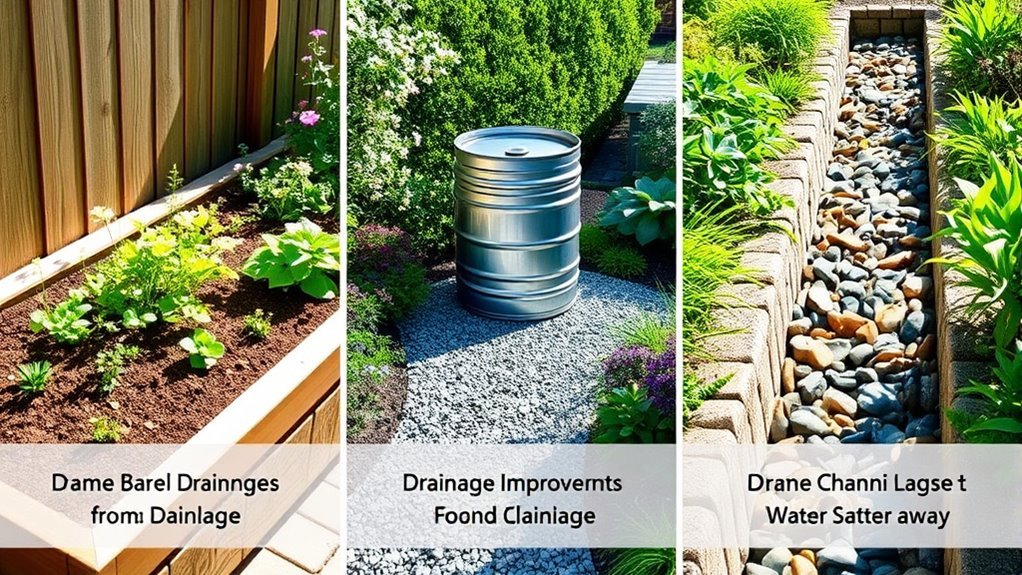
3 Easy Tips to Improve Drainage in Your Garden
You can improve drainage in your garden by first adding organic matter like compost or aged manure to loosen heavy soil and boost aeration. Improving garden drainage is essential for healthy plant growth and preventing waterlogging.
Next, build raised beds to elevate plants and use the land’s natural slope to direct excess water away. This helps manage water flow effectively and keeps roots from sitting in water.
Finally, mix in soil amendments such as coarse sand or perlite to enhance water flow through clay soils. These simple steps create a healthier environment for your plants, and exploring further tips will help you master garden drainage.
Improve Soil Texture and Add Organic Matter for Better Drainage
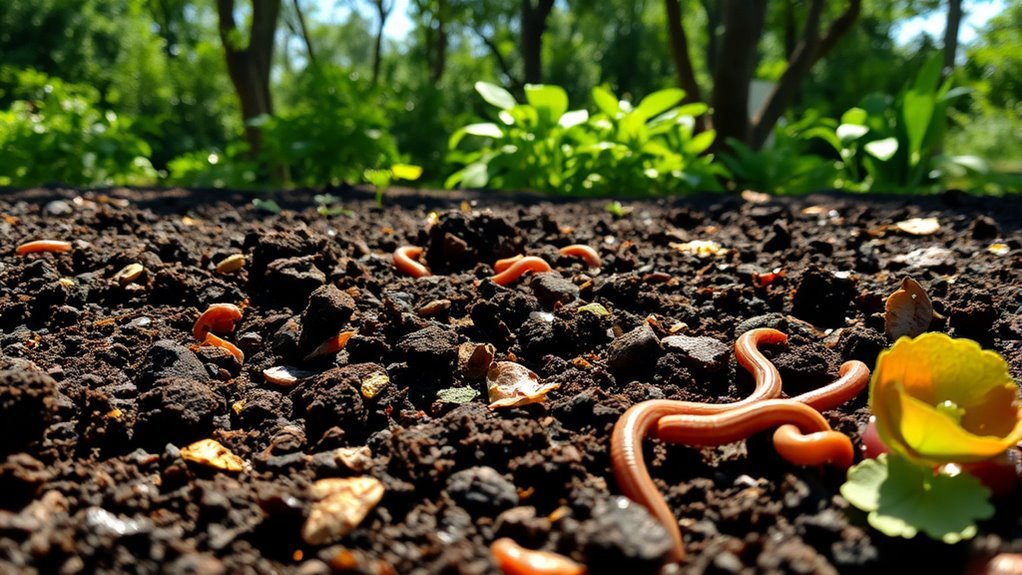
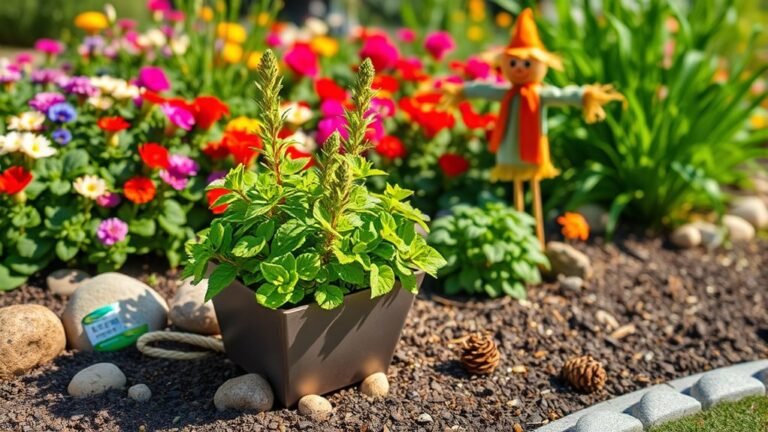
Although poor drainage can frustrate any gardener, you can improve your soil texture by adding organic matter like compost or aged manure. These materials break up heavy clay soils and loosen compacted earth, allowing water to pass through more easily.
Improving soil texture with organic matter helps break up clay and ease water flow for healthier gardens.
When you mix organic matter into your soil, it enhances its structure, increases aeration, and promotes beneficial microbial activity.
You don’t need to overhaul your entire garden; simply incorporate a few inches into the topsoil before planting. Avoid using fresh manure, which can burn plants or introduce pathogens—always opt for well-aged sources.
By improving your soil’s texture this way, you’ll reduce waterlogging and create a healthier environment for your plants to thrive.
It’s a simple, effective step toward better drainage that benefits your whole garden.
Build Raised Beds and Optimize Garden Layout to Prevent Waterlogging
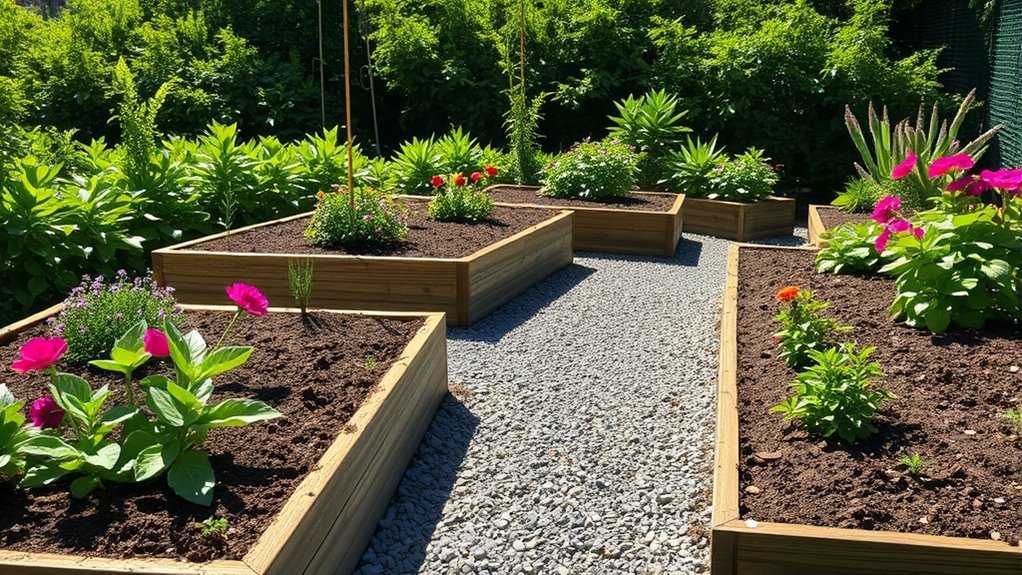
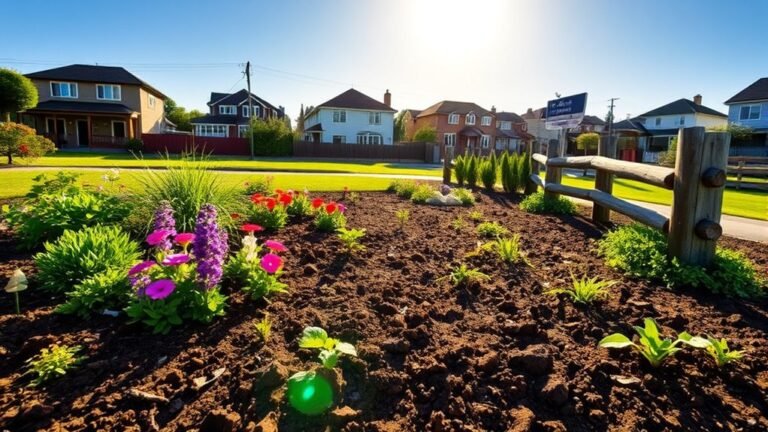
When you build raised beds, you improve drainage by lifting plants above the natural soil level, preventing water from pooling around their roots. Raised beds also let you control soil quality and structure better.
To optimize your garden layout, arrange beds to follow the land’s natural slope, directing excess water away from plant roots. Avoid planting in low spots where water tends to collect.
You can also space beds and pathways to allow efficient water runoff and airflow, reducing waterlogging risks.
| Raised Beds Benefits | Layout Strategy | Water Management Tips |
|---|---|---|
| Elevate plants | Align beds with slope | Create proper spacing |
| Control soil mix | Avoid low-lying areas | Use sloped pathways |
| Enhance root health | Design for airflow | Direct runoff away from beds |
Use Drainage-Boosting Soil Amendments to Keep Your Garden Dry
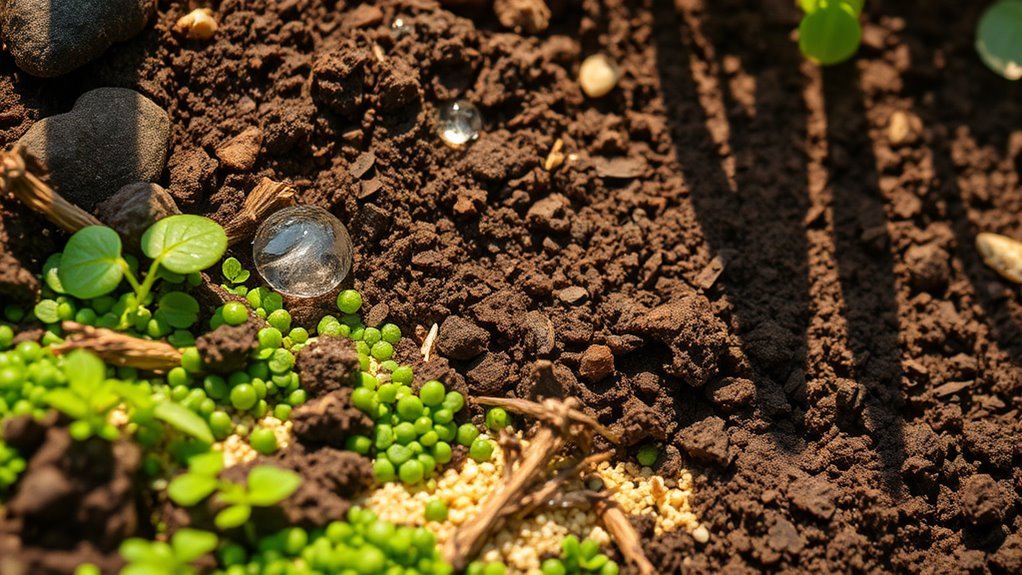
Since soil composition directly affects how well water drains, incorporating drainage-boosting amendments can make a big difference in keeping your garden dry. You can improve heavy, clay soils by mixing in coarse sand, perlite, or vermiculite to increase aeration and water flow.
Improving heavy clay soil with coarse sand, perlite, or vermiculite boosts aeration and enhances water drainage.
Organic materials like compost or well-rotted manure also help by breaking up compacted soil and enhancing its structure.
Adding gypsum can reduce clay soil’s density, letting water pass through more easily. When you prepare your garden bed, blend these amendments thoroughly into the top 6 to 12 inches of soil.
This approach prevents water from pooling and encourages healthy root growth.
Frequently Asked Questions
How Often Should I Water My Garden to Avoid Drainage Issues?
You should water your garden only when the top inch of soil feels dry. Overwatering causes drainage problems, so check moisture regularly and adjust watering frequency based on weather, soil type, and plant needs to avoid issues.
Can Certain Plants Help Improve Garden Drainage Naturally?
Yes, you can use plants like lavender, yarrow, and ornamental grasses to improve drainage naturally. They absorb excess water and help soil stay loose, preventing waterlogging and promoting healthier garden soil for your plants.
These plants not only manage moisture but also enhance soil structure over time. Incorporating them into your garden can create a more balanced and thriving environment.
What Tools Do I Need for Assessing Garden Drainage?
Picture digging a small hole—that’s where your shovel and trowel come in. You’ll also need a soil probe or auger to check moisture layers, plus a stopwatch to time water absorption.
These tools help you assess drainage accurately.
How Do I Identify if My Garden Has Poor Drainage?
You’ll notice soggy spots, standing water, or plants wilting despite watering.
If your soil feels compacted or water pools after rain, these signs show your garden has poor drainage that needs improving.
Are There Any Drainage Solutions for Clay-Heavy Soil?
Yes, you can improve clay-heavy soil drainage by mixing in organic matter like compost or sand. You’ll also want to create raised beds or install French drains, so water moves away and your plants thrive instead of drowning.
Improving drainage helps prevent root rot and promotes healthier plant growth. Adding gypsum can also help break up compacted clay soils, making it easier for water to pass through.
Regularly aerating the soil and avoiding overwatering are additional steps to keep the soil well-drained and plant roots healthy.
Conclusion
So, if you love that swampy garden look, just ignore these tips and watch your plants swim!
But if you’d rather not host a frog convention every spring, improving soil texture, building raised beds, and adding drainage-boosting amendments will save you from a soggy disaster.
Trust me, your plants—and your boots—will thank you for keeping the water at bay.
After all, gardens are for growing, not for hosting mini lakes! Improving drainage in your garden is key to healthy plants and a beautiful outdoor space.