7 Factors That Affect How Much to Landscape a Garden
When landscaping your garden, you’ll want to think about seven key factors that shape how much it will cost. Backyard size is a big one since it affects how much material and labor you’ll need.
Plus, the design complexity can really add up if you want extra features like pathways or water elements.
Your choice of materials and plants also plays a major role in your budget.
Labor rates can vary depending on where you live, so that’s something to keep in mind.
Don’t forget about permits and local regulations, which might add to the expenses.
Timing matters too — landscaping during certain seasons can save you money.
Finally, consider ongoing maintenance costs to keep your garden looking great.
Understanding all these factors will help you create a beautiful garden without any surprise expenses and make the most of your investment.
Key Takeaways
- Backyard size and design complexity directly influence landscaping costs. Larger or more intricate projects usually cost more.
- Material choices and selected features also play a big role. They impact both your budget and how much upkeep you’ll need to do.
- Labor costs can vary quite a bit depending on where you live and how challenging the project is. This can seriously affect your total expenses.
- Don’t forget about permits and local rules. These can add extra fees and might even change how you plan your design.
- Plus, ongoing maintenance adds up over time. Regular lawn care and seasonal tasks are part of keeping your garden looking great.
Backyard Size and Its Impact on Landscaping Budget
The size of your backyard plays a major role in shaping your landscaping budget. When you have a smaller backyard, say around 500 square feet, landscaping costs usually fall between $5,000 and $10,000.
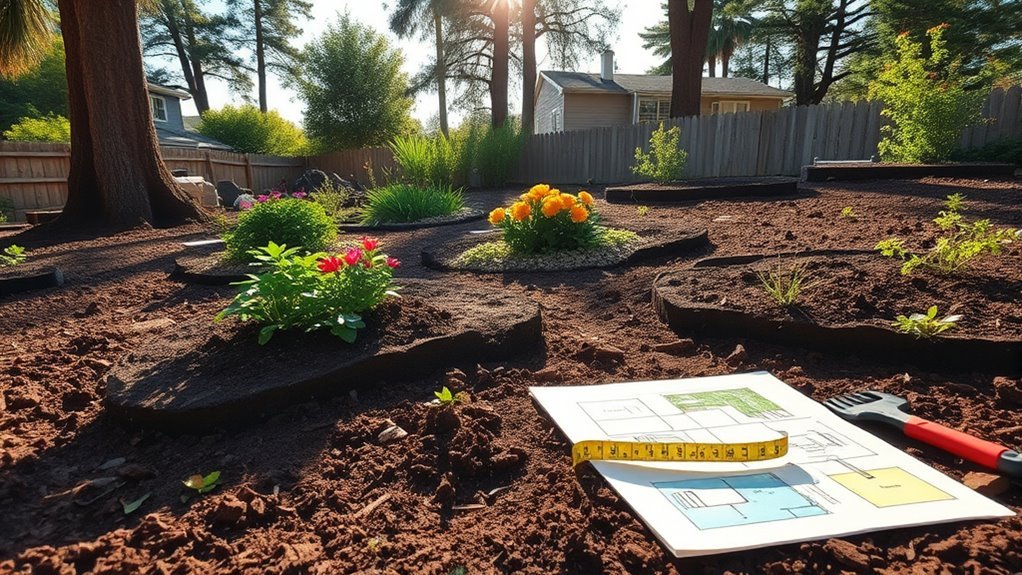
For larger backyards, up to 2,000 square feet or more, expenses can easily exceed $20,000 due to the increased materials and labor required. Accurate measurements of your backyard size are essential for estimating costs precisely.
While small yards may cost less overall, you’ll need to focus on maximizing space without driving up expenses. Keep in mind that as your backyard size grows, the potential for more complex designs rises.
This can push your landscaping costs higher even before considering the specific design complexity factors involved. So, it’s not just about size, but also how you plan to use the space.
Design Complexity as a Major Cost Driver
While your backyard size sets the stage, how complex you want your design to be will largely determine your landscaping costs. Design complexity plays a major role in the overall cost of landscaping projects.
Your backyard size sets the stage, but design complexity largely drives landscaping costs.
Simple layouts might cost between $3,000 and $5,000, but as you add intricate features like patios, water elements, or customized plant arrangements, expenses can easily exceed $20,000. These additions require more skilled labor and planning, driving up costs.
Complex projects often need specialized expertise and extra installation time, further increasing the price. Plus, including multiple elements such as retaining walls or outdoor lighting adds to both complexity and cost.
When planning your landscaping project, keep in mind that managing design complexity carefully helps avoid unexpected expenses and keeps your overall cost under control.
Choosing Features and Materials Within Budget
When you choose features and materials wisely, you can create a beautiful garden without overspending. Start by focusing on cost-effective solutions like using mulch instead of natural stone and prioritizing essential features such as basic plantings and pathways.
The materials used play a big role in your budget, so researching and comparing prices helps you find affordable alternatives that still fit your design. Your plant selection also impacts costs—native plants and smaller options are more budget-friendly than mature trees or exotic varieties.
Labor Costs and Geographic Price Variations
Because labor costs can vary widely depending on where you live and the complexity of your landscaping project, it’s important to factor these differences into your budget early on. Geographic location greatly influences labor costs, with urban areas often charging 20-30% more than rural ones due to higher demand and living expenses.
You’ll also notice seasonal shifts—hiring during off-peak times can save you 15-20%. If your design requires skilled labor for intricate installations, expect higher rates, typically ranging from $50 to $150 per hour. Skilled professionals bring expertise that guarantees quality work but can increase costs.
Permits, Regulations, and Their Cost Implications
Before you start, check the permit requirements for your landscaping project, since fees and regulations vary by location and scope. These rules can affect your budget considerably, especially if you need special approvals for things like tree removal or water features.
Staying informed helps you avoid fines and costly delays down the road. It’s definitely worth taking the time to understand what’s required before you dive in.
Permit Requirements Overview
Although landscaping can transform your outdoor space, many projects require permits that add complexity and cost. Understanding permit requirements is essential since local regulations often govern structures like retaining walls, fences, or water features.
These rules can influence your project timeline and budget, so you need to plan accordingly.
Here’s what to keep in mind about permit requirements and costs:
- Permit fees vary widely, from $50 to several hundred dollars, depending on location and project scope.
- You may need to submit detailed plans and schedule inspections, which can add professional service costs.
- Local regulations might specify materials or designs you must follow.
- Ignoring permit requirements risks fines, delays, or removal of completed work.
Regulatory Cost Impact
Understanding permit requirements is just the first step; you also need to evaluate how these regulations impact your budget and timeline. The regulatory cost impact can be significant, as permits for landscaping features like retaining walls or water installations often come with fees ranging from $50 to several hundred dollars.
Beyond fees, compliance with zoning laws and building codes might require design adjustments or professional consultations, adding to your expenses. Delays in securing permits can extend your project timeline, increasing labor costs and potentially disrupting seasonal planting plans.
Ignoring permits isn’t an option either—failing to comply can lead to fines or costly modifications. So, by planning for these regulatory factors upfront, you can better manage costs and keep your landscaping project on track.
Seasonal Timing for Landscaping Savings
You can save money by scheduling your landscaping projects during the off-season when landscapers offer discounts to fill slower months.
Keep in mind, though, that weather conditions in late fall and winter might affect the timing and progress of your work.
Planning around these factors helps you get the best value without sacrificing quality.
Off-Season Cost Benefits
When you schedule your landscaping project during the off-season, like late fall or early spring, you can save 10-30% because labor and material demand drops.
This off-season timing lowers the overall cost of landscaping by reducing competition for resources. Plus, many companies offer discounts to attract business during these quieter months.
You also benefit from a wider selection of plants and materials, as suppliers are less busy and more open to negotiation. Off-season landscaping lets contractors focus more on your project, ensuring quality work without peak season pressure.
Consider these off-season cost benefits:
- Discounts and promotions from landscaping companies
- Lower prices on certain plants due to reduced demand
- Better availability and choice of materials
- More dedicated contractor attention during scheduling
Weather Impact On Scheduling
Scheduling your landscaping project during off-season months can save you money, but weather plays a significant role in timing those savings. Weather conditions like rain or extreme heat can delay project timelines, pushing back completion and increasing overall costs due to longer labor hours or extra materials.
While late fall and winter offer lower prices thanks to reduced demand, you need to take into account your local climate to avoid costly delays. Early spring can be ideal, allowing plants to establish before summer’s heat, which reduces replacement expenses.
However, peak seasons like spring and early summer often come with higher labor rates and limited material availability. By balancing weather conditions with off-season discounts, you can effectively manage project timelines and keep overall costs in check for your landscaping.
Planning for Ongoing Maintenance Expenses
Although designing your garden might be exciting, planning for ongoing maintenance expenses is essential to keep it thriving. You’ll want to budget for ongoing maintenance costs, which typically range from $100 to $300 monthly, depending on your garden’s size and complexity.
High-maintenance plants, like exotic species, can raise upkeep expenses due to their specific care needs. Hiring professional landscaping services guarantees quality care but will increase costs, while DIY maintenance saves money but demands time and skill.
Consider these key factors for your maintenance budget:
- Regular lawn care: mowing, fertilization, aeration ($1,500–$2,500 annually)
- Seasonal tasks: winterizing plants, irrigation setup ($300–$1,000 yearly)
- Plant selection: avoid overly high-maintenance plants
- Maintenance approach: professional vs. DIY care
Frequently Asked Questions
What Is the 70/30 Rule in Gardening?
The 70/30 rule in gardening means you’ll design 70% of your garden with hardscape features like paths and patios, and 30% with plants. This balance makes your garden functional, low-maintenance, and visually appealing.
What Factors Affect Landscaping Costs?
Think of landscaping like cooking a meal—you choose ingredients, complexity, and location. Your costs rise with garden size, design intricacy, material quality, where you live, and how much upkeep you’re ready to handle over time.
What Is the Rule of 3 in Landscaping?
The Rule of 3 in landscaping means you group plants in threes for a balanced, visually appealing look. You’ll create cohesive, dynamic spaces by mixing odd-numbered clusters, making your garden easier to design and more inviting to the eye.
What Are the Most Common Landscaping Mistakes to Avoid?
Don’t put all your eggs in one basket by overcomplicating designs or ignoring plant compatibility. You shouldn’t skip site analysis or professional help, and always plan for maintenance to avoid costly mistakes and frustration later on.
Conclusion
You might think landscaping is just about planting a few flowers, but as you’ve seen, it’s a lot more—size, design, materials, labor, permits, timing, and maintenance all sneak into your budget.
Ironically, the more you want to enjoy a beautiful garden, the more you’ll need to plan and spend.
So, if you’re ready to jump in, remember: your dream garden might just come with a surprise price tag! Landscaping a garden involves many factors that can affect how much you spend, from the initial design to ongoing maintenance.
Understanding these cost elements helps you prepare better and avoid unexpected expenses. Careful planning and budgeting ensure your garden turns out just the way you want it, without breaking the bank.
In the end, knowing what influences landscaping costs lets you create a beautiful, enjoyable garden that fits your budget and lifestyle.