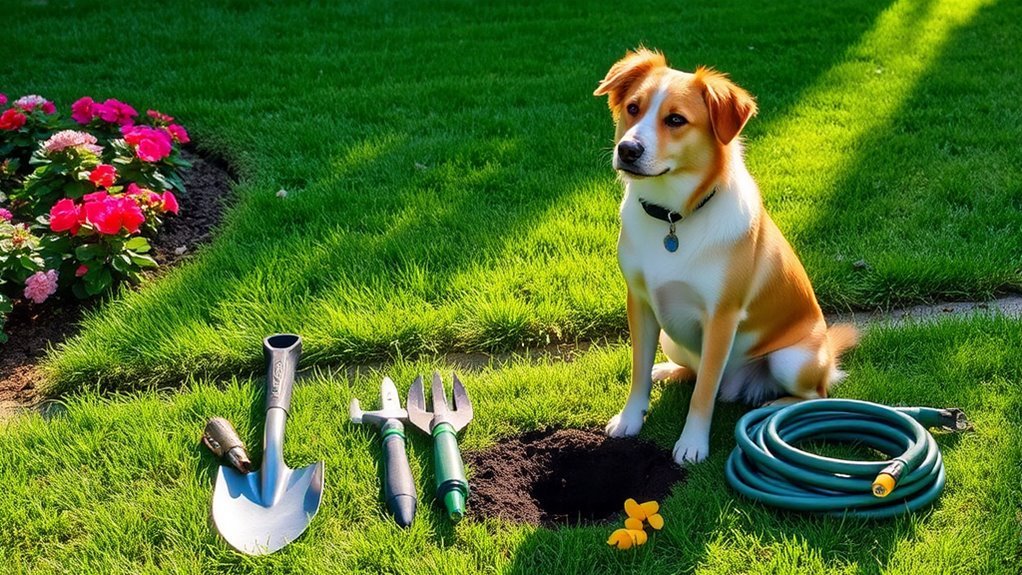
How to Stop Dog Digging in Garden With a Step-By-Step Guide
To stop your dog digging in the garden, first understand why they dig—common reasons include boredom, instinct, or seeking comfort. Identifying the cause is key to effective prevention. Watch for triggers like anxiety or the presence of wildlife that may encourage digging.
Next, provide plenty of exercise to help your dog burn off excess energy. Regular physical activity reduces the urge to dig out of boredom. Training with clear commands and rewarding good behavior will reinforce positive habits.
Create a designated digging spot to satisfy your dog’s natural instincts safely. Use barriers or natural deterrents like citrus sprays to protect other areas of your garden. Keep your dog engaged with toys and attention to further reduce digging.
Explore these steps more, and you’ll find effective ways to keep your garden intact and your dog happy. Consistency and patience are essential throughout this process.
Why Do Dogs Dig in Gardens?
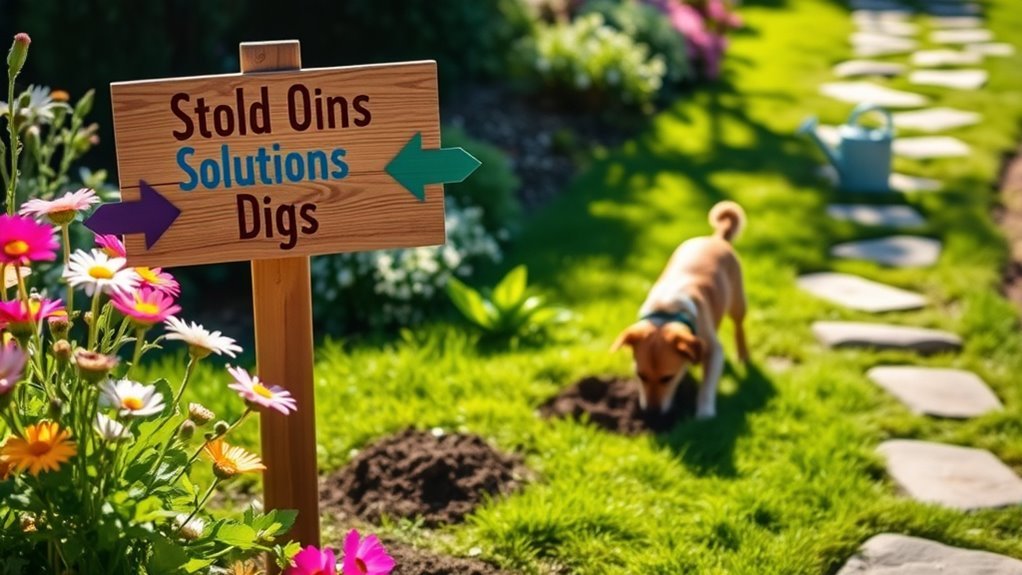
Although digging can be frustrating, your dog digs in the garden because it’s a natural behavior driven by instincts, boredom, or a need to explore.
Dogs have strong digging instincts inherited from their wild ancestors, who dug to find food or create shelter.
Sometimes, your dog simply wants to satisfy curiosity by uncovering scents or objects buried underground.
Boredom can also push your dog to dig as a way to entertain itself when it lacks mental or physical stimulation.
Additionally, digging helps dogs regulate body temperature, especially on hot days when they seek cooler spots underground.
Understanding these reasons helps you realize digging isn’t just misbehavior but a normal outlet for your dog’s energy and instincts. You can then address it effectively.
How to Spot What Triggers Your Dog’s Digging
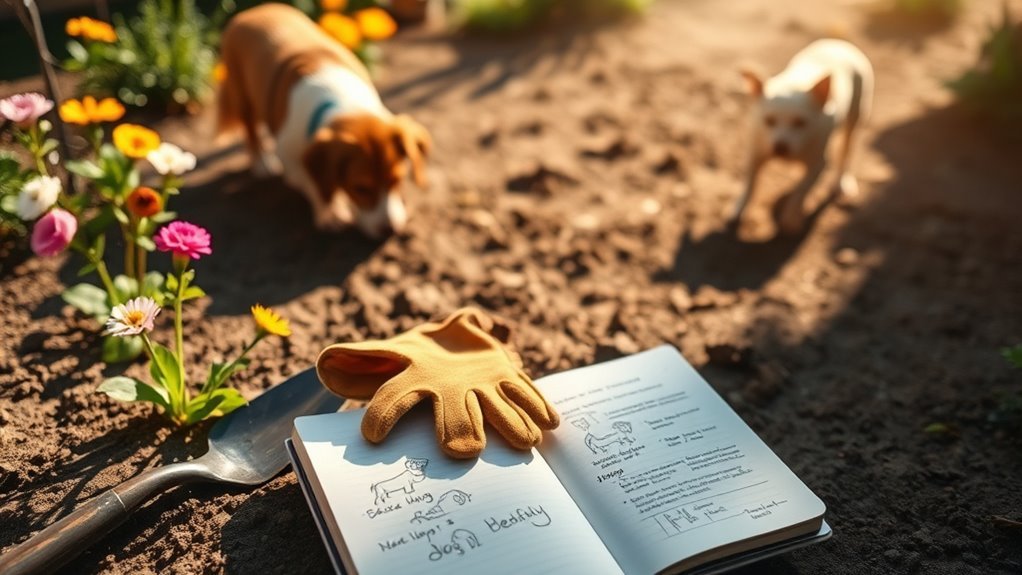
To stop your dog from digging, you need to identify what sets them off. Watch their behavior closely to spot common triggers like boredom, anxiety, or the scent of buried animals.
Once you know what causes the digging, you can address it more effectively.
Common Digging Triggers
When your dog starts digging in the garden, it’s important to understand what’s driving this behavior before you can effectively stop it. Identifying common digging triggers helps you address the root cause, not just the symptom.
Here are four typical reasons your dog might be digging:
- Boredom or Excess Energy – Dogs dig to entertain themselves or burn off energy.
- Hunting Instincts – They might be chasing scents or small animals underground.
- Comfort and Shelter – Digging creates cool spots to lie down or hide from heat.
- Attention-Seeking – Your dog might dig because it gets your reaction, even if it’s negative.
Pinpointing which trigger applies lets you tailor your approach to stop the digging effectively.
Observing Your Dog’s Behavior
Since every dog is different, closely watching your pet’s behavior is key to understanding why they dig in your garden. Pay attention to when and where your dog starts digging. Is it after you leave, during playtime, or when they see wildlife?
Notice their body language—are they anxious, excited, or bored? Keep a journal to track patterns, including time of day and weather conditions. This helps you identify specific triggers like loneliness, excess energy, or hunting instincts.
Once you spot what sparks the digging, you can tailor your approach to address the root cause. By being observant and patient, you’ll get valuable clues to prevent unwanted digging and create a happier environment for both your dog and garden.
How to Train Your Dog Not to Dig

Although digging is a natural behavior for dogs, you can teach your pet to stop by redirecting their energy and setting clear boundaries. Start by consistently guiding your dog toward acceptable activities and rewarding good behavior.
Here’s how to train your dog not to dig:
- Provide plenty of exercise to burn excess energy that might trigger digging.
- Create a designated digging area where your dog is allowed to dig freely.
- Use commands like “Leave it” or “No dig” and reward compliance immediately.
- Distract your dog with toys or games whenever they start digging in unwanted spots.
Easy Garden Fixes to Stop Digging
If you want to protect your garden without constant supervision, simple fixes can make a big difference. You can use physical barriers, adjust your garden layout, or create designated digging spots to redirect your dog’s energy. These methods reduce damage and keep your pup happy.
| Fix Type | Description | Benefit |
|---|---|---|
| Physical Barriers | Fencing, chicken wire under soil | Blocks access to digging areas |
| Garden Layout | Plant tough shrubs, mulch soil | Makes digging less appealing |
| Digging Zones | Designate spots with loose soil | Satisfies digging instinct |
| Distraction | Provide toys or playtime | Shifts focus from garden |
Try combining these fixes to protect your garden effectively and keep your dog engaged.
Products That Safely Deter Dog Digging
While simple garden adjustments and designated digging zones can help, sometimes you need extra support to keep your dog from turning your garden into a digging site.
Thankfully, several safe products can deter your dog effectively without harming them or your plants.
Here are four reliable options to ponder:
- Citrus Sprays – Dogs dislike citrus scents, so these sprays discourage digging in sprayed areas.
- Motion-Activated Sprinklers – These startle your dog with a harmless water spray when they approach forbidden spots.
- Ultrasonic Deterrents – Emit high-frequency sounds only dogs can hear, discouraging digging.
- Natural Repellent Granules – Spread around garden beds, they create an unpleasant texture or smell for dogs.
Using these products along with training can help protect your garden safely.
Keeping Your Dog Happy Without Digging
To prevent your dog from digging, you need to keep them mentally and physically engaged. Boredom often leads dogs to dig, so providing regular exercise helps burn off excess energy. Take your dog on daily walks, play fetch, or try agility training to keep them active.
Mental stimulation is just as important—use puzzle toys, obedience training, or scent games to challenge their mind. Create a designated digging area in your garden where your dog can dig freely, then reward them for using it.
Consistency is key; redirect digging behavior to this space, so your dog learns where it’s allowed. By meeting your dog’s physical and mental needs, you reduce the urge to dig in unwanted spots and keep them happy and well-behaved.
Frequently Asked Questions
Can Certain Dog Breeds Dig More Than Others?
Yes, certain dog breeds dig more than others. You’ll notice terriers, dachshunds, and hounds have stronger digging instincts. Understanding your dog’s breed helps you anticipate this behavior and manage their digging more effectively.
Does Neutering Affect a Dog’s Digging Behavior?
Think of neutering as turning down a faucet; it can reduce your dog’s digging urge but won’t stop it completely.
You’ll still need patience and training to redirect their energy and protect your garden effectively.
How Long Does It Take to Train a Dog to Stop Digging?
It usually takes a few weeks to a couple of months to train your dog to stop digging. Stay consistent, use positive reinforcement, and redirect their energy to acceptable activities.
Patience and persistence are key throughout the process.
Are There Any Health Risks From Dogs Digging in Gardens?
Digging like a miner searching for gold, your dog risks cuts, parasites, or ingesting harmful plants.
You’ll want to watch closely and clean wounds promptly to keep your pup healthy and happy.
Can Digging Be a Sign of Separation Anxiety in Dogs?
Yes, digging can be a sign of separation anxiety in your dog. When you’re away, your dog might dig to relieve stress or boredom.
You’ll want to provide comfort and distraction to help them cope.
Conclusion
By being proactive, patient, and persistent, you can prevent pesky paw prints from ruining your prized plants. Pinpoint the problem, provide plenty of playtime, and practice positive training to transform troublesome digging into delightful behavior.
Use simple solutions and safe products to secure your garden’s serenity. Stay steady, stay strong, and soon you’ll see your dog’s digging days diminish.
With these effective dog digging prevention tips, your garden will become a gorgeous, dig-free haven for both you and your furry friend. Consistent training and care are key to stopping dog digging in your garden.