7 Tips to Stop Cats Pooping in My Garden
You can stop cats pooping in your garden by spotting signs like small holes and disturbed soil. Using natural repellents such as citrus peels and herbs like lavender can help keep cats away. These simple methods are effective and safe for your plants and pets.
Build physical barriers like mesh fencing or prickly mulch to block access. Removing attractants like outdoor food and water is also important to discourage cats from visiting.
Try motion-activated deterrents to keep cats away effectively. Encourage them to use a designated litter area placed quietly nearby. Keep these tips in mind to explore even more effective solutions.
Spot Signs of Cats Pooping in Your Garden
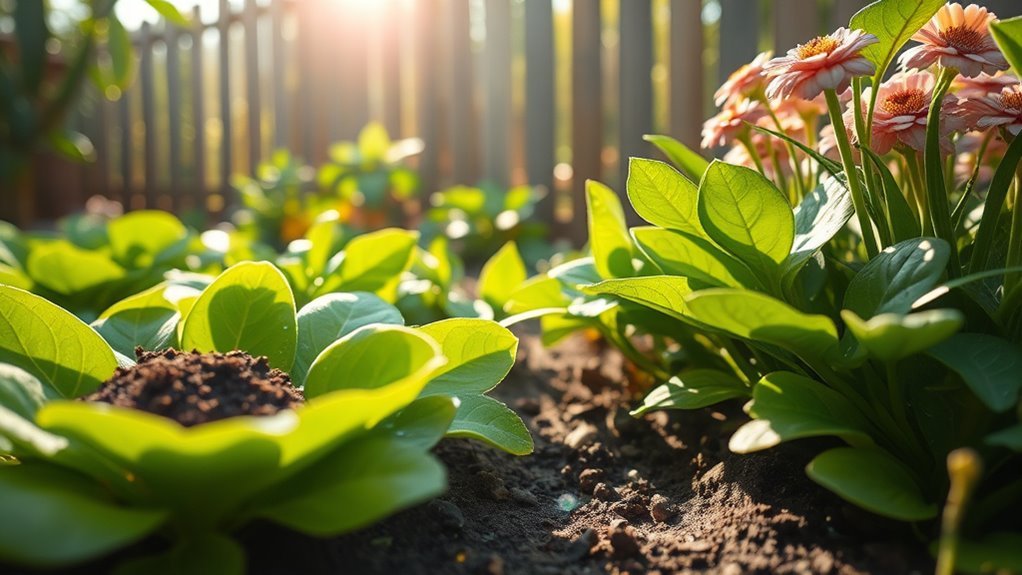
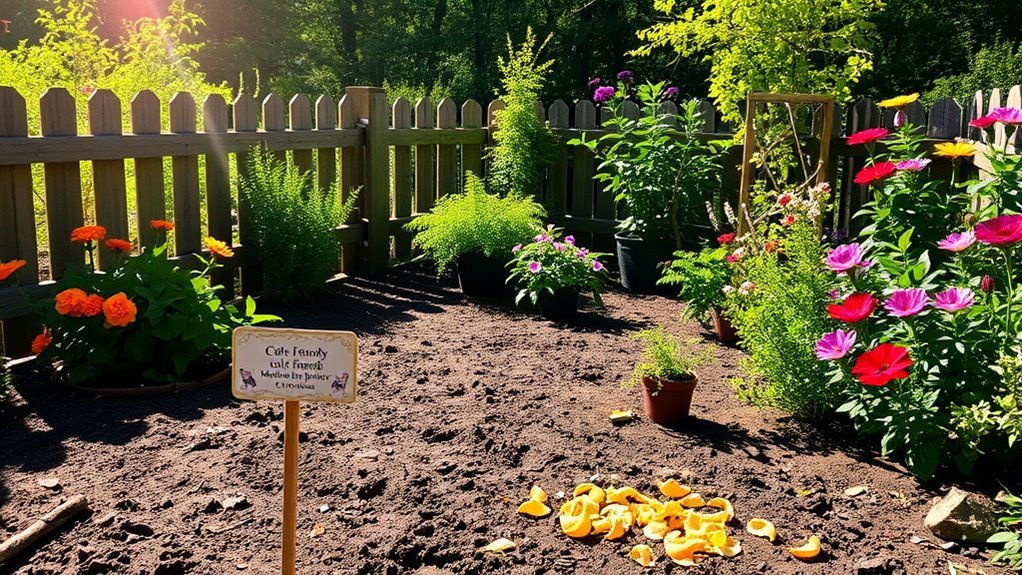
Before you can effectively stop cats from pooping in your garden, you need to recognize the signs they’ve been there. Look for small, shallow holes dug in soft soil or mulch, often with disturbed earth around them. You might spot cat droppings, usually cylindrical and firm, sometimes with a strong odor.
Pay attention to areas where plants look trampled or soil appears freshly turned without clear cause. You could also notice scratch marks or paw prints in dirt or mud nearby.
If you catch a strong ammonia-like smell early in the morning, that’s another clue cats have been marking territory.
Why Do Cats Poop in Gardens?
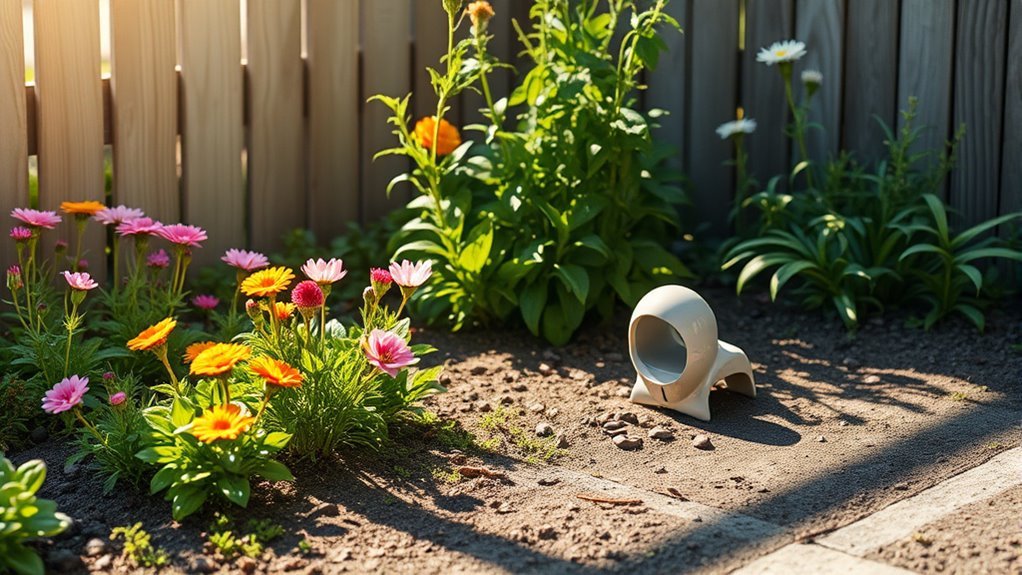
You’ll notice cats are drawn to your garden because soft soil feels perfect for their natural digging instincts. They also use these spots to mark their territory, leaving messages for other cats.
Understanding these behaviors helps you find better ways to keep them away.
Natural Instincts Explained
Although it might seem frustrating, cats naturally seek soft, loose soil to bury their waste, making gardens an ideal spot. This behavior stems from their instinct to hide their scent from predators and rivals. When you notice cats pooping in your garden, it’s not just random—it’s deeply ingrained.
Here’s why they do it:
- Cats instinctively cover their waste to avoid attracting danger.
- Gardens often provide a quiet, undisturbed place to do their business.
- The soil texture mimics natural environments where they’d hide waste.
- Outdoor cats mark territory subtly through scent left in soil.
- Burying waste helps keep their living area clean, following survival instincts.
Understanding these natural instincts helps you approach the problem with empathy and effective solutions.
Attracted To Soft Soil
Because cats prefer soft, loose soil, your garden becomes an irresistible spot for them to dig and do their business. They naturally seek out areas where burying waste is easy, and compacted ground just won’t cut it.
If your garden soil is freshly turned, mulched, or moist, it’s like a welcome mat for cats. You might notice they avoid hard or dry patches but return readily to softer spots.
To keep cats at bay, consider making your soil less inviting by regularly compacting it or covering it with coarse mulch.
This simple change can discourage them from digging and pooping.
Understanding this preference helps you take targeted steps to protect your garden without harming the animals or your plants.
Territory Marking Behavior
Soft soil may lure cats into your garden, but their visits often serve a deeper purpose than just comfort. Cats use your garden to mark territory by pooping, signaling ownership to other cats. This behavior helps them establish boundaries and avoid conflicts.
Understanding this can help you manage their visits better.
Here’s why cats poop in your garden for territory marking:
- Poop contains chemical markers unique to each cat
- It warns other cats to stay away
- Helps them feel secure in their environment
- Indicates an established presence to rivals
- Reinforces social hierarchy among neighborhood cats
Use Natural Repellents Like Citrus and Herbs
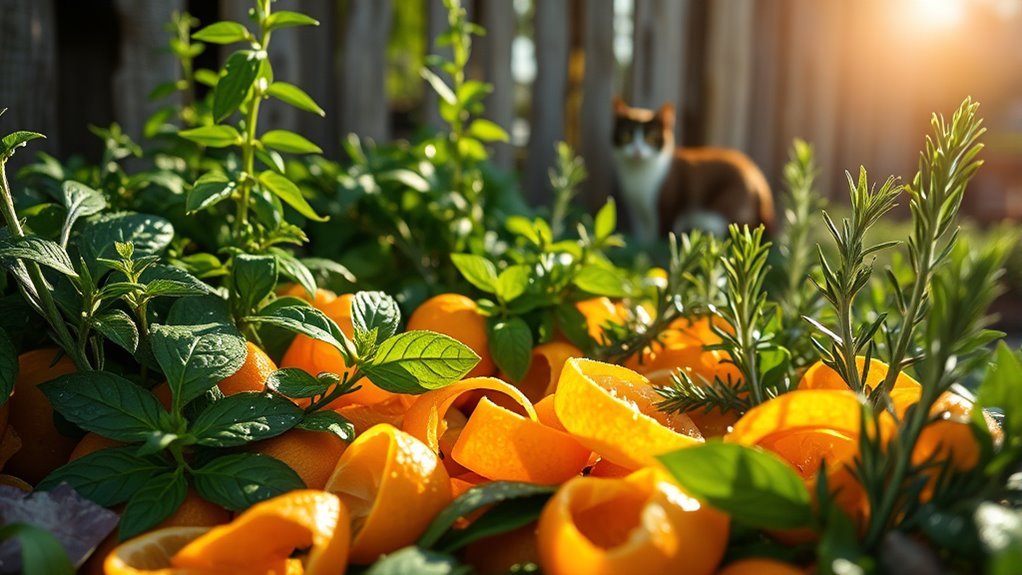
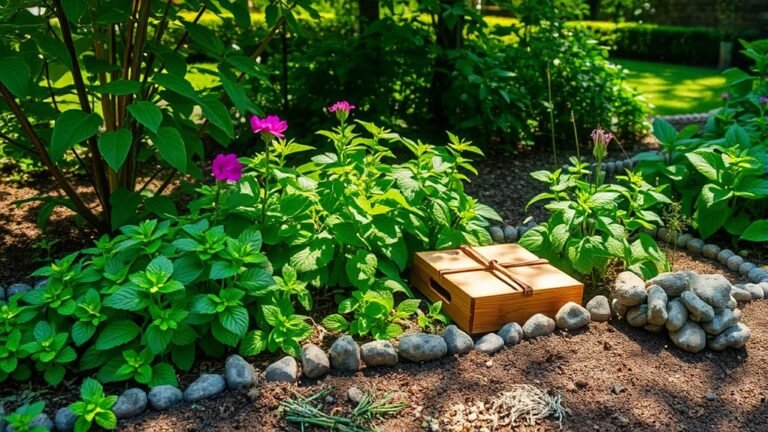
When you want to keep cats away from your garden without harsh chemicals, natural repellents like citrus peels and strong-smelling herbs can work wonders. Cats dislike the scent of citrus fruits and certain herbs, making them reluctant to enter treated areas. Scatter orange, lemon, or lime peels around your plants or garden beds.
Plant herbs such as lavender, rosemary, or rue, which naturally deter cats.
| Natural Repellent | Effectiveness |
|---|---|
| Orange Peels | High |
| Lemon Peels | High |
| Lavender | Moderate |
| Rosemary | Moderate |
| Rue | High |
Using these natural options keeps your garden cat-free while being safe for plants and pets. Refresh peels and trim herbs regularly for best results.
Build Physical Barriers to Protect Your Plants
You can keep cats out by installing effective fences or barriers around your garden.
Using plant-friendly deterrents like thorny shrubs or textured mulch can also discourage them from entering.
These simple steps help protect your plants without causing harm.
Effective Fence Options
Although cats are agile and determined, installing effective fencing can greatly reduce their access to your garden. Choosing the right fence helps create a strong physical barrier that discourages cats from entering.
Here are some effective fence options to consider:
- Cat-proof mesh fencing: Small holes prevent cats from squeezing through.
- Roller bars or rollers: Mounted on top, these spin when cats try to climb over.
- Electric fences: Low-voltage shocks deter without harming.
- Fence extensions angled inward: Makes climbing more difficult.
- Solid wooden or metal fences: No gaps means fewer entry points.
Make sure your fence is at least 6 feet high and check for any gaps underneath.
Combining these options can substantially improve your garden’s protection against unwanted feline visitors.
Plant-Friendly Deterrents
How can you protect your plants without harming curious cats? Building physical barriers is a great way to keep cats away while keeping your garden safe. You can use materials that deter cats but don’t injure them or damage your plants.
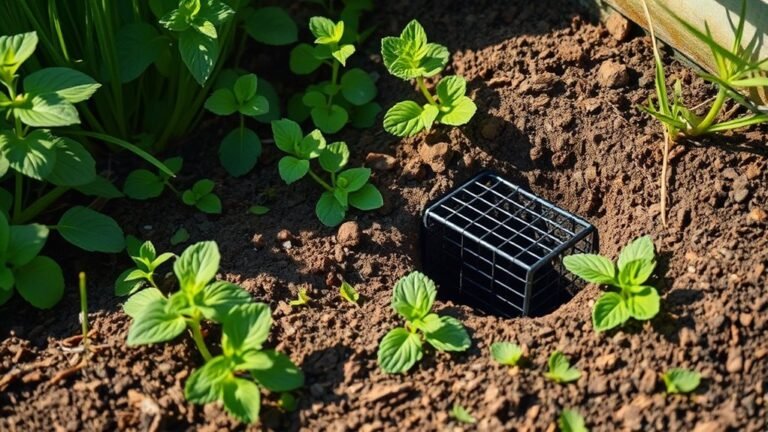
For example, placing chicken wire over soil or using prickly mulch makes digging uncomfortable for cats. You might also try decorative garden fences or plant cat-repellent herbs. Here’s a quick guide:
| Barrier Type | Benefit |
|---|---|
| Chicken Wire | Prevents digging |
| Prickly Mulch | Uncomfortable texture |
| Decorative Fences | Visual block & physical barrier |
| Cat-Repellent Herbs | Natural scent deterrent |
| Pebble Stones | Hard surface, discourages digging |
Try combining these to create a cat-free zone without harm or hassle.
Remove Attractants That Lure Cats to Your Garden
Since cats are attracted to specific scents and food sources, removing these elements can considerably reduce their visits to your garden. Start by eliminating anything that might draw them in.
You can:
- Keep pet food indoors, avoiding outdoor feeding spots.
- Secure your trash bins with tight lids to prevent scavenging.
- Clear fallen fruits or birdseed that cats might find appealing.
- Remove compost heaps or cover them securely.
- Avoid leaving water sources like pet bowls outside overnight.
Use Motion-Activated Deterrents to Keep Cats Away
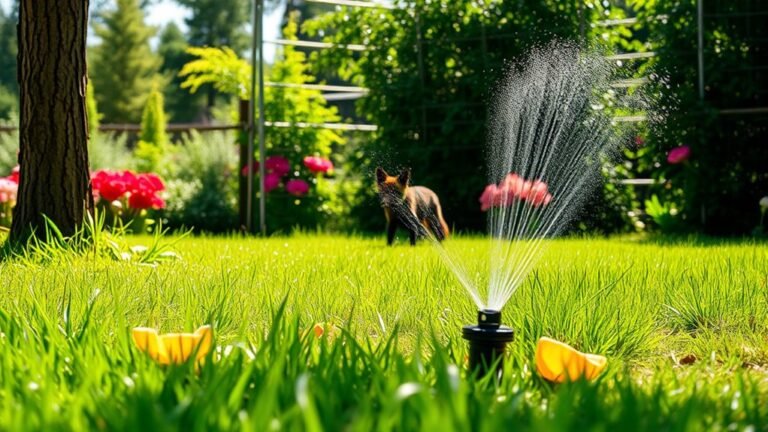
Removing attractants helps reduce the chances of cats wandering into your garden, but you can take it a step further by installing motion-activated deterrents. These devices detect movement and emit bursts of water, sounds, or lights that startle cats without harming them.
Setting one up near areas where cats frequently visit can effectively discourage them from returning. You don’t need to constantly monitor it; the deterrent works automatically, saving you time and effort.
Plus, it’s a humane way to protect your garden since it avoids physical contact or chemicals. Just make sure to position the device correctly and test it to verify it triggers at the right moment.
This approach helps maintain a cat-free garden while respecting your neighbors’ pets.
Encourage Cats to Use a Designated Litter Area
Although you want to keep cats out of your garden, providing a designated litter area nearby can redirect their behavior and prevent unwanted messes. Setting up a comfortable, inviting spot encourages cats to do their business where you want.
Here’s how to create an effective litter area:
- Choose a quiet, shaded location close to the garden but not inside it.
- Use fine, sandy soil or commercial cat litter to attract cats.
- Keep the area clean by regularly scooping waste and rejuvenating the litter.
- Add natural scents like catnip or valerian to make it more appealing.
- Avoid placing food or water near the litter spot to prevent confusion.
Frequently Asked Questions
Can Certain Types of Soil Deter Cats From Pooping?
Yes, certain soils like rough mulch or sharp gravel can deter cats from pooping because they dislike uncomfortable textures.
You can try mixing these into your garden soil to make it less inviting for them.
Are There Specific Plants That Naturally Repel Cats?
You’d think cat-repelling plants could stop a thousand cats! Yes, you can plant rue, lavender, or pennyroyal—cats hate their strong scents, so they’ll avoid your garden like it’s a fiery battlefield.
How Long Does It Take for Repellents to Be Effective?
Repellents usually start working within a few hours to a couple of days, but full effectiveness might take up to a week.
Keep reapplying as directed, and stay consistent to train cats to avoid your garden.
Can Feeding Cats Nearby Reduce Garden Pooping?
Yes, feeding cats nearby can help divert them from your garden, but it’s not foolproof.
You’ll need to consistently offer food in a designated area and combine this with other deterrents to keep your garden poop-free.
Are There Safe Chemical Repellents Approved for Gardens?
Yes, you can use safe chemical repellents like citrus sprays or commercial cat repellents approved for gardens. Just make sure to follow instructions carefully to avoid harming plants or pets, and reapply after rain for best results.
Conclusion
By spotting early signs and understanding why cats choose your garden, you can gently guide them elsewhere. Natural scents like citrus and herbs, along with thoughtful barriers, create a welcoming message that your garden isn’t the preferred spot.
Removing tempting features and using motion-activated devices subtly encourage cats to reconsider. Finally, offering a designated area helps them find a more suitable place.
This approach keeps your garden peaceful and pristine without any awkward confrontations. Using these effective tips to stop cats pooping in my garden ensures a harmonious outdoor space for everyone.