How Can You Stop Moles in Your Garden?
You can stop moles in your garden by spotting fresh tunnels and molehills early, then using natural repellents like castor oil or garlic to drive them away. These methods are effective ways to protect your garden from mole damage.
Plant mole-repelling flowers and install underground mesh barriers to block tunnels. Keeping your garden tidy and reducing soil moisture also makes it less inviting to moles.
If these steps aren’t enough, traps or professional help may be needed. Explore more to discover effective strategies tailored to your garden’s needs.
How to Identify Mole Activity in Your Garden
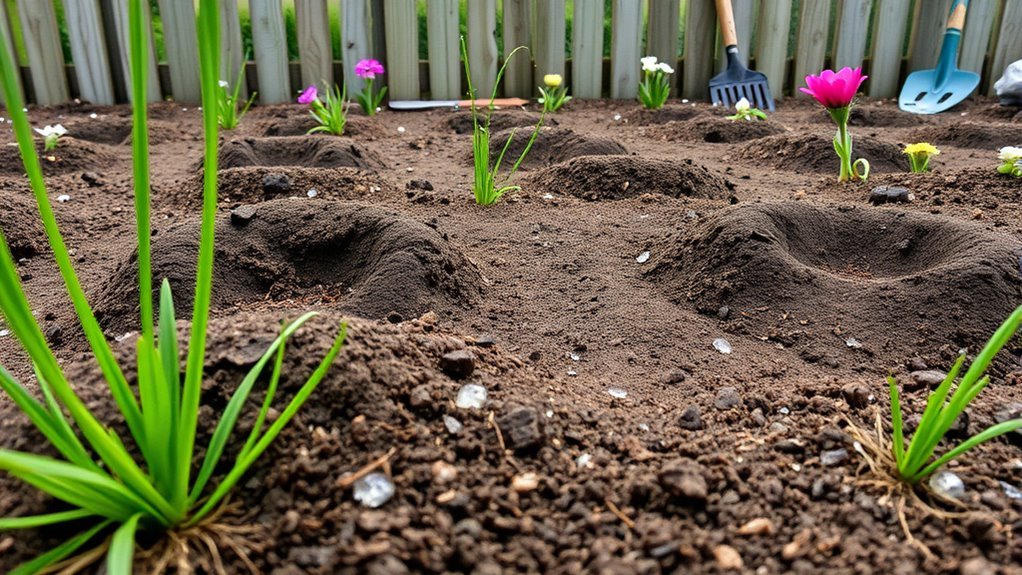
How can you tell if moles have taken up residence in your garden? Look closely for raised ridges or tunnels on your lawn’s surface—they’re sure signs. Moles create these winding pathways as they search for insects underground.
You might also spot small, dome-shaped mounds of fresh soil, called molehills, scattered around. These appear when moles push dirt up while expanding their tunnels. Notice if parts of your garden seem uneven or if the grass looks disturbed.
You won’t usually see moles since they stay mostly underground, but their tunnel patterns are clear indicators. If you find these signs, it means moles are actively burrowing.
Catching their presence early helps you decide how to manage them before they cause bigger problems.
Why Moles Damage Your Lawn and Plants
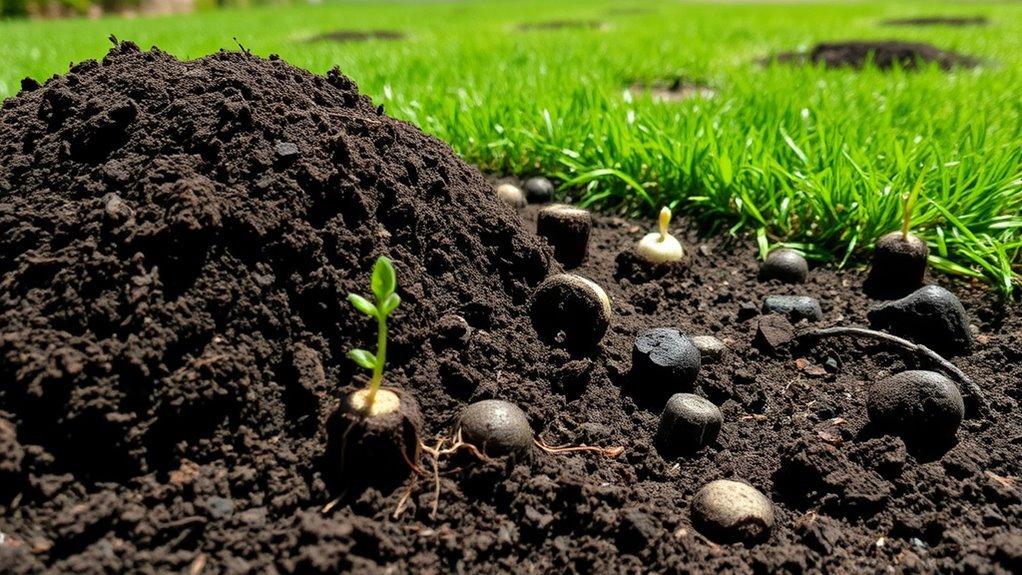
Although moles play a role in controlling insect populations, their tunneling can seriously damage your lawn and plants. When moles dig, they disrupt soil structure and root systems, leading to uneven ground and stressed vegetation.
Moles help control insects but their digging disrupts soil and harms your lawn and plants.
You’ll notice raised ridges and molehills, which not only look unsightly but can also choke grass and hinder plant growth.
Here’s why moles cause problems:
- Root Damage: Tunnels cut through roots, preventing plants from absorbing water and nutrients.
- Soil Displacement: Moving soil to the surface creates mounds that smother grass and small plants.
- Plant Instability: Shifting soil weakens plant anchorage, making them prone to falling over or dying.
Understanding these effects helps you appreciate why controlling moles is essential for a healthy garden.
Natural Mole Deterrents That Actually Work
When moles start wreaking havoc in your garden, you’ll want to try natural deterrents that actually work before resorting to harsher methods. These options protect your plants while being safe for pets and kids.
Here’s a quick guide to effective natural mole deterrents:
| Deterrent | How It Works | Application Tips |
|---|---|---|
| Castor Oil | Creates unpleasant smell | Mix with water, spray tunnels |
| Coffee Grounds | Repels with strong scent | Sprinkle in molehills |
| Garlic Cloves | Releases sulfur compounds | Bury near mole activity |
| Vibrating Stakes | Emits vibrations moles dislike | Insert into soil around garden |
| Chili Peppers | Irritates mole’s sensitive nose | Mix with water, spray regularly |
Try these methods consistently to keep moles away naturally.
How to Use Plants and Landscaping to Repel Moles
If you want to keep moles out of your garden without chemicals, using certain plants and landscaping techniques can make your space less inviting to them. Moles dislike strong smells and dense roots, so you can use this to your advantage.
- Plant mole-repelling plants: Try daffodils, marigolds, or castor beans. Their scent and roots deter moles naturally.
- Create physical barriers: Use gravel or mulch layers around flower beds to disrupt mole tunnels.
- Maintain a tidy garden: Regularly trim grass and remove dense ground cover where moles hide and build nests.
How to Protect Your Vegetable Patch From Moles
To keep moles out of your vegetable patch, start by installing physical barriers like underground fencing.
You can also use natural repellents that make your soil less inviting to them.
Regular soil maintenance helps create conditions that discourage moles from settling in.
Physical Barriers Installation
Although moles are skilled at burrowing underground, you can effectively keep them out of your vegetable patch by installing physical barriers. These barriers create an obstacle that moles can’t easily bypass, protecting your plants from damage.
To install barriers correctly, consider these steps:
- Use hardware cloth: Bury a wire mesh with 1/4-inch openings at least 12 inches deep around your garden’s perimeter to block mole entry.
- Add a vertical barrier: Extend the mesh 6 inches above ground to prevent moles from climbing over.
- Create a bottom flap: Bend the bottom of the mesh outward at a 90-degree angle to stop tunneling beneath the barrier.
Natural Mole Repellents
Why rely solely on physical barriers when you can also harness natural mole repellents to protect your vegetable patch? Using natural repellents is an eco-friendly way to keep moles at bay.
Castor oil-based sprays are popular; they irritate moles without harming them. You can easily make a homemade spray by mixing castor oil, water, and a bit of dish soap.
Garlic and chili pepper sprays also work well by creating an unpleasant environment underground. Another effective method is planting mole-repelling plants like marigolds, daffodils, or fritillaries around your garden’s edges.
These plants emit scents that moles dislike. Regularly applying these natural repellents not only keeps moles away but also preserves your soil’s health, ensuring your vegetables can grow strong and undisturbed.
Soil Maintenance Techniques
When you maintain healthy soil, you create an environment that’s less inviting to moles and more supportive of your vegetables. Moles prefer loose, moist soil teeming with grubs and insects, so managing soil conditions can help keep them away.
Here are three key soil maintenance techniques to protect your vegetable patch:
- Improve Drainage: Avoid overly wet soil by adding organic matter or sand to improve drainage. Moles dislike dry, compact soil.
- Regularly Turn Soil: Till your garden to disrupt mole tunnels and reduce insect populations they feed on.
- Use Mulch Wisely: Apply mulch sparingly to prevent creating moist, inviting conditions for moles while still protecting your plants.
How to Set Up Mole Traps Safely
Before setting up mole traps, you need to identify active tunnels to guarantee effectiveness. Look for fresh molehills or raised ridges indicating recent activity. Once located, clear the soil lightly to expose the tunnel without collapsing it.
Position the trap directly inside the tunnel where the mole travels. Make sure the trap’s trigger mechanism is set properly and test it carefully. Always wear gloves to avoid transferring your scent, which can deter moles.
Place warning signs or barriers to prevent accidental triggering by children or pets. After setting the trap, check it frequently to avoid unnecessary suffering. Handle and dispose of any caught moles humanely and wash your hands thoroughly afterward.
Following these steps ensures safe, effective mole control in your garden.
Effective Homemade Remedies to Keep Moles Away
You can keep moles at bay using natural repellents you make yourself. Simple recipes with common ingredients offer effective mole deterrents without harsh chemicals.
Plant-based solutions also provide a safe way to protect your garden from unwanted digging.
Natural Repellents That Work
Several natural repellents can help keep moles away from your garden without using harsh chemicals. You can try these simple, effective options to protect your plants and soil.
- Castor Oil: Moles dislike the smell and taste of castor oil. Mix it with water and spray it on your lawn to deter them naturally.
- Coffee Grounds: Sprinkle used coffee grounds around your plants. The strong scent repels moles and also enriches the soil.
- Garlic: Plant garlic cloves or crush garlic and scatter it near mole tunnels. The pungent odor keeps moles at bay.
Using these natural repellents regularly can help create an environment moles avoid, giving your garden a better chance to thrive without harmful chemicals.
Homemade Mole Deterrent Recipes
Although moles can be persistent garden pests, you can tackle them effectively with homemade deterrent recipes using simple ingredients found around your home. One popular option is mixing castor oil with water and a few drops of dish soap, then spraying it over mole tunnels. The strong smell and taste drive moles away without harming your plants.
Garlic and chili powder also work well—sprinkle them around problem areas to create an unpleasant environment for moles.
Another easy remedy is placing cotton balls soaked in peppermint oil in moleholes; the scent is a natural mole repellent.
You’ll want to reapply these treatments after rain or every couple of weeks to maintain effectiveness.
These DIY solutions help protect your garden without relying on harsh chemicals.
Plant-Based Solutions for Moles
When moles invade your garden, plant-based solutions offer a natural and effective way to drive them away without damaging your landscape. You can use certain plants to create a barrier that moles find unpleasant, encouraging them to move elsewhere.
Here are three effective options you can try:
- Castor Bean Plants – Their roots release compounds that irritate moles, making your garden less inviting.
- Marigolds – Their strong scent repels moles and other pests while brightening your garden’s appearance.
- Garlic and Onion – Planting these produces a pungent smell underground that moles dislike, helping keep them at bay.
How to Choose the Best Mole Repellent Products
Choosing the best mole repellent products requires understanding how each option works and what fits your garden’s specific needs. You’ll find repellents that use natural ingredients, like castor oil, which irritate moles’ senses without harming them. Electronic repellents emit vibrations underground, deterring moles through discomfort.
When picking a product, consider your garden’s size, soil type, and whether you want a chemical-free approach. Also, check for easy application and how often you’ll need to reapply.
Read reviews and labels carefully to ensure effectiveness and safety for pets and kids.
When to Call a Professional for Mole Control
If your efforts with mole repellents aren’t making a noticeable difference, it might be time to bring in a professional. Some mole problems require expert intervention to prevent further damage and protect your garden effectively.
You should consider calling a professional when:
- The mole activity persists despite repeated use of repellents and traps.
- You notice extensive tunneling that disrupts plants and lawn integrity.
- You want a safe, humane, and long-lasting solution tailored to your specific garden conditions.
Professionals have the experience, tools, and knowledge to assess the severity of the problem and apply targeted treatments.
Don’t wait too long—early expert help can save you time, money, and frustration while preserving your garden’s health.
How to Maintain a Mole-Free Garden Long Term
To keep your garden mole-free long term, you’ll need to monitor the soil regularly for any signs of activity.
Using natural deterrents like castor oil or planting mole-repellent plants can help maintain a barrier.
Staying consistent with these methods will protect your garden from future mole problems.
Consistent Soil Monitoring
Although moles can be persistent, you can keep them at bay by regularly checking your soil’s condition. Consistent soil monitoring lets you spot early signs of mole activity and maintain a mole-free garden long term.
Here’s what you should do:
- Inspect for tunnels and mounds weekly. Fresh molehills or raised tunnels indicate recent activity.
- Check soil moisture and texture. Moles prefer moist, loose soil rich in insects. Adjust watering and aeration to make it less inviting.
- Assess insect populations. Use simple traps or observe soil health to reduce their food source, discouraging moles.
Natural Deterrent Methods
While moles can be stubborn, you can effectively discourage them using natural deterrent methods that work with your garden’s ecosystem. These approaches minimize harm and keep your garden healthy long term.
Planting mole-repelling plants, using natural predators, and applying organic repellents can create an environment moles avoid.
Here’s a quick guide:
| Method | How It Works | Example |
|---|---|---|
| Repelling Plants | Emit scents moles dislike | Daffodils, Garlic |
| Natural Predators | Encourage animals that eat moles | Owls, Snakes |
| Organic Repellents | Use safe substances to repel | Castor oil, Coffee grounds |
Use these consistently, and your garden will stay mole-free without chemicals.
Frequently Asked Questions
Are Moles Beneficial for My Garden Ecosystem?
Yes, moles are beneficial because they aerate your soil and control insect populations.
However, they can also disrupt roots and create tunnels, so you’ll want to balance their benefits with potential garden damage carefully.
What Animals Prey on Moles Naturally?
Think of owls as night-time detectives hunting moles silently. You’ll find foxes, snakes, and hawks also prey on moles naturally. They keep mole populations in check, like nature’s own pest control team working undercover.
Can Moles Carry Diseases Harmful to Humans?
Yes, moles can carry diseases like tularemia and leptospirosis, which might harm you. You should avoid direct contact with them or their tunnels and always wear gloves when handling soil that could be contaminated.
How Do Moles Affect Earthworm Populations?
You might find that moles gently reduce earthworm numbers since they consider them a tasty treat. While this keeps worm populations in check, it’s a natural balance you’ll want to observe carefully to protect your soil’s health.
Do Different Mole Species Require Different Control Methods?
Yes, different mole species require varied control methods because their behavior and habitat preferences differ.
You’ll need to tailor traps, repellents, or barriers specifically to the species you’re dealing with for effective mole control.
Conclusion
You might think moles are impossible to get rid of, but with consistent effort, you can protect your garden. Using natural deterrents and smart landscaping won’t harm your plants or the environment. Plus, homemade remedies give you affordable options.
Remember, acting early and combining methods is key to success. If things get out of hand, professionals can help. Stay patient and proactive, and you’ll enjoy a mole-free garden in no time!
By using these effective mole control methods, you can maintain a healthy garden without damaging your plants or the ecosystem. Consistency and a mix of natural solutions will ensure long-term success in stopping moles in your garden.