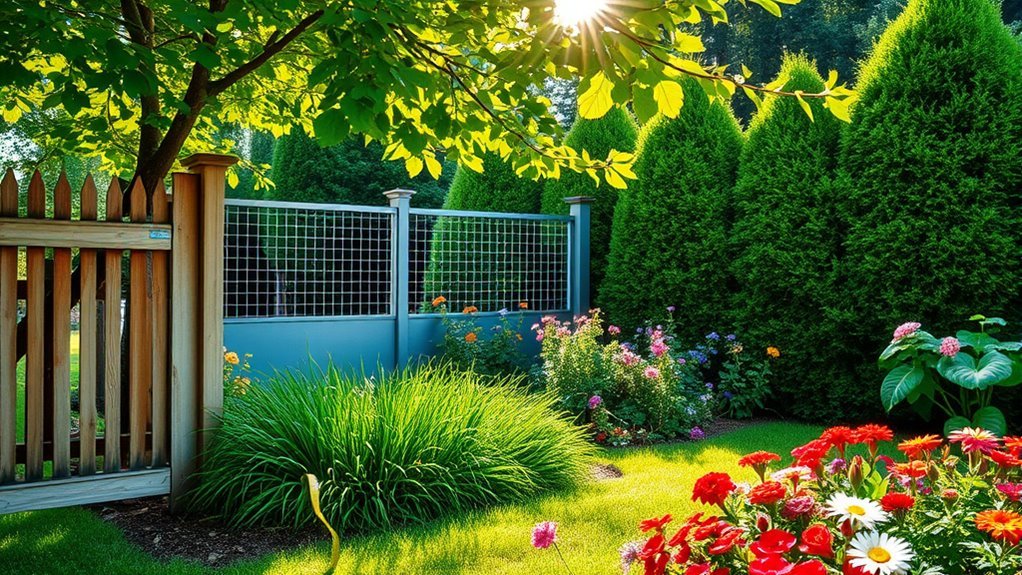
7 Factors That Determine How Much to Fence a Garden
When deciding how much to fence your garden, measuring its perimeter accurately is essential. You’ll also need to consider local regulations on fence height and materials to ensure compliance. Garden size, shape, and plant choices greatly influence fence design and height.
Think about the level of security and privacy you want to achieve with your fence. Your budget and maintenance requirements are important factors to weigh as well.
Climate plays a significant role in material durability, so choose your fencing materials wisely. Keep these factors in mind to create a fence that suits your space, style, and wallet—there’s more to explore for a perfect fit.
How to Measure and Calculate the Right Amount of Garden Fencing
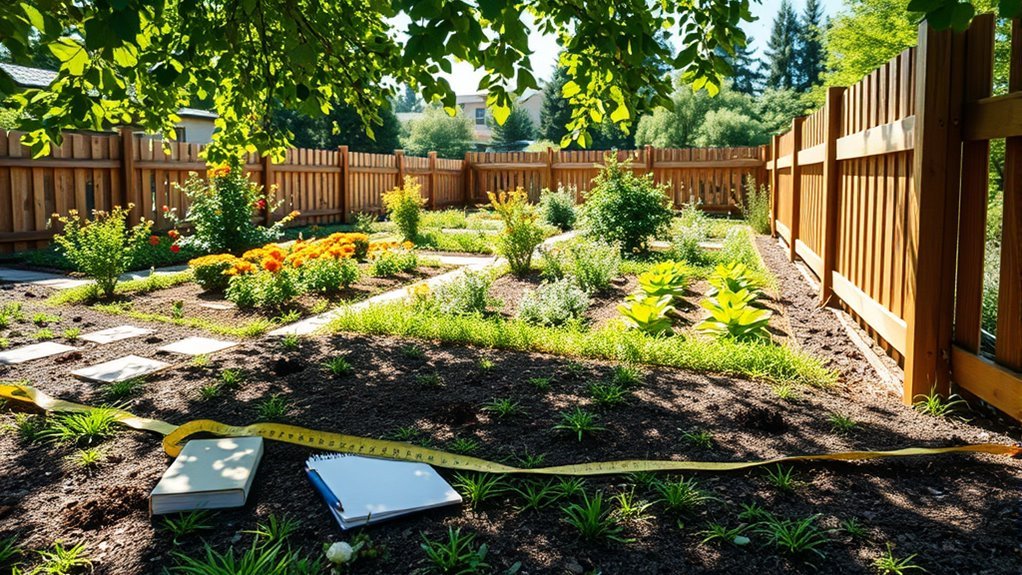
Before you buy any fencing materials, you need to measure your garden’s perimeter accurately. Grab a measuring tape and walk the boundary of your garden, noting down each side’s length.
Measure your garden’s perimeter carefully with a tape before buying fencing materials.
If your garden is irregularly shaped, break it into straight sections to measure easily.
Add the lengths of all sides to get the total perimeter, which determines how much fencing you need. Don’t forget to double-check your measurements for accuracy.
Once you have the perimeter, consider adding a bit extra—usually 5 to 10% more—to account for gates, overlaps, or cutting errors.
This way, you won’t come up short mid-project. Accurate measurement and calculation save you time, money, and frustration, ensuring your fencing fits perfectly around your garden.
How Local Regulations Affect Garden Fence Dimensions
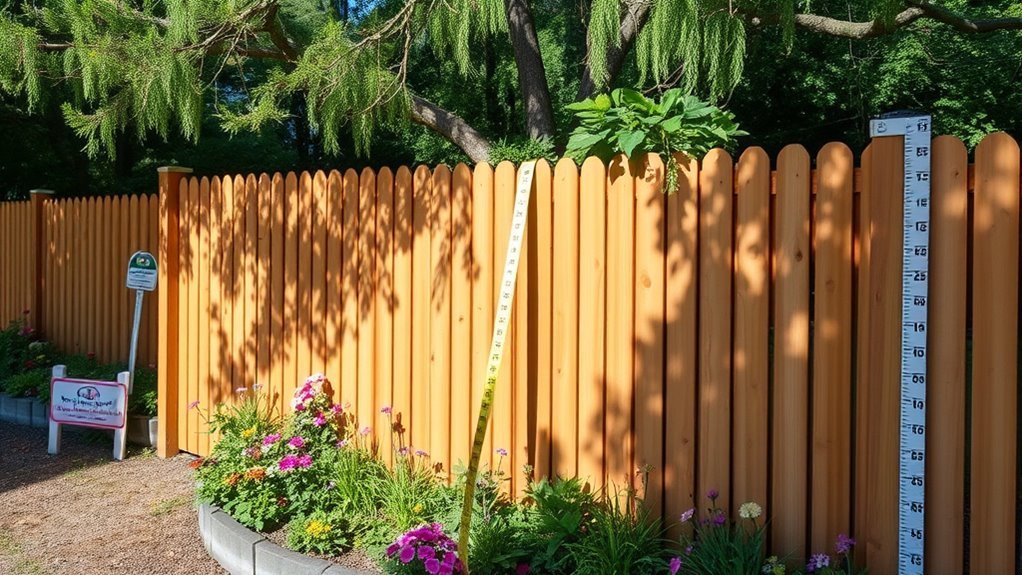
Although you might be enthusiastic to start building your garden fence, you’ll need to check local regulations first, as they often dictate fence height, materials, and placement. These rules help maintain neighborhood aesthetics and guarantee safety.
Before you buy materials or design your fence, contact your city or homeowners’ association to understand restrictions.
Key regulations you should look for include:
- Maximum fence height allowed
- Approved fencing materials
- Required setbacks from property lines
- Rules about visibility at driveways and intersections
Failing to comply could lead to fines or having to rebuild your fence.
By knowing these guidelines upfront, you’ll save time and money while creating a fence that fits both your garden and legal requirements.
Always prioritize checking local laws before starting your fencing project.
How Security and Privacy Needs Shape Your Garden Fence
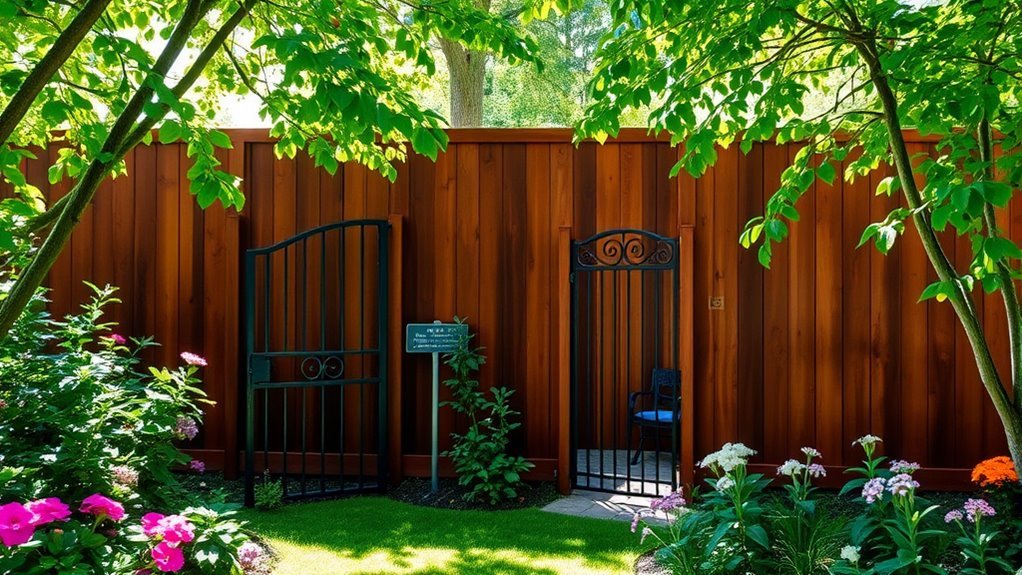
You’ll want to take into account how much security your garden needs when choosing a fence, as higher security often means taller, sturdier materials.
Your privacy preferences also play a big role in deciding the fence style and height.
Balancing both factors helps create a space that feels safe and comfortable.
Security Levels Required
When deciding on a garden fence, consider how much security and privacy you need, as these factors directly influence your choice.
If you want to keep your garden safe from intruders or animals, you’ll need a fence that’s sturdy and tall enough to deter entry.
On the other hand, if security is less critical, a decorative fence might suffice.
Think about:
- The risk level in your neighborhood
- Whether you need to keep pets or wildlife out
- If you want to prevent unauthorized access
- The potential for vandalism or theft
Privacy Preferences Impact
How much privacy do you really want from your garden fence? Your privacy preferences directly shape the fence’s height, material, and design.
If you value seclusion, you’ll likely choose a taller, solid fence like wood or vinyl, blocking views and creating a personal retreat.
On the other hand, if you enjoy openness but still want some boundary, consider partial privacy options like lattice or picket fences.
Remember, privacy also ties into security; a fence that’s too low or see-through might invite unwanted attention.
Think about how much visibility you’re comfortable with—whether from neighbors, passersby, or even pets.
How Your Garden’s Size and Shape Affect Garden Fencing Needs
Because the size and shape of your garden dictate the amount and type of fencing required, understanding these factors can save you time and money. Larger gardens need more fencing material, increasing costs, while oddly shaped gardens may require custom solutions.
Here’s what to take into account:
- Perimeter length: Calculate accurately to avoid overbuying or shortages.
- Garden shape: Irregular shapes might need additional posts or special fittings.
- Accessibility: Larger gardens may require multiple gates for convenience.
- Maintenance: Bigger fenced areas often need more upkeep, influencing your material choice.
What Types of Plants Influence Garden Fence Height and Style
Although garden fencing serves many practical purposes, the types of plants you choose play a significant role in determining both the height and style of your fence.
If you’re growing tall plants like sunflowers or climbing vines, you’ll want a taller fence to provide support and prevent damage from wind.
Conversely, low-growing herbs or flowers might only require a shorter fence, focusing more on style than function.
Thorny or delicate plants may call for fences that keep animals out without harming the foliage, so consider smooth or picket styles.
Additionally, if you plan to train vines or espalier fruit trees against your fence, choose designs with ample structure, such as lattice panels.
Your plant choices directly influence how your fence looks and functions.
How Local Climate Affects Garden Fence Materials and Durability
You’ll want to think about how your local weather affects fence materials, since rain, sun, and wind can wear them down differently.
Choosing the right material based on your climate helps keep your fence durable year-round.
Let’s explore which options stand up best in various seasons and conditions.
Weather Impact On Materials
When selecting materials for your garden fence, consider how your local climate can accelerate wear and tear. Different weather conditions can cause damage faster than you might expect, so choosing durable materials is key.
For example, constant rain may lead to wood rot, while intense sun exposure can fade paint and weaken plastic. Wind can loosen fastenings, and freezing temperatures might cause cracking.
Keep these weather impacts in mind:
- Moisture promotes rust on metal and rot in untreated wood
- UV rays degrade plastics and paint finishes
- Strong winds stress joints and posts
- Freeze-thaw cycles create cracks in materials
Climate-Specific Fence Choices
Because different climates challenge fence materials in unique ways, choosing the right type for your local weather is essential to ensuring durability and longevity.
If you live in a humid area, opt for rot-resistant woods like cedar or vinyl, as they handle moisture better and resist mold.
In dry, hot climates, metal fences with rust-resistant coatings work well since they withstand heat without warping.
Coastal regions expose fences to salty air, so materials like aluminum or treated wood that resist corrosion are smart choices.
In windy areas, you’ll want sturdy, well-braced fences that won’t easily tip over or break.
Durability In Different Seasons
Matching your fence material to your climate goes beyond just handling moisture or wind—it also impacts how well your fence holds up through changing seasons. You want a fence that withstands temperature swings, rain, snow, and sun without warping or fading.
Different materials react differently depending on your local weather patterns. For example:
- Wood may crack or rot in humid, rainy areas but looks great in dry climates.
- Metal fences resist pests and rot but can rust without proper coating in wet or salty environments.
- Vinyl holds up well against moisture and UV rays but may become brittle in extreme cold.
- Composite materials offer balanced durability across seasons but often come at a higher cost.
Choosing wisely guarantees your fence remains strong and attractive year-round.
How Budget Limits Shape Your Garden Fencing Options
Although you might dream of an elaborate garden fence, your budget often determines what’s realistically possible. You’ll need to balance your desires with costs, prioritizing essential features over luxury details.
Dream big, but let your budget shape practical, essential fencing choices over extravagant details.
Materials like wood or vinyl vary widely in price, so you can select options that fit your financial plan without sacrificing durability.
If funds are tight, consider simpler designs or partial fencing to protect key areas. You can also explore cost-saving strategies such as DIY installation or sourcing recycled materials.
Keep in mind that investing a bit more upfront may save money later by reducing maintenance needs.
Ultimately, your budget guides choices, but with careful planning, you can create a functional, attractive fence that suits both your garden and wallet.
Frequently Asked Questions
How Do I Maintain and Repair My Garden Fence?
You should regularly inspect your fence for damage, clean it to prevent rot or rust, tighten loose screws or nails, and replace broken boards or wires promptly.
Treat wood fences with sealant to extend their life and keep them sturdy.
What Tools Are Needed for Garden Fence Installation?
Like a knight preparing for battle, you’ll need a post-hole digger, hammer, measuring tape, level, wire cutters, and a drill.
These trusty tools help you install your garden fence with precision and strength, no fuss.
Can I Add Decorative Elements to My Garden Fence?
Yes, you can definitely add decorative elements to your garden fence. Incorporate items like hanging plants, fairy lights, or colorful ornaments to personalize your space and enhance your garden’s charm.
This allows you to keep it functional while adding a unique touch that reflects your style. Decorative elements can make your garden feel more inviting and visually appealing.
How Long Does It Take to Install a Garden Fence?
It usually takes you about one to three days to install a garden fence, depending on size and complexity. You’ll find that 75% of DIYers finish within two days, making your project quicker than you might expect.
Are There Eco-Friendly Materials for Garden Fencing?
Yes, you can use eco-friendly materials like bamboo, reclaimed wood, or recycled metal for your garden fence. These options reduce environmental impact, look natural, and last long.
Using such materials helps you create a sustainable, attractive garden boundary. They blend well with outdoor settings and promote environmental responsibility.
Conclusion
When deciding how much to fence your garden, keep all these factors in mind so you don’t put the cart before the horse. Measuring accurately, understanding local rules, and considering your privacy and security needs will guide you. Don’t forget how your garden’s shape, plant types, climate, and budget play a role too.
By balancing these elements, you’ll create a fence that’s just right—functional, durable, and perfectly suited to your outdoor haven. Remember, the key to a successful garden fence lies in thoughtful planning and taking into account all 7 factors that determine how much to fence a garden. This approach ensures your fence meets your needs for privacy, security, and aesthetics while fitting your budget and environmental conditions.