7 Effective Tips to Deter Foxes From Your Garden
You can deter foxes from your garden by first recognizing their signs like footprints and noises. Identifying these early indicators is crucial in managing fox activity effectively. Secure trash bins, remove pet food outdoors, and clear fallen fruit to reduce attractants.
Use natural repellents like garlic or vinegar, and set up motion-activated lights or noise devices to startle them. These methods create an uncomfortable environment that discourages foxes from lingering.
Install tall, buried fencing to block entry, and tidy your garden to eliminate hiding spots. Keeping these tips in mind will help you protect your garden effectively and discover more ways to keep foxes at bay.
Signs to Identify Fox Activity in Your Garden
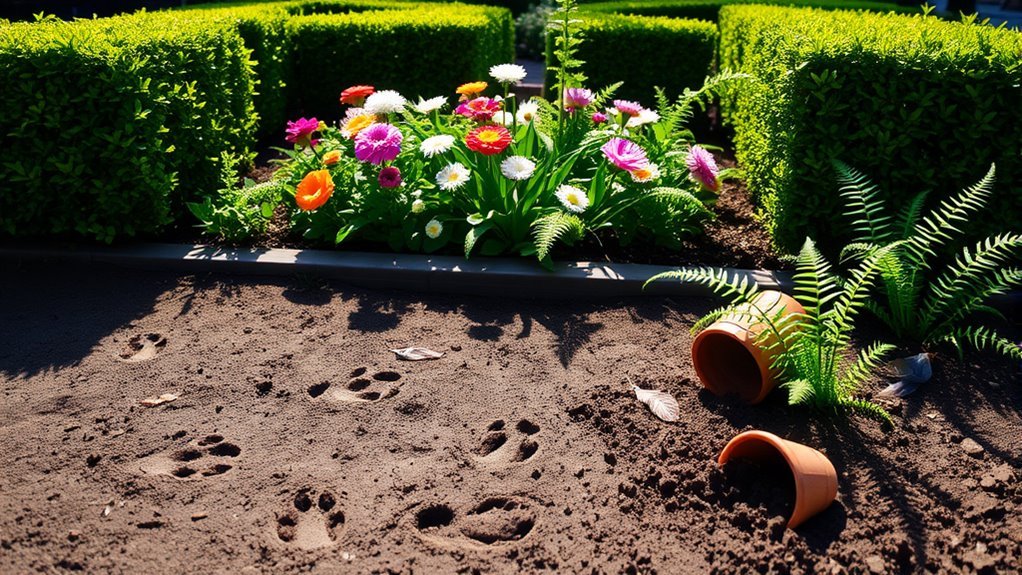
Before you can deter foxes, you need to recognize their presence in your garden. Look for footprints—fox tracks are small, about two to three inches long, with four toes and a distinct triangular pad.
You might spot scat, which is often dark, twisted, and contains fur or bones.
Foxes also leave scratch marks on the ground or dig small holes when searching for food.
Listen for unusual noises at dawn or dusk—foxes are often active during these times and may make sharp barks or howls.
You could notice disturbed plants or tipped-over trash bins, signs that foxes have been scavenging.
Remove Food Sources to Deter Foxes From Your Garden
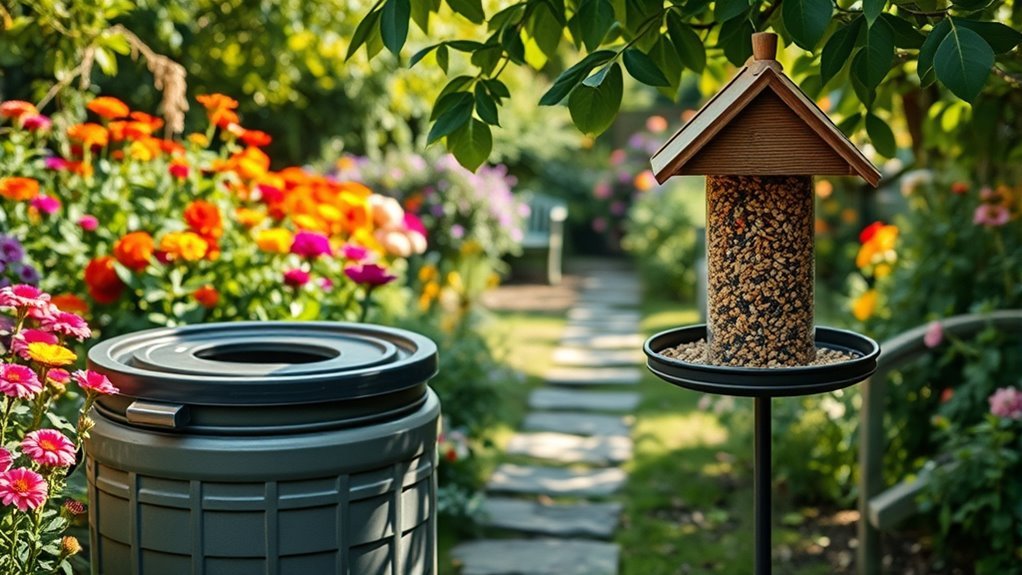
To keep foxes away, make sure you secure your trash bins tightly and don’t leave pet food outside.
Clearing fallen fruit from your garden also removes an easy meal for them.
Secure Trash Bins
One of the simplest ways to keep foxes out of your garden is by securing your trash bins tightly. Foxes are opportunistic feeders and will rummage through easily accessible garbage for food. Make sure your bins have locking lids or use bungee cords to keep them firmly closed.
Store bins in a shed or garage if possible, or place them on a raised platform to make access harder. Clean your bins regularly to eliminate lingering food smells that attract foxes.
Avoid leaving bins out overnight, as this is when foxes are most active.
Remove Pet Food
Leaving pet food outside is a major invitation for foxes to visit your garden. They’re attracted by the easy meal, and once they realize food is available, they’ll keep coming back.
To prevent this, bring pet food bowls indoors immediately after feeding. If you must feed pets outside, do it only during the day and remove any leftovers right away.
Avoid leaving dry food bags or containers accessible, as foxes have a keen sense of smell and can find hidden stashes.
By removing these food sources, you cut off a primary attraction, making your garden less appealing to foxes.
Consistency is key—don’t let pet food become a regular snack for these opportunistic visitors if you want to keep them away.
Clear Fallen Fruit
Foxes are drawn to any accessible food, so pet food isn’t the only temptation in your garden. Fallen fruit can attract them just as much, so it’s important to keep your space tidy.
Here’s how you can manage fallen fruit effectively:
- Regularly walk through your garden to collect any dropped fruit.
- Use a rake or broom to gather fruit from under trees.
- Dispose of the collected fruit in sealed bins or compost away from your garden.
- Consider installing netting over fruit trees to reduce the amount of fruit that falls.
Use Natural Scents and Fox Repellents That Work

Although natural scents won’t guarantee complete protection, you can use them to make your garden less inviting for foxes. Foxes dislike strong smells like garlic, chili, and vinegar. Sprinkling garlic powder or chili flakes around problem areas can help keep them away.
Natural scents like garlic, chili, and vinegar can help deter foxes by making your garden less appealing.
You can also soak rags in vinegar and place them near entry points.
Besides natural options, commercial fox repellents are available and often contain ingredients that mimic fox predators or irritate their senses. When applying repellents, follow the instructions carefully and reapply after rain.
Remember to rotate scents occasionally to prevent foxes from getting used to them. Using these scent-based deterrents alongside other methods boosts your chances of keeping foxes out of your garden.
Use Fencing and Barriers to Keep Foxes Out
When you want to create a physical barrier that foxes can’t easily bypass, installing sturdy fencing is one of the most reliable solutions.
To keep foxes out effectively, consider these key steps:
- Choose a fence at least 6 feet tall to prevent foxes from jumping over.
- Use mesh or wire with small gaps (no larger than 2 inches) so foxes can’t squeeze through.
- Bury the bottom of the fence 12 inches underground or bend it outward to stop digging.
- Add a slanted or angled topper to discourage climbing.
Keep Foxes Away From Bird Feeders and Pets
You’ll want to place bird feeders where foxes can’t easily reach them and consider using fox-resistant designs.
Keeping pet areas secure with sturdy barriers also helps prevent unwanted visits.
Taking these steps protects both your wildlife and furry friends.
Secure Bird Feeder Placement
Where should you place your bird feeders to keep foxes at bay? Location is key. You want to minimize easy access and visibility to foxes while still providing comfort for birds. Try these tips:
- Position feeders at least 6 feet off the ground to prevent foxes from jumping up.
- Keep feeders away from dense shrubs or fences where foxes can hide and stalk.
- Place feeders in open areas with good lighting to deter nocturnal visits.
- Regularly clean up spilled seeds or food underneath feeders to avoid attracting foxes.
Use Fox-Resistant Feeders
Although foxes are clever at finding food, using fox-resistant feeders can considerably reduce their access to birdseed and pet food. These feeders have designs that make it difficult for foxes to reach the contents, such as weight-sensitive perches that close access when a heavier animal steps on them.
You can also opt for feeders with enclosed compartments or narrow openings that only small birds can access.
Regularly clean up spilled seed beneath feeders to avoid attracting foxes.
For pet food, use heavy, stable bowls or feeders with lids, and bring food indoors when your pet finishes eating.
Protect Pets With Barriers
How can you guarantee your pets stay safe while keeping foxes at bay? Protecting your furry friends requires smart barriers that deter foxes without causing harm. Here’s what you can do:
- Install sturdy fencing around pet areas, ensuring it’s at least 6 feet high and buried a foot underground to block digging.
- Use secure covers for bird feeders and outdoor pet food to avoid attracting foxes.
- Create enclosed outdoor spaces or kennels for pets, offering a safe retreat.
- Motion-activated lights or sprinklers near pet zones can startle foxes and discourage their approach.
How to Use Motion-Activated Lights and Noise Devices
When foxes wander into your garden at night, motion-activated lights and noise devices can startle them away quickly. Position these devices near entry points or areas foxes frequent to maximize effectiveness.
Choose lights that emit a bright, sudden flash to surprise foxes without disturbing you.
For noise devices, opt for ultrasonic or sudden loud sounds that activate only when movement is detected, reducing disturbance to neighbors.
Regularly check and maintain these devices to guarantee they function properly and don’t become predictable.
Combining lights and noise increases the chance that foxes will avoid your garden entirely.
Keep Your Garden Clean to Remove Fox Attractants
Since foxes are drawn to food sources and shelter, keeping your garden clean is essential to remove anything that might attract them. You can greatly reduce fox visits by following these simple steps:
Foxes seek food and shelter, so maintaining a clean garden helps keep them away effectively.
- Regularly clear fallen fruits, birdseed, and pet food from your garden to eliminate easy meals.
- Secure trash bins with tight-fitting lids to prevent foxes from scavenging.
- Remove dense brush or debris piles where foxes can hide or build dens.
- Keep compost bins well-maintained, avoiding food scraps that might lure wildlife.
Frequently Asked Questions
Can Foxes Transmit Diseases to Humans or Pets?
Yes, foxes can transmit diseases like rabies and mange to you or your pets. You should avoid direct contact, keep pets vaccinated, and maintain a clean environment to reduce the risk of disease transmission from foxes.
Are There Any Legal Restrictions on Deterring Foxes?
You might think deterring foxes is illegal, but in many places, you can use non-lethal methods legally. Just avoid harming them or their dens, and always check local wildlife regulations before taking action.
It’s important to understand the specific laws in your area, as they can vary widely. Some regions have strict protections for foxes, while others allow more flexibility in managing them. Being informed helps ensure you stay within legal boundaries.
What Time of Day Are Foxes Most Active in Gardens?
Foxes are most active during dawn and dusk, so you’ll likely see them in your garden early morning or late evening.
They prefer these low-light times to avoid humans while searching for food or shelter.
Can Planting Certain Plants Naturally Repel Foxes?
Imagine planting lavender along your garden edges; it naturally repels foxes because they dislike its strong scent.
You can create a fragrant barrier that deters them, helping protect your plants without harsh chemicals or traps.
How to Safely Relocate a Fox if Found in Your Garden?
You should contact local wildlife authorities to safely relocate a fox. Don’t try to handle it yourself, as foxes can be scared or aggressive.
Keep pets inside and give the fox space to leave naturally.
Conclusion
By spotting fox signs early and removing their food sources, you can keep these clever visitors at bay. Using natural scents, sturdy fences, and motion-activated devices works like a charm to protect your garden. Don’t forget to guard your bird feeders and keep the area spotless—cleanliness is your secret weapon.
With these tips in your toolbox, you’ll turn your garden into a fox-free zone, making it a safe haven for your plants and pets. Implementing effective fox deterrent methods ensures your garden remains protected. Stay vigilant and enjoy a peaceful, fox-free outdoor space.