What Stops Cats Pooping in the Garden?
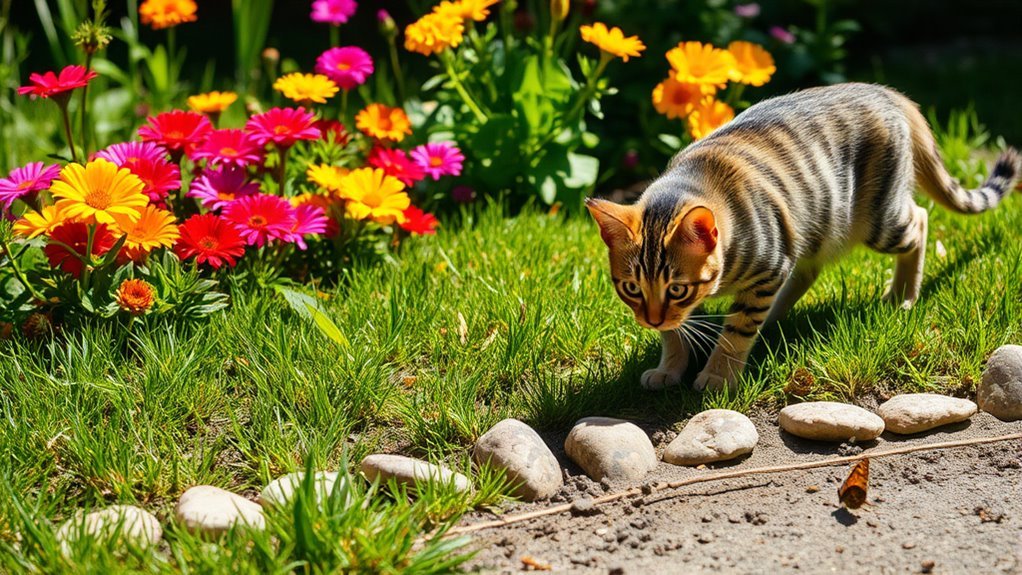
You can stop cats pooping in your garden by making the area less inviting with natural deterrents like citrus peels, lavender, or rosemary. These scents are unpleasant to cats and help keep them away from your plants. Adding physical barriers such as chicken wire, spiky mats, or rough mulch also prevents cats from digging and using your garden as a litter box.
Keeping the soil damp and choosing dense plants further discourages visits by making the garden less comfortable for cats. Using gentle training methods alongside safe commercial repellents can reinforce these efforts effectively.
With a few smart strategies combined, you’ll create a garden cats want to avoid. Keep going to discover how to tailor these techniques effectively.
Why Do Cats Poop in Gardens?
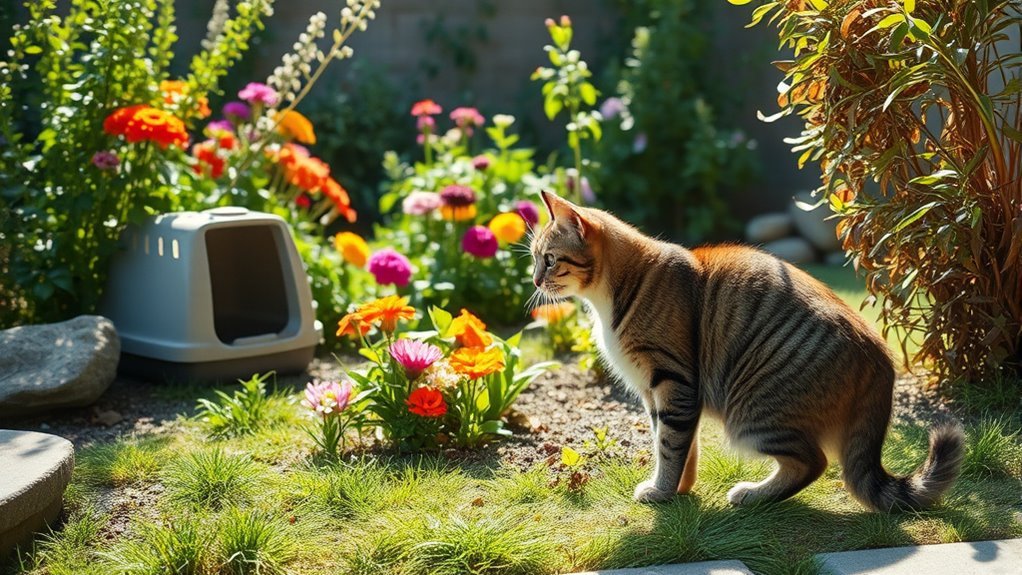
Why do cats choose your garden as their litter box? It’s simple: your garden offers the perfect spot for them to relieve themselves.
Cats look for soft, loose soil that’s easy to dig and bury their waste, and your garden beds fit the bill.
Cats prefer soft, loose soil for easy digging and covering their waste, making garden beds ideal spots.
Unlike hard surfaces, soil absorbs odors, making it more appealing to cats.
Also, your garden may be in a quiet, sheltered area, giving cats a sense of safety while they do their business.
If your garden is near their territory or a food source, they’re more likely to mark it by pooping there.
Understanding this behavior helps you realize it’s natural for cats to treat gardens as convenient, private bathrooms.
How to Identify Cat Pooping Activity in Your Garden
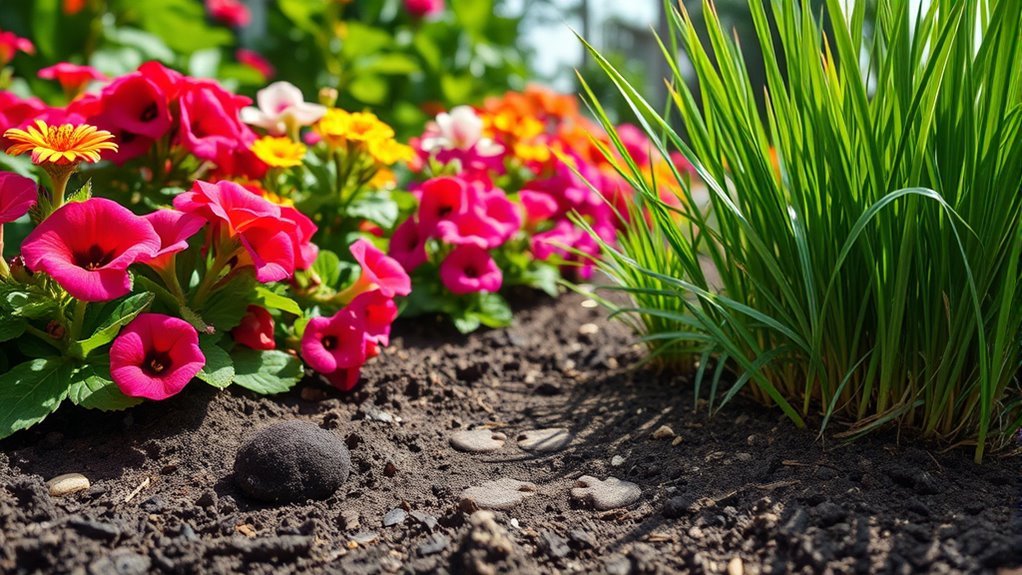
Since cats are naturally drawn to your garden for its soft soil and privacy, it helps to know how to spot their presence. Identifying cat pooping activity early lets you take action before it becomes a bigger issue.
Here’s what to look for:
- Freshly Dug Soil: Cats use soft, loose soil to bury their waste. If you notice small, disturbed patches of earth, it’s a strong sign.
- Distinctive Droppings: Cat feces are usually small, cylindrical, and dark brown with a strong odor. Spotting these confirms their visits.
- Footprints and Smell: You might find tiny paw prints near problem areas, accompanied by a musky scent that lingers in warm weather.
Keep an eye out for these signs to manage and prevent unwanted cat activity in your garden.
Natural Smells to Stop Cats Pooping in Your Garden
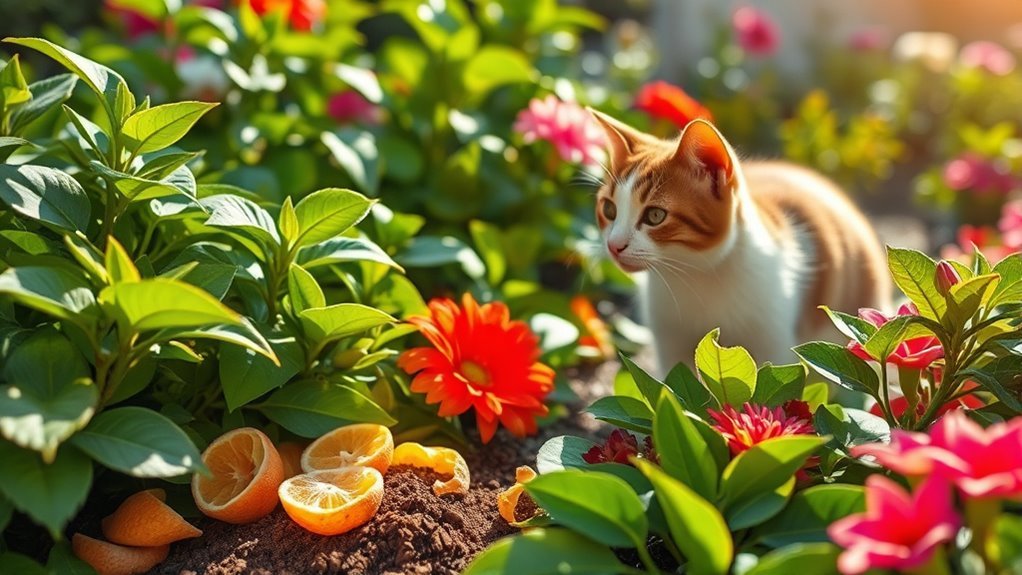
You can use natural smells to keep cats out of your garden without harsh chemicals. Citrus scents, certain herbal plants, and essential oils all work as effective deterrents.
Let’s explore how to use these smells to protect your garden.
Citrus Scents Deterrent
Although cats are drawn to many garden spots, they tend to avoid areas with strong citrus scents. You can use this to your advantage by introducing citrus aromas to keep them away from your garden beds.
Here are three effective ways to use citrus as a natural cat deterrent:
- Scatter citrus peels, like orange, lemon, or lime, around the garden perimeter or in problem spots.
- Spray a diluted citrus essential oil mixture on garden soil and plants, invigorating it regularly to maintain the scent.
- Plant citrus trees or shrubs near garden entrances to naturally emit the scent and discourage cats from entering.
These methods use natural smells cats dislike, making your garden less appealing without harmful chemicals.
Herbal Repellent Plants
Adding natural scents to your garden can keep unwanted cats at bay, and beyond citrus, certain herbs work just as well. Planting rue, lavender, or rosemary creates a strong aroma cats dislike, making them think twice before entering your garden.
You can also try pennyroyal or coleus canina, known as “scaredy cat plant,” which emit scents cats avoid instinctively. Place these herbs strategically near flower beds or vegetable patches to protect key areas.
Not only do these plants repel cats, but they also add beauty and fragrance to your garden. Keep in mind, fresh, healthy plants are most effective—dead or wilting herbs lose their scent and repellent power.
Essential Oils Usage
When you want to keep cats out of your garden without harsh chemicals, essential oils offer a powerful, natural solution. These oils emit scents cats find unpleasant, discouraging them from pooping in your outdoor space.
To use them effectively, dilute a few drops in water and spray around your garden’s perimeter or on problem spots.
Here are three essential oils that work best:
- Citrus oils (lemon, orange) – Cats dislike their sharp, fresh aroma.
- Eucalyptus oil – Its strong, menthol-like scent deters cats efficiently.
- Lavender oil – Pleasant to humans but off-putting for cats.
Remember to reapply after rain and avoid direct contact with plants to prevent damage. This method keeps your garden cat-free naturally.
Plants That Keep Cats From Pooping in Garden Beds
If you want to keep cats out of your garden beds, planting certain types of plants can help. Cats dislike strong smells and textures from some plants, which naturally discourages them from pooping in those areas.
Incorporate these plants strategically to protect your garden without harming the cats.
| Plant Name | Scent/Texture | Cat Reaction |
|---|---|---|
| Lavender | Strong, floral | Avoids due to scent |
| Rue | Pungent, bitter | Repelled by smell |
| Coleus Canina | Garlic-like odor | Deterrent |
| Rosemary | Woody, aromatic | Dislikes the smell |
| Lemon Thyme | Citrusy fragrance | Keeps cats away |
Try planting these around your beds’ edges to create a natural barrier cats won’t want to cross.
Physical Barriers to Stop Cats Pooping in Your Garden
Although plants can discourage cats, physical barriers provide a more direct way to keep them out of your garden. They create an immediate obstacle that cats won’t want to cross, protecting your garden beds effectively.
Here are three effective physical barriers you can use:
- Chicken Wire or Mesh Fencing – Lay chicken wire flat on soil or create a low fence. Cats dislike walking on uneven surfaces.
- Garden Netting – Stretch netting over plants or soil to prevent cats from digging or pooping.
- Spiky Mats or Plastic Plant Protectors – Place these mats around vulnerable areas. They’re uncomfortable for cats but safe and harmless.
Using these barriers will help you maintain a cat-free garden without harming the animals or your plants.
Garden Soil Textures That Discourage Cats From Digging
You can discourage cats from digging by choosing certain garden soil textures. Rough mulch and sharp stones make the surface uncomfortable for their paws.
While moisture-retaining soil keeps the ground less appealing to scratch.
Adjusting these textures helps keep your garden cat-free without harsh measures.
Rough Mulch Materials
Because cats prefer soft, loose soil for digging, using rough mulch materials can effectively discourage them from pooping in your garden. These textures make it uncomfortable for cats to scratch or bury their waste, steering them away from your plants.
Here are three rough mulch options to try:
- Pine cones – Their prickly texture is unpleasant for cats to walk on.
- Cocoa hull mulch – Coarse and slightly abrasive, it’s a natural deterrent.
- Wood chips – Large, uneven chunks create an uncomfortable surface for digging.
Sharp Stone Surfaces
Rough mulch materials can make your garden less inviting for cats, but sharp stone surfaces take this a step further by creating a harsh environment that’s tough on their paws.
When you spread sharp gravel, crushed shells, or jagged stones over soil, cats find it uncomfortable to walk or dig.
These textures discourage them from using your garden as a litter box because they prefer softer, easier surfaces.
Plus, sharp stones are low maintenance and don’t wash away easily, so you won’t have to reapply them often.
Just be sure to choose sizes that won’t harm your pets or children.
Moisture-Retaining Soil
How does soil moisture affect a cat’s digging habits? Cats prefer dry, loose soil that’s easy to dig. Moisture-retaining soil, which stays damp and compact, can discourage them from burrowing and pooping in your garden.
When soil holds moisture, it becomes heavier and less inviting for cats to scratch around. To use this to your advantage:
- Choose clay or loamy soil types that retain water well.
- Mulch your garden beds to help maintain consistent moisture levels.
- Water your garden regularly, especially during dry spells, to keep the soil damp and less appealing to cats.
Safe Commercial Cat Repellents for Your Garden
While keeping your garden free from unwanted cat visits can be challenging, using safe commercial cat repellents offers an effective solution. These products typically use natural ingredients like citrus, lavender, or eucalyptus scents that cats find unpleasant, deterring them without causing harm.
You can find sprays, granules, or ultrasonic devices designed specifically for garden use. When applying sprays or granules, follow the instructions carefully for the best results and reapply after rain.
Ultrasonic repellents emit high-frequency sounds only cats can hear, keeping them away silently.
Training Neighborhood Cats to Stay Out of Your Garden
If you want to keep neighborhood cats out of your garden, training them can be an effective approach. While cats are independent, consistent actions can teach them boundaries. Here’s how you can start:
- Use gentle deterrents like a water spray when you see cats entering your garden. They quickly associate the spray with the area and avoid it.
- Place motion-activated noise makers or sprinklers to surprise and discourage cats without harming them.
- Offer an alternative spot with soft soil and maybe some catnip to redirect their attention away from your plants.
Garden Designs That Deter Cats
Although cats can be persistent, you can design your garden to naturally discourage their visits. Start by planting cat-repellent plants like lavender, rue, or rosemary, which emit scents cats dislike.
Incorporate rough textures, such as thorny bushes or prickly mulch, making your garden uncomfortable for cats to walk or dig in.
Adding barriers like chicken wire or garden netting over soil beds can physically block cats from accessing preferred spots.
You might also use decorative stones or pine cones as ground cover to deter digging.
Raised beds or tightly spaced plants reduce open soil areas, limiting attractive spots for cats.
Combining Methods for Long-Term Cat Prevention
You can boost your garden’s protection by combining effective barrier solutions with natural repellents. Using multiple methods together creates a stronger deterrent that keeps cats away for good.
Let’s explore how these strategies work hand in hand to protect your garden long-term.
Effective Barrier Solutions
When you combine different barrier methods, you create a more effective defense against cats digging in your garden. Relying on one solution often isn’t enough, but layering barriers can keep cats at bay long-term.
Here are three effective barrier solutions to try:
- Chicken Wire: Lay it flat over soil or garden beds. Cats dislike the uneven surface and avoid walking on it.
- Plant Thorny Bushes: Dense, spiky plants like holly or roses create natural, uncomfortable boundaries.
- Physical Fencing: Low garden fencing or mesh barriers block easy access, especially if buried a few inches underground.
Natural Repellent Combinations
Since cats are persistent, combining natural repellents enhances your garden’s protection more effectively than using them alone. You can mix scents cats dislike, like citrus peels with coffee grounds, to create a stronger deterrent.
Adding plants such as lavender or rue alongside these scents boosts the effect by making your garden less appealing.
You might also scatter crushed garlic or sprinkle cayenne pepper in problem areas, but remember to reapply after rain.
Using textured materials like pine cones or rough mulch alongside scent repellents adds an extra barrier cats avoid.
By layering these natural methods, you reduce the chance cats will return.
Keep monitoring and adjusting your approach for long-term success, ensuring your garden stays cat-free without harsh chemicals.
Frequently Asked Questions
Can Cat Feces in Gardens Spread Diseases to Humans?
Yes, cat feces can spread diseases like toxoplasmosis to you. If you handle contaminated soil or plants without gloves, you risk infection.
Always wash your hands thoroughly after gardening to stay safe.
How Does Cat Diet Affect Their Garden Pooping Habits?
Your cat’s diet affects how often they need to poop, influencing their garden visits. High-protein or fibrous food can increase frequency, so adjusting their diet might reduce outdoor pooping.
You’ll notice changes quickly.
Are There Specific Times Cats Prefer to Poop in Gardens?
Yes, cats usually prefer to poop during early morning or late evening when it’s quieter and cooler. You’ll notice they choose times when they feel safest and least disturbed, so timing your garden visits can help manage this.
Can Indoor Cats Develop a Habit of Pooping Outside?
Yes, indoor cats can develop a habit of pooping outside if they’re curious or stressed.
You’ll need to watch their behavior closely and provide a clean litter box to discourage outdoor bathroom trips.
How Do Weather Changes Influence Cats’ Garden Pooping Behavior?
Like sudden storms in a Shakespeare play, weather changes make cats rethink their garden visits. You’ll notice they avoid wet, cold spots, preferring dry, warm areas, so their pooping habits shift with the seasons and conditions.
Conclusion
You can stop cats from pooping in your garden by combining natural smells, plants like lavender, and physical barriers. For example, Sarah planted rue alongside her veggies and sprinkled citrus peels, which quickly discouraged neighborhood cats. She also added chicken wire under mulch to prevent digging.
With these simple steps, her garden stayed clean and cat-free. This proves that a thoughtful mix of methods keeps your outdoor space enjoyable for you and unwelcome for unwelcome feline visitors. Using natural deterrents, strategic planting, and physical barriers is key to stopping cats pooping in the garden.