5 Ideal Widths for a Garden Path
When choosing your garden path width, consider how many people will use it and if you’ll need room for wheelbarrows or strollers. Garden path width plays a crucial role in functionality and comfort. Narrow paths work well at 18 to 24 inches for single walkers.
For two people walking side by side, aim for 4 to 5 feet. If you need wheelbarrow access, plan for at least 3 to 4 feet. Extra-wide paths over 4 feet also make space for seating and accessibility.
There’s more to explore for creating the perfect path for your garden’s needs. Taking these measurements into account will help you design a path that suits your lifestyle and garden space.
Factors to Consider When Choosing Garden Path Width
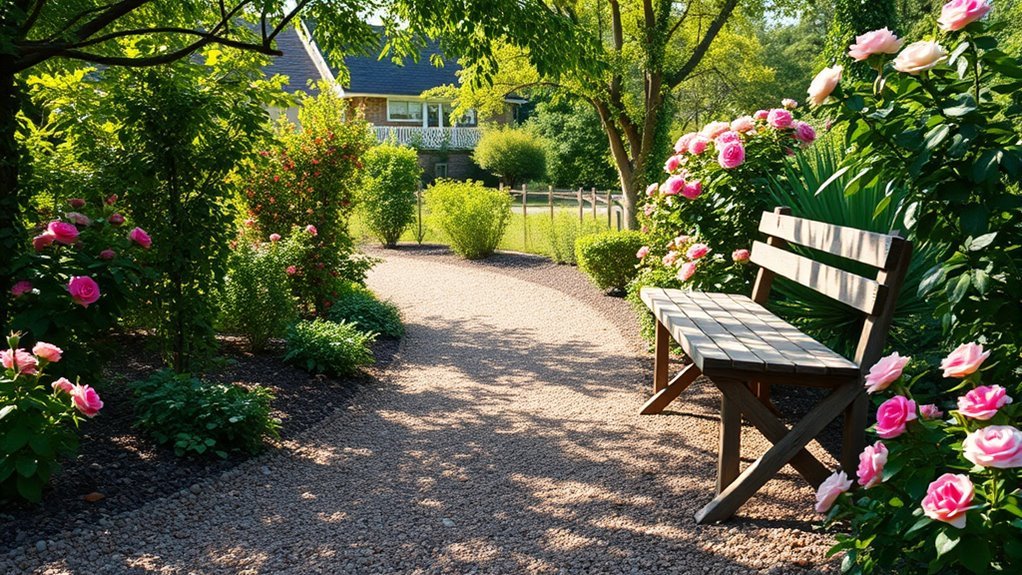
When deciding on your garden path width, you’ll need to take into account how you plan to use the path and the space available. Think about who’ll walk the path — will it be just you, or will you often have guests? Also, consider if you’ll be pushing a wheelbarrow, stroller, or wheelchair along it.
These uses require wider paths for comfort and safety. Next, assess your garden’s size; a narrow path might suit small areas, while larger gardens can handle broader walkways. Don’t forget the style of your garden—formal designs often call for wider, symmetrical paths, while informal gardens may benefit from meandering, narrower ones.
Finally, keep future maintenance in mind; wider paths are easier to upkeep and less likely to suffer wear.
Ideal Widths for Narrow Garden Paths

Although narrow garden paths require less space, you’ll want to make certain they’re wide enough for comfortable use. A path that’s too tight can feel cramped and awkward to walk on.
Narrow garden paths save space but must be wide enough to ensure comfortable, uncramped walking.
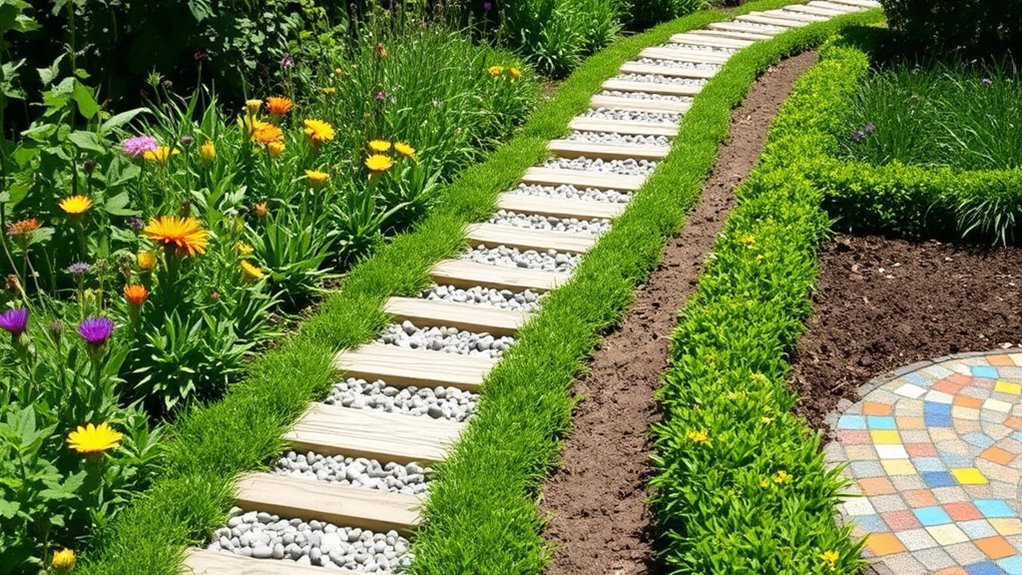
Ideally, narrow garden paths should range between 18 to 24 inches wide.
This width lets you navigate without squeezing through, while saving space for your plants.
Consider these ideal widths for narrow paths:
- 18 inches – Just enough for a single person to walk comfortably with small steps.
- 20 inches – Offers a bit more room for shifting side to side, perfect for tight garden corners.
- 24 inches – Allows you to carry tools or small items without brushing against plants.
Choosing the right narrow path width guarantees ease and enjoyment as you stroll through your garden.
Garden Paths Wide Enough for Two People

How wide should a garden path be to let two people walk side by side comfortably? Ideally, you’ll want a path that’s at least 4 feet wide. This width gives enough room for two adults to stroll together without brushing shoulders or stepping off the path.
If you expect children or want extra comfort, consider widening it to 5 feet. Remember, a wider path encourages social interaction and makes your garden feel more inviting.
Keep the surface even and free of obstacles to maintain ease of movement.
Avoid narrowing spots that force single-file walking. By planning for two-person width, you make your garden accessible and enjoyable for friends, family, or anyone sharing the space with you.
Garden Path Widths for Wheelbarrows and Tools
A garden path wide enough for wheelbarrows and tools should measure at least 3 to 4 feet across to allow easy maneuvering without damaging plants or edging. This width gives you enough room to push a loaded wheelbarrow comfortably and carry long-handled tools without scraping nearby foliage.
When planning your path, keep these points in mind:
- Make certain the path is smooth and stable to prevent tipping when moving heavy loads.
- Leave extra clearance near garden beds to avoid brushing delicate plants.
- Consider the width of your widest tool or equipment to set a minimum path width.
Extra-Wide Garden Paths for Accessibility and Entertaining
When you design extra-wide garden paths, you create space that not only improves accessibility for wheelchairs and walkers but also provides a welcoming area for social gatherings. Aim for paths at least 48 inches wide, giving enough room for mobility aids to pass comfortably and for people to walk side by side.
This width also lets you set up seating, small tables, or decorative elements without crowding the walkway. An extra-wide path invites guests to linger, making your garden a social hub.
Plus, wider paths reduce trip hazards by allowing clear, unobstructed passage.
Whether you’re hosting a garden party or simply enjoying peaceful solitude, these spacious paths enhance both functionality and enjoyment, ensuring your outdoor space is inclusive and inviting.
Frequently Asked Questions
What Materials Are Best for Garden Path Construction?
You’ll want durable, weather-resistant materials like gravel, flagstone, brick, or concrete for your garden path. These provide stability, drainage, and aesthetic appeal.
Choose based on your style, budget, and maintenance preferences to create a lasting path.
How Do I Maintain a Garden Path Year-Round?
You should regularly sweep debris, remove weeds, and check for loose stones or boards. In winter, clear snow promptly to prevent damage.
Apply sealant annually if needed, and fix any drainage issues to keep your path safe and attractive.
Can Garden Path Width Affect Drainage?
You know what they say, “Measure twice, cut once.”
Yes, your garden path’s width can affect drainage; too narrow may trap water, while wider paths allow better runoff, preventing puddles and keeping your garden dry and healthy.
What Lighting Options Suit Garden Paths?
You’ll want to use solar lights, LED path lights, or low-voltage fixtures along your garden path. They provide safety, highlight features, and save energy.
String lights or lanterns also add charm and ambiance in the evening.
How Do Seasonal Changes Impact Garden Path Durability?
You’ll notice seasonal changes cause up to 40% more wear on garden paths due to moisture and temperature shifts.
To maintain durability, you’ll want to use weather-resistant materials and guarantee proper drainage throughout the year.
Conclusion
When choosing your garden path width, think about how you’ll use it daily. Whether it’s a cozy narrow path or a wide one fit for wheelbarrows and gatherings, the right size makes all the difference.
Imagine strolling through your garden like a knight in shining armor, confidently maneuvering every turn. By tailoring your path’s width to your needs, you’ll create a space that’s both functional and inviting.
This thoughtful approach ensures your garden path will enhance your outdoor experience, combining practicality with charm. Selecting the ideal width is key to designing a garden path that suits your lifestyle and garden layout perfectly.