7 Factors That Determine How Much to Pave a Garden
When deciding how much to pave your garden, consider your garden’s size and layout to avoid overpowering the space. The amount of paving needed depends on these factors, so careful planning is essential. Think about the primary purpose—entertaining, relaxing, or walking—to guide the paved area’s size and style.
Account for drainage to prevent water issues, and balance paving with plants and features for harmony. Proper drainage ensures your garden remains functional and beautiful. Factor in material choices and budget for cost and durability to make an informed decision.
Plus, plan for ongoing maintenance to keep your paved garden looking its best. Keep exploring these factors to create your perfect paved garden that suits your needs and aesthetic preferences.
How Garden Size Determines Your Paving Area
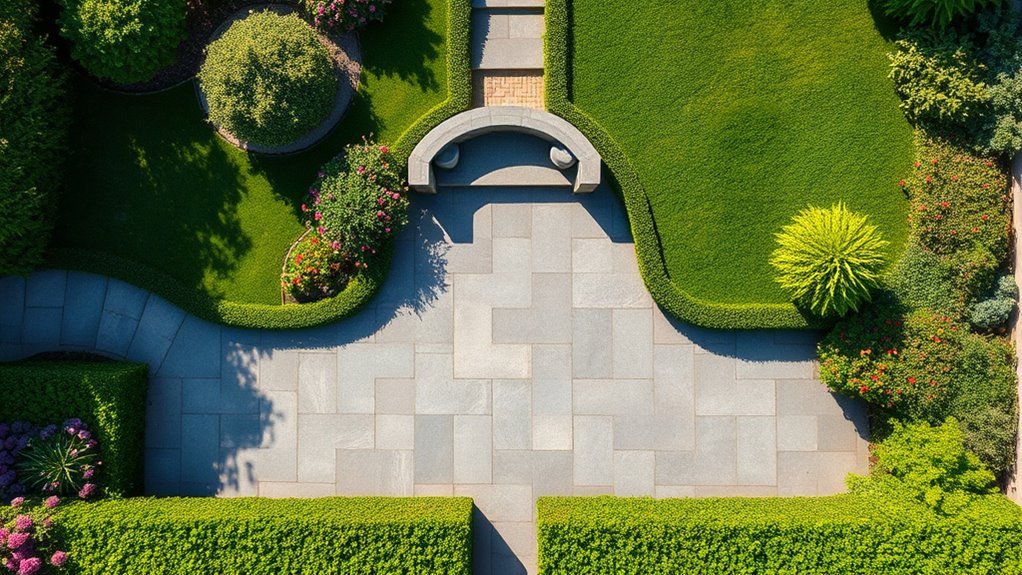
How much space do you actually have to work with? Your garden’s size directly limits how much area you can pave. If you have a small garden, paving too much can overwhelm the space, leaving little room for plants or green areas.
Your garden size determines how much paving fits without overpowering plants or green spaces.
On the other hand, a larger garden allows you to create distinct paved zones, like patios or pathways, without crowding the landscape. Measure your garden carefully and consider the layout before deciding on the paved area.
Keep in mind that leaving some open soil or grass helps maintain balance and supports healthy drainage.
Knowing your garden’s dimensions helps you plan a paving area that fits comfortably, enhancing usability without sacrificing the garden’s natural appeal.
Defining the Purpose of Your Paved Space
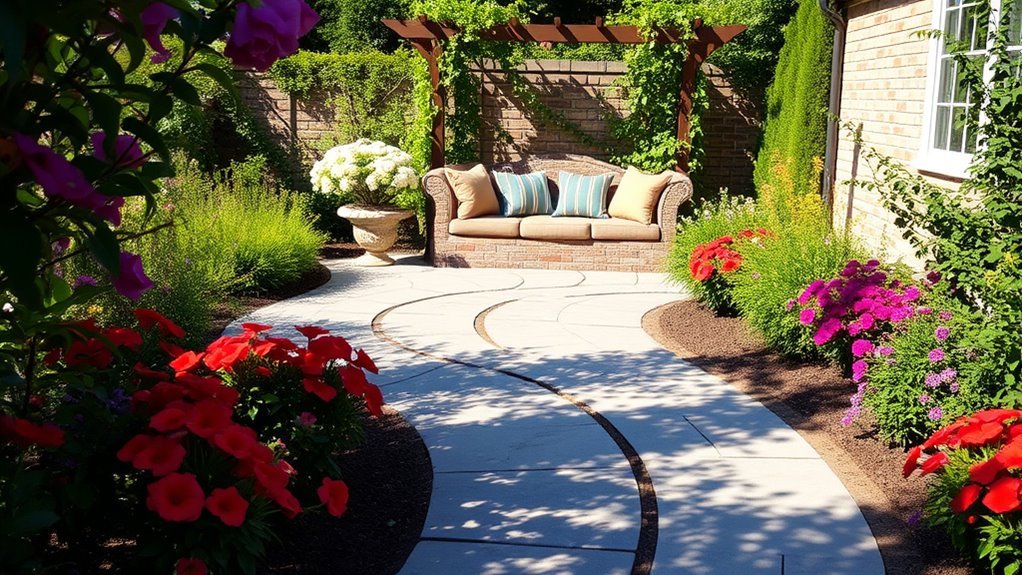
Once you know the size of your garden and the area you can pave, you need to decide what you want that space to do. Your paved area should fit your lifestyle and enhance how you enjoy your garden.
Think about the main activities that will happen there and how often you’ll use it. Are you picturing a lively entertaining spot, a peaceful retreat, or a practical pathway?
Consider these purposes to guide your paving size:
- Hosting family BBQs and gatherings
- Creating a quiet space for reading or meditation
- Providing a safe, clean area for kids to play
- Designing an easy-to-maintain walkway for daily use
Defining your space’s purpose makes it easier to choose the right amount and style of paving.
How Drainage Affects How Much to Pave
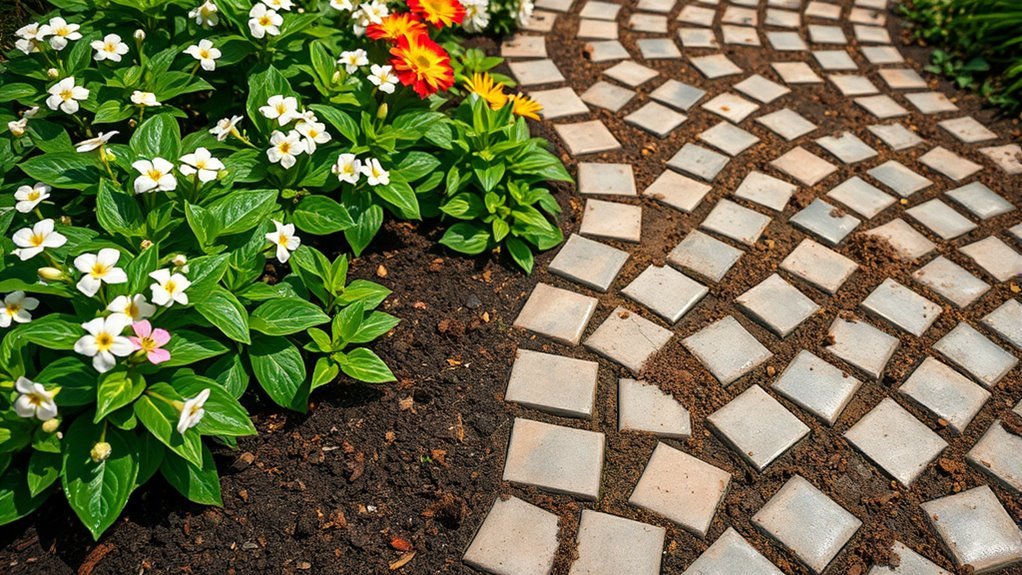
Because proper drainage is essential to maintaining your garden’s health, you’ll need to take into account how water flows before deciding how much area to pave.
Proper drainage is key to garden health; consider water flow before paving any area.
Paving too much can prevent rainwater from soaking into the soil, leading to water pooling or runoff issues. You want to avoid creating areas where water collects, as this can damage plants and promote erosion.
Assess your garden’s natural slope and identify low spots where water tends to gather. If drainage is poor, limiting paved surfaces or using permeable materials can help.
Proper drainage planning ensures you don’t unintentionally cause flooding or harm your garden’s ecosystem.
Balancing Paving With Your Garden’s Plants and Features
Proper drainage plays a big role in deciding your garden’s paving, but you also need to think about how the paved areas will fit with your plants and features. You want your garden to feel cohesive, not chopped up by too much hard surface.
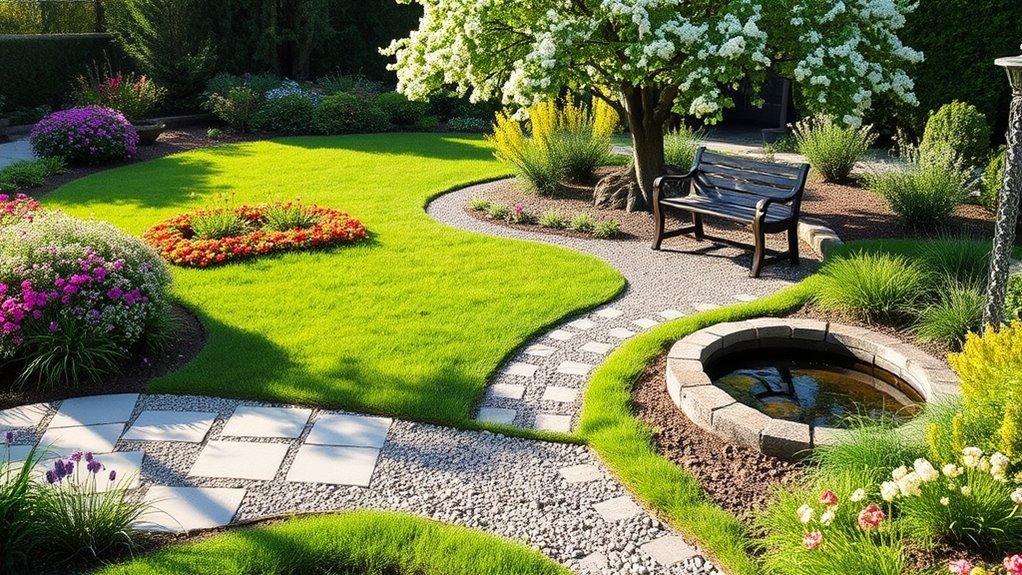
Consider how paving can complement your greenery and focal points. Think about highlighting vibrant flower beds by framing them with subtle paving. Creating pathways that invite exploration without overwhelming delicate plants is also important.
Integrate seating areas where you can relax surrounded by nature. Additionally, leave enough soil space for roots to breathe and plants to flourish.
Planning Your Budget for Garden Paving
When planning your budget for garden paving, you’ll want to factor in both the cost of materials and the labor required for installation.
Different materials vary widely in price, so choosing the right one can help control expenses.
Don’t forget to get reliable labor estimates to avoid surprises down the line.
Material Cost Considerations
Although garden paving can transform your outdoor space, the material cost plays a crucial role in shaping your budget. When choosing materials, you want to balance beauty, durability, and price without compromising your vision.
Consider how different options impact your wallet:
- Natural stone offers timeless elegance but can be pricey.
- Concrete pavers are affordable and versatile for various designs.
- Brick adds warmth and character but may require more maintenance.
- Recycled materials are eco-friendly and often budget-friendly.
Each choice affects not just the upfront cost but also the long-term satisfaction with your garden.
Labor Expense Estimates
Material choices set the foundation for your garden paving budget, but labor expenses often account for a significant portion of the total cost. When estimating labor, consider the complexity of the design, site preparation needs, and the contractor’s rates.
Intricate patterns or uneven terrain demand more time and skill, increasing labor charges. You’ll also pay more if the area requires demolition or extensive groundwork before laying the paving.
Labor costs vary by location, so get multiple quotes to compare. Keep in mind that experienced professionals might charge more but often deliver higher quality and efficiency.
Planning for labor expenses carefully helps you avoid surprises and ensures your project stays within budget while achieving the desired results.
Choosing Materials That Suit Your Space and Style
Since your garden’s paving sets the tone for the entire outdoor space, you’ll want to pick materials that complement both your style and the area’s function. Think about how you want to feel when you step outside—cozy, elegant, natural, or modern?
Choose materials that evoke that emotion while fitting your garden’s practical needs.
Consider these options to inspire you:
- Warmth and charm with natural stone, perfect for a rustic vibe
- Sleek and clean lines from concrete for a modern touch
- Classic brick for timeless appeal and durability
- Eco-friendly gravel for a relaxed, earthy feel
Maintenance Tips for Long-Lasting Paving
To keep your garden paving looking great, you’ll want to stick to a regular cleaning routine that removes dirt and debris.
Don’t forget to apply a sealant to protect the surface and make repairs as soon as cracks appear.
These simple steps will help your paving last much longer with less effort.
Regular Cleaning Routine
Although garden paving can withstand various weather conditions, you’ll need a regular cleaning routine to keep it looking fresh and durable. Dirt, moss, and algae can accumulate quickly, making your paving slippery and unattractive. By staying on top of cleaning, you’ll protect your investment and enjoy a beautiful outdoor space.
Here’s how you can maintain it effectively:
- Sweep away leaves and debris weekly to prevent stains and blockages.
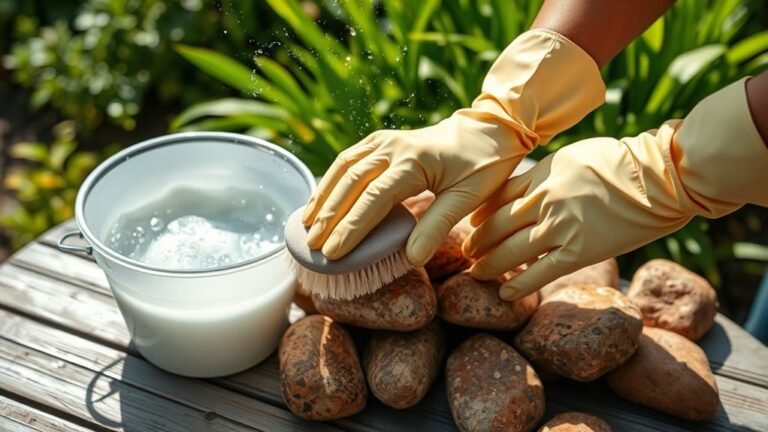
- Use a stiff brush with mild detergent for stubborn dirt spots.
- Rinse thoroughly with a garden hose to avoid residue buildup.
- Remove moss and algae promptly to prevent slippery surfaces.
With these simple steps, your garden paving will stay inviting and safe all year round.
Sealing and Repairs
When you want your garden paving to last, sealing it regularly is essential to protect against weather damage and wear. Applying a good-quality sealant creates a barrier that repels water, prevents stains, and reduces fading from sunlight.
You should reseal your paving every couple of years or as recommended by the product manufacturer.
Along with sealing, keep an eye out for cracks or loose stones. Promptly repairing these issues prevents further damage and costly replacements. Use appropriate fillers or adhesives designed for your paving material.
Regular maintenance not only preserves the appearance but also extends the lifespan of your garden paving. By sealing and repairing consistently, you’ll keep your outdoor space looking great and durable for years to come.
Frequently Asked Questions
Can I Pave My Garden Myself or Should I Hire a Professional?
You can pave your garden yourself if you have the right tools and skills, but hiring a professional guarantees quality and saves time. Consider your experience, budget, and the project’s complexity before deciding which option suits you best.
If you enjoy DIY projects and have some paving experience, doing it yourself can be rewarding and cost-effective. However, complex designs or uneven terrain might require professional expertise to ensure durability and a polished finish.
Ultimately, weigh the pros and cons based on your situation to make the best choice for your garden paving project.
How Long Does Garden Paving Usually Take to Complete?
It usually takes a couple of days to a week to complete garden paving, depending on size and complexity.
You’ll feel like a pioneer laying cobblestones anew, crafting your outdoor space with care and patience.
Are There Eco-Friendly Paving Options Available?
Yes, you can choose eco-friendly paving options like permeable pavers, recycled materials, or natural stone. These choices help reduce runoff, conserve resources, and minimize environmental impact.
They also give your garden a stylish, sustainable look.
What Permits or Regulations Apply to Garden Paving?
You’ll need to check local zoning laws and building codes, as some areas require permits for garden paving. Restrictions may include drainage, surface materials, and property boundaries, so contact your local planning office before starting.
How Does Weather Affect the Paving Installation Process?
Did you know 60% of paving failures come from poor weather conditions? You’ll want to avoid rain and freezing temperatures since they can delay curing, weaken materials, and cause uneven surfaces during your garden paving installation.
Choosing the right weather ensures a smooth installation process and a durable finish. Proper timing helps your paving materials set correctly, giving you a beautiful and long-lasting garden path.
Conclusion
You might think bigger gardens always need more paving, but that’s not necessarily true. Instead, focus on your garden’s purpose, drainage, and existing features to decide the right amount. By balancing these factors with your budget and maintenance plans, you’ll create a beautiful, functional space that lasts.
Remember, it’s not just about size—it’s about how paving fits into your garden’s unique story and style. Considering these elements will help you determine the perfect paving solution. Proper planning ensures your garden remains both practical and visually appealing over time.