7 Tips to Attract Robins to Your Garden
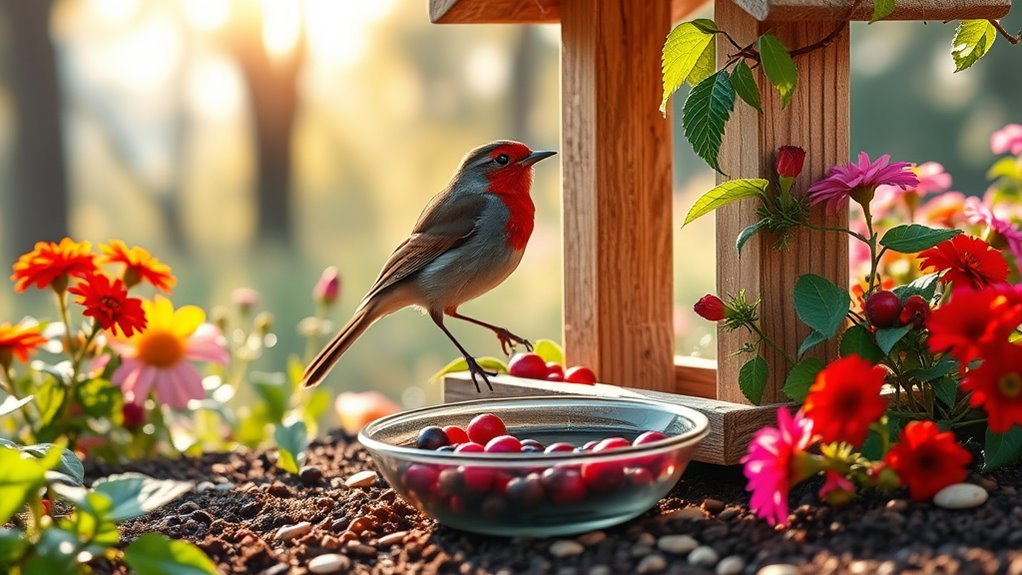
You can attract robins to your garden by offering live mealworms, soaked raisins, and suet.
Place the food on flat surfaces or open trays so they have easy access from the ground.
Also, make sure to provide fresh water, like a clean bird bath or a fountain.
Robins love a good drink and a place to splash around.
Plant fruit-bearing trees and dense shrubs to give them shelter and extra food sources.
These natural spots make your garden even more inviting.
Remember to keep feeders clean and position them safely away from predators.
Creating natural feeding spots by turning over soil can also encourage robins to visit.
For more ways to welcome robins, explore tips on habitat and safety enhancements.
Your garden will soon be a robin-friendly haven!
Key Takeaways
– Offer live mealworms, soaked raisins, and suet pellets to provide robins with preferred, energy-rich food sources.
These treats really help keep them coming back to your garden.
– Scatter food on flat surfaces or use open tray feeders for easy ground-level feeding access.
Robins love it when food is easy to find and reach.
– Plant dense shrubs and fruit-bearing trees like holly and hawthorn to provide natural shelter and food.
This not only feeds them but also gives them a safe place to rest.
– Install bird baths or moving water features in quiet spots to supply fresh water for drinking and grooming.
Robins appreciate a calm spot to freshen up.
– Keep feeders and nest boxes clean, and use predator deterrents like bells and natural scents to protect robins.
A safe and tidy environment makes your garden a robin favorite!
Provide the Right Food to Attract Robins
To attract robins to your garden, you’ll want to offer the right food that suits their natural diet. Robins primarily eat insects and invertebrates, so providing live mealworms is a great way to attract robins effectively.
During winter, you can offer soaked raisins and suet pellets with insects to supply the nutrition and energy they need. Planting fruit-bearing trees like holly and hawthorn also helps increase natural food sources that attract robins.
To make feeding easier, scatter food on flat surfaces or use open tray feeders, catering to their ground-feeding habits. Remember, consistent access to fresh water is essential for robins, especially in winter, supporting their drinking and grooming needs alongside the food you provide.
Place Feeders and Food Where Robins Can Reach Them
To attract robins, set up feeding spots at ground level where they can easily find food. Scatter mealworms, soaked raisins, or apple slices on flat surfaces to mimic their natural foraging.
Make sure these areas are safe and accessible so robins feel comfortable returning. That way, they’ll keep coming back for more!
Ground-Level Feeding Spots
Since robins primarily feed on the ground, you should scatter food on flat surfaces like garden beds or lawns to attract them effectively. Creating inviting ground-level feeding spots is key to bringing these charming birds to your outdoor space.
Use natural food sources that robins love, like worms and insects, and place an open tray feeder near berry-producing plants to increase their chances of finding a meal. Keep your lawn well-mowed and clear of debris to help robins easily spot food.
Turning over flowerbeds regularly exposes hidden earthworms, making your garden irresistible.
- Scatter natural food on flat surfaces
- Use open tray feeders close to the ground
- Keep lawns tidy and debris-free
- Position feeders near berry plants
- Turn over soil to reveal earthworms
These steps make your garden a robin paradise.
Accessible Food Placement
Creating ground-level feeding spots sets the stage, but placing food where robins can easily reach it will keep them coming back. Scatter food sources like soaked raisins and apple slices on flat surfaces or in shallow dishes to make them accessible and attractive to robins.
Position these feeding stations about 2 meters from dense vegetation to reduce predator risks while staying within the robins’ sightlines. Open tray feeders work well since robins prefer open, easy-to-navigate spaces.
Keep the food fresh and replenish it regularly, as robins quickly learn reliable spots and will return consistently when they find dependable food sources. By thoughtfully placing accessible food, you create a welcoming environment that encourages robins to visit your garden frequently.
Turn Over Soil to Help Robins Find Worms
Turn over the soil in your flower beds to attract robins searching for worms and other invertebrates. When you disturb the soil, you expose worms and insects, giving robins easy access to food.
This simple act signals robins that a fresh feeding opportunity awaits, encouraging them to visit your garden more often. Regularly turning soil, especially in spring, invites robins to stick around during their nesting season.
Turning soil signals fresh food for robins, inviting them to visit and stay through nesting season.
Here’s why you should:
- Freshly turned soil reveals hidden worms
- Increases insect availability for robins
- Signals robins to come feed
- Encourages robins to visit frequently
- Supports their natural foraging behavior
Plant Fruit-Bearing Trees and Shrubs for Natural Food
Planting a variety of fruit-bearing trees and shrubs like cherry, crabapple, and hawthorn gives robins a reliable natural food source. This is especially important during winter when berries are essential to their diet.
By including shrubs such as holly and juniper, you not only provide berries but also improve habitat quality. Diverse shrubs and trees attract insects and invertebrates, which robins rely on during warmer months.
To extend food availability, let summer flowers go to seed, offering ongoing nourishment through fall and winter. It’s a simple way to keep food coming even when things start to cool down.
Incorporate different planting styles with leaf litter and log piles to create a healthy ecosystem that encourages foraging. By thoughtfully choosing fruit-bearing trees and shrubs, you’ll make your garden a magnet for robins all year round.
Create Safe Shelter and Nesting Sites for Robins
To attract robins, create safe shelters by planting dense shrubs and climbing plants that offer natural cover. You can also install sturdy nest boxes in quiet spots facing northeast to protect them from harsh weather.
Providing these options gives robins the comfort they need to settle and raise their young in your garden. It’s a simple way to welcome these lovely birds and watch them thrive right outside your window.
Providing Natural Cover
When you create dense shrubs and trees in your garden, you provide robins with essential cover and shelter that help them feel safe. These natural hideaways offer nooks perfect for nesting, encouraging robins to stay and raise their young.
While nest boxes are helpful, dense shrubs offer a more natural environment that robins prefer. To make their habitat even better, you can try a few simple things.
Plant native shrubs that attract insects, their main food source. And keep your garden pesticide-free to make sure their food stays plentiful and safe.
Also, make sure your shrubbery is dense enough to create cozy, hidden spots for shelter. Try to avoid disturbing these areas too often—that can really stress the birds out.
Finally, provide layered vegetation. This gives robins extra protection from predators and helps them feel even more secure in your garden.
Installing Nest Boxes
While dense shrubs offer natural shelter, adding nest boxes can give robins a safe, reliable place to raise their young. To attract the American Robin, install nest boxes made from decay-resistant wood like cedar or redwood.
Use wood at least ¾” thick to prevent heat buildup, ensuring a comfortable environment during warmer months. Position the nest box about 6 feet off the ground, with the entrance hole facing northeast to shield against harsh weather.
Robins prefer open-fronted designs, so choose boxes that offer easy access and visibility. After the breeding season, clean out old nesting materials in autumn to prepare the box for future inhabitants.
Add Water Features That Robins Will Use
Since robins rely on fresh, clean water for drinking and grooming, adding a water feature to your garden can greatly increase their visits. A bird bath filled with fresh water offers a perfect spot for robins to refresh and preen.
To make your water feature irresistible, consider these tips:
- Choose moving water, like a fountain, to attract robins with soothing splashes.
- Keep the bird bath clean to prevent harmful bacteria buildup.
- Place the water feature in a quiet, safe spot where robins feel secure.
- Add floating objects in winter to prevent the water from freezing.
- Refill the water often, especially during hot or dry weather.
Doing these little things can really help keep robins coming back to your garden!
Keep Your Garden Safe and Predator-Free for Robins
Adding water features invites robins to your garden, but keeping them safe requires careful planning. To keep your garden safe and predator-free, position bird feeders about 2 meters from dense vegetation to avoid ambushes.
Install nest boxes in quiet spots, out of cats’ reach, oriented between north and east to shield against harsh weather. Regularly clean feeders and nest boxes to prevent bacteria buildup.
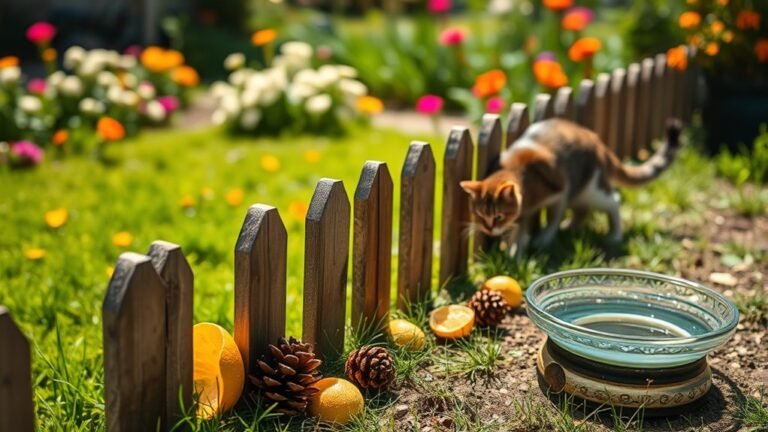
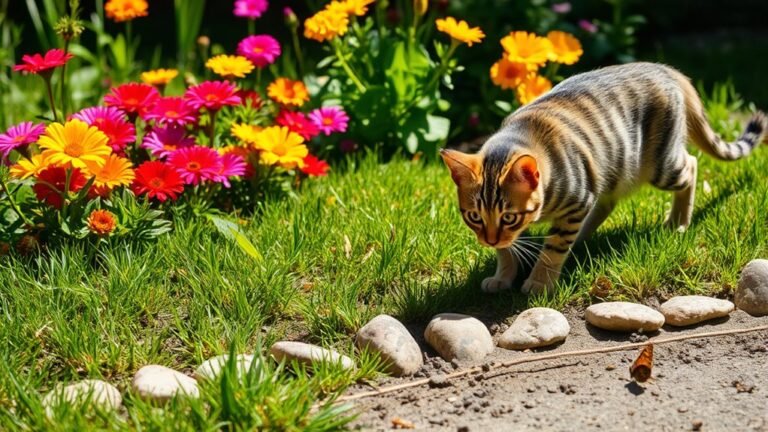
Minimize threats by fitting bells on pet collars and using scents like lavender or coffee grounds to deter predators. These little steps really make a difference in keeping your feathered friends safe and happy.
| Action | Purpose |
|---|---|
| Position feeders 2m away | Reduce predator ambush risk |
| Install nest boxes quietly | Provide safe nesting spots |
| Use pet bells & scents | Deter cats and other natural predators |
Frequently Asked Questions
How to Get a Robin to Trust You?
You’ll earn a robin’s trust by feeding it regularly, staying calm and quiet, and gradually getting closer over time. Avoid sudden movements and let the robin see you as a consistent, safe presence in its environment.
Why Put a Potato in the Bird Feeder?
You put a potato in the bird feeder because its soft texture and carbohydrates attract robins, especially in colder months. Cut it fresh and small to help robins easily peck and enjoy a nutritious, energy-rich snack.
How to Attract a Robin to a Nest Box?
Want robins to RSVP to your nest box party? Place it 5-6 feet high, face it northeast, use thick wood, paint outside, keep it natural inside, and plant near shrubs. They’ll thank you with chirpy visits!
Why Don’t Robins Eat Birdseed?
Robins don’t eat birdseed because they prefer worms, insects, and fruits. You’ll find them foraging on the ground or eating berries, so offering seeds won’t attract them as much as live food or fruit will.
Conclusion
If you want to enjoy robins in your garden, these tips will make your space their favorite spot. Did you know robins eat up to 14,000 insects and worms in a single breeding season?
By providing food, water, shelter, and safety, you’re helping these birds thrive while keeping your garden healthy. It’s a win-win!
So, get started today—your garden will soon be alive with the cheerful presence of robins. Attracting robins not only adds beauty and life to your outdoor space but also supports natural pest control. With just a little effort, your garden can become a safe haven for these delightful birds, creating a vibrant and thriving ecosystem right outside your door.