10 Tips to Deter Foxes From Your Garden
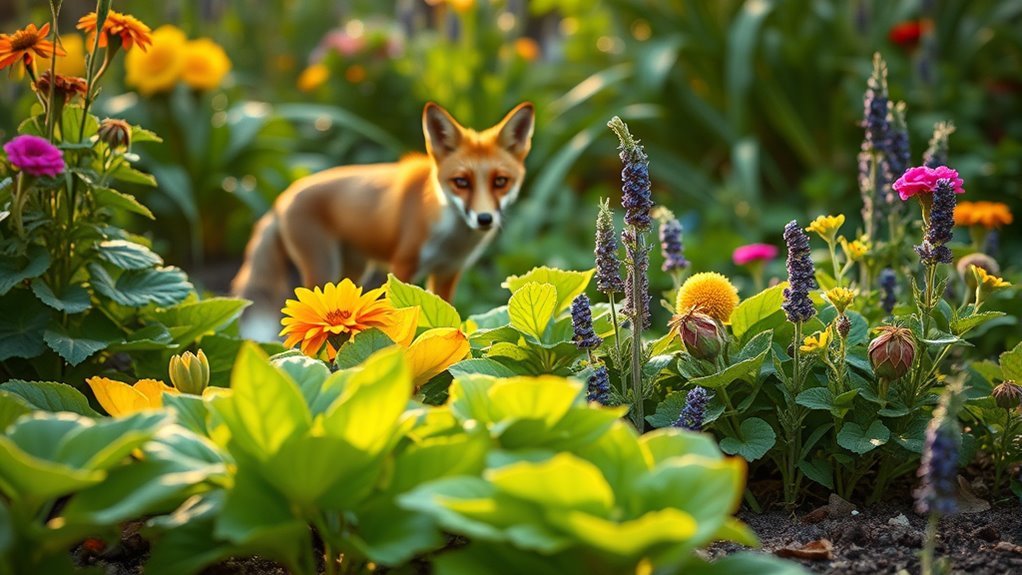
To deter foxes from your garden, start by removing food sources like fallen fruit and pet food. Foxes are always on the lookout for an easy meal, so keeping your garden free of snacks is a great first step.
Secure trash bins and compost with tight lids to block access and reduce temptation.
Clear overgrown vegetation and seal potential dens to reduce hiding spots. Foxes love to lounge in quiet, covered areas, so making your garden less inviting can really help.
Installing tall, sturdy fox-proof fencing with buried mesh is another effective way to keep them out.
You can also try scent deterrents, ultrasonic devices, and motion-activated sprinklers or lights to scare foxes away. These tools can add an extra layer of protection and keep foxes guessing.
Keep an eye on fox activity and consider professional help if you have persistent issues. With these tips, you’ll be better equipped to protect your garden from unwanted visitors.
Key Takeaways
– Remove fallen fruits, vegetables, and pet food from your garden to eliminate fox food sources.
It’s a simple step, but really helps keep foxes away.
– Secure trash bins and compost with tightly fitting lids and sturdy mesh to prevent fox access.
Don’t give foxes an easy meal!
– Trim overgrown vegetation and block potential den sites under sheds and decks to reduce hiding spots.
Foxes like cozy spots, so make your garden less inviting.
– Install 6-8 feet tall galvanized wire mesh fencing buried 12 inches underground to block fox entry.
This kind of fence is tough for foxes to get through.
– Use scent deterrents, motion-activated sprinklers, ultrasonic devices, and professional help to effectively repel foxes.
Mixing different methods usually works best to keep foxes at bay.
Remove Garden Food Sources That Attract Foxes
Since foxes are drawn to easy meals, removing garden food sources can markedly reduce their visits. You should promptly clean up fallen fruits and vegetables, as these are prime food sources that attract foxes.
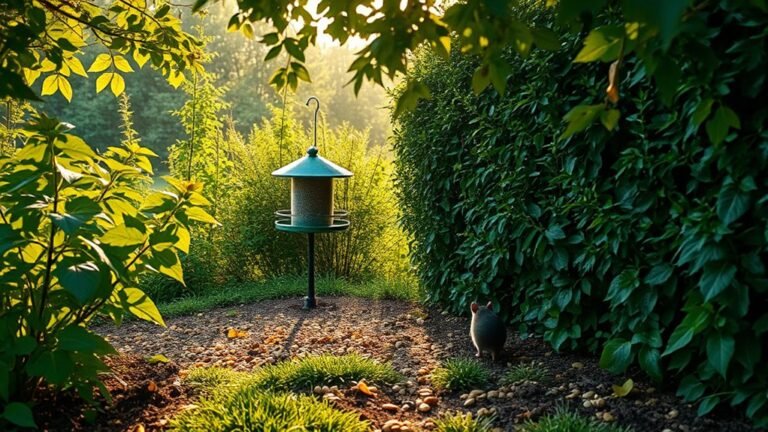
Don’t leave pet food outside, especially overnight, because it provides a reliable meal for them. Bird feeders can spill seeds, so choose ones designed to minimize mess and clean up any dropped seeds to keep foxes away.
Compost piles with strong odors also draw foxes in, so store compost in sealed bins rather than open piles. By taking these steps to remove garden food sources, you actively discourage foxes from frequenting your yard and make it less appealing for them to scavenge.
Seal compost bins tightly to reduce odors and keep foxes from visiting your garden.
This way, you’re effectively helping keep foxes away.
Secure Trash Bins and Compost to Block Fox Access
Although foxes are clever at finding food, you can keep them out by securing your trash bins and compost. Use trash bins with tightly fitting lids or animal-proof containers to prevent foxes from getting into your rubbish.
Avoid plastic bags since foxes can easily tear them open, scattering waste. Enclose compost piles with sturdy mesh or wire to block foxes from rummaging through organic material.
Store pet food and birdseed in sealed, durable containers to eliminate food sources that attract foxes. Regularly clean the areas around bins and compost to remove odors and leftover scraps.
Clear Overgrown Vegetation and Block Fox Shelters
You should regularly trim dense shrubs to reduce hiding spots that attract foxes. Clearing overgrown vegetation makes your yard less inviting for them to settle in.
Also, block potential den sites like crawlspaces or wood piles to keep foxes from making a home nearby. It’s all about making your space less cozy for them.
Trim Dense Shrubs
When you trim dense shrubs and clear overgrown vegetation, you remove the perfect hiding spots foxes use to shelter in your garden. By regularly maintaining your shrubbery, you reduce cover that foxes rely on to feel safe, which helps prevent foxes from digging or nesting nearby.
Keeping plants well-trimmed also improves visibility, letting you spot fox activity early and react quickly. Plus, managing dense shrubs creates physical barriers that block access to crawl spaces or gaps where foxes might enter.
A tidy garden with clear sightlines discourages foxes, as they prefer concealed areas free from threats. So, make trimming dense shrubs a routine part of your garden care to effectively deter foxes and protect your outdoor space.
Block Potential Den Sites
Maintaining trimmed shrubs sets the stage for blocking foxes from making dens in your garden. You should regularly clear overgrown vegetation because dense shrubbery and tall grass provide perfect cover for foxes seeking shelter.
To block access to potential den sites, seal off spaces under sheds, decks, and porches where foxes might nest. Remove clutter like wood piles, debris, or anything that creates sheltered spots for them to hide or den.
Prune bushes to reduce cover height, making your garden less attractive for fox habitation. Also, keep your garden tidy by clearing fallen leaves, fruits, and debris that could draw foxes looking for food and shelter.
Taking these steps will really help keep foxes away by eliminating safe den sites and reducing hiding places. It’s all about making your garden less inviting for them.
Put Up Tall, Secure Fox-Proof Fencing
A fence standing at least 6 to 8 feet tall can effectively block foxes from jumping into your yard. To deter foxes, install tall, secure fencing with galvanized wire mesh buried 12 inches underground to prevent digging access.
Choose a fence with a grid diameter no larger than 3 inches, stopping smaller animals from squeezing through. For added protection, consider attaching an electric wire along the top to discourage climbing.
Regularly inspect your fencing for any damage or gaps, repairing them promptly to maintain a continuous barrier. By putting up this type of secure fencing, you’ll create a strong physical boundary that greatly reduces the chances of foxes invading your garden.
This proactive step is key to keeping your outdoor space safe and fox-free. It’s a simple but effective way to protect your yard!
Plant Prickly Bushes to Create Natural Fox Barriers
Three types of prickly bushes—holly, rose, and barberry—can create a natural barrier that foxes are reluctant to cross. Their sharp thorns and dense growth act as an effective deterrent, making it uncomfortable for foxes to enter your garden.
By planting these prickly bushes at a height of 3-4 feet, you enhance their barrier function and block foxes’ sightlines, which discourages them from approaching. Regular pruning keeps the bushes thick and uninviting, reinforcing the deterrent effect.
Besides protecting your garden, these bushes provide shelter for beneficial wildlife, making them a smart, eco-friendly choice. Use prickly bushes strategically around vulnerable areas to establish a strong, natural barrier that helps keep foxes at bay without harsh measures.
Apply Scent-Based Deterrents Like Garlic and Citrus Regularly
You can keep foxes away by using strong scents like garlic powder and citrus peels. Make sure to place these deterrents around spots foxes like to visit, such as compost bins or pet food areas.
Remember to reapply them regularly since weather can wash away their effectiveness. It’s pretty simple, but staying consistent really helps keep those foxes at bay.
Effective Natural Ingredients
Although foxes are clever, you can deter them by using natural scent-based ingredients like garlic and citrus. Garlic’s strong aroma, especially when mixed with chili powder, acts as an effective fox repellent.
Similarly, citrus peels from oranges and lemons are disliked by foxes and work well when scattered around your garden. These ingredients create an unpleasant environment that keeps foxes away without harming them.
To maintain their effectiveness, you need to reapply these deterrents regularly, especially after rain or windy conditions wash away the scents. Combining garlic with citrus peels boosts the overall repellent power, making your garden less inviting.
Placement Strategies
Since scent-based deterrents lose their potency when wet, it’s important to apply them regularly, especially after rain or watering. You want to sprinkle crushed garlic and chili powder around garden borders and near entry points.
Place citrus peelings like orange or lemon in strategic locations where foxes frequent, such as near garden beds and trash bins. To maximize effectiveness, regularly monitor the deterrents and adjust placement or concentration based on fox activity.
Proper placement guarantees a strong scent barrier that foxes avoid.
| Location | Recommended Deterrent |
|---|---|
| Garden borders | Crushed garlic & chili powder |
| Entry points | Chili powder & garlic mix |
| Near trash bins | Citrus peelings |
| Garden beds | Garlic & citrus combination |
| Known fox paths | Chili powder |
Reapplication Frequency
Because scent-based deterrents like garlic and citrus lose their potency quickly, you’ll need to reapply them regularly to keep foxes at bay. The reapplication frequency is essential since weather conditions like rain and wind wash away or dilute these scents, reducing their effectiveness.
For example, citrus peelings should be replaced weekly to maintain a strong, unappealing aroma. Similarly, mixtures like chili powder and garlic need frequent renewal to act as a reliable barrier.
By consistently applying these scents every few days, especially after adverse weather, you reinforce your garden’s defense. This steady routine not only repels foxes but also encourages them to avoid your space long-term.
Set Up Ultrasonic Devices to Keep Foxes Away
Ultrasonic devices offer a smart way to deter foxes by emitting high-frequency sounds that only these animals can hear. You can set up ultrasonic devices equipped with motion sensors to keep them away effectively, activating only when foxes approach.
Since the sound is inaudible to humans, these devices won’t disturb your peaceful garden. To maximize their effectiveness, consider placing devices strategically to cover common fox entry points.
Also, regularly check and adjust their placement to combat foxes’ adaptation. Avoid obstructions like thick bushes that block sound waves.
And don’t forget to ensure the devices are weather-resistant for durability. That way, they’ll keep working no matter the weather.
Scare Foxes Away With Motion-Activated Sprinklers and Lights
You can effectively scare foxes away by using motion-activated sprinklers and lights that trigger when something moves nearby. Choosing the right type of deterrent light and placing both devices strategically will boost their impact.
Don’t forget to test and maintain them regularly. This way, foxes won’t get used to your setup and will keep their distance.
Benefits Of Motion Activation
When foxes trigger motion-activated sprinklers, sudden bursts of water startle them and keep them away from your garden without causing harm. Using a motion sensor to activate sprinklers and lights creates an unpredictable environment that foxes dislike. This makes deterring foxes way more effective.
Motion-activated lights add an extra layer of defense by illuminating your garden suddenly. Foxes find this uncomfortable because of their nocturnal habits. Together, these devices disrupt fox behavior and protect your plants.
Benefits include:
- Humane, non-lethal deterrence
- Wide coverage area, up to 1,200 square feet
- Works both day and night with sprinklers and lights
- Continuous protection with proper maintenance
You’ll feel safer knowing your garden stays fox-free without harming wildlife. It’s a smart way to protect your plants while being kind to nature.
Types Of Deterrent Lights
Two common types of deterrent lights—motion-activated floodlights and flashing LED lights—work by startling foxes with sudden illumination. Motion lights trigger when foxes approach, creating an unexpected burst of light that deters them from entering your garden.
Floodlights offer broad coverage and a bright, intense flash, while flashing LED lights change intensity or blink unpredictably to increase the deterrent effect. Both types exploit foxes’ natural aversion to sudden stimuli, especially at night when they’re most active.
Using motion lights creates an environment that feels unsafe and unpredictable, discouraging foxes from lingering. Incorporating these deterrent lights into your garden setup helps protect your plants and property efficiently without harm to the animals.
Placement And Maintenance Tips
Strategically placing motion-activated sprinklers and lights near common fox entry points and favorite garden spots maximizes their deterrent impact. To scare foxes effectively, you need to guarantee these devices cover the most vulnerable areas.
Regularly check sensors and water supply to keep everything working properly. Positioning them appropriately not only startles foxes but also keeps your garden safe without constant manual effort.
Remember, combining these tools with other repellents can boost results.
- Feel the relief as sudden water bursts keep foxes at bay.
- Enjoy peaceful nights with motion-activated lights disrupting foxes’ routines.
- Stay confident knowing your garden’s entry points are well-guarded.
- Experience less damage and more vibrant plants thanks to smart placement.
With proper placement and maintenance, you’ll protect your garden from unwanted fox visitors.
Monitor Fox Activity and Maintain Deterrents for Long-Term Success
Although deterring foxes requires an initial effort, you’ll need to monitor their activity regularly to guarantee long-term success. Check your garden for signs like droppings, tracks, or digging to assess how well your deterrents are working.
Keep a log of fox activity and any damage to spot patterns and adjust your strategies promptly. Reapply scent-based deterrents, such as garlic or chili powder, especially after rain or every few days, to keep them effective.
Regularly inspect fences and netting for wear or breaches that might let foxes in. Also, try different methods like ultrasonic devices or motion-activated sprinklers to find what works best for your garden.
Consistent monitoring and maintenance of deterrents are key to keeping foxes away in the long run. Just stick with it, and you’ll see the results!
Call Professional Fox Control Services When Needed
When DIY methods don’t keep foxes at bay, calling professional fox control services can make a big difference. These experts use humane techniques tailored to your situation, ensuring foxes are deterred safely and ethically.
They’ll assess your garden, identify food sources attracting foxes, and secure these to prevent future visits. Plus, they know local laws, so you stay compliant while protecting your space.
Hiring professionals means you’ll get peace of mind knowing experts handle the problem. You’ll also benefit from effective, humane removal and prevention strategies.
This reduces the risk of property damage and health concerns. On top of that, you get long-term solutions that keep your garden fox-free.
Don’t hesitate to seek professional help when needed. It’s the smartest way to protect your garden and enjoy your outdoor space worry-free.
Frequently Asked Questions
What Do Foxes Hate the Most in the Garden?
Foxes hate strong smells like garlic, chili powder, and vinegar the most in your garden. You can also use reflective objects or prickly plants to make your space uncomfortable and keep foxes away effectively.
What Happens to Foxes in October?
In October, foxes increase their food intake to prepare for winter, become more territorial due to mating season, and their cubs start exploring. You’ll notice they adapt hunting strategies and use autumn foliage for better camouflage.
Do Coffee Grounds Deter Foxes in the Garden?
Coffee grounds can act like a thorn in a fox’s paw, deterring them with their strong smell. You’ll need to refresh them often and combine with other methods for the best chance at keeping foxes out of your garden.
How to Get a Fox to Leave Your Yard?
You can get a fox to leave your yard by removing food sources, using scent deterrents like chili or garlic, installing motion-activated lights or sprinklers, and securing your garden with fencing to make it uninviting and safe.
Conclusion
By blocking bothersome buffet spots and building barriers like prickly plants and tall fences, you’ll banish bothersome foxes from your backyard. Be bold with bright, buzzing, and bouncing deterrents such as ultrasonic devices and sprinklers.
Keep keenly keen on fox activity, consistently caring for your crafted controls. When fox frustration flares, don’t hesitate to hire helpful professionals.
With these tips, you’ll tame troublesome trespassers and triumph in turning your garden into a fox-free fortress! Remember, staying proactive with fox deterrents and maintaining your garden’s defenses are key to keeping those crafty foxes at bay. So, take action today and enjoy a peaceful, fox-free garden tomorrow!