10 Tips to Stop Cats Pooping in My Garden
To stop cats pooping in your garden, it helps to understand why they choose your space in the first place. Cats like soft, quiet soil where they can dig and do their business undisturbed.
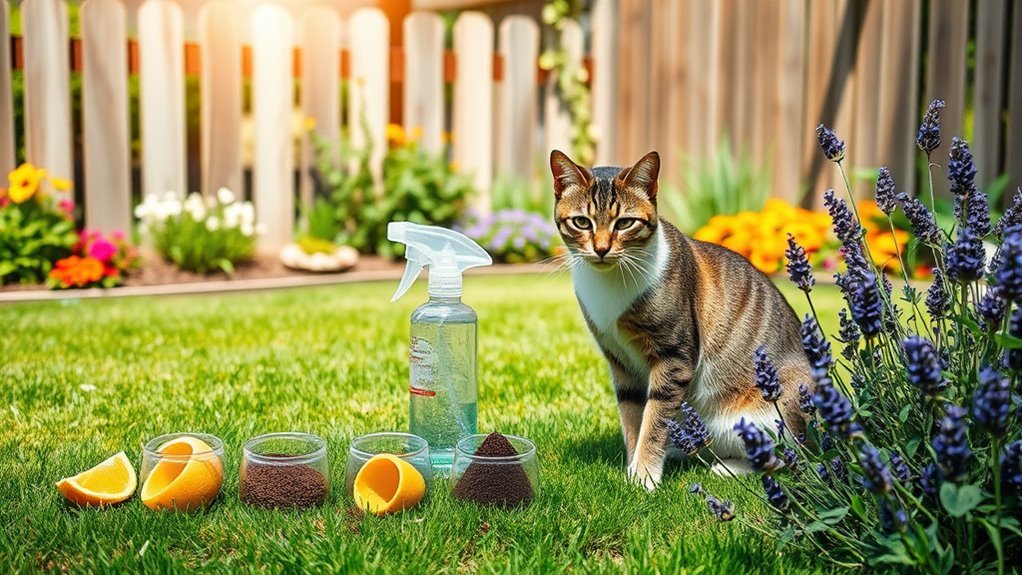
They’re also attracted to certain smells, which means you can use natural repellents to keep them away. Try using things like lavender, citrus peels, or peppermint around your garden. These scents tend to discourage cats from hanging out.
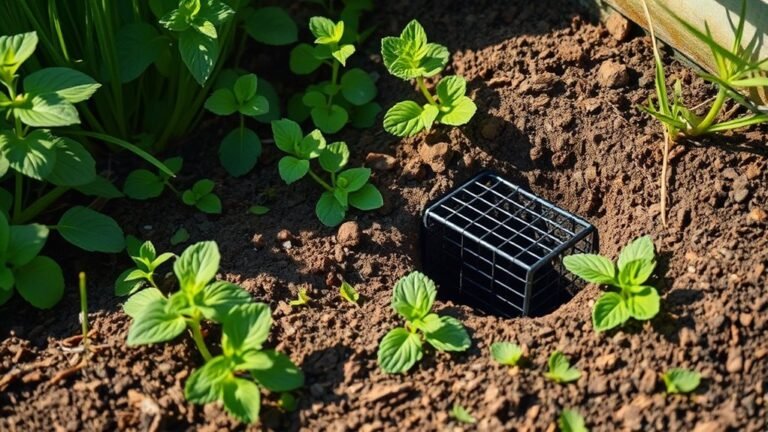
You can also cover your soil with prickly materials or set up physical barriers like chicken wire to make it less inviting.
Motion-activated sprinklers are great too—they startle cats and make them think twice before coming back.
Keeping your garden clean and planting cat-repelling herbs adds an extra layer of protection. For more practical tips to protect your garden, keep exploring these effective solutions.
Key Takeaways
– Plant cat-repellent herbs like lavender, peppermint, and rue to naturally deter cats from entering your garden. These plants have strong scents that cats don’t like.
They make your garden smell nice for you but keep cats away.
– Cover soil with prickly materials or chicken wire to create uncomfortable surfaces that prevent digging. Cats don’t enjoy walking on anything sharp or awkward.
This simple trick can really stop them from pooping in your garden.
– Use motion-activated sprinklers or ultrasonic devices near garden entry points to startle and deter cats. These gadgets surprise cats and encourage them to leave.
It’s a humane way to keep your garden cat-free.
– Regularly clean garden areas and remove cat waste to eliminate scent trails that attract cats. Cats often return to the same spots because of their smell.
Keeping things tidy helps break that habit.
– Scatter citrus peels or banana skins as natural, biodegradable repellents that discourage cats from pooping. Cats dislike the smell of citrus, so this works well.
Plus, you’re using stuff that would otherwise go to waste!
Understand Why Cats Poop in Your Garden
Although it can be frustrating, understanding why cats poop in your garden helps you address the problem effectively. Cats are drawn to soft, loose soil, which makes your garden an ideal spot for pooping.
They prefer quiet, secluded places to do their business, and your garden often fits that description perfectly. If their litter box is unclean or unavailable, they’ll look for alternatives nearby, like your garden.
Other animals’ scents or markings can also attract cats, prompting them to claim the area as their territory. Warm, sunny spots and certain plants create inviting environments that keep cats coming back.
Use Natural Scents to Stop Cats Pooping in Your Garden
You can keep cats out of your garden by using natural scents like lavender, peppermint, and cinnamon, which they find unpleasant.
Planting herbs such as rue or coleus canina adds a plant-based barrier that cats avoid.
You might also try homemade sprays combining vinegar and citrus to create a safe, effective deterrent. Give it a go and see what works best for your garden!
Effective Natural Scents
When cats enter your garden, their sensitivity to strong natural scents gives you a simple way to discourage them from pooping there. Scattering citrus peels around your garden releases a strong scent that cats dislike. Plus, as they break down, they enrich your soil.
You can also make homemade sprays using fresh lemon juice or diluted vinegar. These safely deter cats without harming your plants.
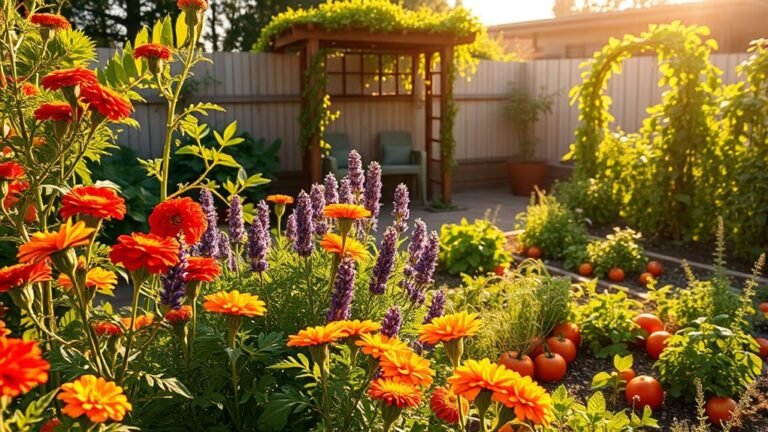
Planting aromatic herbs like marigolds, pennyroyal, and lemon thyme creates an uninviting environment for cats. At the same time, they add beauty to your garden.
Just remember, these natural scents lose effectiveness over time. So, you’ll need to replace citrus peels and refresh sprays regularly to keep your garden cat-free.
Using these effective natural scents consistently helps maintain a pleasant and cat-resistant outdoor space. It’s a simple and natural way to protect your garden!
Plant-Based Repellents
Building on natural scents like citrus peels and lemon sprays, plant-based repellents offer another effective way to keep cats from pooping in your garden. You can try planting repellent herbs like lavender, mint, and Coleus canina, which emit strong scents cats dislike.
Scattering chopped citrus peels around your garden also creates a natural barrier. Plus, essential oils from citrus mixed with water make a safe, effective deterrent when sprayed.
Here’s a quick guide:
| Plant/Item | Effect on Cats |
|---|---|
| Lavender | Strong scent, repels cats |
| Mint | Unpleasant odor for cats |
| Coleus canina | Emits scent cats avoid |
| Citrus peels | Natural, strong citrus odor |
| Citrus essential oils | Used in sprays, non-toxic |
Use these plant-based repellents to keep your garden cat-free naturally. It’s an easy and eco-friendly way to protect your plants!
Homemade Scent Sprays
Although cats are drawn to gardens, you can discourage them with homemade scent sprays using natural ingredients like lavender, peppermint, or citrus. These sprays are a safe, effective solution to stop cats from pooping in your garden.
To make a citrus spray, mix fresh lemon juice or chopped citrus peels with water and spray around your garden, replenishing regularly. You can also use diluted white vinegar or a mix of cayenne pepper or ground coffee with water for added repellent power.
These homemade scent sprays keep cats away by creating odors they find unpleasant but non-toxic to humans. Regular application not only helps keep cats away but also adds organic matter to your soil, making it a natural and eco-friendly approach.
Cover Soil With Prickly Materials to Deter Cats
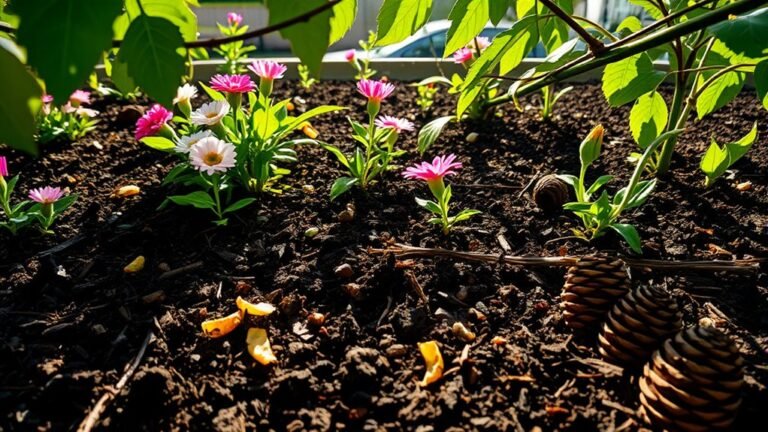
If you want to keep cats out of your garden, covering the soil with prickly materials like pine cones, bramble cuttings, or eggshells creates an uncomfortable surface that discourages them from digging and pooping. These prickly materials deter cats by making garden beds less inviting, as the sharp textures are unpleasant for their paws.
You can also insert small forks or scatter eggshells to enhance this effect. This method is cost-effective, easy to apply, and even benefits soil fertility.
To keep it working well, refresh or rearrange the prickly materials regularly because cats might get used to a static barrier. Using these natural deterrents helps protect your flower beds and vegetable gardens without harming the cats, keeping your garden clean and cat-free.
Use Physical Barriers to Block Cats From Garden Beds
Besides using prickly materials, you can also block cats from your garden beds with physical barriers. Laying chicken wire or repurposed plastic carpet runners over the soil creates an uncomfortable surface that cats avoid.
While chicken wire may not look great on large areas, it’s effective at keeping cats off your plants. Another option is covering soil with mulch or rough-textured materials. Cats dislike these because they prefer soft soil for toileting.
Combining these physical barriers with prickly materials like pine cones or bramble cuttings makes your garden beds even less inviting. By using these methods, you create a strong deterrent without harming the cats.
This way, you protect your garden while encouraging them to look elsewhere for their bathroom needs. It’s a win-win!
Set Up Motion-Activated Sprinklers to Scare Cats
You can set up motion-activated sprinklers that detect movement and spray water to startle cats away from your garden. These sprinklers offer a humane and effective way to keep cats from pooping without causing them harm.
Placing them near entry points guarantees they catch cats before they settle in your garden beds. It’s a simple trick that really works to protect your plants!
How Motion Sensors Work
When a cat enters your garden, motion-activated sprinklers use infrared sensors to detect its movement and body heat. This instantly triggers a burst of water to startle the animal away.
These sensors are designed to detect movement within a range of up to 30 feet, making them effective for all garden sizes. You can adjust the sensitivity to suit your garden’s needs. This way, the system only activates for unwanted visitors.
The sudden water release not only deters cats but also creates noise, which enhances the scare factor without harming animals.
Keep your sprinkler in top shape by regularly checking water levels and cleaning sensors.
| Feature | Benefit |
|---|---|
| Detect movement & heat | Accurate activation |
| Adjustable sensitivity | Customizable for your garden |
| Water release | Safe, effective cat deterrent |
Benefits Of Sprinkler Use
Motion-activated sprinklers offer several advantages that make them a practical choice for keeping cats out of your garden. These devices act as an effective deterrent by releasing a sudden jet of water, startling any cat that approaches and encouraging it to stay away.
They’re equipped with heat and motion sensors, so they activate only when necessary. This helps you conserve water while protecting your outdoor space.
Many models let you adjust spray angles and distances, so you can target specific problem areas. Besides cats, they also help deter other unwanted garden visitors, adding an extra layer of protection.
To keep your motion-activated sprinklers working efficiently, remember to check batteries regularly and clear any obstructions from the spray path. This way, you maintain a safe, cat-free garden effortlessly.
Use Ultrasonic Devices to Keep Cats Away
Although cats are sensitive to many deterrents, ultrasonic devices offer a humane way to keep them out of your garden by emitting high-frequency sounds that only they can hear.
Using an ultrasonic cat device can effectively keep cats from pooping in your flowerbeds or vegetable patches without causing harm. To maximize results, place the device near entry points where cats often enter.
Brands like CATwatch and Pestbye® provide reliable options that work both in the UK and USA. Remember, regular maintenance, including battery changes, is essential to keep the device functioning properly.
While ultrasonic devices are a strong deterrent method, they might not fully prevent cats on their own. So, combining them with other strategies can improve your garden’s protection and discourage unwanted feline visitors.
Grow Cat-Repelling Herbs Around Your Garden
If you want to keep cats out without harsh chemicals or devices, growing cat-repelling herbs around your garden is an effective and natural solution. These plants emit strong scents that cats find unpleasant, creating a fragrant barrier that discourages them.
Incorporate herbs like rue, lavender, and lemon thyme, and don’t forget the scaredy cat plant (Coleus canina), known for its odor that particularly deters felines. Marigolds add color and repel cats while attracting pollinators.
Regular trimming keeps these herbs potent, making your garden less inviting to cats.
| Herb/Plant | Benefit |
|---|---|
| Rue | Strong scent, natural deterrent |
| Lavender | Fragrant barrier, calming scent |
| Scaredy Cat Plant | Odor cats dislike |
| Marigolds | Repels cats, attracts pollinators |
Keep Your Garden Clean to Deter Cats
Along with planting cat-repelling herbs, keeping your garden clean plays a big role in discouraging cats from making it their bathroom. To keep the cats away, regularly hose down areas they frequent to erase scent trails and disrupt their marking habits.
Clean flower beds and garden paths often to remove any residual odors that might attract them. Using a designated outdoor litter box filled with sand or cat-friendly plants gives cats an alternative spot, helping maintain a cleaner garden.
Also, promptly remove any cat waste to prevent repeated visits. Incorporate plants with a strong smell that cats dislike, making your garden less inviting.
Use Citrus Peels and Banana Skins to Repel Cats
Since cats dislike strong scents, you can use citrus peels and banana skins as a natural way to keep them out of your garden. Scatter finely chopped citrus peels like lemon or orange around flower beds or mix them with water for a spray.
Banana skins work similarly—just place chopped skins to stop cats pooping in your garden. Both break down over time, adding valuable organic matter to your soil.
Remember to refresh them regularly for a lasting effect. It’s an easy, eco-friendly trick that keeps your garden cat-free and healthy!
| Material | Method | Benefits |
|---|---|---|
| Citrus Peels | Scatter or spray | Repels cats, adds organic matter |
| Banana Skins | Scatter | Natural deterrent, enriches soil |
| Combined Use | Scatter both | Stronger scent, ongoing soil benefits |
| Frequency | Replace weekly | Maintains effectiveness |
| Environmental | Fully biodegradable | Eco-friendly and safe |
Make Your Garden Less Appealing to Cats
To make your garden less appealing to cats, start by adding physical barriers like pine cones or twigs to create an uncomfortable surface. You can also use unpleasant scents, such as planting lavender or placing vinegar bowls, to keep them away naturally.
These simple steps will help discourage cats from visiting your garden. It’s an easy way to protect your plants without causing any harm. Give it a try and see the difference!
Use Unpleasant Scents
If you want to keep cats out of your garden, using unpleasant scents can be a really effective strategy. Cats dislike strong smells, so applying citrus scents like lemon or orange peels is a simple way to stop them from pooping in your garden.
These peels don’t just repel cats—they also enrich your soil as they break down. You can also spray a mix of vinegar and water around your plants to create an unpleasant smell that cats won’t like.
Plus, sprinkling cayenne pepper, crushed garlic, or aromatic herbs like lavender and peppermint can boost the deterrent effect. Just keep in mind that unpleasant scents fade over time, so you’ll need to refresh them regularly to keep your garden cat-free.
Add Physical Barriers
While unpleasant scents can help, adding physical barriers makes your garden much less inviting to cats. You can add physical barriers that effectively deter them without harming your plants.
Try these three methods:
- Install netting around your garden beds. Though it might not look perfect, netting creates a strong barrier preventing cats from entering sensitive areas.
- Spread prickly materials like pine cones, eggshells, or stone mulch on the soil. These create an uncomfortable surface that discourages digging.
- Use dense ground cover plants or closely planted shrubs. These make it harder for cats to access or settle in your flower beds.
Frequently Asked Questions
What Smell Do Cats Hate to Stop Pooping?
Cats hate strong smells like citrus, vinegar, lavender, peppermint, garlic, and cayenne pepper. You can use these scents around your garden to keep them from pooping there, making it less inviting for them to visit.
What Can I Do if My Neighbor’s Cat Keeps Pooping in My Garden?
You should talk to your neighbor kindly about their cat’s behavior and suggest keeping it indoors or providing a litter box. Meanwhile, install barriers or motion-activated deterrents to protect your garden and discourage the cat’s visits.
Do Coffee Grounds Stop Cats Pooping in the Garden?
Think of coffee grounds as a protective shield for your garden. They can discourage cats from pooping by masking soil scents. You’ll need to refresh them often, though, and maybe use other methods alongside for better results.
Does Vinegar Stop Cats From Pooping?
Yes, vinegar can stop cats from pooping by disrupting their scent trails with its strong smell. You’ll need to spray it regularly and avoid harming plants. Combining it with citrus peels boosts its effectiveness.
Conclusion
You might’ve heard that sprinkling coffee grounds keeps cats away, but the truth is, it doesn’t work for all cats. Instead, focusing on natural scents, physical barriers, and motion-activated sprinklers will give you better results.
By understanding why cats target your garden and using these practical tips, you can protect your plants without harming the animals. It’s all about finding what works best for your space.
With a bit of patience and persistence, your garden will stay clean and cat-free in no time! Remember, stopping cats from pooping in your garden is possible when you combine natural deterrents and smart garden care. Keep at it, and enjoy a beautiful, cat-free garden!