10 Tips to Stop Foxes Pooing in Your Garden
To stop foxes pooing in your garden, first identify their droppings and understand why they choose your space. Recognizing fox poo is key to addressing the problem effectively. Use natural scents like citrus or garlic to repel them and install motion-activated lights or sprinklers to startle visiting foxes.
Remove food sources by securing bins and clearing fallen fruit, and maintain tidy gardens to reduce shelter spots. Keeping your garden clean makes it less attractive for foxes to visit and leave droppings behind. Always handle droppings safely to avoid health risks.
If problems persist, consider professional help. Keep exploring to uncover practical ways to protect your garden effectively and ensure it remains a pleasant space for you and your family.
Identify Fox Droppings in Your Garden
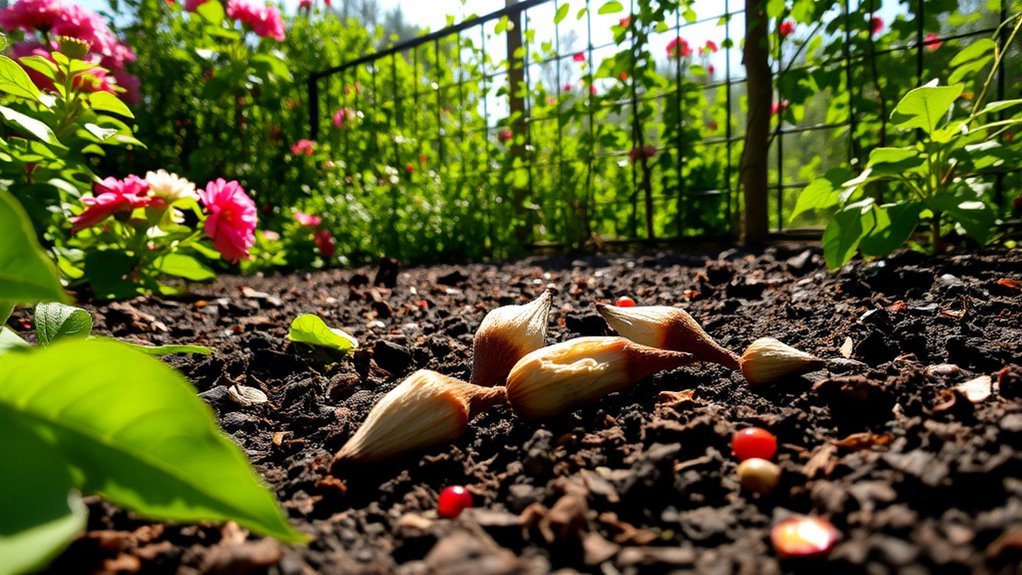
Before you can stop foxes from pooing in your garden, you need to know what their droppings look like.
Fox droppings are usually dark brown or black, tapered at both ends, and about 2 to 5 inches long. They often contain visible bits of fur, bones, seeds, or fruit remnants because foxes have varied diets.
Fox droppings are dark, tapered, 2-5 inches long, often containing fur, bones, seeds, or fruit bits.
You’ll typically find them on raised surfaces like logs, stones, or garden edges, as foxes use these spots to mark territory.
The texture is usually firm but can vary depending on their last meal. If you spot droppings that match this description, chances are a fox has been visiting.
Identifying these correctly helps you confirm the problem, so you can take effective steps to keep your garden clean.
Why Foxes Use Your Garden as a Toilet
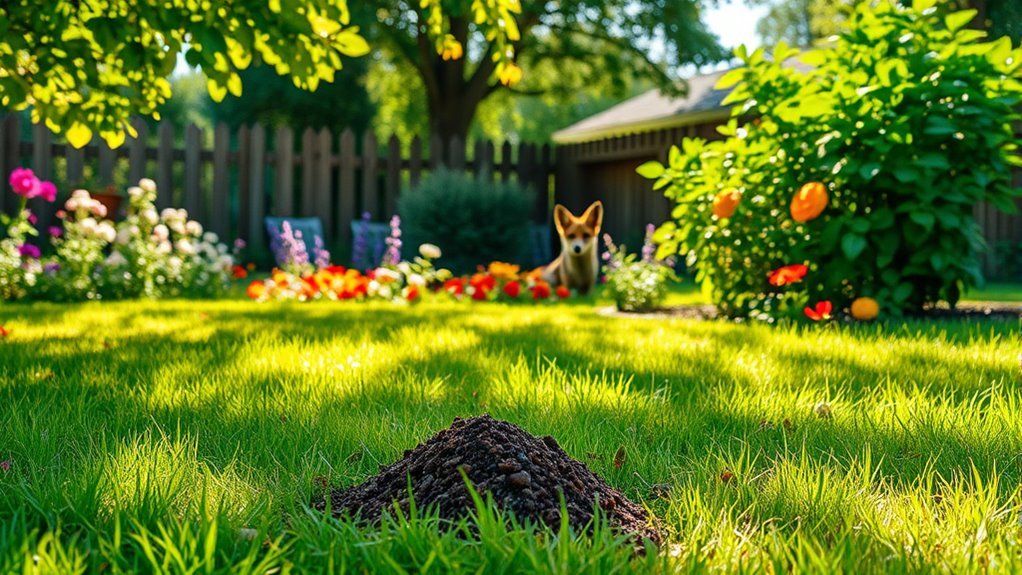
You’ll notice foxes often choose your garden because it fits their behavior patterns and helps them mark territory. They use specific spots to leave their scent, signaling to other foxes.
Plus, your garden’s quiet corners and soft soil make it an ideal toilet.
Fox Behavior Patterns
Although foxes may seem like unwelcome visitors when they use your garden as a toilet, they’re actually following natural behavior patterns. Understanding these patterns can help you manage their presence more effectively.
Foxes are creatures of habit, and they tend to:
- Choose quiet, sheltered spots for toileting
- Return to familiar places regularly
- Use their droppings to communicate with other foxes
- Prefer areas with soft soil for easy digging
- Adapt their behavior based on human activity nearby
Territory Marking Reasons
One key reason foxes choose your garden as a toileting spot is to mark their territory and send messages to other foxes.
When a fox leaves droppings, it’s not random—it signals ownership and warns rivals to stay away. Your garden becomes a communication hub in their world.
| Message Type | Purpose |
|---|---|
| Scent Marking | Establishes territory boundaries |
| Social Status | Shows dominance and hierarchy |
| Reproductive Signals | Attracts mates during breeding |
Garden Appeal Factors
Foxes don’t just mark territory randomly; they pick spots that suit their needs. Your garden might seem like an inviting restroom because it offers the right conditions. Understanding why foxes favor your outdoor space helps you tackle the problem effectively.
They’re drawn to gardens that provide:
- Quiet, undisturbed areas for safe toileting
- Soft soil or mulch, making digging easier
- Access to food sources like compost or pet food
- Shelter such as bushes or sheds for privacy
- Limited human activity, creating a comfortable environment
Use Natural Scents to Keep Foxes Away

If you want to keep unwanted visitors out of your garden, using natural scents can be an effective strategy. Foxes dislike strong smells, so placing certain natural items around your garden can deter them from coming back.
You’ll find that these scents not only protect your space but are safe and eco-friendly.
Here are some natural scents to try:
| Natural Scent | How It Works |
|---|---|
| Citrus Peels | Foxes dislike the sharp smell |
| Garlic Cloves | Strong odor acts as a repellent |
| Vinegar | Pungent scent deters foxes |
Sprinkle or place these around entry points or areas frequented by foxes. Refresh them regularly for continued effectiveness.
Install Motion-Activated Lights and Sprinklers
Natural scents can help keep foxes at bay, but sometimes you need a more immediate deterrent. Installing motion-activated lights and sprinklers is an effective way to startle foxes and discourage them from entering your garden. These devices activate as soon as movement is detected, creating an unexpected disturbance that foxes dislike.
Motion-activated lights and sprinklers quickly startle foxes, providing an immediate and humane garden deterrent.
Here’s why you should consider them:
- Motion-activated lights mimic human presence at night
- Sprinklers provide a sudden burst of water, startling foxes
- They require minimal maintenance once installed
- Easy to position near common fox entry points
- Can protect your garden without harmful chemicals
Remove Food Sources and Shelter to Deter Foxes
You’ll want to remove any accessible food that might be attracting foxes to your garden. Make sure to secure bins and avoid leaving pet food outside.
Clearing away dense shrubs or piles of debris can also eliminate potential hiding spots they use for shelter.
Eliminate Accessible Food
Why do foxes keep visiting your garden? Often, it’s because they find easy food. To discourage them, you need to eliminate accessible food sources.
Start by securing your bins with tight lids to prevent scavenging. Avoid leaving pet food outside overnight. Clear fallen fruit or birdseed from the ground daily.
Compost responsibly by using enclosed bins. Remove dead animals or scraps promptly.
Remove Potential Hiding Spots
Although foxes are attracted to food, they also seek shelter and hiding spots in your garden. Removing these potential shelters discourages them from settling nearby. Clear away dense shrubs, tall grass, and woodpiles where foxes can hide or rest.
Secure compost bins and cover holes under sheds or decks to eliminate cozy dens. By reducing these hiding spots, you make your garden less appealing and more exposed.
Here’s a quick guide to removing potential fox shelters:
| Spot to Remove | Action | Reason |
|---|---|---|
| Dense Shrubs | Trim or remove | Limits cover for foxes |
| Woodpiles | Relocate or cover | Removes resting places |
| Under Decks/Sheds | Block access with mesh | Prevents den creation |
Act now to keep foxes away!
Build Physical Barriers to Keep Foxes Out
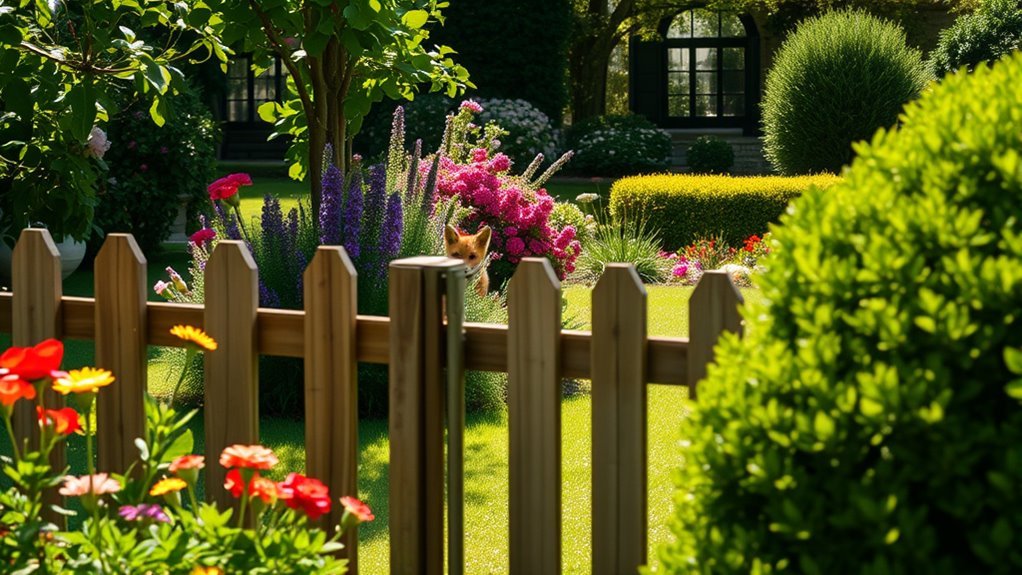
When foxes keep visiting your garden, building physical barriers can effectively block their access. You want to create obstacles that foxes find difficult to bypass or climb over.
Start by installing sturdy fencing at least six feet high, as foxes are excellent jumpers.
Install strong fencing at least six feet tall since foxes can jump surprisingly high.
Bury the fence’s base underground to prevent them from digging beneath.
Consider adding a roll bar or angled extension at the top to deter climbing.
Use mesh wire with small gaps to stop foxes squeezing through tight spots.
Finally, secure gates firmly and check for any weak points regularly.
- Erect tall, secure fencing
- Bury fence base about 12 inches deep
- Add angled extensions or roll bars
- Use fine mesh wire with tiny gaps
- Reinforce gates and inspect often
These steps will help keep foxes out of your garden for good.
Try Humane Repellents That Actually Work
Physical barriers can keep foxes out, but sometimes they find a way through or around them. That’s where humane repellents come in—they work without harming the animals. You can try natural scents foxes dislike or ultrasonic devices that deter them effectively.
Here’s a quick guide:
| Repellent Type | How It Works | Tips for Use |
|---|---|---|
| Citrus Peels | Strong smell repels foxes | Replace every few days |
| Predator Urine | Mimics fox enemies | Apply around garden edges |
| Ultrasonic Devices | Emit high-frequency sound | Place near fox entry points |
| Commercial Sprays | Contain natural deterrents | Follow label instructions |
| Motion-Activated Lights | Startle foxes | Use at night for best results |
Try these options consistently to keep foxes from pooing in your garden humanely.
How to Safely Remove Fox Droppings
Since fox droppings can carry parasites and bacteria, you need to handle their removal carefully to protect your health. Follow these steps to clean up safely:
- Wear disposable gloves to avoid direct contact.
- Use a plastic bag or shovel to pick up droppings without touching them.
- Seal the waste in a sturdy plastic bag before disposal.
- Disinfect the affected area with a bleach solution (1 part bleach to 9 parts water).
- Wash your hands thoroughly with soap and water after removing gloves.
Avoid stirring up dust to reduce inhalation risk.
Don’t compost fox droppings, as parasites can survive.
Taking these precautions helps keep your garden safe and sanitary while deterring foxes from returning.
Maintain Your Garden to Prevent Fox Visits
Although foxes are naturally curious, you can discourage them from visiting your garden by keeping it well-maintained. Trim overgrown bushes, remove piles of debris, and clear fallen fruit that might attract them.
Keeping your garden tidy reduces hiding spots and food sources, making it less inviting for foxes.
Here’s a quick maintenance checklist to help you prevent fox visits:
| Task | Reason |
|---|---|
| Trim shrubs | Limits shelter for foxes |
| Remove debris | Eliminates hiding places |
| Clear fallen fruit | Reduces food attractants |
| Secure compost bins | Prevents easy food access |
When to Call Professionals for Fox Control
If foxes keep returning despite your efforts, it’s time to contemplate professional help. Sometimes, fox control requires expert intervention to guarantee your garden stays fox-free without harming the animals.
Consider calling professionals if you notice:
- Persistent fox visits despite deterrents
- Damage to property or garden plants
- Foxes showing aggressive or unusual behavior
- Concerns about diseases like mange or rabies
- Difficulty identifying fox entry points or nests
Professionals have the tools and knowledge to assess the situation accurately. They can implement humane and legal control measures tailored to your specific problem.
Don’t wait until the issue escalates; timely expert assistance can protect your garden and provide peace of mind.
Frequently Asked Questions
Can Foxes Damage Plants While Using My Garden as a Toilet?
Yes, foxes can damage your plants while using your garden as a toilet. Their digging and scent marking can disturb roots and soil, potentially harming delicate plants and disrupting your garden’s overall health and appearance.
Are Foxes Dangerous to Pets When They Visit Gardens?
Foxes aren’t usually dangerous to pets, and they don’t usually attack. They might scare you, they might scare your pets, but if you keep your pets supervised, you won’t have to worry about harm.
How Long Do Foxes Typically Stay in One Garden?
Foxes usually stay in one garden for just a few minutes while they explore or search for food. They’re mostly quick visitors, so you won’t often find them lingering unless there’s a consistent food source attracting them.
Do Foxes Prefer Certain Types of Soil for Toileting?
You know what they say, “Don’t put all your eggs in one basket.” Foxes don’t have a strong soil preference but often choose loose, sandy, or well-drained soil to bury waste easily.
You’ll notice preferences vary.
Can Foxes Transmit Diseases Through Their Droppings?
Yes, foxes can transmit diseases through their droppings, like parasites and bacteria. You should avoid direct contact, wear gloves when cleaning, and wash your hands thoroughly to protect yourself and your family from potential infections.
Conclusion
You’ve taken every step—sprayed scents, cleared food, and lit up the night. Yet, as dusk falls and shadows stretch across your garden, a faint rustle stirs. Will that sly fox return, undeterred?
Don’t let uncertainty rule your nights. Keep your defenses strong and stay vigilant. With patience and persistence, your garden can finally become a fox-free haven.
By following these 10 tips to stop foxes pooing in your garden, you’ll create a peaceful outdoor space. Say goodbye to those unwelcome visits once and for all.