How to Paint Garden Furniture in 3 Easy Steps
First, clean your garden furniture with a mild detergent and sand it smooth, focusing on any chipped or rough areas. Proper preparation is key to achieving a beautiful paint finish on your garden furniture.
Next, choose exterior-grade, weather-resistant paint along with the right primer for your furniture’s material. This ensures your paint job can withstand outdoor conditions and last longer.
Finally, apply the paint in thin, even coats using a quality brush or roller. Allow each layer to dry fully before applying the next. Taking your time guarantees a lasting, durable finish.
Keep going, and you’ll discover tips to perfect the process and boost your furniture’s durability.
Clean and Sand Your Garden Furniture Before Painting
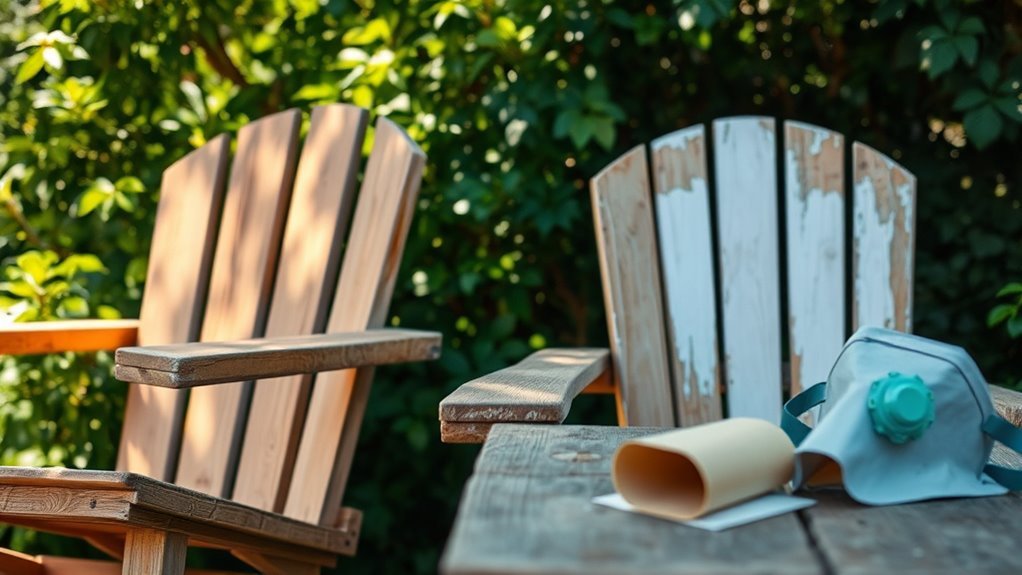
Before you begin painting, make certain you clean and sand your garden furniture thoroughly. Start by removing any dirt, grime, or old paint using a mild detergent and water. Rinse well and let it dry completely.
Clean and sand garden furniture thoroughly before painting for the best, long-lasting finish.
Next, grab medium-grit sandpaper and sand the entire surface to smooth out rough patches and help the new paint stick better. Focus on any peeling or chipped areas until they’re flush with the rest of the piece.
After sanding, wipe the furniture down with a damp cloth to remove dust.
Taking these steps ensures your paint job lasts longer and looks professional. Skipping this prep work can lead to peeling or uneven paint, so don’t rush it—your furniture deserves a solid foundation.
Choose the Right Paint and Tools for Garden Furniture
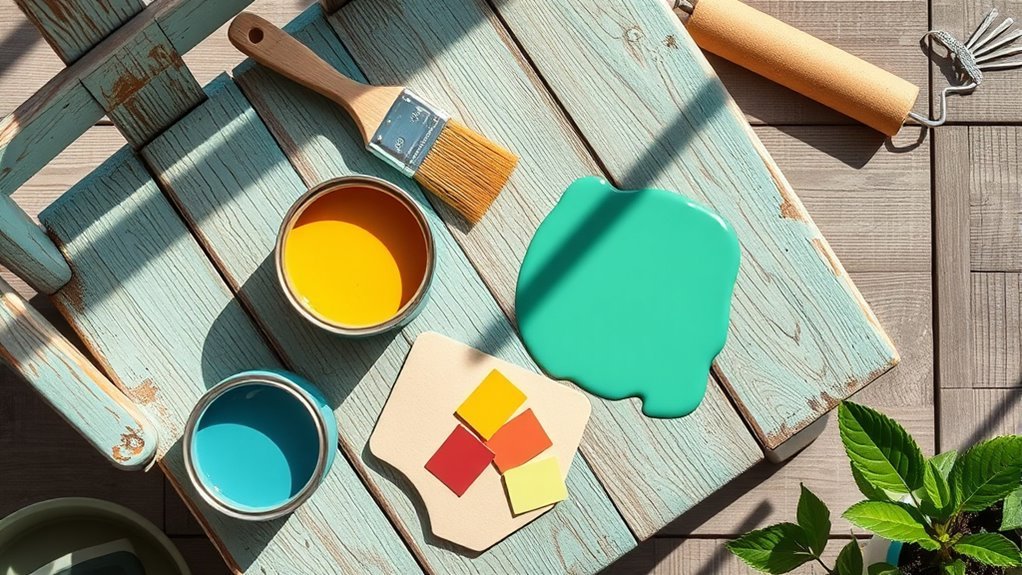
How do you guarantee your garden furniture gets the best finish? Choosing the right paint and tools is key. You want paint that’s durable, weather-resistant, and suited to your furniture’s material—wood, metal, or plastic.
Alongside the right paint, having the proper tools makes the job smoother and more precise.
Here’s what you’ll need:
- Exterior-grade paint designed for outdoor use
- Primer specific to your furniture type for better adhesion
- Synthetic brushes or rollers for smooth application
- Sandpaper to prep surfaces between coats
- Protective gloves and drop cloths to keep your workspace tidy
Selecting these carefully sets you up for a lasting, beautiful finish without frustration or extra work later.
Apply Paint to Garden Furniture for a Smooth, Lasting Finish
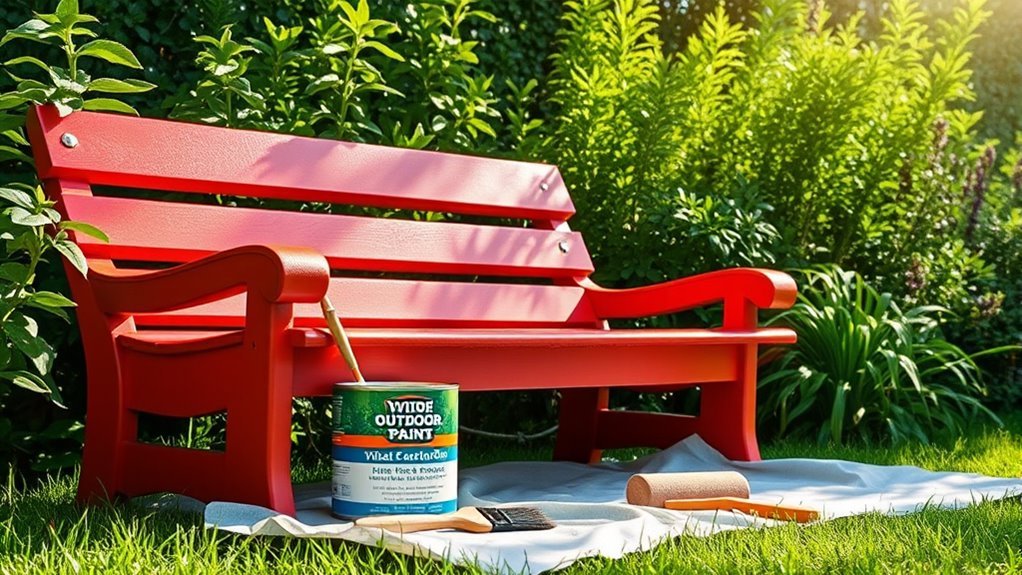
Once you’ve prepped and primed your garden furniture, you can start applying paint with confidence. Use a high-quality brush or a foam roller for an even coat, working in long, smooth strokes along the grain. Avoid overloading your brush to prevent drips and runs.
Apply thin, multiple coats rather than one thick layer; this guarantees better adhesion and a smoother finish. Allow each coat to dry completely before adding the next, following the paint manufacturer’s recommended drying time.
Pay special attention to corners and crevices, where paint tends to pool or wear off.
After the final coat, let the furniture cure fully before use to maximize durability. This method guarantees a beautiful, lasting finish that protects your garden furniture from the elements.
Frequently Asked Questions
How Long Does the Paint Take to Dry Completely?
The paint usually takes about 24 hours to dry completely, but you should wait up to 48 hours for full curing.
Factors like temperature and humidity can affect drying time, so be patient before using your furniture.
Can I Paint Garden Furniture in Humid Weather?
You can paint garden furniture in humid weather, but it’s like trying to dry a wet towel in a steamy bathroom—paint takes longer to dry and may not adhere well.
Choose a dry day for best results.
How Often Should I Repaint My Garden Furniture?
You should repaint your garden furniture every 1 to 2 years, depending on exposure to weather.
Check for peeling or fading paint, and if you notice wear, it’s time to refresh and protect your pieces.
Is It Necessary to Prime the Furniture Before Painting?
Want your paint to last and look flawless? Yes, you should prime your garden furniture first. It seals the surface, prevents peeling, and helps the paint stick better.
Skipping this step? You’ll risk a patchy finish.
What Safety Precautions Should I Take When Painting Outdoors?
You should wear gloves and a mask to protect from fumes and chemicals. Work in a well-ventilated area, avoid windy days to prevent dust, and keep kids or pets away while painting to stay safe and focused.
Conclusion
So, you’ve cleaned and sanded your garden furniture—who knew dirt and rough patches were the real villains? Then, you picked the perfect paint and tools, like a pro preparing for battle. Finally, you applied that paint smoothly, turning old wood into a masterpiece.
Now, your garden furniture looks so good, you might just have to invite everyone over… or risk them thinking you’ve secretly bought brand new pieces. Painting garden furniture never felt so rewarding!
By following these easy steps, you’ve given your outdoor space a fresh, vibrant look that will last. Painting garden furniture is a simple way to transform your garden and enjoy durable, beautiful results.