How You Put Garden Waste in a Skip Step by Step
First, sort your garden waste into green waste and harder materials, removing plastics or treated wood. This step is essential when you want to put garden waste in a skip efficiently.
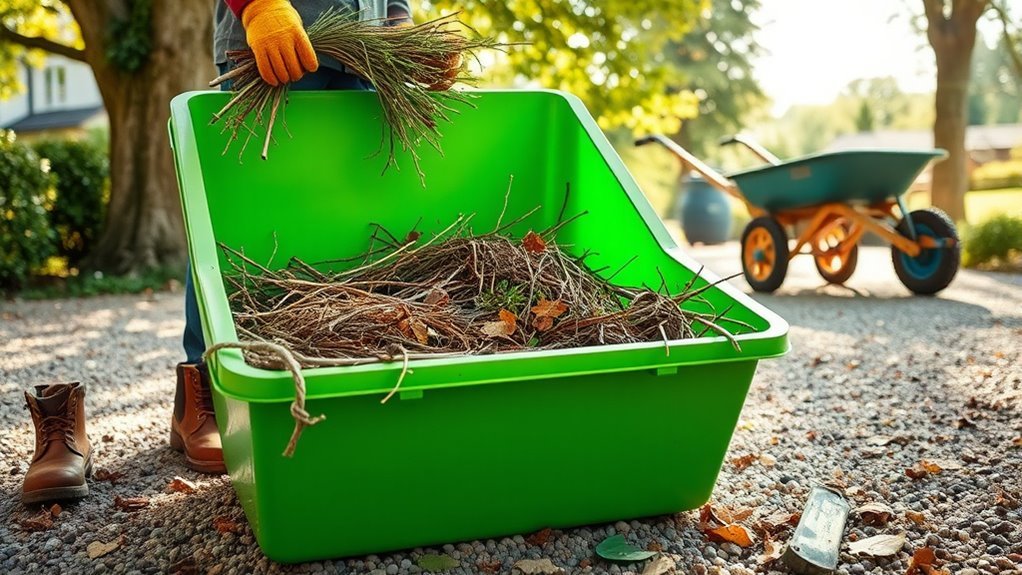
Start loading by placing heavy items like branches and soil at the bottom. Then, layer lighter materials like grass clippings and leaves on top.
Compact each layer to maximize space and keep the load stable. Wear protective gear and lift carefully to avoid injury.
Once the skip is filled to the right level and stable, you’ll be ready to manage your garden waste effectively—and there’s more to learn about optimizing the process.
Key Takeaways
- Sort garden waste by type, separating green waste from hard materials. Also, make sure to remove any non-compostable items like plastics.
- Start filling the skip with heavier items like branches and soil. This helps create a stable base to build on.
- Next, layer lighter materials such as grass clippings and leaves on top. Try to avoid air gaps so everything stays compact.
- Be careful not to overfill the skip. Keeping the load balanced and stable is really important while you’re filling it.
- Don’t forget to wear protective gear. Also, check that the skip is stable and follow any guidelines from your skip provider before you finish loading.
Prepare Garden Waste for Your Garden Waste Skip
Before you load your garden waste into the skip, sort it carefully into categories like green waste and hard materials. Separating leaves, grass clippings, and branches from soil, rubble, or concrete helps you dispose of garden waste correctly and keeps the process environmentally responsible.
Make sure to remove non-compostable items such as plastics or treated wood. This will help you avoid penalties and follow your skip provider’s rules.
Use a wheelbarrow or garden cart to move different types of garden waste efficiently to your skip for your garden. When filling a skip, try to compact the waste as much as possible to maximize space and keep things stable during transport.
Load Garden Waste Safely and Efficiently Into Your Skip
To load garden waste safely and efficiently into your skip, start by placing heavier items like soil and large branches at the bottom to create a stable base. Use a wheelbarrow to transport garden waste quickly, helping you compactly load lighter materials such as grass clippings and leaves on top with no air gaps.
If your outdoor space is limited, prioritize bulky items early. This way, you make sure you don’t exceed the right skip size or the maximum fill level, which can be a safety hazard.
Always wear personal protective equipment during the loading process to keep yourself safe from injury. And don’t forget, choosing the right skip size from your skip hire provider is key for effective waste disposal and smooth loading.
Frequently Asked Questions
Can You Put Garden Waste in a Skip Bag?
Yes, you can put garden waste in a skip bag. Just make sure to follow your provider’s guidelines on what’s allowed and the weight limits. It’s a convenient way to dispose of grass, leaves, and small branches.
Can You Throw Green Waste in a Skip?
Yes, you can throw green waste in a skip, but you should avoid hazardous items like chemicals. Always check with your skip provider for specific rules, and load the waste properly to prevent overfilling and guarantee safe transport.
How to Fill a Skip Bin?
You can fill a skip bin efficiently by starting with heavy, flat items—over 60% of skip space is wasted if not packed well. Compact garden waste, distribute weight evenly, and avoid overfilling to guarantee safe transport.
What Size Skip Is Best for Garden Waste?
You’ll want a 4-yard skip for most garden waste, as it handles about 4 tonnes—perfect for small to medium projects. For bigger jobs, consider larger skips. Always match size to your waste volume to avoid overfilling.
Conclusion
By following these steps, you’ll turn the intimidating task of loading garden waste into a smooth dance with nature’s leftovers. Like a sculptor shaping clay, you carefully prepare and stack each branch and leaf, making the most of every inch in your skip.
Remember, a well-packed skip isn’t just tidy—it’s a green masterpiece, ready to be whisked away. This process helps keep your garden fresh and free to bloom anew.
Properly placing garden waste in a skip not only maximizes space but also makes disposal easier and more environmentally friendly. When you load your garden waste carefully, you’re making sure everything fits securely and nothing spills out.
So, take your time and enjoy the process. With these simple steps, loading garden waste in a skip becomes a breeze, leaving your outdoor space clean, organized, and ready for new growth.