How to Stop Cats From Pooping in the Garden: 10 Practical Tips
To stop cats from pooping in your garden, use natural scents they dislike like citrus peels, coffee grounds, or vinegar sprays away from plants. These scents act as gentle deterrents that keep cats at bay without harming them.
Set up physical barriers like chicken wire or mulch with pine cones to block access. These obstacles make it difficult for cats to enter your garden and discourage digging.
Train cats by redirecting them and rewarding good behavior. Providing alternative digging spots with cat-friendly plants nearby can also help satisfy their natural instincts.
Keep the garden clean, remove waste promptly, and try motion-activated deterrents. Keep these steps consistent and you’ll find even more effective ways to protect your garden.
How to Understand Why Cats Poop in Your Garden
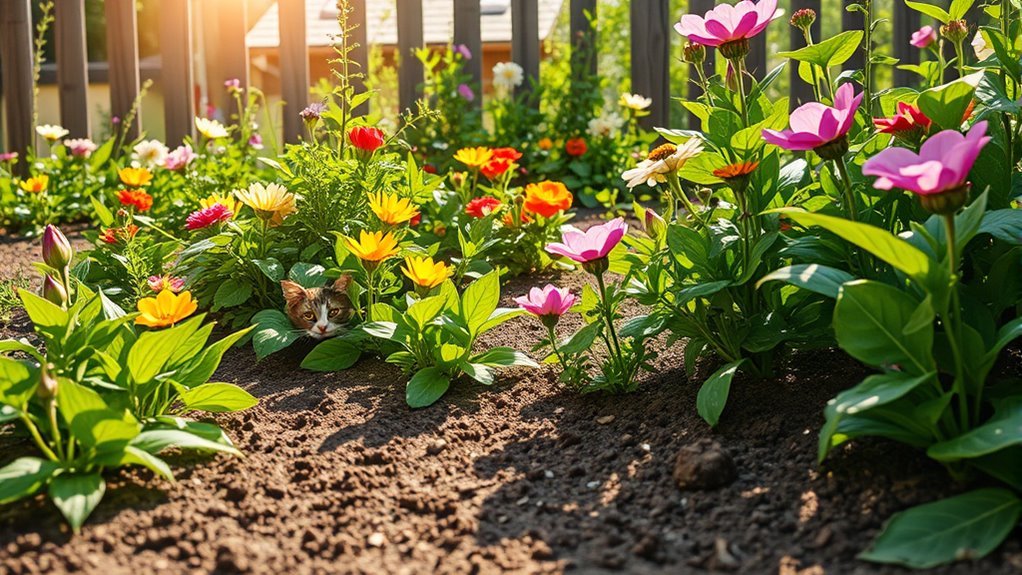
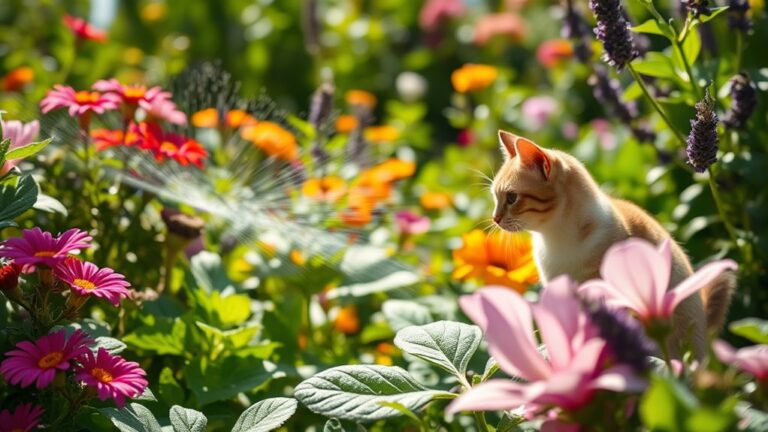
Before you can stop cats from pooping in your garden, you need to understand why they choose your space in the first place. Cats look for soft, loose soil that’s easy to dig in, so your garden beds may feel like the perfect litter box. They also prefer quiet, undisturbed areas where they feel safe to do their business.
If your garden offers shelter or a warm spot, it becomes even more attractive. Outdoor cats mark territory through their waste, so if neighborhood cats pass by, your garden might be a prime spot for claiming space.
Recognizing these reasons helps you target the root causes.
Once you know why cats pick your garden, you can take steps to make it less inviting without harming the animals.
Use Natural Scents Cats Hate to Repel Them
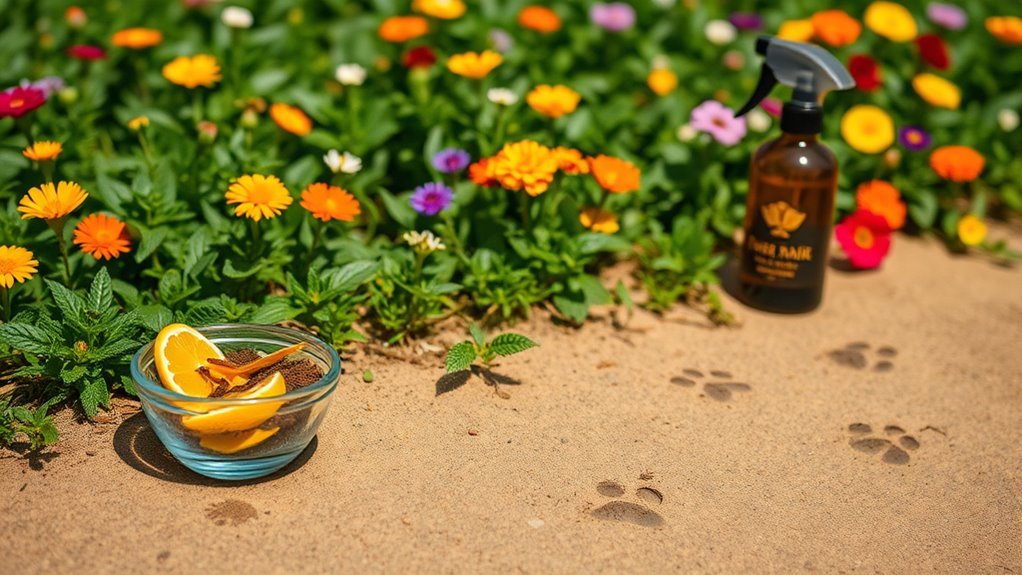
You can keep cats out of your garden by using natural scents they dislike. Scents like citrus peels, coffee grounds, or lavender are effective and safe for your plants.
Let’s explore how to use these repellents without harming your garden.
Effective Natural Repellents
Although cats are curious creatures, they tend to avoid certain natural scents that irritate their sensitive noses. To keep them out of your garden, use natural repellents like citrus peels, coffee grounds, or vinegar sprays.
Simply scatter orange or lemon peels around your plants; cats dislike the sharp, tangy smell.
Sprinkling used coffee grounds works too, as the bitter aroma deters them.
You can also mix vinegar with water and spray it on the soil—just avoid spraying directly on plants to prevent damage.
Another effective option is planting rue or lavender near your garden edges, as their strong scent discourages cats from approaching.
Using these natural repellents regularly helps create an environment cats find unappealing without harming them or your garden.
Safe Scents For Gardens
Since cats rely heavily on their sense of smell, choosing safe scents they dislike can effectively keep them away from your garden. You can use natural scents like citrus, lavender, and rosemary, which are pleasant to you but unpleasant for cats.
Simply scatter peels, plant herbs, or use essential oils diluted in water around your garden.
Here’s a quick guide to safe scents for your garden:
| Scent | How to Use | Effect on Cats |
|---|---|---|
| Citrus | Scatter peels or spray | Repels due to strong smell |
| Lavender | Plant or use oil spray | Discomfort and avoidance |
| Rosemary | Plant or crush leaves | Keeps cats away naturally |
Use these scents regularly to maintain a cat-free garden without harming them.
Create Barriers to Protect Garden Beds
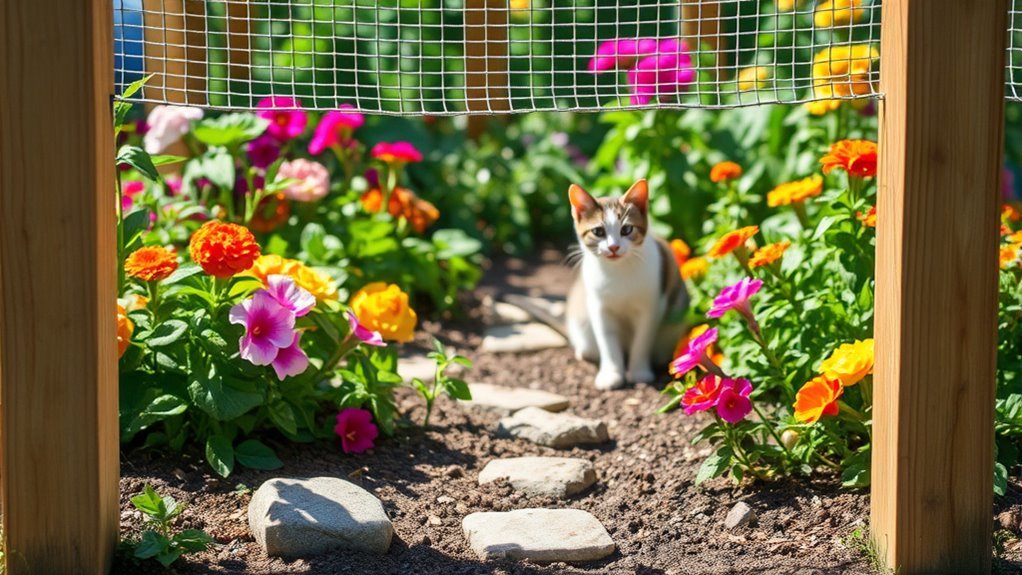
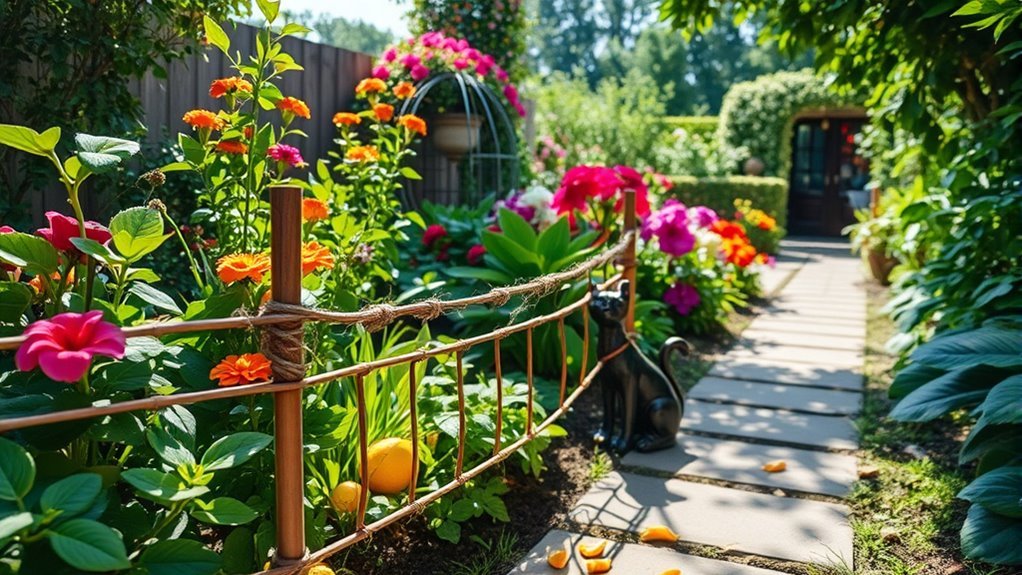
When cats keep targeting your garden beds, creating physical barriers can effectively deter them from entering. You want to make it difficult for them to access the soil without harming them.
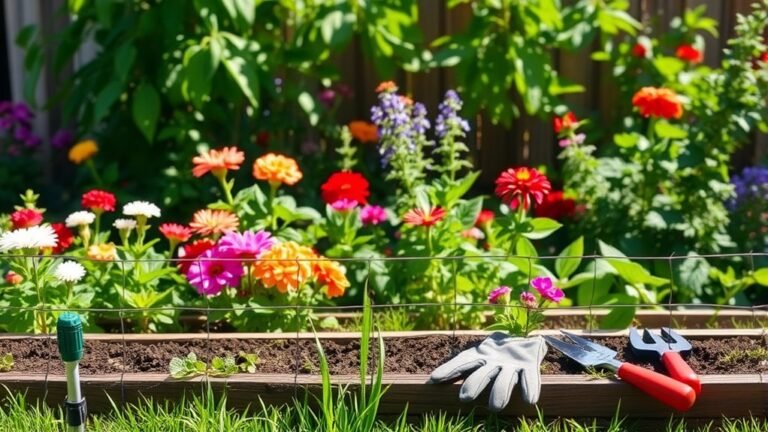
- Install garden fencing: Use chicken wire or mesh around your beds to block entry.
- Lay down mulch with sharp textures: Pine cones or thorny branches discourage digging.
- Use garden cloches or row covers: These protect plants and stop cats from jumping in.
- Place flat stones or pavers: Cover exposed soil to prevent cats from pawing through it.
How to Choose Plants That Deter Cats Naturally
You can keep cats away by choosing plants they dislike, like lavender, rosemary, and rue. These aromatic herbs not only smell great to you but can also discourage cats from entering your garden.
Placing these plants strategically around your garden’s borders creates a natural barrier that helps protect your beds.
Cat-Repellent Plant Varieties
Why do some plants keep cats away while others attract them? It’s all about scent and texture. Certain plants produce smells cats dislike or have textures they find unpleasant.
When choosing cat-repellent plant varieties, focus on these options:
- Coleus canina – Known as “scaredy cat plant,” its odor deters cats effectively.
- Lavender – Its strong fragrance keeps cats at bay without harming them.
- Rue – This plant’s bitter scent discourages feline visitors.
- Rosemary – Its pungent aroma and tough leaves make it unappealing to cats.
Planting these around your garden’s edges or near problem spots can naturally reduce unwanted cat visits.
You’ll create a garden cats want to avoid, keeping your flower beds clean without chemicals.
Aromatic Herbs Benefits
Although many plants can influence feline behavior, aromatic herbs stand out for their dual benefits—they deter cats while enhancing your garden’s scent and utility. You can choose herbs like lavender, rosemary, and rue, known for their strong fragrances that cats dislike. These plants not only keep cats away but also add beauty and useful aromas to your outdoor space.
Additionally, herbs such as thyme and lemon balm offer mild repellant effects while attracting beneficial insects and supporting pollinators.
By selecting aromatic herbs, you create a natural barrier without harsh chemicals, making your garden both cat-resistant and enjoyable.
Just be sure to pick varieties suited to your climate and garden conditions to maintain their health and effectiveness in deterring unwanted feline visitors.
Plant Placement Strategies
When selecting plants to deter cats naturally, consider how their placement influences feline behavior. You can use strategic positioning to keep cats away from your garden beds effectively. Here’s how to do it:
- Place cat-repellent plants like lavender or rosemary near garden edges to create a natural barrier.
- Cluster strongly scented herbs around areas where cats frequent to discourage them from entering.
- Plant thorny or textured species, such as rosemary or rue, along pathways to make walking uncomfortable for cats.
- Use dense, low-growing plants in open soil patches to reduce inviting spots for cats to dig or poop.
Use Safe Repellents to Keep Cats Away
Since cats rely heavily on their sense of smell, you can use safe repellents to discourage them from entering your garden. Natural scents like citrus peels, coffee grounds, or vinegar sprayed around the garden perimeter often repel cats without harming them.
You might also try commercial cat repellents formulated with non-toxic ingredients that are safe for plants and pets.
Apply these repellents regularly, especially after rain, to maintain their effectiveness. Avoid harsh chemicals that could damage your garden or pose risks to other animals.
Additionally, sprinkling dried herbs such as lavender or rue can create an unpleasant environment for cats.
Make Your Garden Unattractive to Stray Cats
In addition to using safe repellents, you can take steps to make your garden less appealing to stray cats. Here’s how you can do it:
- Remove Shelter Spots: Clear away dense bushes or piles of debris where cats might hide or rest.
- Cover Soil: Lay down chicken wire or garden mesh over soil beds; cats dislike walking on these textures.
- Use Plants Cats Avoid: Plant rue, lavender, or rosemary, which have scents that deter cats naturally.
- Keep Your Garden Clean: Regularly remove any food scraps or fallen fruit that could attract cats.
How to Train Your Cat to Stay Out of the Garden
You can train your cat to stay out of the garden by setting clear boundaries they understand. Use positive reinforcement to reward good behavior and guide them away gently.
Also, provide alternative spaces where your cat feels comfortable and safe.
Set Clear Boundaries
Although cats are naturally curious and independent, you can teach them to respect your garden’s boundaries with consistent training. Start by clearly defining where your garden begins and ends.
Here’s how to set clear boundaries effectively:
- Use physical barriers like low fences or garden edging to block access.
- Place textured mats or rough surfaces along the garden’s edge to discourage stepping in.
- Mark the boundary with visual cues such as stakes or plant markers your cat will recognize.
- Consistently redirect your cat away from the garden when you see them approaching it.
Use Positive Reinforcement
When training your cat to stay out of the garden, positive reinforcement works best by rewarding desired behavior rather than punishing unwanted actions.
Whenever your cat avoids the garden or responds to your boundary cues, immediately offer treats, praise, or affection. This helps your cat associate staying away from the garden with positive outcomes.
Be consistent—reward every time your cat complies, especially during the early stages of training.
Use a calm voice and gentle petting to reinforce good behavior. Avoid scolding or physical punishment, as this can create fear and confusion.
Instead, focus on encouraging your cat’s natural instincts by highlighting what you want, not what you don’t.
Over time, your cat will learn that staying out of the garden brings rewards, making the behavior more likely to stick.
Provide Alternative Spaces
Since cats love having cozy, stimulating spots to explore and relax, providing alternative spaces can effectively divert them from your garden. You want to create appealing areas that meet their natural instincts. Here’s how:
- Set up a sandbox filled with soft soil or sand where your cat can dig and do their business comfortably.
- Place cat-friendly plants like catnip or cat grass nearby to attract them away from the garden beds.
- Create shaded resting spots with cushions or small shelters that offer comfort and security.
- Add vertical elements such as cat trees or shelves for climbing and observing.
How to Maintain Your Garden to Discourage Cat Visits
To keep cats from pooping in your garden, you need to maintain the space in ways that make it unappealing to them. Regularly rake and turn the soil to disrupt any scent markers cats leave behind. Remove fallen fruits, leaves, and debris that create cozy hiding spots.
Trim dense shrubs and tall grass to reduce sheltered areas where cats like to hide or rest. Planting herbs like lavender or rosemary can deter cats with their strong scents.
Keep your garden tidy by clearing away clutter and sealing compost bins to avoid attracting cats.
Use Motion-Activated Devices to Scare Cats Away
Although cats are persistent visitors, you can effectively discourage them by installing motion-activated devices in your garden. These gadgets startle cats without harming them, making your garden less appealing as a bathroom spot.
Motion-activated devices gently deter cats, keeping your garden clean without causing them harm.
Here’s how to use them for best results:
- Choose devices that emit bursts of water, ultrasonic sounds, or flashing lights to surprise cats.
- Position the devices near areas where cats frequently enter or dig.
- Adjust sensitivity settings to avoid false triggers from smaller animals or plants.
- Regularly check and maintain the device to guarantee it works consistently.
How to Clean Cat Waste From Your Garden
When you find cat waste in your garden, cleaning it promptly is essential to keep your plants healthy and prevent unpleasant odors. First, put on disposable gloves to protect yourself from bacteria.
Use a small scoop or shovel to remove the solid waste, then place it in a sealed plastic bag.
Avoid adding cat waste to your compost, as it can contain harmful pathogens.
After removing the solids, wash the area with a mixture of water and mild detergent or vinegar to disinfect and neutralize odors.
Rinse thoroughly to avoid harming your plants.
Finally, wash your hands well, even if you wore gloves.
Regularly cleaning cat waste helps maintain a safe, inviting garden for you and your plants.
Frequently Asked Questions
Can Cats Harm My Garden Plants by Digging?
Yes, cats can harm your garden plants by digging, as they disturb the soil and damage roots. You’ll notice uprooted seedlings and compacted soil, which can stunt plant growth and reduce your garden’s overall health.
This digging behavior can also create uneven ground, making it difficult for other plants to establish themselves. Additionally, the disruption may expose roots to pests and harsh weather conditions.
Taking measures to deter cats from digging can help protect your garden and maintain its vitality.
Are There Specific Times Cats Prefer to Visit Gardens?
You might think cats prefer nighttime visits, but they often come during dawn and dusk when it’s quieter.
You’ll notice their activity peaks then, so focusing your garden protection efforts around these times works best.
Do Outdoor Cats Carry Diseases That Can Affect My Garden?
Yes, outdoor cats can carry diseases like toxoplasmosis that might contaminate your garden soil.
You should take precautions to keep them away to protect your plants and guarantee your garden stays healthy and safe for you.
Can Feeding Stray Cats Nearby Reduce Garden Pooping?
Feeding stray cats nearby can be a double-edged sword; while it might keep them closer, it often attracts more visitors.
You’ll need other strategies alongside feeding to truly protect your garden from unwanted messes.
Are There Legal Restrictions on Using Repellents for Cats?
Yes, you’ll find some legal restrictions on using cat repellents, especially those that cause harm. Always check local laws and avoid toxic chemicals.
Opt for humane, approved methods to keep cats away safely and legally.
Conclusion
Stopping cats from pooping in your garden takes a mix of patience and smart strategies. For example, Sarah used natural scents like citrus peels and planted lavender around her flower beds, which kept neighborhood cats away for months.
By combining barriers, repellents, and regular garden maintenance, you can protect your plants without harming the cats. With consistent effort, you’ll enjoy a beautiful, cat-free garden in no time.
Implementing these practical tips will help you stop cats from pooping in the garden effectively. Protect your outdoor space and maintain a clean, healthy environment with these proven methods.