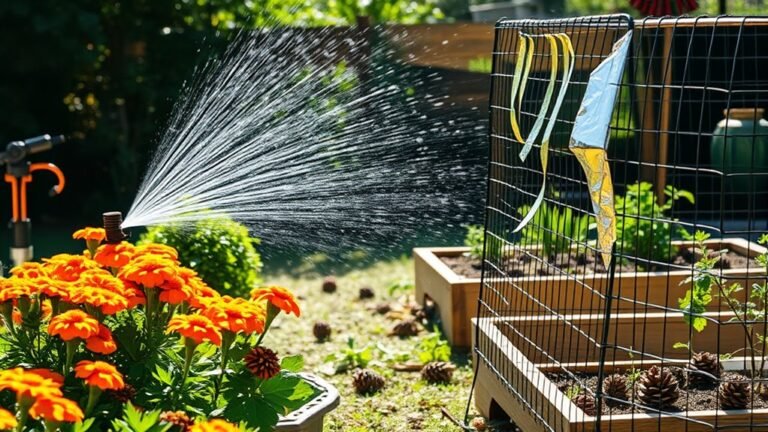
How to Stop Foxes Digging in Your Garden Step by Step
To stop foxes digging in your garden, first identify their signs like small holes and footprints. Removing food sources is crucial, so secure trash, pet food, and compost to discourage them. Using natural deterrents such as strong-smelling plants and repellents can also help.
Create uncomfortable digging surfaces with materials like chicken wire or gravel. Installing physical barriers such as buried fences adds an extra layer of protection. Motion-activated devices are effective at scaring foxes away from your garden.
Keep your garden tidy and monitor activity frequently to catch any new signs early. By following these steps, you’ll uncover more ways to protect your garden effectively.
Why Foxes Dig Gardens and How to Spot Their Digging

Although foxes dig in gardens for various reasons, you’ll usually find they’re searching for food, such as insects or small mammals hiding underground. When you notice small holes, often 2-4 inches wide, with disturbed soil around them, that’s a clear sign of fox activity.
Foxes tend to dig quickly and repeatedly in the same spots, especially near compost heaps, under hedges, or close to fences where prey shelters. You might also spot footprints nearby—paw prints with four toes and claw marks.
Fox digging can look random, but it’s purposeful, focused on areas rich in food sources. Understanding these signs helps you identify fox presence early, so you can take appropriate steps to protect your garden before damage worsens.
Remove Food Sources to Stop Fox Digging

Since foxes dig primarily to find food, cutting off their access to potential meals in your garden can greatly reduce their activity. You want to make your space less appealing by removing any easy food sources.
Foxes dig mainly to find food, so removing easy meals makes your garden less inviting.
Start by securing your trash bins with tight lids to prevent foxes from scavenging leftovers.
Avoid leaving pet food outside overnight, as it attracts foxes looking for an easy meal.
If you compost, use animal-proof bins and avoid adding meat or greasy scraps that might lure foxes.
Finally, pick up fallen fruit from trees promptly, since rotting fruit can be a tempting snack.
- Secure trash bins with tight lids
- Don’t leave pet food outside overnight
- Use animal-proof compost bins without meat scraps
- Regularly clear fallen fruit from your garden
These steps limit food availability, discouraging foxes from digging.
Natural Ways to Keep Foxes Away
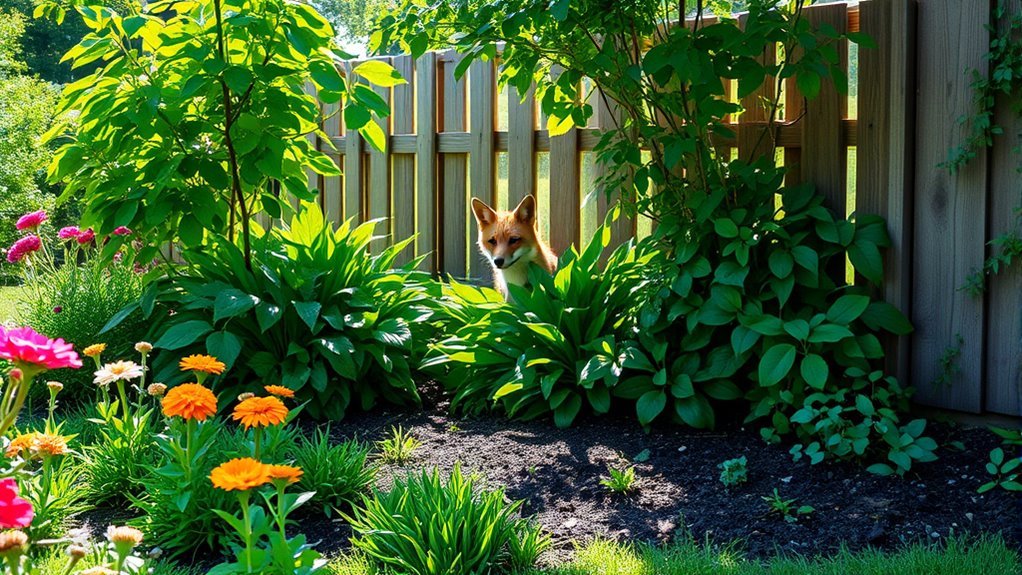
You can keep foxes at bay by planting herbs they dislike, like lavender or rosemary, around your garden.
Natural deterrent sprays made from essential oils can also help discourage them from digging.
These simple, eco-friendly methods protect your space without harming wildlife.
Plant Fox-Repellent Herbs
When you plant fox-repellent herbs around your garden, you create a natural barrier that discourages foxes from digging. These herbs emit scents that foxes find unpleasant, helping keep them at bay without harming them.
Plus, they add beauty and fragrance to your outdoor space. Focus on planting these herbs strategically near areas foxes target most.
Try these effective fox-repellent herbs:
- Lavender: Its strong fragrance deters foxes and attracts beneficial pollinators.
- Rosemary: This tough herb repels foxes and is great for cooking.
- Sage: The pungent scent keeps foxes away and enhances your garden’s aroma.
- Mint: Its sharp smell makes foxes avoid your garden beds.
Planting these herbs provides a simple, eco-friendly way to protect your garden naturally.
Use Natural Deterrent Sprays
Although foxes are clever at finding new spots to dig, natural deterrent sprays can help keep them away from your garden without causing harm. You can make your own spray using ingredients like garlic, chili, and vinegar, which foxes find unpleasant.
Simply blend crushed garlic and chili peppers with water and a bit of vinegar, then strain and spray around the areas foxes target.
Reapply the spray after rain or every few days to maintain its effectiveness.
You can also buy commercial natural deterrent sprays that use essential oils such as eucalyptus or citronella. These sprays create an environment foxes want to avoid, discouraging digging without resorting to harmful chemicals.
Using natural deterrent sprays is a safe, eco-friendly way to protect your garden while respecting local wildlife.
Block Foxes With Simple Garden Barriers
You can block foxes by installing simple garden barriers that keep them out effectively. Choose sturdy fences or natural deterrents and place them strategically where foxes tend to dig.
This approach helps protect your garden without harming the animals.
Effective Fence Options
Where should you start if you want to keep foxes out of your garden? The key is choosing the right fence. Foxes are clever diggers and jumpers, so your barrier needs to be sturdy and well-designed.
Consider these effective fence options:
- Wire mesh fencing: Use galvanized wire mesh at least 6 feet high, with mesh size under 2 inches to prevent squeezing through.
- Dig-proof barrier: Bury the fence’s bottom edge 12-18 inches underground or angle it outward to block digging.
- Electric fencing: A low-voltage electric fence can deter foxes without harming them.
- Solid panel fencing: Wooden or metal panels without gaps stop foxes from seeing inside, reducing their interest.
Choose a fence type that suits your garden setup, ensuring all gaps are sealed to keep foxes out.
Using Natural Deterrents
When foxes start targeting your garden, simple natural deterrents can effectively discourage them without the need for complex installations. You can use strong-smelling plants like lavender, rosemary, or garlic around your garden’s perimeter to repel foxes. These scents are unpleasant to foxes but won’t bother you.
Additionally, sprinkling natural substances such as chili powder or coffee grounds in digging-prone areas can make the soil less inviting. Foxes dislike these irritants and will often avoid treated spots.
Another option is placing human hair or pet fur near entrances, as foxes associate these smells with humans or predators.
These natural methods work best when combined and refreshed regularly, keeping your garden off-limits to foxes gently but effectively without harming them.
Strategic Barrier Placement
Although foxes are clever diggers, you can outsmart them by placing simple barriers in strategic spots around your garden. Focus on areas where foxes tend to dig, such as near compost bins, garden beds, and under sheds.
Using barriers that are easy to install but effective will make a big difference.
Consider these options to block foxes efficiently:
- Install chicken wire or mesh fencing buried at least 12 inches underground to prevent digging beneath.
- Place large flat stones or paving slabs over vulnerable soil patches.
- Use garden edging with sharp or pointed tops to deter climbing.
- Erect temporary barriers around new plants until they’re established and less attractive.
Make Surfaces Uncomfortable to Stop Digging
Why do foxes prefer soft, loose soil for digging? It’s easier on their paws and requires less effort to uncover food or create dens.
To stop them, you need to make the surfaces in your garden uncomfortable to dig.
You can lay chicken wire just beneath the soil surface or scatter prickly materials like pine cones or sharp-edged stones where they usually dig.
Raised beds with tough edging also deter foxes since they can’t easily access the soil.
Avoid using loose mulch or soft soil in vulnerable areas; instead, compact the ground or use gravel to create an uninviting texture.
Scents and Sounds That Repel Foxes From Your Garden
You can keep foxes away by using natural scents like vinegar or garlic that they dislike.
Ultrasonic sound devices are another tool that can create an uncomfortable environment for them without disturbing you.
Combining these scents with noise can boost your chances of protecting your garden effectively.
Effective Natural Repellents
How can you use natural scents and sounds to keep foxes out of your garden? You can rely on certain smells and noises that foxes find unpleasant or threatening. These natural repellents create an environment foxes want to avoid without causing harm.
Try these effective natural repellents:
- Garlic and chili spray: The pungent, spicy scent deters foxes from digging.
- Human hair or pet fur: Place clumps around your garden to signal a predator’s presence.
- Strong-smelling plants: Plant rosemary, lavender, or rue, which foxes dislike.
- Wind chimes or radios: Unfamiliar sounds can discourage foxes from settling in.
Using these natural methods helps protect your garden in an eco-friendly way, keeping foxes at bay without chemicals or traps.
Using Ultrasonic Sound Devices
Where can ultrasonic sound devices fit into your strategy for keeping foxes out of your garden? These devices emit high-frequency sounds that are unpleasant to foxes but typically inaudible to humans. You can place them near areas where foxes frequently dig or roam.
Because foxes rely heavily on their hearing, the ultrasonic sounds disrupt their comfort and encourage them to avoid your garden. Make sure to position the device so it covers the problem spots effectively and check batteries regularly for consistent operation.
Keep in mind, these devices work best in open spaces without many obstacles.
While they won’t harm foxes, ultrasonic sound devices provide a humane, non-invasive way to deter them, making your garden less inviting for digging and unwanted visits.
Combining Scents With Noise
Although scents and sounds can independently deter foxes, combining them creates a more effective barrier against unwanted digging. You can enhance your garden’s defenses by using strong-smelling repellents alongside noise devices, confusing and discouraging foxes from settling in.
This layered approach keeps them guessing and less likely to dig.
Try these tactics together for best results:
- Place cotton balls soaked in ammonia near ultrasonic sound emitters
- Use predator urine scents close to motion-activated noise makers
- Combine garlic or chili pepper sprays with wind chimes or radios
- Rotate scent and sound sources regularly to prevent foxes from getting used to them
Using Motion-Activated Devices to Stop Fox Digging
If foxes keep digging up your garden, motion-activated devices can offer an effective deterrent. These gadgets detect movement and activate lights, sounds, or water sprays that startle foxes, making your garden less inviting.
Place devices near known digging spots or entry points for best results.
Position devices close to frequent digging areas or access points for optimal effectiveness.
You can choose from motion-activated lights, ultrasonic repellents, or sprinklers depending on your preference and garden layout. Be sure to adjust sensitivity settings to avoid false triggers from pets or wildlife you want to safeguard.
Regularly check and maintain the devices to ensure they work properly.
Using motion-activated devices provides a humane way to discourage foxes without harming them, helping you protect your garden efficiently and peacefully.
Maintain Your Garden to Keep Foxes Away
Motion-activated devices can help keep foxes at bay, but maintaining your garden plays a big role in discouraging them from sticking around. You want to make your space less inviting by removing potential food sources and hiding spots.
Here’s how you can do it:
- Clear fallen fruit, pet food, and birdseed promptly to avoid attracting foxes.
- Trim dense shrubs and bushes where foxes might hide or rest.
- Secure compost bins tightly, so foxes can’t dig for scraps.
- Fill in holes or gaps under fences to block easy access to your garden.
How to Monitor Fox Activity and Adjust Deterrents
To effectively manage fox activity in your garden, you need to keep a close eye on their movements and behavior. Start by setting up motion-activated cameras or using trail cameras to track when and where foxes enter your space.
Look for fresh digging spots, footprints, or scat to pinpoint frequent areas. Regularly check these signs to identify patterns, like times of day they’re most active.
Once you gather this info, adjust your deterrents accordingly—move scare devices to new hotspots or change their types to avoid foxes getting used to them. Rotate smells, sounds, or barriers every few days to keep your garden unpredictable.
What to Do When Foxes Keep Coming Back
Although you’ve tried various deterrents, foxes might still return to your garden if they find a reliable food source or shelter. To stop them from coming back, you need to remove what attracts them and reinforce your defenses.
Start by securing trash bins and removing pet food left outside.
Next, block access to potential dens under sheds or decks. Also, consider using motion-activated lights or sprinklers to startle foxes.
Finally, reinforce fencing by extending it underground to prevent digging.
- Remove all food sources, including fallen fruit and compost
- Seal gaps under sheds and fences to eliminate shelter spots
- Use motion-activated deterrents to scare foxes away
- Extend fencing underground to block digging attempts
Stay consistent—foxes will move on when your garden no longer offers easy rewards.
Frequently Asked Questions
Are Foxes Protected by Law in Residential Areas?
Yes, foxes are protected by law in residential areas, so you can’t harm or trap them without a license.
You should use humane methods to deter them and avoid causing any injury or distress.
Can Foxes Carry Diseases Harmful to Humans or Pets?
Imagine a shadowy fox slipping through moonlit gardens—yes, foxes can carry diseases like mange and parasites that harm you and your pets.
You should stay cautious, keep pets healthy, and avoid direct contact to stay safe.
What Time of Day Are Foxes Most Active in Gardens?
Foxes are most active in your garden during dawn and dusk, when they hunt and explore.
You’ll rarely see them during the day since they prefer low light to stay hidden and avoid human activity.
Do Foxes Prefer Certain Plants or Garden Types?
Foxes don’t prefer specific plants but are drawn to gardens offering easy food sources, like fruit or pet food.
You’ll notice they favor gardens with dense cover or soft soil, making digging easier and safer for them.
Is It Safe to Trap and Relocate Foxes Yourself?
No, you shouldn’t trap and relocate foxes yourself—it’s often illegal and stressful for the animal.
Instead, contact local wildlife authorities who can handle it safely and humanely, protecting both you and the fox.
Conclusion
Stopping foxes from digging in your garden takes a mix of patience and strategy. For example, Sarah noticed foxes kept visiting her backyard despite barriers. After removing food scraps and installing motion-activated lights, the digging stopped within a week.
By combining food removal, natural repellents, and deterrents, you can protect your garden too. Keep observing and adjusting your methods, and soon you’ll enjoy a fox-free, peaceful garden.
Implementing these steps to stop foxes digging in your garden will help maintain a safe and beautiful outdoor space.