How to Flatten a Garden in 3 Simple Steps
To flatten your garden in three simple steps, start by clearing plants, debris, and furniture to open the space and remove weeds or roots for a smooth base. This initial step is crucial for preparing the garden surface. Clearing the area helps ensure an even foundation for flattening your garden effectively.
Next, loosen compacted soil with a garden fork and use a shovel and rake to move and level soil. Check your progress with a spirit level or a board to achieve the desired flatness. These tools help create a perfectly even garden surface.
Finally, maintain your flat garden by mulching, watering evenly, removing weeds, and aerating regularly. Consistent care will preserve your garden’s evenness and health. Keep going to discover how to perfect and sustain your garden’s flatness over time.
Prepare Your Garden for Flattening
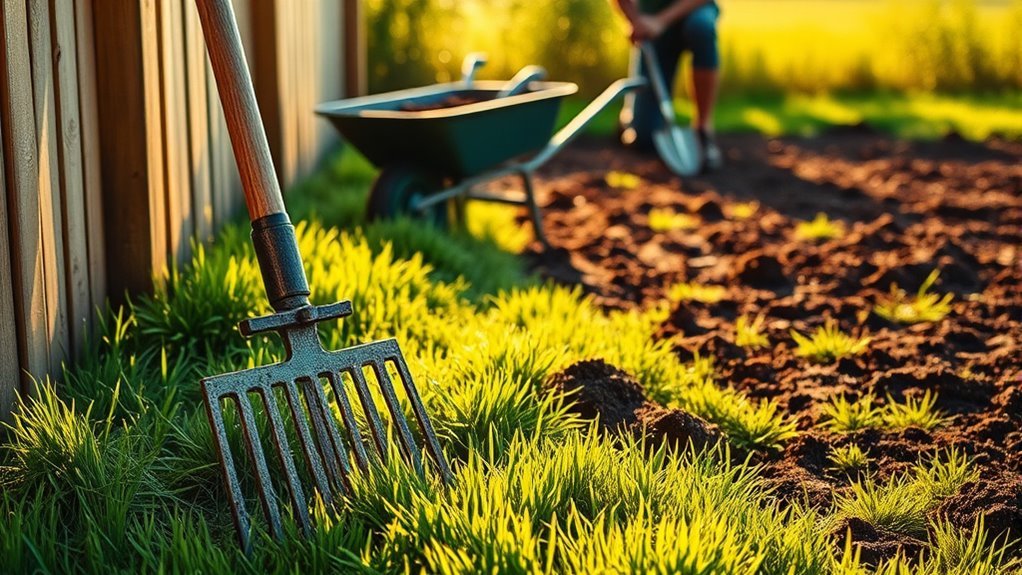
How do you get your garden ready for flattening? First, clear out any plants, rocks, or debris that could obstruct the process. Pull up weeds and remove roots to prevent uneven spots later.
Next, take out any garden furniture or tools to create an open workspace. If you have existing turf, consider cutting it into strips and setting it aside; you might want to reuse or compost it.
Also, check for any underground utilities before digging deeper.
Once cleared, examine the soil for compacted areas; loosening the soil with a garden fork can help the flattening process go smoothly.
Preparing your garden thoroughly guarantees you won’t encounter surprises, making the flattening step easier and more effective.
Level Your Garden With Simple Tools
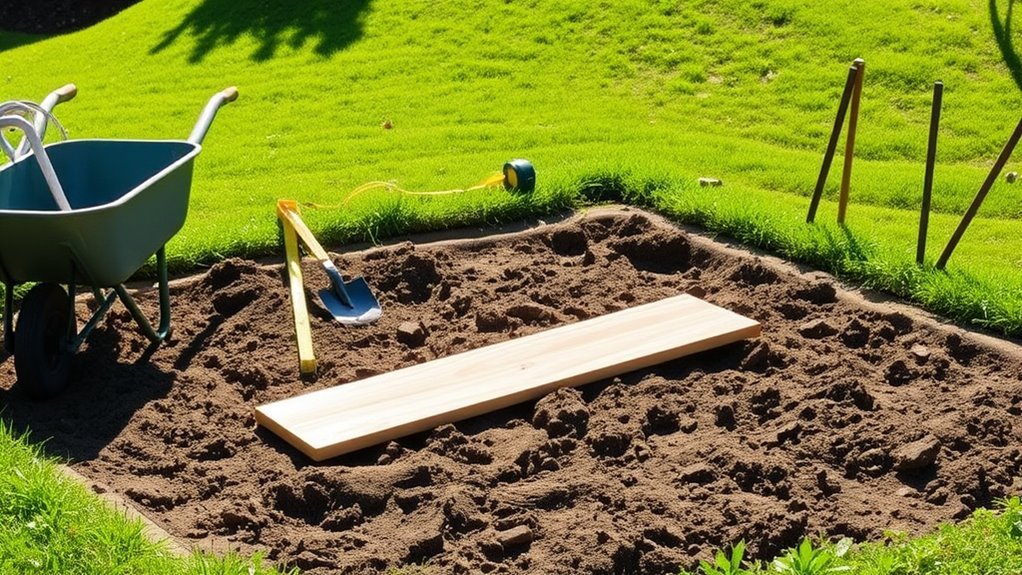
Before you start leveling, gather simple tools like a rake, shovel, and a spirit level or long straight board to check your progress.
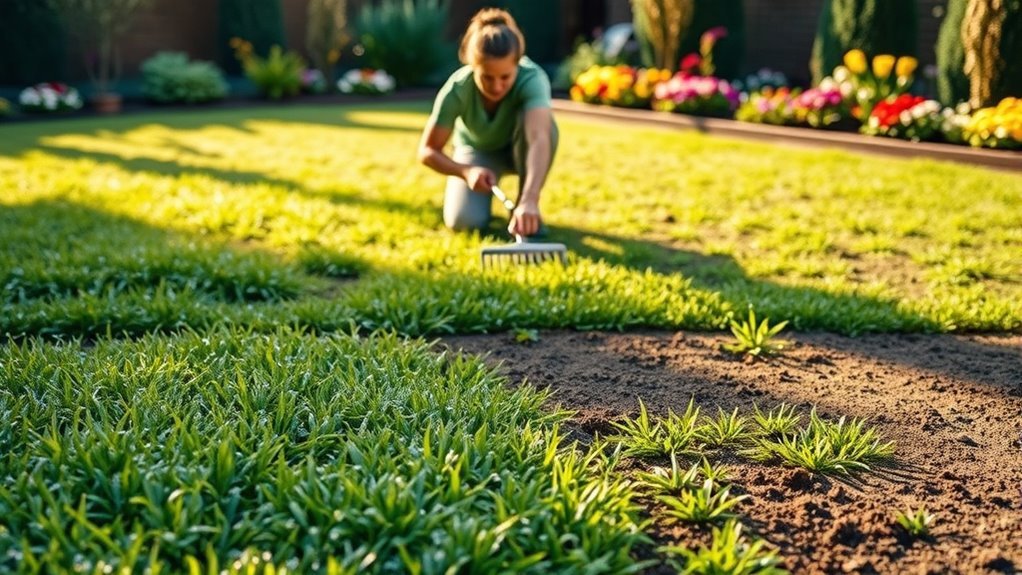
Begin by using the shovel to move soil from higher spots to lower areas. Spread the soil evenly with the rake, breaking up clumps and smoothing the surface.
Place the spirit level or board across different sections to see if the ground is even; adjust as needed by adding or removing soil.
Work systematically across the garden, focusing on small sections at a time for better control. Keep checking your work frequently to avoid uneven patches.
With patience and these basic tools, you’ll create a flat, stable base ready for planting or landscaping.
Finish and Maintain Your Flattened Garden
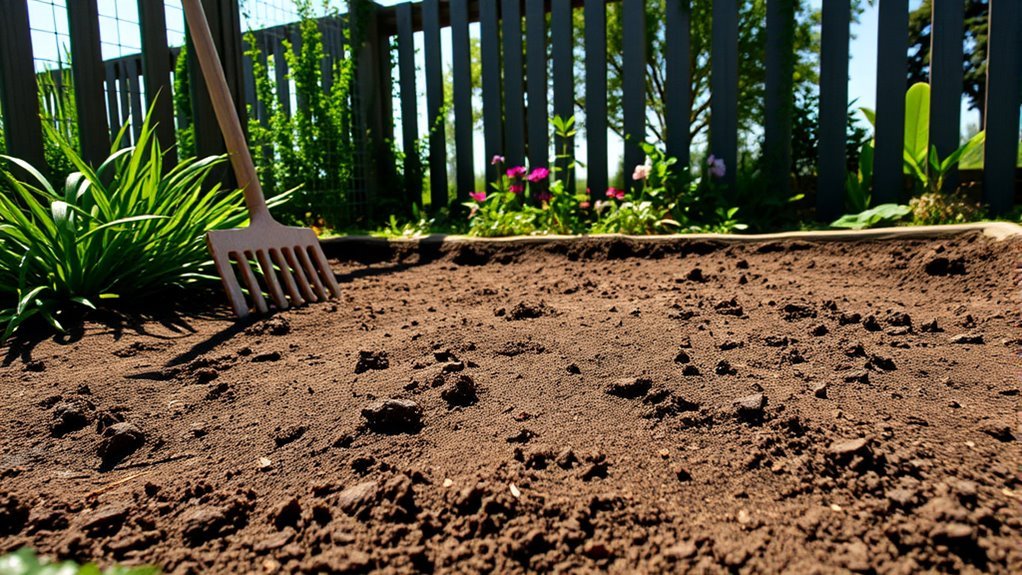
Once your garden is evenly leveled, the next step is to guarantee it stays that way and remains healthy over time. To finish and maintain your flattened garden, you’ll want to focus on protecting the soil and encouraging plant growth.
Start by spreading a layer of mulch to prevent erosion and retain moisture. Water your garden regularly but avoid overwatering, which can cause uneven settling. Keep an eye out for weeds that might disrupt the smooth surface and remove them promptly.
Finally, aerate the soil occasionally to promote good drainage and root health.
Following these simple steps will help you enjoy a beautifully flat, thriving garden for seasons to come.
- Apply mulch evenly over the surface
- Water consistently without flooding
- Remove weeds as soon as they appear
- Aerate soil every few months
Frequently Asked Questions
Can I Flatten My Garden on a Slope?
Yes, you can flatten your garden on a slope by creating terraces or using retaining walls. You’ll need proper drainage to prevent erosion and guarantee stability, so plan carefully and take your time to get it right.
What Time of Year Is Best for Flattening a Garden?
You’ll want to flatten your garden during early spring or autumn when the soil is moist but not waterlogged.
This timing makes digging easier and helps plants establish well after you level the ground.
How Do I Handle Large Rocks or Tree Roots?
Tackling large rocks or tree roots is like peeling an onion—layer by layer. You’ll want to dig around them carefully, use a pry bar or saw for roots, and remove debris before smoothing the soil beneath.
Take your time to avoid damaging tools or injuring yourself. Once the obstacle is free, clear the area thoroughly to prepare for your next step.
Will Flattening Affect My Garden’s Drainage?
Yes, flattening can affect drainage if you compact the soil too much.
You’ll want to loosen the soil afterward and create slight slopes to direct water flow, preventing puddles and ensuring your garden drains properly.
Can I Flatten a Garden Without Heavy Machinery?
Yes, you can flatten your garden without heavy machinery by using hand tools like a rake, shovel, and tamper.
It takes more effort and time, but it’s effective for small to medium-sized areas.
Conclusion
Flattening your garden is easier than you think, and following these simple steps will make your space look amazing. Did you know that a well-leveled garden can improve water absorption by up to 50%? That means healthier plants and less water waste.
By preparing your garden, using basic tools to level it, and maintaining it regularly, you’ll create a beautiful, functional outdoor space you’ll love spending time in. Get started today!
Remember, a well-leveled garden not only enhances aesthetics but also promotes better drainage and plant growth. Flatten your garden with these simple steps to enjoy a healthier, more vibrant outdoor area.