How Do I Clean Garden Tools in 7 Easy Steps?
To clean your garden tools in seven easy steps, start by gathering essential supplies like a stiff brush, soapy water, and sandpaper. Proper garden tool maintenance is key to ensuring they remain effective and last longer.
Begin by brushing off dirt and debris from the tools. Next, soak any rusty parts in vinegar before scrubbing them with steel wool to remove the rust.
Disinfect your tools using a bleach solution to protect your plants from harmful pathogens. After cleaning, carefully sharpen the blades to maintain their cutting efficiency.
Make sure to dry your tools thoroughly to prevent moisture buildup. Finally, apply oil to the metal parts to prevent rust and store your tools hung in a dry place.
Follow these steps to keep your garden tools sharp, safe, and long-lasting, with more tips ahead to optimize maintenance.
Gather Cleaning Supplies
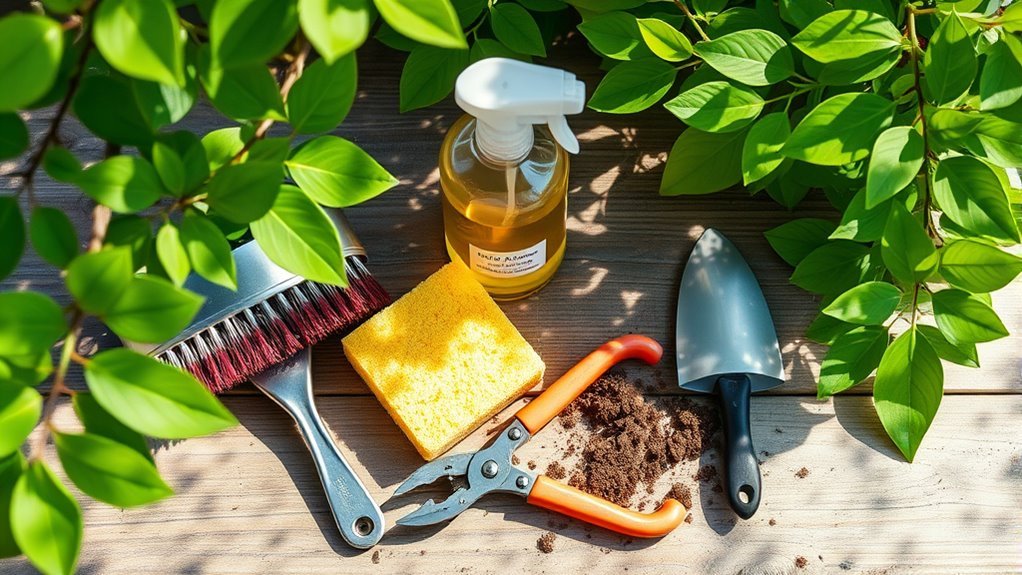
Where do you begin when cleaning your garden tools? Start by gathering the right cleaning supplies. You’ll need a stiff brush or wire brush to scrub off any rust or residue once you start cleaning.
Have a bucket of warm soapy water ready; dish soap works well for breaking down dirt and grime. Keep a cloth or rag nearby for drying your tools after cleaning to prevent rust.
You might also want to grab some steel wool for tougher rust spots and sandpaper to smooth out any rough edges.
Don’t forget protective gloves to keep your hands safe and a pair of safety glasses if you’re scrubbing vigorously. Having these supplies on hand makes the cleaning process faster and more efficient.
Remove Dirt and Debris From Garden Tools
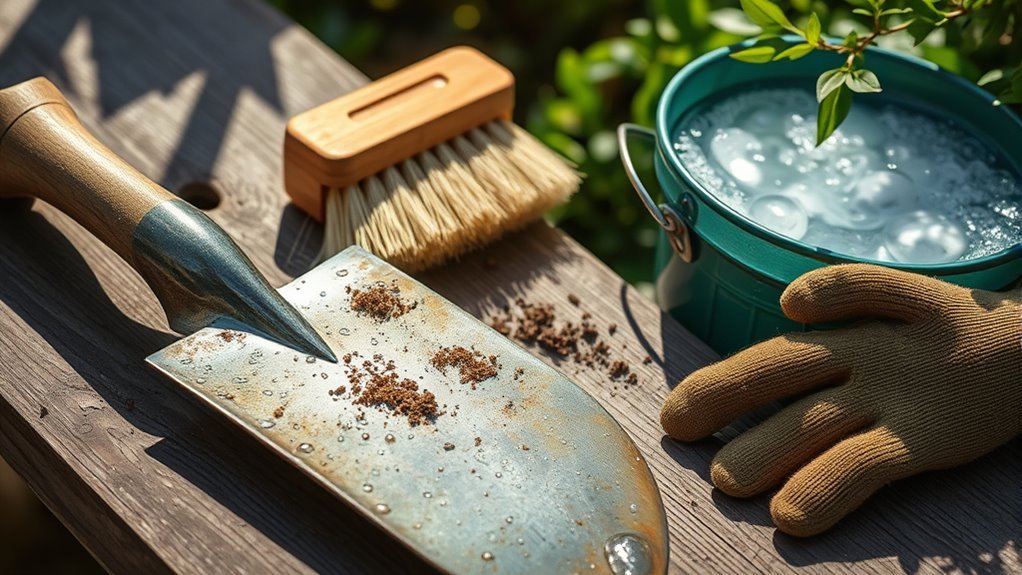
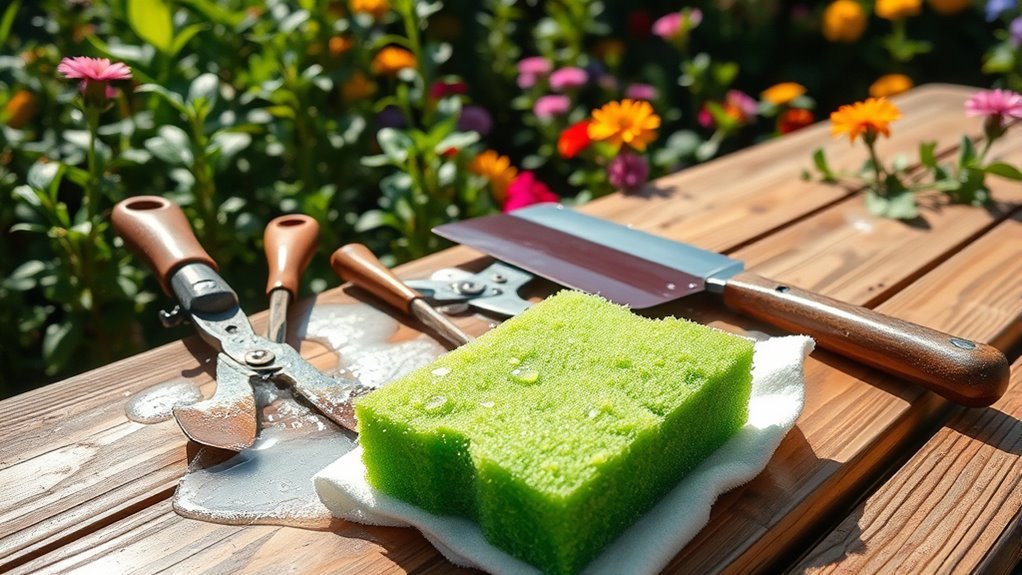
Once you have your cleaning supplies ready, the next step is to remove all the dirt and debris stuck to your garden tools. Start by brushing off loose soil and plant material using a stiff-bristled brush or an old toothbrush.
For stubborn clumps of mud, tap the tools gently against a hard surface to dislodge the dirt.
You can also use a putty knife or a flathead screwdriver to scrape off compacted debris carefully. Be thorough, especially around joints and crevices where dirt tends to accumulate.
If your tools have wooden handles, avoid soaking them in water to prevent damage. Instead, wipe them down with a damp cloth.
Removing this dirt not only improves tool performance but also prevents the spread of plant diseases in your garden.
Soak and Scrub Rust and Gunk
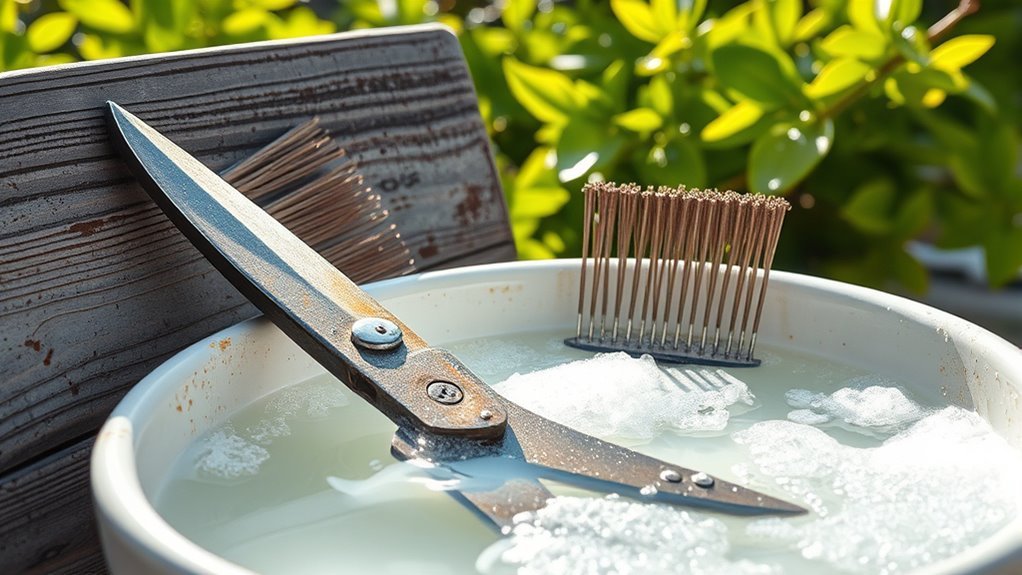
To tackle rust and stubborn gunk, you’ll want to soak your tools in a solution that loosens buildup effectively.
After soaking, scrub them thoroughly with a wire brush or steel wool to restore their surface.
This process guarantees your tools stay sharp and last longer.
Effective Rust Removal
Although rust and gunk can seem stubborn, soaking your garden tools in a cleaning solution softens the buildup, making it easier to scrub away.
Start by submerging your tools in a mixture of white vinegar and water for a few hours or overnight. The vinegar’s acidity breaks down rust effectively.
After soaking, grab a stiff brush or steel wool and scrub the rusted areas firmly. You’ll notice the rust loosening and flaking off.
For heavy rust, repeat soaking or use a paste made from baking soda and water to scrub stubborn spots.
Rinse your tools thoroughly with clean water to remove any leftover residue. Dry them completely to prevent new rust from forming.
Taking these steps keeps your tools sharp and extends their lifespan.
Cleaning Tools Thoroughly
When you want your garden tools to perform their best, thorough cleaning is essential to remove both rust and stubborn gunk. Start by soaking your tools in a mixture of warm water and a mild detergent for 10-15 minutes. This softens dirt, sap, and rust buildup, making scrubbing much easier.
After soaking, use a stiff brush or steel wool to scrub the surfaces, focusing on blades, joints, and crevices where grime collects. For tougher rust spots, a bit of vinegar or baking soda paste can help break it down.
Rinse your tools thoroughly with clean water to remove residue, then dry them completely to prevent new rust from forming.
A clean tool not only works better but lasts longer, saving you time and money.
Disinfect Garden Tools to Keep Plants Healthy
Since garden tools come into contact with soil and plant debris, they can easily transfer harmful pathogens from one plant to another. Disinfecting your tools helps prevent the spread of diseases and keeps your plants healthy.
Here’s how you can do it effectively:
- Use a solution of one part bleach to nine parts water or a commercial disinfectant designed for garden tools.
- Soak or wipe your tools thoroughly, paying close attention to blades and joints where pathogens hide.
- Rinse the tools with clean water and dry them completely to prevent rusting.
Disinfect your tools after every use, especially when working with infected plants, to maintain a healthy garden environment. This simple step protects your plants and ensures your tools last longer.
Sharpen Blades Safely
When sharpening your garden tools, pick the right sharpening tool to match your blade type.
Keep the blade at the proper angle to guarantee a clean, effective edge.
Don’t forget to wear protective gear to keep yourself safe during the process.
Choose The Right Tool
How can you guarantee your garden tools stay sharp and effective? It all starts by choosing the right sharpening tool for the job. Using an inappropriate tool can damage your blades or make sharpening unsafe.
Here’s how to pick the best tool:
- Identify your blade type – Different blades require different sharpeners. For example, bypass pruners need a fine file or sharpening stone, while thicker blades may need a bench grinder.
- Prioritize safety features – Look for tools with handles that offer a secure grip and guards to protect your fingers.
- Match your skill level – If you’re new to sharpening, opt for easy-to-use tools like sharpening stones or manual files rather than power tools.
Choosing the right tool sets you up for safe, efficient sharpening every time.
Maintain Proper Blade Angle
Choosing the right sharpening tool is just the first step; maintaining the proper blade angle guarantees your garden tools get a clean, effective edge every time you sharpen. Keep your blade at the recommended angle—usually between 20° and 30°—to avoid damaging the metal or dulling the edge prematurely.
Use a consistent angle throughout the process to assure even sharpening. You can mark the angle on your sharpening stone or use an angle guide for precision.
| Tool Type | Recommended Angle | Notes |
|---|---|---|
| Pruners | 20° – 25° | Small blades need care |
| Shovels | 25° – 30° | Slightly sharper for digging |
| Hedge Shears | 20° – 25° | Maintain even angle both sides |
| Garden Knives | 25° – 30° | Sharpen both edges carefully |
Use Protective Gear
Why risk injury when sharpening your garden tools? Using protective gear is essential to keep you safe and confident while working.
Before you start sharpening, make sure you:
- Wear sturdy gloves to protect your hands from sharp edges and metal shards.
- Use safety goggles to shield your eyes from flying debris.
- Put on a dust mask if you’re working with rust or old metal particles.
These simple precautions help prevent cuts, eye injuries, and respiratory issues caused by dust.
Dry and Oil Garden Tools
Once you’ve thoroughly cleaned your garden tools, make sure to dry them completely to prevent rust and corrosion. Use a clean cloth or towel to wipe off all moisture, paying close attention to metal parts and joints where water tends to linger.
After drying, apply a light coat of oil—such as vegetable oil, motor oil, or specialized garden tool oil—to metal surfaces. This protective layer keeps rust at bay and maintains smooth operation. Use a cloth to spread the oil evenly and remove any excess.
Don’t forget to oil wooden handles, too; it prevents cracking and keeps the wood supple.
Store Garden Tools Properly
Although cleaning and oiling your garden tools are essential, storing them properly guarantees they stay in good condition longer. You want to protect your tools from moisture, rust, and damage by choosing the right storage method.
Proper storage is key to protecting your garden tools from moisture, rust, and damage, ensuring they last longer.
Here’s how to store your garden tools properly:
- Hang Tools Off the Ground – Use hooks or a pegboard to keep tools dry and prevent blades from dulling or bending.
- Keep Them in a Dry, Ventilated Area – Avoid damp sheds or garages where rust can form quickly.
- Group Similar Tools Together – Organize by type or size to easily find what you need, reducing wear from unnecessary handling.
Frequently Asked Questions
Can I Use Household Bleach to Disinfect Garden Tools?
Yes, you can use household bleach to disinfect garden tools, but dilute it properly (one part bleach to nine parts water). Don’t soak tools too long, and rinse them well afterward to prevent rust and damage.
Be sure to wear gloves and work in a well-ventilated area to avoid irritation from the bleach. After disinfecting, allow the tools to dry completely before storing them to maintain their condition. Regular cleaning and proper storage will help extend the life of your garden tools.
How Often Should I Clean My Garden Tools During the Season?
Just like Sarah, who cleans after every use to prevent rust, you should clean your garden tools weekly during heavy use and right after working with diseased plants.
This helps keep them sharp, safe, and long-lasting. Regular cleaning also reduces the risk of spreading plant diseases.
Are Electric Garden Tools Cleaned Differently Than Manual Ones?
Yes, you clean electric garden tools differently than manual ones. You’ll need to unplug them first, avoid soaking electrical parts, and carefully wipe blades and handles.
Always check the manufacturer’s guide for specific cleaning tips.
What Are the Signs That a Tool Needs Replacing, Not Cleaning?
If your garden tool looks like a knight’s rusty sword—blades chipped, handles cracked, or it won’t cut despite cleaning—it’s time to replace it.
Don’t waste effort; a fresh tool saves you time and frustration.
Can Cleaning Garden Tools Prevent the Spread of Specific Plant Diseases?
Yes, cleaning your garden tools prevents spreading specific plant diseases like blight and rust. You’ll remove harmful pathogens stuck on blades, keeping your plants healthier and your garden thriving with less risk of infections spreading.
Conclusion
Keeping your garden tools clean not only extends their life but also boosts your plant health—did you know that dirty tools can spread diseases to 70% of your garden? By following these simple steps, you’ll protect your plants and make your gardening easier and more enjoyable.
Regular cleaning, sharpening, and proper storage guarantee your tools stay in top shape, helping you nurture a thriving garden season after season. Don’t skip this easy but essential routine!
Incorporating regular garden tool cleaning into your gardening routine is key to maintaining healthy plants and ensuring the longevity of your tools. Proper garden tool cleaning, combined with sharpening and storage, will keep your equipment efficient and your garden flourishing year after year.