10 Factors Affecting How Much to Turf a Garden
You’ll need to measure your garden’s exact dimensions and consider unusable areas like paths or flower beds to calculate turf accurately. Understanding the 10 factors affecting how much to turf a garden will help you make the best choices. Think about your turf type—artificial or natural—and select grass suited to your soil and climate.
Factor in ground slope and extra turf for waste or future repairs. Timing matters; choose cooler months for better root growth. Budget for purchase, installation, and upkeep.
Keep these in mind to make sure your turf fits perfectly and lasts well—you’ll find more helpful tips ahead.
Measure Your Garden Size Before Buying Turf
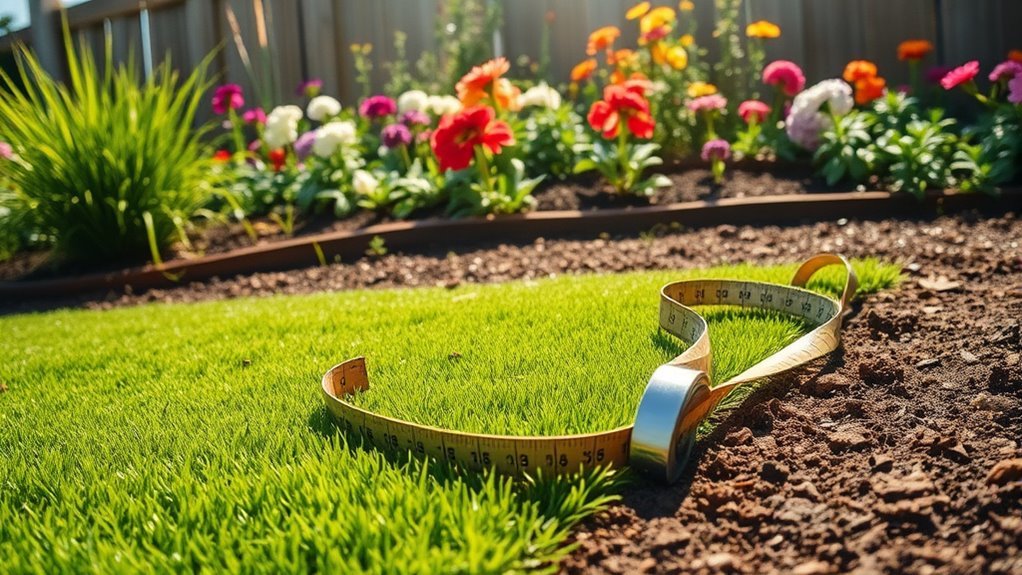
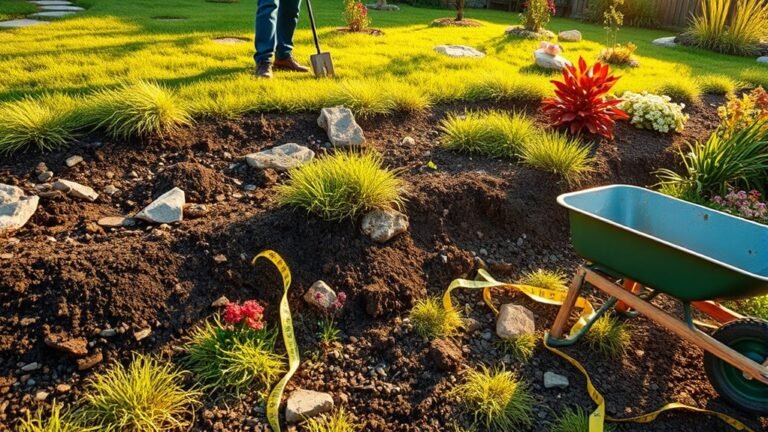
Before you buy turf, make sure you accurately measure your garden’s size. Grab a tape measure or laser distance measurer and note down the length and width of the area you want to cover. Multiply these two numbers to find the total square footage or meters.
This measurement helps you determine how much turf you need, preventing overbuying or running short. If your garden has multiple sections, measure each separately and add the results.
Accurate measurements also let you get precise quotes from suppliers, making budgeting easier.
Taking this step saves you time, money, and hassle during installation. So, don’t skip it—measuring your garden carefully guarantees you purchase the right amount of turf for a perfect lawn.
Account for Lawn Shape and Unusable Areas
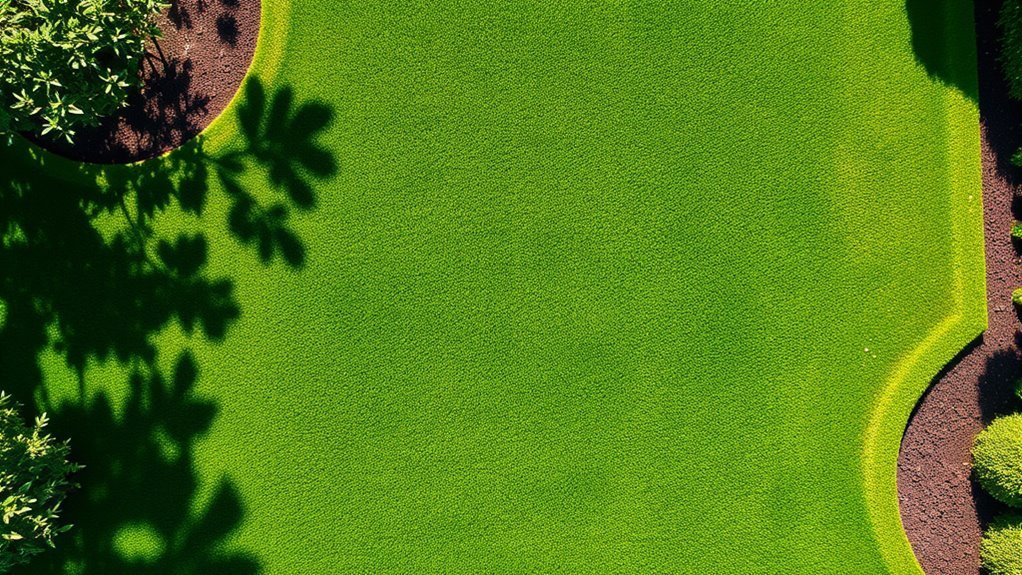
You’ll want to carefully measure your lawn’s dimensions, including any irregular shapes that could affect turf coverage.
Make sure to identify areas where turf won’t go, like flower beds, paths, or patios.
Accounting for these unusable zones helps you avoid overbuying and keeps costs accurate.
Measuring Lawn Dimensions
How do you accurately measure a lawn that isn’t perfectly rectangular? Break the lawn into smaller, manageable shapes like rectangles, triangles, and circles. Measure each part separately, then add the areas to get the total square footage.
Don’t forget to subtract any unusable spaces such as paths or flower beds. Use a tape measure or a laser distance measurer for precision.
| Shape | Measurement Needed | Area Calculation |
|---|---|---|
| Rectangle | Length & Width | Length × Width |
| Triangle | Base & Height | 0.5 × Base × Height |
| Circle | Radius | π × Radius² |
| Irregular | Divide into shapes | Sum of individual areas |
| Unusable | Measure & subtract area | Subtract from total lawn area |
This method guarantees you turf just the right amount.
Identifying Non-Turf Zones
Where do you draw the line between turf and non-turf areas on your lawn? Start by observing your garden’s shape and noting any odd corners or narrow strips that turfing would be impractical.
Paths, patios, flower beds, and play areas all count as non-turf zones. These spaces not only break up your lawn but also reduce the total area you need to cover with turf, saving you money.
Don’t forget spots under large trees or near garden furniture where grass struggles to grow. Mark these unusable areas clearly when planning, so you avoid wasting turf on places it won’t thrive.
Choose Between Artificial and Natural Turf
When deciding on turf for your garden, weighing the benefits of artificial versus natural options can save you time and money. Artificial turf requires minimal upkeep, stays green year-round, and handles heavy foot traffic without damage, making it ideal if you want a low-maintenance lawn.
However, it has a higher upfront cost and doesn’t offer the natural feel or environmental benefits of real grass. Natural turf provides a softer surface, improves air quality, and supports local ecosystems.
But it demands regular watering, mowing, and fertilizing. It’s also more prone to wear in shaded or heavily used areas. Consider your lifestyle, budget, and garden conditions carefully.
Choosing the right type depends on how much effort you’re willing to invest and the look you want to achieve.
Select the Right Grass Type for Your Lawn
Although selecting the right grass type might seem straightforward, choosing one that suits your climate, soil, and lawn usage can considerably impact your garden’s appearance and maintenance costs.
First, consider your local climate—cool-season grasses like fescue thrive in cooler areas, while warm-season grasses such as Bermuda do better in hot climates.
Next, think about how you’ll use your lawn; if it sees heavy foot traffic, opt for durable, wear-resistant varieties.
Also, consider the amount of sunlight your garden gets daily, as some grasses prefer full sun while others tolerate shade.
Picking grass suited to these factors reduces watering, mowing, and fertilizing needs, saving you time and money.
Taking the time to choose the right grass type ensures a healthy, attractive lawn that fits your lifestyle.
Check Your Soil Before Laying Turf
Before laying your turf, make certain you identify your soil type to choose the right preparation method.
Test your soil’s pH to make sure it supports healthy grass growth.
Don’t forget to assess nutrient levels so you can add the necessary amendments and avoid extra costs later.
Soil Type Identification
Since your soil forms the foundation for healthy turf, identifying its type is crucial before laying any grass. Start by taking a handful of soil and feel its texture. If it feels gritty and drains quickly, you likely have sandy soil.
Clay soil, on the other hand, feels sticky and holds moisture longer. Loam soil, the ideal type, has a balanced mix of sand, silt, and clay, feeling crumbly and soft.
You can also conduct a simple jar test: mix soil with water in a clear jar, shake it, then let it settle. Layers will separate, revealing proportions of sand, silt, and clay.
Knowing your soil type helps you choose the right turf and prepare the ground properly, saving you time and money.
Soil pH Testing
Understanding your soil type gives you a solid start, but testing its pH level will help you fine-tune your approach to laying turf. Soil pH measures acidity or alkalinity, impacting how well your turfgrass absorbs nutrients. Most turf varieties thrive in a pH range of 6.0 to 7.5.
If your soil’s pH is too low (acidic) or too high (alkaline), your turf may struggle to establish and grow evenly. You can test soil pH using a simple kit from a garden center or send a sample to a lab for more accurate results.
Once you know your soil’s pH, you can adjust it by adding lime to raise pH or sulfur to lower it, creating an ideal environment for your turfgrass.
Nutrient Level Assessment
Although soil pH is crucial, checking your soil’s nutrient levels guarantees your turf gets the essential elements it needs to grow strong and healthy. Before laying turf, test your soil to understand its nutrient profile. This helps you avoid wasting money on unnecessary fertilizers and ensures your lawn thrives from the start.
Focus on these key nutrients:
- Nitrogen (N): Promotes lush, green growth.
- Phosphorus (P): Supports root development and establishment.
- Potassium (K): Enhances disease resistance and drought tolerance.
- Micronutrients: Elements like iron and magnesium influence color and overall health.
You can use a home test kit or send samples to a lab for detailed analysis.
Adjust your soil based on results before turfing to save costs and ensure a vibrant lawn.
Factor in Slopes and Uneven Ground
When you’re dealing with slopes and uneven ground, installing garden turf becomes more challenging and costly. You’ll need extra preparation to level the soil or create terraces, which requires more labor and materials.
Uneven surfaces can cause water runoff, so you might have to invest in drainage solutions to prevent turf washout and guarantee healthy growth.
Addressing water runoff with proper drainage is key to maintaining healthy, long-lasting turf on uneven ground.
Additionally, laying turf on a slope often demands more careful handling to avoid slippage, increasing installation time.
You may also need to buy extra turf to cover any waste generated from cutting and fitting around irregular areas. Factoring these challenges into your budget helps you avoid surprises.
Taking the time to address slopes and uneven ground properly ensures your turf looks great and lasts longer.
Plan Turf Around Pathways and Garden Features
You’ll want to carefully plan where your pathways go since their placement directly affects how much turf you’ll need.
Integrating garden features like flower beds or water elements can also change the turf layout and cost.
Thinking about these early helps you avoid last-minute adjustments that could raise expenses.
Pathway Placement Impact
Since pathways and garden features break up your lawn space, planning turf around them can considerably affect your overall turf cost. The placement of pathways influences how much turf you’ll need and how easily you can install it. When pathways are strategically placed, you minimize awkward turf cuts and reduce waste.
Poorly planned pathways create irregular turf shapes, increasing labor and material expenses. Consider these key factors when positioning pathways:
- Maximize straight edges to simplify turf laying and reduce cutting.
- Avoid narrow or curved pathways that require custom turf sizes.
- Place pathways to balance lawn areas, avoiding small, unusable patches.
- Guarantee pathways provide easy access without fragmenting large turf sections.
Thoughtful pathway placement helps you save money and achieve a clean, efficient turf layout.
Garden Feature Integration
Although integrating garden features like flower beds, ponds, or seating areas adds charm to your outdoor space, it also demands careful turf planning to avoid excessive waste and extra labor. You’ll want to measure around these features accurately to calculate the turf area needed.
Consider leaving a small buffer zone between turf and features to reduce damage risks.
Here’s a quick guide to help you plan turf around common garden features:
| Feature | Typical Size (sq ft) | Turf Adjustment Needed |
|---|---|---|
| Flower Bed | 20 – 50 | Subtract from turf area |
| Pond | 30 – 100 | Subtract + margin |
| Seating Area | 40 – 80 | Subtract fully |
| Pathway Edge | N/A | Leave 6-12 inch buffer |
| Trees | Varies | Subtract root area |
Plan carefully to save cost and effort.
Add Extra Turf for Waste and Repairs
When planning your garden turf, remember to order extra to cover waste and future repairs. Turf can be damaged during installation or over time, so having spare pieces saves you from costly replacements later. It’s smart to add about 5-10% more turf than your garden’s exact measurements.
Here’s why you should factor in extra turf:
- Cutting Waste: Shaping turf to fit irregular spaces creates offcuts that can’t be used.
- Damage During Installation: Handling and laying the turf might cause tears or breaks.
- Future Repairs: Patches from wear, pets, or weather require matching turf for seamless fixes.
- Settling and Shrinkage: Turf may settle unevenly, needing top-ups to maintain a full look.
Ordering extra turf upfront ensures your garden stays lush without unexpected extra trips.
Time Your Turfing for Best Results
Ordering extra turf helps you avoid delays caused by damage or repairs, but choosing the right time to lay your turf can save you even more effort and expense.
Aim to turf during cooler months, like early autumn or spring, when the soil is moist and temperatures are moderate. This gives your turf the best chance to establish strong roots without stress from extreme heat or drought.
Turf in cooler months like early autumn or spring for strong roots and less stress.
Avoid laying turf during peak summer or freezing winter, as these conditions can hinder growth and increase watering needs.
Also, try to turf right after prepping your soil to reduce weed growth and ensure good contact between turf roots and soil.
Timing your turfing well means less maintenance and a healthier lawn that thrives from the start.
Budget for Installation and Maintenance Costs
Since laying turf is just the beginning, you’ll need to allocate funds not only for installation but also ongoing maintenance costs. Proper budgeting guarantees your garden stays lush without surprises.
Start by calculating the cost of turf delivery and labor for installation.
Remember, cheaper turf might mean higher maintenance later. Then, factor in regular watering, which can raise your utility bills.
Don’t forget fertilizing and weed control products to keep your lawn healthy.
Finally, budget for occasional repairs or reseeding in high-traffic areas. Here’s what to contemplate:
- Turf purchase, delivery, and installation fees
- Increased water usage for irrigation
- Fertilizers, pesticides, and lawn care products
- Future repairs or reseeding expenses
Planning ahead saves money and keeps your garden thriving.
Frequently Asked Questions
How Long Does Newly Laid Turf Take to Establish?
Newly laid turf usually takes about 2 to 3 weeks to establish.
You’ll know it’s ready when the roots have anchored well, and the grass feels secure when you gently tug on it.
Can Pets Damage Newly Turfed Areas?
Yes, pets can damage newly turfed areas by digging or urinating, which may cause patches or discoloration.
You should keep them off the turf until it’s well established to avoid damage and help it grow strong.
What Are the Best Watering Practices After Turf Installation?
Don’t drown your turf like it’s auditioning for a swim meet. Water lightly but often—morning and evening—so roots settle in happily.
Overwatering’s just a fancy way to invite mold and regret. Keep it balanced!
How Often Should You Mow a New Lawn?
You should mow your new lawn when it reaches about 3 inches tall, usually after 2-3 weeks.
Keep your mower blades sharp and never cut more than one-third of the grass height at once to avoid stressing it.
Are There Eco-Friendly Turfing Options Available?
Absolutely, you can choose eco-friendly turf options like drought-resistant grass, organic compost, or even ancient seed blends. These choices help conserve water, reduce chemicals, and promote a greener garden you’ll be proud of every season.
Conclusion
So, you’ve measured, planned, and picked the perfect turf, only to realize your “easy” garden makeover isn’t quite that simple. Who knew that turfing involves more math, soil checks, and timing than you expected?
But hey, if you love surprises and extra trips to the garden center, this is your dream project. Just remember: the more you plan, the less you’ll need to patch up later—ironic, right?
Happy turfing! Keep in mind the 10 factors affecting how much to turf a garden to make your project smoother and more cost-effective.