How to Stop Cats Pooing in Your Garden Step-by-Step
To stop cats pooing in your garden, start by inspecting regularly and removing enticing debris or fallen fruit. Installing physical barriers like chicken wire near the ground can also help deter cats. Additionally, use natural repellents such as citrus peels or coffee grounds, and remember to revitalize them often.
Create a clean, alternative toileting area with soft soil to redirect cats away from your garden beds. Keep your garden tidy to minimize attractions for visiting cats. Applying enzymatic cleaners to erase scents is essential to prevent repeat visits.
Stay consistent with these steps, and you’ll find effective long-term ways to keep your garden cat-free. Regular maintenance and patience are key to successfully stopping cats from pooing in your garden.
How to Stop Cats Pooing in Your Garden: A Step-by-Step Guide
If you want to keep your garden clean and free from cat mess, you need a clear plan. Start by removing any existing waste promptly to avoid attracting more cats.
To keep your garden cat-free, promptly remove any waste to prevent attracting more cats.
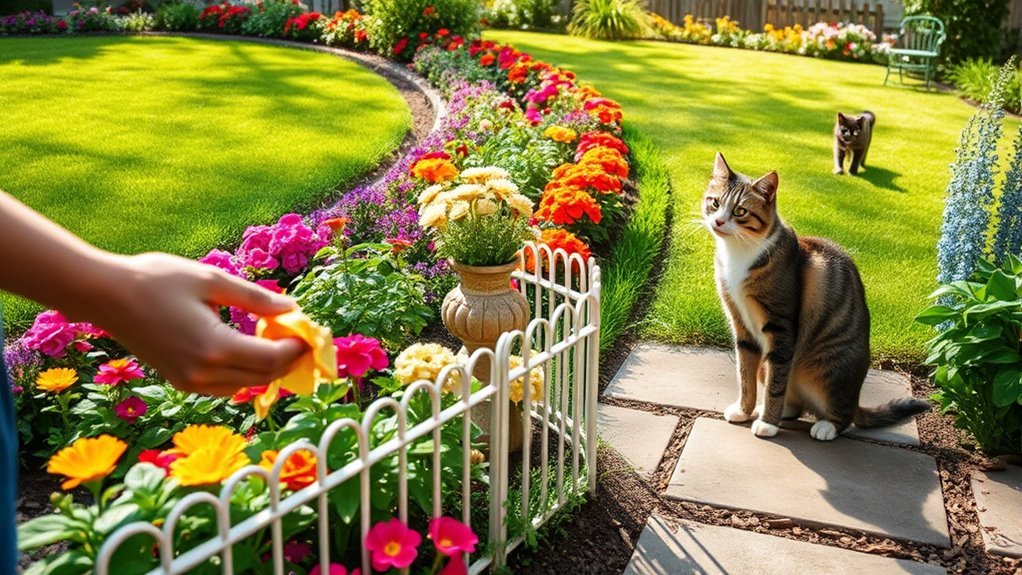
Next, create physical barriers like chicken wire or garden fencing to block access to favored spots.
You can also place rough mulch or prickly plants in areas cats target, making the soil uncomfortable to dig.
Using natural deterrents such as citrus peels or coffee grounds around your garden’s edges can discourage cats from entering.
Consider motion-activated sprinklers or ultrasonic devices for added protection.
Regularly maintain these measures and adjust as needed.
Understanding Why Cats Use Your Garden as a Toilet
You might wonder why cats pick your garden as their bathroom spot. It often comes down to the soft soil, available shelter, and scents that attract them.
Understanding their behavior and territory habits can help you address the problem effectively.
Reasons Cats Choose Gardens
Because cats instinctively seek soft, loose soil to bury their waste, your garden often becomes their preferred spot. You’ll find that gardens offer the perfect texture for digging and covering up their mess.
Also, your garden provides a quiet, undisturbed area where cats feel safe to do their business without being startled.
When you have sheltered spots, like bushes or flower beds, cats see these as ideal hiding places, offering privacy and security.
Additionally, gardens tend to have fewer human disturbances compared to busy sidewalks or streets, making them more appealing.
You mightn’t realize it, but your garden’s natural environment aligns perfectly with a cat’s instincts and needs, which is why they keep coming back.
Common Attractants For Cats
The features that make your garden appealing to cats go beyond just soft soil and quiet spots. Cats are drawn to areas where they find easy-to-dig ground, which makes your freshly turned flower beds or loose mulch irresistible. If you compost or leave pet food outside, these scents can attract cats too.
Your garden might also provide shelter, like dense bushes or shaded corners, offering a sense of safety while they do their business.
Additionally, if you have birds or rodents around, cats might frequent your garden simply because it’s part of their hunting territory.
Cat Behavior And Territory
Although cats may seem to choose your garden at random, they actually mark their territory and establish boundaries through their toileting habits.
When a cat uses your garden as a toilet, it’s not just about convenience—it’s a way to communicate with other cats, signaling that this area is claimed.
Cats rely heavily on scent marking to reduce conflicts and protect their space.
If your garden is near their home or a food source, it becomes an attractive spot.
Understanding this behavior helps you address the root cause rather than just the symptoms.
Spotting Cat Poo Problems Before They Get Worse
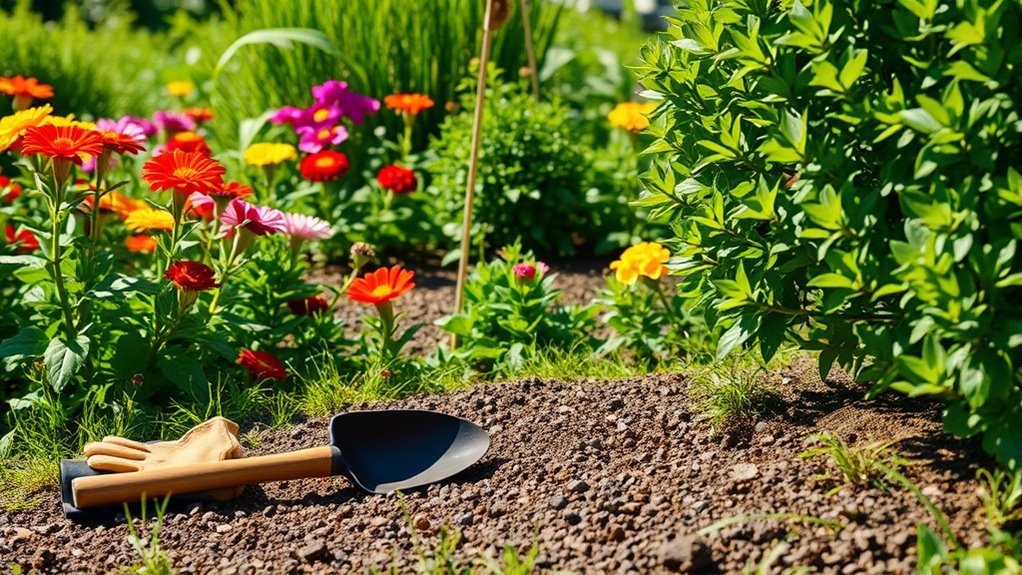
When you notice small patches of disturbed soil or unpleasant smells in your garden, it’s a sign that cats might be using your outdoor space as their bathroom. Keep an eye out for scattered clumps of cat poo or unusual scratching marks in flowerbeds or mulch.
Early spotting helps you address the problem before it escalates.
Check shaded, quiet spots where cats prefer to hide and dig. Also, monitor any areas where neighbors’ cats frequent, as they often return to favored spots.
By regularly inspecting your garden, you can catch signs of cat activity early and take timely action.
The sooner you spot these issues, the easier it will be to prevent damage and maintain a clean, fresh garden environment.
Physical Barriers to Stop Cats Pooing in Your Garden
If you want to keep cats out of your garden, installing physical barriers can be one of the most effective methods. Start by fencing your garden with tight mesh or chicken wire, ensuring the bottom is flush with the ground to prevent cats from squeezing underneath.
Install tight mesh fencing flush to the ground to effectively keep cats out of your garden.
You can also place garden spikes or prickly mats in areas where cats tend to dig, as these surfaces are uncomfortable for them to walk on.
Another option is using netting over soil or mulch beds to block access. Raised beds with smooth sides can also deter cats from jumping in.
Remember to check and maintain these barriers regularly, as gaps or damage can invite cats back in.
Physical barriers provide a direct way to protect your garden without harming the animals.
Using Natural Scents and Techniques to Deter Cats
You can keep cats away from your garden by using natural scents they dislike. Plant-based options like lavender, rosemary, and rue work as gentle deterrents without harming the environment.
Let’s explore how these natural techniques can protect your garden effectively.
Effective Natural Cat Repellents
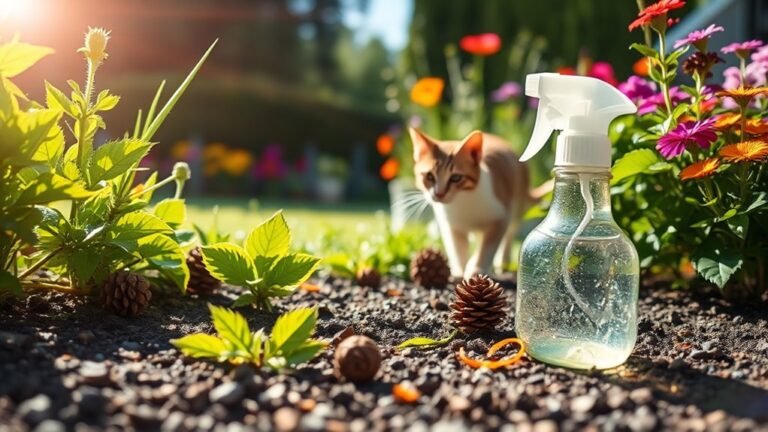
Although cats are curious creatures, certain natural scents can effectively discourage them from using your garden as their toilet. You can sprinkle coffee grounds or citrus peels around problem areas; cats dislike these strong smells.
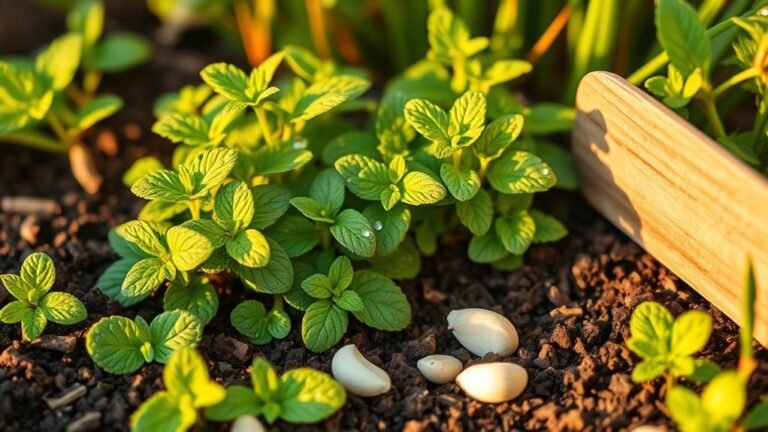
Another simple method is to scatter crushed garlic or onion skins, which also repel them.
Vinegar spray works well—mix equal parts water and white vinegar in a spray bottle and mist the soil lightly. Just avoid over-saturating plants.
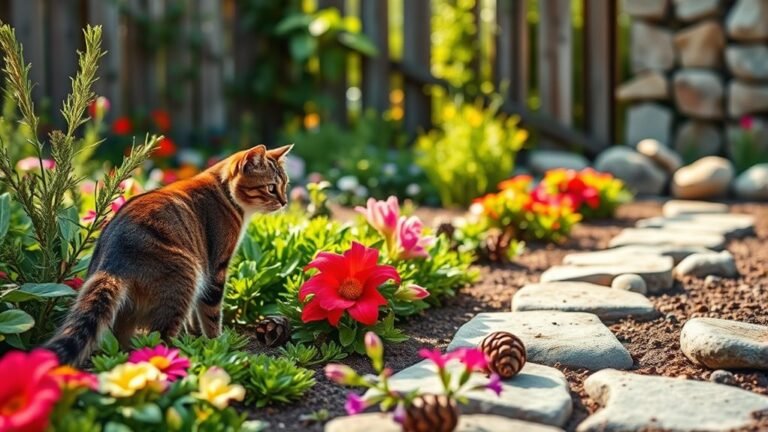
You might also try placing pine cones or rough mulch, making the surface uncomfortable for cats to walk on or dig.
Remember to refresh these repellents regularly, especially after rain, to maintain their effectiveness. Using these natural techniques, you’ll protect your garden without harming the cats or the environment.
Plant-Based Deterrent Options
When you want to keep cats away without harsh chemicals, plant-based deterrents offer a gentle yet effective solution. You can use natural scents cats dislike to protect your garden while keeping it safe and attractive.
Here are three plant-based options to try:
- Lavender and Rosemary: These herbs emit strong scents that cats find unpleasant. Plant them around garden beds or pots.
- Rue: This bitter-smelling plant naturally repels cats. Place it in areas they frequent.
- Coleus Canina (Scaredy Cat Plant): Known for its odor that deters cats, it’s perfect near entry points or along fences.
Using these plants not only deters cats but also adds beauty and fragrance to your garden.
Creating Alternative Toilet Spots to Divert Cats
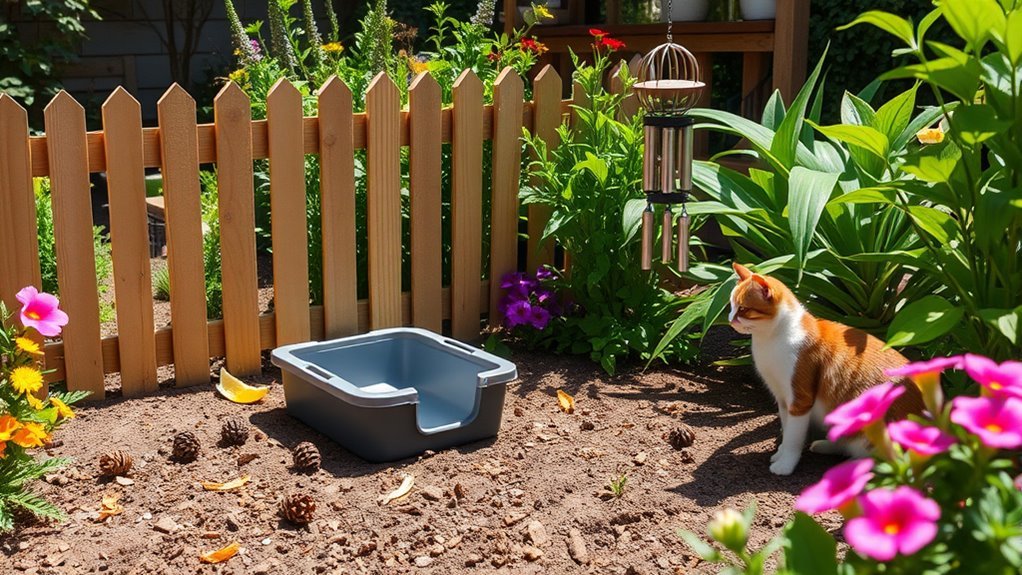
If cats keep using your garden as their bathroom, offering them an alternative spot can help redirect their behavior. Choose a quiet, shaded corner filled with soft soil or sand, mimicking a natural toilet area. Place a shallow box or tray filled with loose soil or sand to attract them.
Keep it clean and refreshed regularly to encourage use.
Here’s a quick guide to creating effective alternative toilet spots:
| Step | What to Use | Tips |
|---|---|---|
| Location | Quiet, shaded area | Away from your main garden |
| Material | Soft soil or sand | Avoid sharp stones or debris |
| Maintenance | Regular cleaning | Change soil weekly for hygiene |
This setup makes your garden less appealing while giving cats a preferred place.
Maintenance Tips to Sustain a Cat-Free Garden
To keep cats from returning to your garden, you’ll need consistent maintenance and vigilance. Regularly inspect your garden for signs of cat activity and address them promptly.
Consistent care and vigilance are key to preventing cats from revisiting your garden.
Here are three essential tips to help you sustain a cat-free space:
- Refresh deterrents often: Reapply natural repellents like citrus peels or coffee grounds every few days, and replace any worn-out physical barriers such as chicken wire or netting.
- Keep the garden tidy: Remove fallen fruits, secure compost bins, and clear away debris where cats might hide or dig.
- Maintain alternative toilet areas: If you’ve created designated spots for cats, keep them clean and well-kept to discourage use of your main garden beds.
Staying proactive ensures your garden stays inviting for you, not unwanted feline visitors.
When Cats Keep Coming Back: What You Can Do
Although you’ve tried various deterrents, some cats may still return to your garden out of habit or territory marking. To handle this, first reinforce your barriers—install motion-activated sprinklers or ultrasonic devices that startle but don’t harm.
You can also create a less appealing environment by spreading citrus peels or coffee grounds, both natural repellents cats dislike.
Consider planting cat-repellent plants like lavender or rue. If a specific cat keeps coming back, talk to the owner if possible, as they might help keep their pet indoors.
Ultimately, regularly clean the area with enzymatic cleaners to remove any scent markers, discouraging repeat visits.
Consistency is key—keep applying these methods, and over time, you’ll reduce unwanted feline visits effectively.
Frequently Asked Questions
Can Certain Plants Attract Cats Away From My Garden?
Yes, you can plant catnip or catmint away from your garden to attract cats there instead. These plants draw cats’ attention, helping you redirect them and keep your garden clean without causing harm or stress to the cats.
Are There Any Safe Chemical Repellents for Cats?
About 70% of cat owners use chemical repellents. Yes, you can find safe options like citronella or eucalyptus sprays.
Just make sure to choose pet-friendly formulas to avoid harming cats while keeping them away from your garden.
How Do Weather Changes Affect Cat Behavior in Gardens?
You’ll notice cats become less active in cold or rainy weather, often avoiding your garden.
Warmer, dry days encourage more roaming and marking, so expect increased visits during spring and summer when conditions are pleasant.
Can Feeding Stray Cats Reduce Garden Pooping?
You won’t magically stop every cat pooping in your garden just by feeding strays—it might even attract more!
But if you feed them away from your plants, you can reduce their visits and keep your garden cleaner.
Do Different Cat Breeds Have Different Toileting Habits?
You’ll find that different cat breeds don’t have notably different toileting habits. Cats mostly rely on instinct, so their bathroom behavior depends more on environment and training than breed differences.
Conclusion
Now that you know how to stop cats pooing in your garden, why let the problem keep growing? By understanding their behavior, using barriers, and adding natural deterrents, you can protect your space effectively.
Don’t forget to maintain these efforts and consider creating a friendly alternative spot for the cats. With a little patience and consistency, your garden can stay clean and cat-free.
Ready to reclaim your garden for good? Follow these steps to stop cats pooing in your garden and enjoy a fresh, beautiful outdoor space once again.