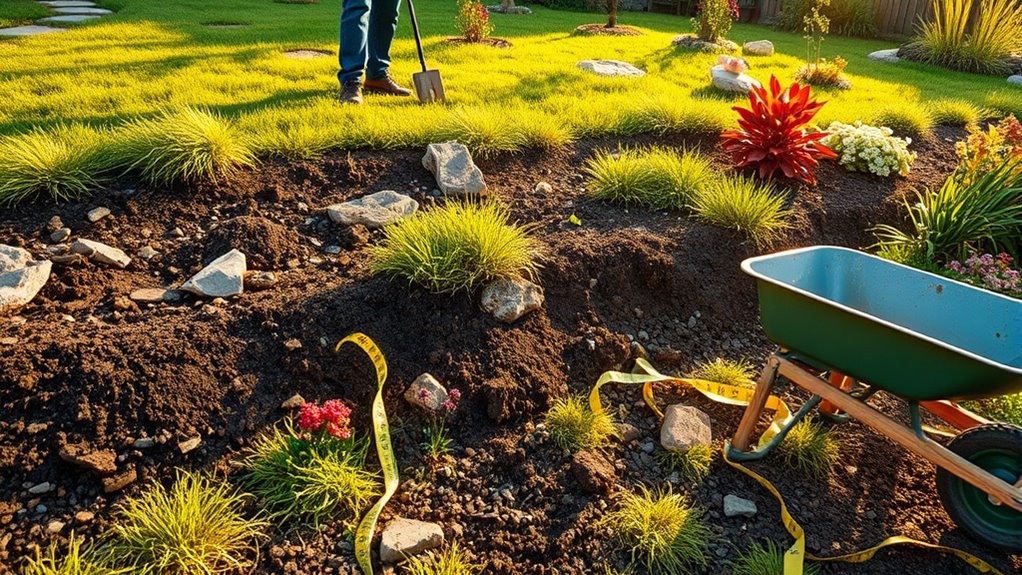
10 Factors That Affect How Much It Does Cost to Level a Garden
You’ll pay more to level a garden if it’s large, steep, or has poor soil like clay or rocky terrain. Limited access and tight spaces can slow work and increase labor costs. Existing landscaping, permits, and drainage needs also add expenses.
Using heavy equipment, especially on complex slopes, raises prices too. Timing and hiring pros can help manage costs. If you want to understand all the details behind these factors, there’s more to uncover.
Typical Garden Leveling Costs: What to Expect
While garden leveling costs can vary, you can generally expect to pay between $500 and $2,500 depending on the size and complexity of your yard. Basic leveling usually involves minor grading and soil redistribution, which keeps costs on the lower end.
Garden leveling costs typically range from $500 to $2,500, depending on yard size and complexity.
However, if your garden needs significant excavation, filling, or drainage installation, prices will rise accordingly. You’ll also find that labor charges play a big role; hiring professionals typically costs more but guarantees a smoother, longer-lasting result.
Equipment rental or use adds to the total, especially if heavy machinery is necessary. Keep in mind that additional tasks like removing debris or old structures can increase expenses.
Knowing these typical costs helps you budget effectively before starting your garden leveling project.
How Garden Size Affects Leveling Prices
How much space do you need leveled? The size of your garden plays a big role in determining the cost of leveling. Larger gardens require more labor, equipment, and time, which naturally increases the price.
If your garden is small, the job is quicker and less resource-intensive, so you’ll pay less. However, keep in mind that even a small garden with uneven spots might need careful attention, affecting the cost slightly.
When planning, measure your garden’s area accurately and communicate it clearly to contractors. This helps them provide a precise estimate.
Ultimately, the bigger your garden, the higher the cost, but efficient planning and clear communication can help you manage expenses effectively.
How Terrain Type Influences Garden Leveling Costs
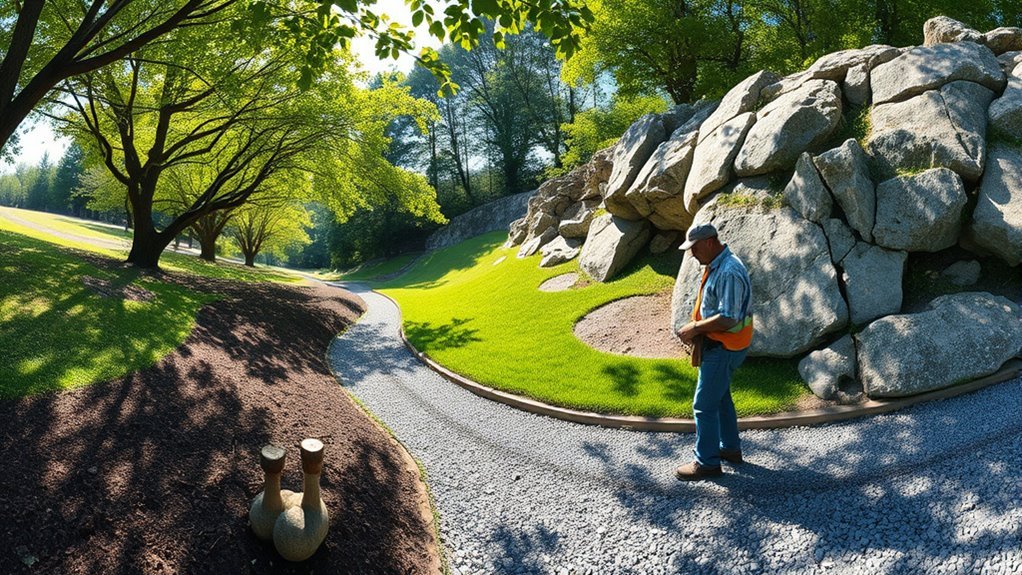
You’ll notice that the type of terrain in your garden plays a big role in leveling costs. Factors like soil composition, slope, and elevation all affect how much work is needed.
Plus, managing drainage and water flow can add to the complexity and price.
Soil Composition Impact
Because soil types vary widely, the kind of terrain you have directly affects garden leveling costs. Sandy soil, for example, is easier to move and compact, making the job quicker and less expensive.
On the other hand, clay soil is dense and sticky, requiring more effort and specialized equipment to break up and level, which drives up costs.
Rocky or gravelly terrain complicates things further, as removing or working around stones demands additional labor and machinery.
You might also face higher expenses if the soil has poor drainage or is prone to erosion, as extra preparation is needed to stabilize the ground.
Understanding your soil composition helps you anticipate these challenges and budget accordingly for your garden leveling project.
Slope and Elevation
Why does the slope and elevation of your garden matter when it comes to leveling costs? Steeper slopes require more extensive work to cut and fill the land, increasing labor and equipment use. If your garden sits on a hill or uneven terrain, contractors need extra time to move soil and create a stable, flat surface.
Higher elevation changes might also demand retaining walls or terraces, adding to expenses.
On the other hand, gently sloping areas usually cost less to level because less soil movement is necessary. Understanding your garden’s slope helps you anticipate these costs and plan accordingly.
Drainage and Water Flow
Although terrain type might seem like a minor detail, it directly affects how water flows through your garden, which impacts leveling costs. If your terrain causes poor drainage or water pooling, you’ll likely need extra work to redirect water and prevent damage.
Different terrain types come with unique challenges:
- Clay soils hold water, requiring more effort to improve drainage
- Sandy soils drain quickly but might need stabilization
- Uneven terrain can cause water to pool in low spots
- Sloped areas may need retaining walls or drainage channels
You’ll pay more when contractors must install drainage systems or regrade to ensure proper water flow. Understanding your terrain’s drainage characteristics helps you anticipate these additional costs and plan your garden leveling project more effectively.
Why Slope Steepness Changes Leveling Expenses
When your garden has a steep slope, you’ll need specialized equipment to handle the job safely and efficiently.
Moving soil on a sharp incline is more complex, which can increase labor and time.
These factors directly impact how much you’ll spend on leveling.
Impact On Equipment Needs
Since steeper slopes require more powerful and specialized machinery, the equipment needed for garden leveling can substantially impact your overall costs.
When your garden has a gentle incline, simple tools or small machinery often suffice.
However, as the slope steepens, you’ll need heavier, more capable equipment to guarantee safety and effectiveness.
Here’s what you might face as slope steepness increases:
- Renting or hiring a bulldozer or excavator instead of a mini-digger
- Using specialized attachments like slope graders or laser-guided levellers
- Increased fuel and maintenance costs for larger machinery
- Potential need for skilled operators to handle complex equipment
Understanding these factors helps you prepare for the true cost of leveling your garden on a steep slope.
Soil Movement Complexity
The steeper your garden’s slope, the more complicated moving soil becomes, directly impacting the cost of leveling. When the incline is sharp, you’ll need more careful excavation and soil redistribution to prevent erosion and guarantee stability. This complexity requires skilled labor and often specialized equipment, which drives up expenses.
Gentle slopes are easier and quicker to handle, reducing both labor time and equipment wear.
| Slope Steepness | Soil Movement Complexity |
|---|---|
| Low (0-10°) | Minimal soil shifting, easier leveling |
| Moderate (10-25°) | Requires careful soil handling, moderate effort |
| High (25°+) | Intensive excavation, erosion control needed |
Understanding this helps you anticipate costs and plan your garden leveling project more effectively.
How Soil Type Impacts Garden Leveling Costs
Because soil type directly influences the effort and equipment required, it plays a crucial role in determining garden leveling costs. Different soils can either simplify or complicate the process, affecting both time and labor expenses.
Soil type significantly impacts garden leveling costs by affecting the needed effort, equipment, and labor time.
When you assess your garden, keep these soil-related factors in mind:
- Clay soils are dense and heavy, needing more powerful machinery and longer working hours.
- Sandy soils are easier to move but may require extra care to avoid erosion during leveling.
- Loamy soils offer a balance, typically allowing for smoother and quicker leveling.
- Rocky or gravelly soils demand specialized equipment and increase labor intensity, raising costs accordingly.
Understanding your soil type helps you anticipate the cost and prepare for the right tools and techniques during garden leveling.
Why Drainage Needs Increase Leveling Prices
When you factor in drainage needs, garden leveling costs often rise due to the extra work involved. Proper drainage prevents water pooling and soil erosion, so you’ll likely need to install systems like French drains, swales, or catch basins. These require additional materials and labor, which add to the overall price.
You might also need to regrade certain areas to guarantee water flows away from structures, increasing the complexity of the job. Ignoring drainage can lead to costly future repairs, so investing upfront makes sense.
Ultimately, the more extensive your drainage requirements, the higher your garden leveling costs will be, as professionals take extra steps to protect your garden’s long-term health and stability.
How Existing Landscaping Raises Garden Leveling Costs
Several factors tied to your existing landscaping can push garden leveling costs higher. When you have established plants or features, it often means extra work before leveling starts.
Established plants and features often mean additional preparation before garden leveling begins.
You might face these cost drivers:
- Removing mature trees or shrubs, which requires care and sometimes permits
- Relocating garden beds or delicate plants to prevent damage
- Dealing with existing structures like patios, pathways, or retaining walls that may need dismantling
- Handling intricate root systems that complicate soil movement and require specialist tools
Each of these adds time, labor, and sometimes equipment expenses to your project.
How Access Challenges and Equipment Use Affect Costs
You’ll find that tough site access can slow down the work and require special equipment, which adds to your costs. The type of machinery needed depends on how easily it can be brought in and used on your garden.
More challenging access means longer labor time and higher expenses.
Site Accessibility Issues
Because accessing your garden site can be tricky, the cost of leveling may rise considerably. When your garden is hard to reach, everything from labor to time increases, pushing up expenses.
Here are common site accessibility issues affecting costs:
- Narrow pathways limit machinery access, requiring more manual work.
- Steep slopes make it harder to maneuver equipment safely.
- Obstructions like trees or fences may need removal or careful navigation.
- Remote locations can increase transportation fees for crews and tools.
Each of these challenges demands extra effort, which translates into higher fees.
Equipment Requirements Impact
Access challenges directly influence the type of equipment you’ll need for garden leveling, which in turn affects your overall costs. If your garden has narrow entrances or uneven terrain, you might have to rely on smaller, specialized machinery rather than standard heavy equipment.
This often means renting more expensive, compact tools or even manual equipment, increasing expenses. Conversely, easy access allows you to use larger, more efficient machinery that can level your garden faster and cheaper.
Additionally, the equipment’s fuel consumption, maintenance, and operator skill requirements factor into the cost. Choosing the right equipment based on accessibility guarantees you avoid unnecessary rentals or damage, keeping costs manageable.
Labor Time Considerations
How much time will leveling your garden take? It depends largely on access challenges and the equipment used.
If your garden is hard to reach, laborers might spend extra time just getting tools and machines in place, which increases costs.
Using larger or advanced machinery can speed up the work but requires more setup time, affecting overall labor hours.
Consider these factors that influence labor time:
- Narrow paths or gates that limit equipment size
- Uneven terrain requiring careful navigation
- Manual labor for tight spaces without machine access
- Time needed to move equipment around obstacles
Permits and Regulations That Impact Garden Leveling
When you plan to level your garden, you’ll need to check local permits and regulations first. These rules can affect your project timeline and budget. Some areas require permits for significant changes to land elevation, drainage, or tree removal.
Failing to comply might lead to fines or work stoppages, increasing costs. It’s smart to contact your local council or planning office to understand the requirements and fees before you start.
| Permit Type | When Required | Potential Cost Range |
|---|---|---|
| Grading Permit | Major soil movement | $50 – $300 |
| Tree Removal Permit | Removing protected trees | $75 – $500 |
| Drainage Permit | Altering water flow | $100 – $400 |
Knowing these details helps you plan better and avoid unexpected expenses.
Why Hiring Professionals and Timing Matter for Costs
Understanding permits and regulations sets a foundation, but choosing whether to hire professionals and timing your project can greatly influence your garden leveling costs.
If you tackle the job yourself, you might save on labor but risk costly mistakes. Professionals bring expertise and equipment, ensuring smoother, faster results.
Timing also plays a vital role; prices can spike during peak seasons when demand is high.
Consider these factors to manage costs effectively:
- Hiring pros means paying for expertise but avoiding delays and errors.
- DIY saves money upfront but may extend the timeline if you’re inexperienced.
- Scheduling in off-peak seasons often lowers labor and equipment rental fees.
- Weather conditions can affect timing, potentially increasing costs if delays occur.
Plan wisely to balance quality, budget, and timing.
Frequently Asked Questions
Can I Level My Garden Myself to Save Money?
Yes, you can level your garden yourself to save money. Just make sure you have the right tools, plan carefully, and be prepared for physical work.
It’s doable, but it might take time and effort.
How Long Does Garden Leveling Typically Take?
Garden leveling typically takes between one to three days, depending on size and complexity.
You’ll find that 70% of small gardens can be leveled in just a day if you stay focused and use the right tools.
Will Leveling My Garden Increase My Property Value?
Yes, leveling your garden can increase your property value by improving curb appeal and usability. You’ll create a more attractive, functional outdoor space that potential buyers will appreciate, making your home stand out in the market.
A well-leveled garden also offers better drainage and easier maintenance, which are attractive features for homeowners. Overall, investing in garden leveling can be a smart way to enhance the appeal and value of your property.
What Tools Are Needed for Garden Leveling?
To level your garden, you’ll need a shovel, rake, wheelbarrow, and a garden level or string line.
Don’t forget a tamper to pack the soil tight—after all, you’ve got to put your best foot forward!
How Often Should a Garden Be Leveled?
You should level your garden once a year, ideally before planting season.
If you notice uneven spots or water pooling, it’s a good idea to level it again to keep your garden healthy and thriving.
Conclusion
Wondering why garden leveling costs can vary so much? It’s because factors like size, terrain, soil type, and even access challenges all play a role. You’ll also want to take into account permits, timing, and whether you hire pros.
Knowing these details helps you budget smarter and avoid surprises. So, are you ready to transform your garden without breaking the bank?
Understanding these elements ensures your project goes smoothly and stays on track. By considering these factors that affect how much it does cost to level a garden, you can plan effectively and achieve the perfect outdoor space.