7 Effective Tips to Deter Squirrels From Your Garden
You can deter squirrels from your garden by using natural repellents like peppermint oil and cayenne pepper around plants. These effective tips to deter squirrels from your garden help protect your fruits and vegetables naturally.
Install physical barriers such as metal collars on trees and wire mesh over garden beds to block their access. Plant squirrel-repelling herbs like lavender and rosemary near your fruits and vegetables.
Keep your garden clean by promptly removing fallen fruit and birdseed. Humane traps baited with peanut butter work well for relocation.
Keep these tips in mind, and explore more ways to protect your garden effectively.
Why Do Squirrels Love Your Garden?
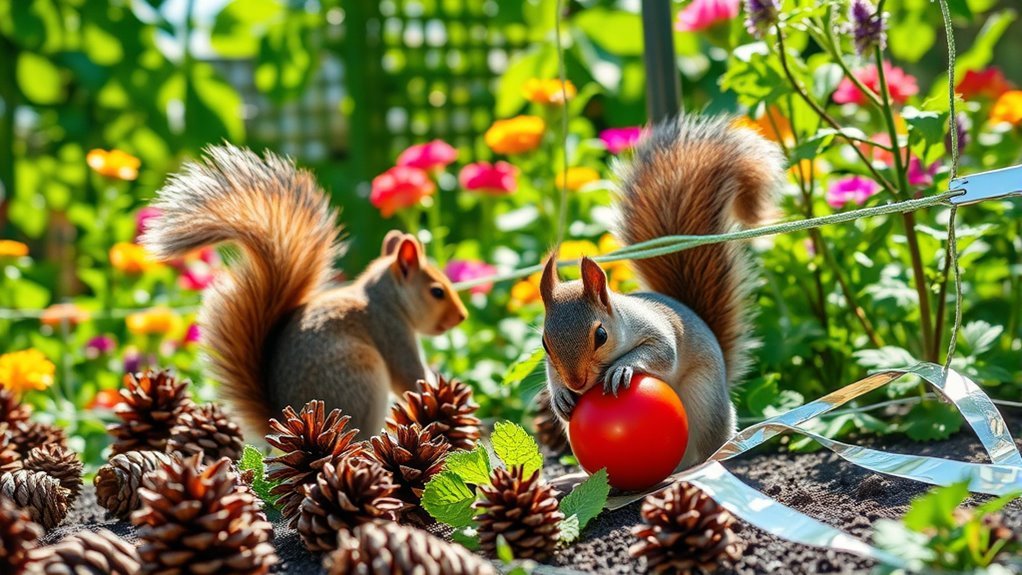
Although squirrels are often seen as charming garden visitors, they’re also drawn to your garden because it offers an abundant food supply and shelter. You provide a variety of nuts, fruits, and seeds that squirrels find irresistible, making your garden a natural buffet.
Your trees and shrubs offer perfect hiding spots and nesting sites, creating a safe environment for them.
Additionally, your garden’s water sources, like birdbaths or ponds, attract squirrels looking to quench their thirst. When you leave fallen fruits or seeds on the ground, you’re fundamentally inviting squirrels to feast.
Their instinct to hoard food drives them to explore your garden repeatedly.
Understanding why squirrels love your garden helps you identify what attracts them and how to manage their visits effectively.
Use Natural Repellents to Keep Squirrels Away
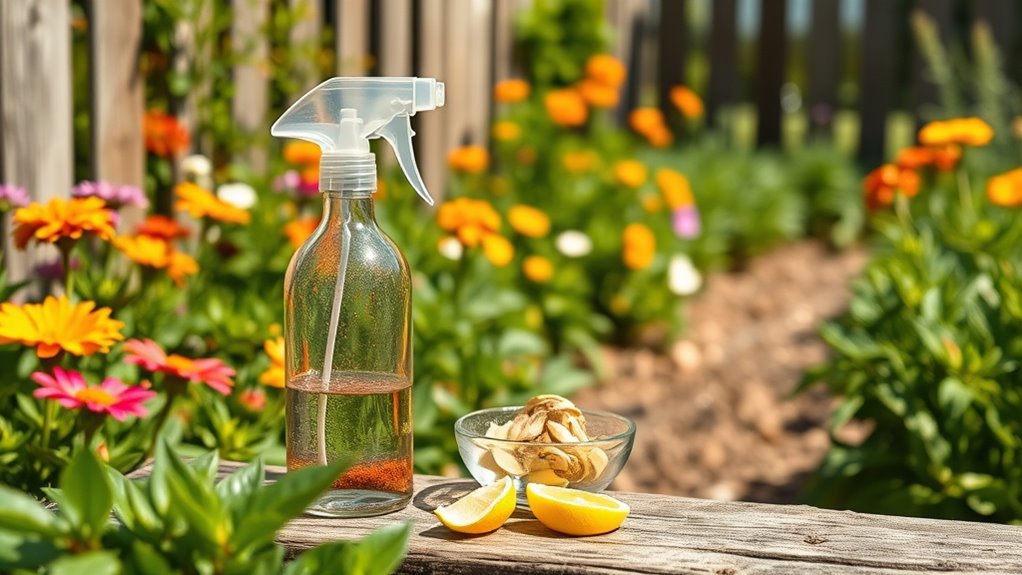
If you want to protect your garden without resorting to harsh chemicals, natural repellents offer an effective and eco-friendly solution. You can use scents that squirrels dislike, such as peppermint oil, garlic, or cayenne pepper.
Simply spray diluted peppermint oil around your plants or sprinkle cayenne pepper on the soil to keep squirrels at bay.
Garlic cloves crushed and placed near vulnerable areas also work well. These repellents interfere with squirrels’ keen sense of smell, making your garden less inviting.
Additionally, planting herbs like rosemary or lavender can naturally discourage them.
Remember to reapply these repellents after rain or watering to maintain their effectiveness.
Using natural repellents helps you protect your garden while respecting the environment and local wildlife.
Install Physical Barriers to Keep Squirrels Out
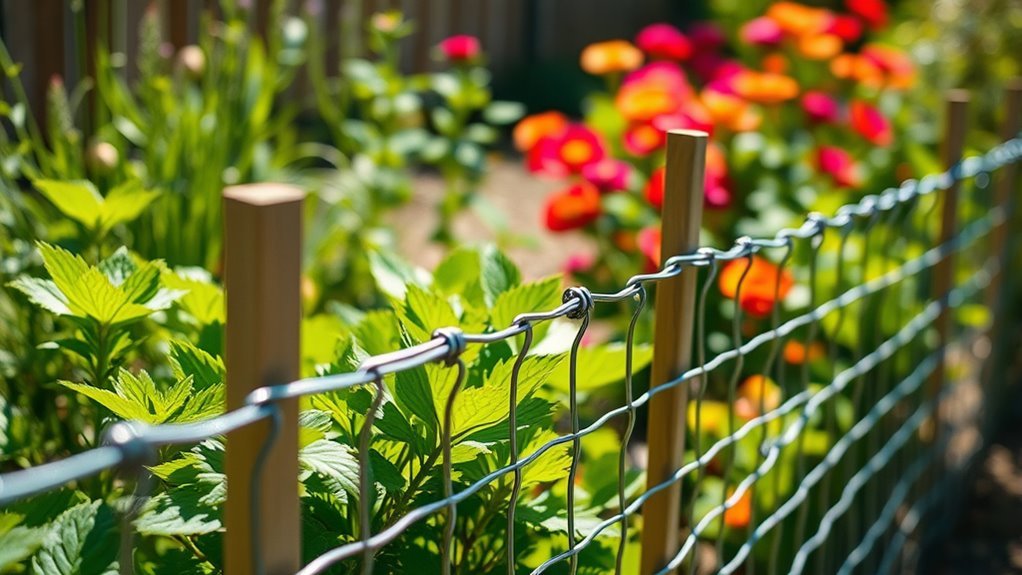
Natural repellents can help keep squirrels at bay, but sometimes they need an extra layer of protection. Installing physical barriers is a practical way to block squirrels from accessing your garden.
Start by wrapping tree trunks with metal collars about two feet high to prevent squirrels from climbing.
Use wire mesh or hardware cloth with small openings to cover garden beds, raised planters, or vulnerable plants.
Secure fences firmly into the ground to stop squirrels from digging underneath.
You can also place netting over fruit bushes or vegetable patches to create a protective shield.
These barriers don’t harm the squirrels but effectively keep them out of your garden, letting your plants thrive without unwanted visitors.
Regularly check and maintain these defenses to guarantee they stay intact and functional.
Plant Flowers and Herbs That Keep Squirrels Away
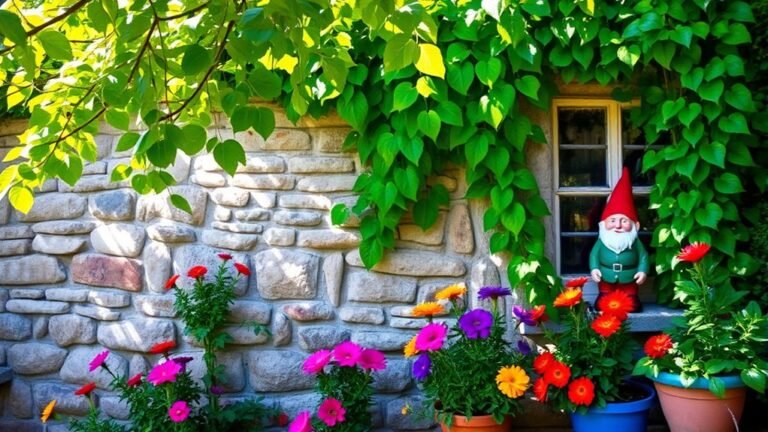
When you plant certain flowers and herbs, you create a natural barrier that squirrels tend to avoid. These plants emit scents or have textures that squirrels find unpleasant, helping keep them away without harming your garden.
Incorporate these into your landscaping to reduce squirrel visits effectively.
| Plant | Squirrel Deterrent Trait | Best Planting Tips |
|---|---|---|
| Daffodils | Toxic to squirrels | Plant in clusters near beds |
| Lavender | Strong scent | Place around garden edges |
| Mint | Pungent aroma | Grow in pots to contain spread |
| Marigolds | Bitter taste | Mix with vegetables |
| Rosemary | Woody texture, scent | Use as border plants |
Using these plants helps protect your garden naturally and beautifies your space.
Protect Your Bird Feeders From Squirrels
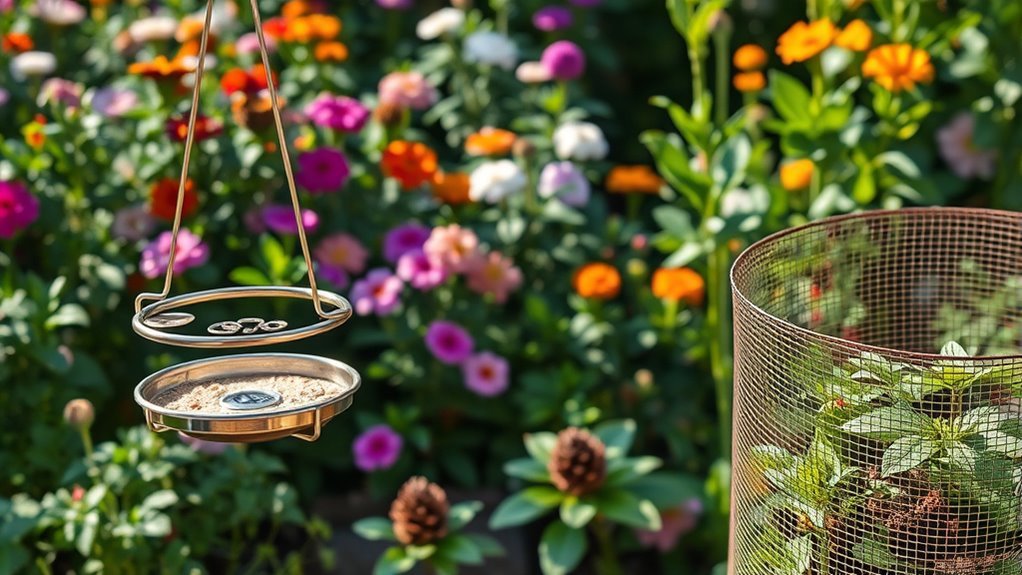
How can you keep squirrels from raiding your bird feeders without discouraging the birds you want to attract? Start by choosing feeders designed to be squirrel-resistant, such as those with weight-activated mechanisms that close off access when a squirrel climbs on.
Choose squirrel-resistant feeders with weight-activated mechanisms to keep squirrels out without deterring your favorite birds.
You can also install baffles—dome- or cone-shaped barriers—on poles or hanging wires to block squirrels from reaching the feeders.
Position your feeders away from jumping-off points like trees or fences, ideally at least 10 feet away and 5 feet above the ground.
Filling feeders with spicy birdseed blends containing chili powder can deter squirrels, as they dislike the heat but birds don’t mind.
Regularly clean up spilled seeds beneath feeders to avoid attracting squirrels to your yard in the first place.
These strategies help protect your feeders while keeping birds happy.
Use Safe Traps and Relocate Squirrels Humanely
Although squirrels can be persistent garden visitors, you can manage them without causing harm by using safe traps and relocating them humanely. Choose live traps designed specifically for squirrels, ensuring they’re spacious enough to keep the animal comfortable without injury. Place bait like peanut butter or sunflower seeds inside to attract them.
Once caught, check the trap frequently to minimize stress. When relocating, release squirrels at least a mile away from your garden in a wooded area with plenty of food and shelter. This reduces the chance they’ll return.
Always wear gloves when handling traps to protect yourself and the animal. Using this method, you control squirrel activity responsibly, protecting your garden while respecting wildlife.
Keep Your Garden Clean to Deter Squirrels
You’ll want to keep your garden free of fallen fruit, birdseed, and other food sources that attract squirrels. Clearing away leaves, branches, and debris also removes their hiding spots and nesting materials.
Staying on top of garden clean-up makes your space less inviting to these persistent visitors.
Remove Food Sources
Why do squirrels keep visiting your garden? It’s simple—they’re searching for easy food. To deter them, you need to remove all accessible food sources.
Don’t leave birdseed, fallen fruit, or pet food outside. Clean up spilled seeds promptly and use squirrel-proof feeders.
Here’s a quick guide:
| Food Source | Action to Take | Why It Helps |
|---|---|---|
| Birdseed | Use squirrel-proof feeders | Limits easy access |
| Fallen fruit | Pick up daily | Removes tempting snacks |
| Pet food | Feed pets indoors | Prevents attracting squirrels |
| Compost piles | Cover securely | Stops scavenging |
Clear Garden Debris
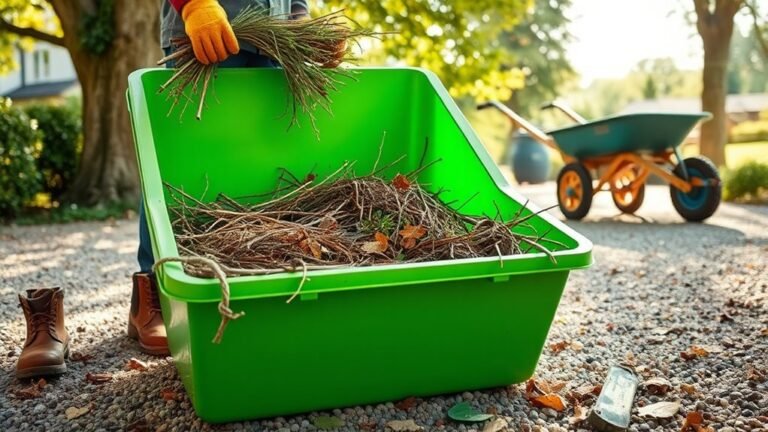
A tidy garden leaves fewer hiding spots and food scraps for squirrels to exploit. Clearing away fallen leaves, branches, and other debris removes potential shelters where squirrels can nest or hide. You should regularly rake leaves and collect garden waste, especially during autumn when debris piles up quickly.
Compost piles can also attract squirrels, so keep them covered and well-maintained. By eliminating clutter, you reduce the places squirrels feel safe and limit their access to leftover seeds or nuts.
This simple habit creates an environment that’s less inviting to these persistent visitors. Staying consistent with garden cleanup not only deters squirrels but also promotes healthier plants and a more enjoyable outdoor space for you.
Frequently Asked Questions
Can Squirrels Damage My Garden Soil?
Yes, squirrels can damage your garden soil by digging holes and uprooting plants while searching for food.
You’ll notice disturbed soil, which can harm your plants’ roots and disrupt your garden’s overall health and appearance.
Do Squirrels Carry Diseases Harmful to Humans?
Yes, squirrels can carry diseases harmful to humans, like leptospirosis and hantavirus. If you happen to feed them or handle their nests, you increase your risk—so it’s best to keep your distance and stay safe.
What Time of Day Are Squirrels Most Active?
Squirrels are most active during the early morning and late afternoon. You’ll notice them foraging and playing at these times, as they avoid the midday heat.
Keep an eye out during these peak activity hours.
Are There Any Plants Squirrels Actually Help Pollinate?
Yes, squirrels help pollinate certain plants like oak trees by spreading pollen while foraging.
You’ll find they contribute to some wildflowers and fruit trees, indirectly supporting plant reproduction as they move between flowers and trees.
How Can I Tell if a Squirrel Is Injured or Sick?
You’ll notice if a squirrel is injured or sick by its slow movements, visible wounds, or unusual behaviors like lethargy.
Curiously, about 20% of urban squirrels face health issues annually, so keep an eye out for these signs.
Conclusion
Squirrels can be persistent garden visitors, but you’ve got plenty of ways to keep them at bay. Did you know squirrels can remember the locations of hundreds of buried nuts? That’s why using a mix of natural repellents, physical barriers, and clean garden habits is key.
By combining these methods, you’ll protect your plants and enjoy a squirrel-free garden without harming these clever critters. Stay consistent, and your garden will thrive! Implementing effective tips to deter squirrels from your garden ensures a healthy, beautiful outdoor space all season long.