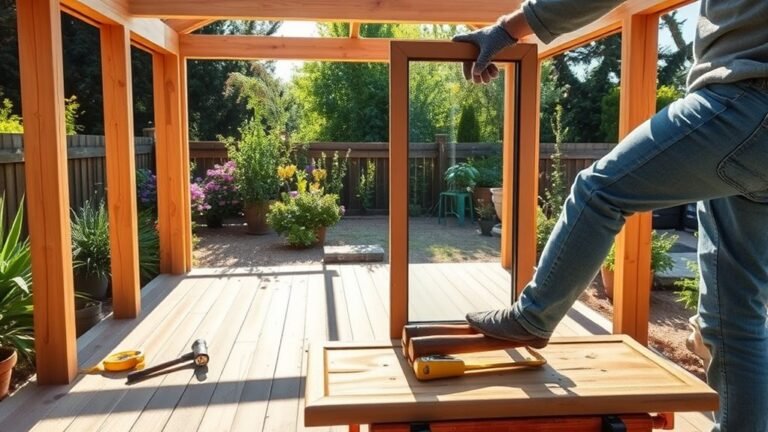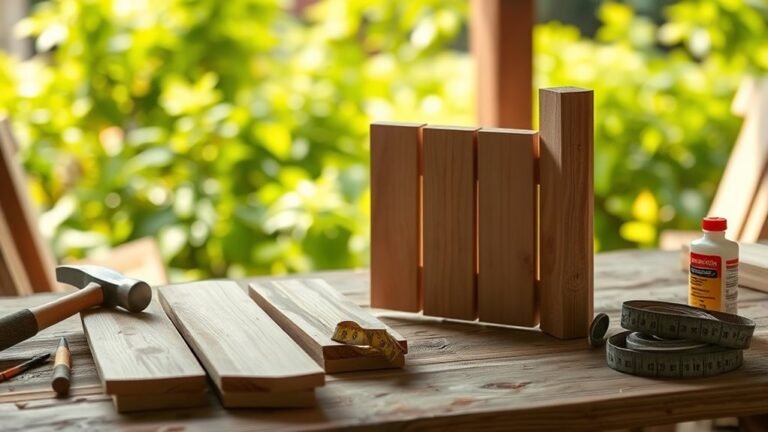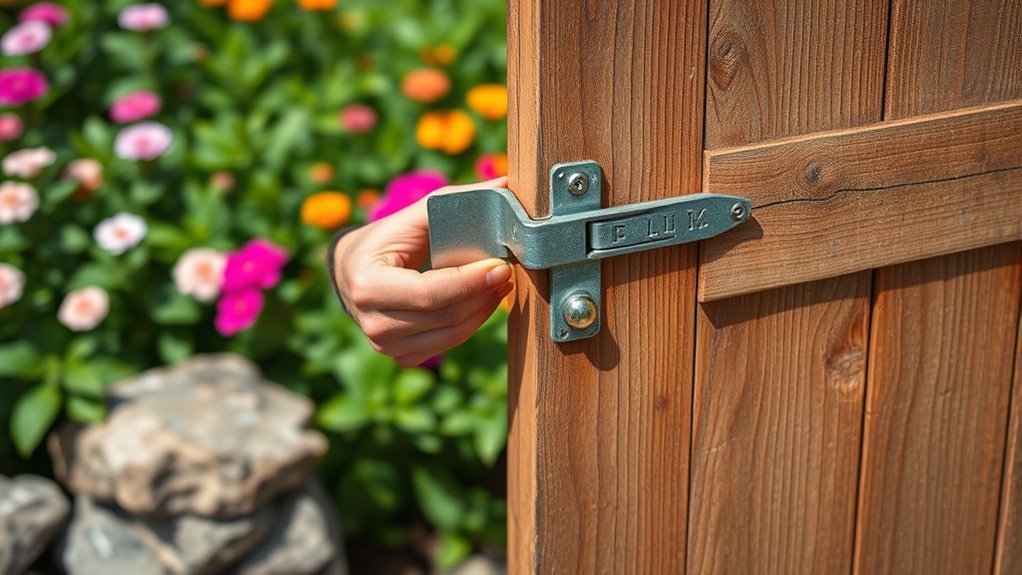
How to Hang a Garden Gate in 3 Simple Steps
First, measure your garden gate and frame, making sure the opening is even and you leave a bit of clearance for the gate to swing smoothly. Proper measurements are essential for hanging a garden gate correctly.
Next, attach the hinges to the gate’s edge. Then hold the gate in place and secure the hinges to your posts, checking its alignment as you go. This will ensure your gate is stable and functional.
Finally, adjust the hinges so the gate swings freely and install the latch for a secure close. Keep going to uncover tips on perfecting each step.
Measure and Prepare Your Garden Gate and Frame
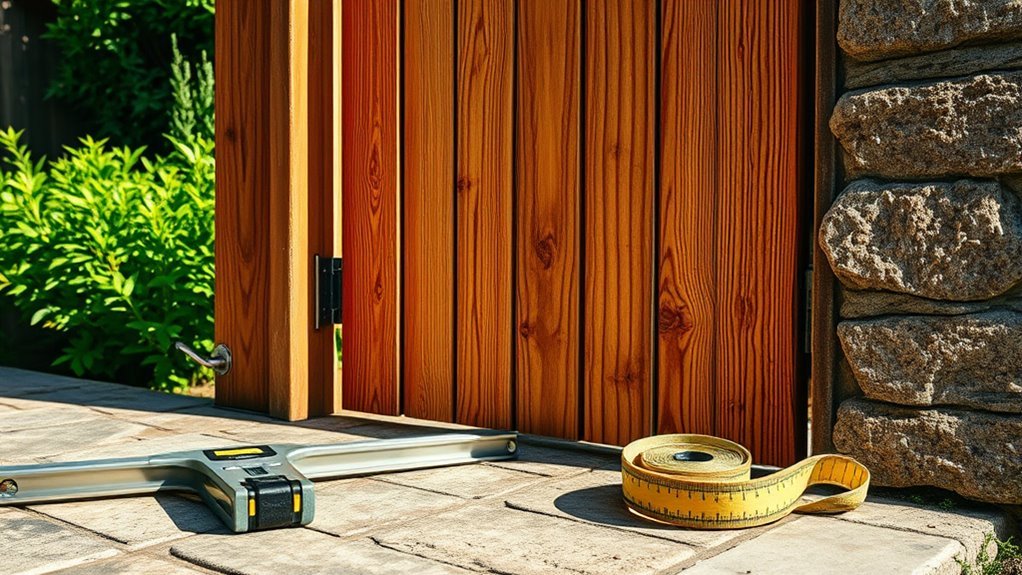
Before you begin, make sure to measure both your garden gate and its frame accurately. Use a tape measure to check the width and height of the gate opening, noting any uneven spots that might affect fitting.
Accurately measure your garden gate and frame, noting any uneven areas for a perfect fit.
Next, measure your gate to verify it matches or slightly fits within the frame dimensions.
You’ll want a small clearance—about a quarter inch on each side—for smooth swinging.
Inspect the gate frame for any damage, rot, or warping that could interfere with installation. If needed, sand rough edges and remove debris.
Preparing the gate by attaching handles or locks beforehand also saves time.
Taking these steps guarantees your garden gate fits perfectly and functions well when you move on to hanging it on the posts.
Attach Hinges and Hang Your Garden Gate on Posts
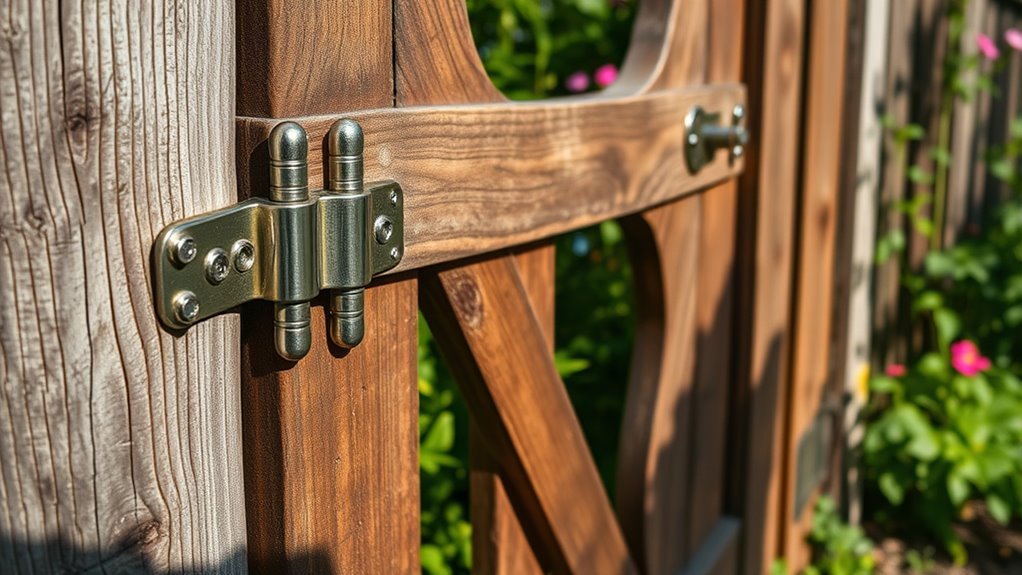
With your gate measured and prepped, you can move on to attaching the hinges that will secure it to the posts. Start by positioning the hinges on the gate’s edge, aligning them with the post height. Mark the screw holes, then pre-drill to prevent wood splitting.
Secure the hinges firmly with screws, ensuring they’re flush and stable. Next, hold the gate up against the post, preferably with help, to check alignment. Attach the hinges to the post by marking, pre-drilling, and screwing in place.
Make sure the gate hangs straight and level before tightening all screws fully. This setup will create a sturdy pivot point, ready for a smooth swing. Avoid forcing the gate on; if it doesn’t fit, recheck your measurements.
Adjust Your Garden Gate for Smooth Swing and Secure Latching
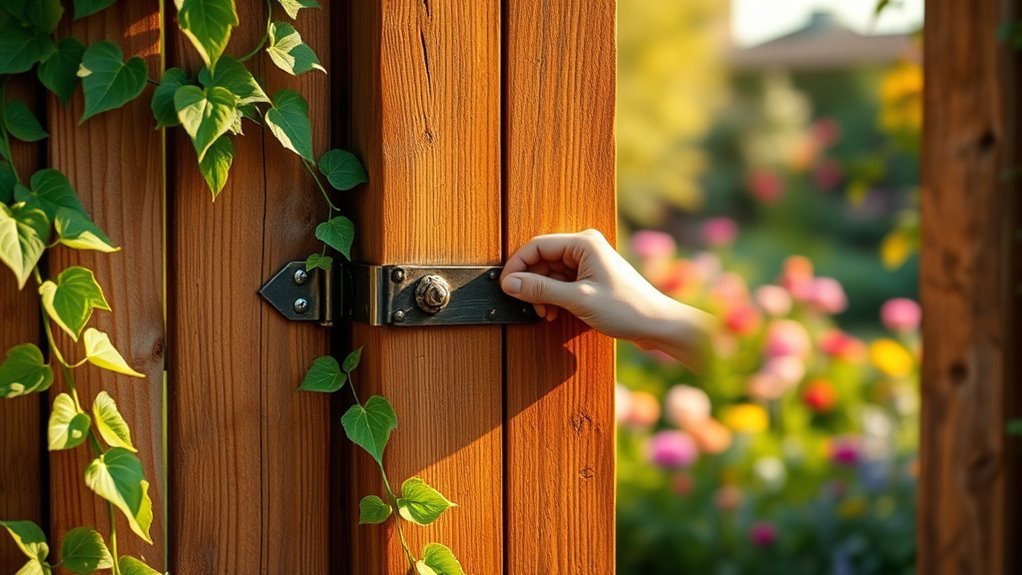
Although your garden gate is now hung, you’ll need to fine-tune its position to guarantee it swings smoothly and latches securely. Start by checking the gate’s alignment with a level; adjust the hinges slightly if it’s tilted or rubbing against the post. Tighten or loosen hinge screws as needed to correct the swing.
Next, test the gate’s movement—if it sticks or swings unevenly, tweak the hinges until it moves freely without sagging.
Then, focus on the latch. Make sure the latch lines up perfectly with the catch on the post. If it doesn’t, adjust the strike plate up or down so the latch catches firmly without force.
Finally, open and close the gate several times to confirm smooth operation and secure latching before finishing.
Frequently Asked Questions
What Materials Are Best for Weatherproofing a Garden Gate?
You’ll want to use exterior-grade paint, waterproof sealant, or wood preservative to weatherproof your gate. Cedar, redwood, or treated lumber resist moisture well.
For metal gates, rust-resistant paint or powder coating works best.
How Do I Prevent My Garden Gate From Sagging Over Time?
Did you know 70% of garden gates sag due to poor support? To prevent sagging, you’ll want to use sturdy hinges, add a diagonal brace, and guarantee posts are deeply set and firmly anchored for long-lasting stability.
Can I Install a Garden Gate on Uneven Ground?
Yes, you can install a garden gate on uneven ground. You’ll need to adjust the gate’s height, use shims or angled hinges, and maybe level the posts carefully to guarantee the gate swings smoothly without dragging or sagging.
What Tools Do I Need to Remove an Old Garden Gate?
You’ll need a screwdriver or drill, a wrench, and maybe a pry bar to remove the old garden gate.
Don’t forget safety gloves—removing that gate can feel like wrestling a wild beast, but you’ve got this!
How Do I Choose the Right Style of Gate for My Garden?
You’ll want to match your gate style to your garden’s overall look and your home’s architecture. Consider materials, privacy needs, and durability.
Don’t forget to factor in your budget and maintenance preferences before deciding.
Conclusion
Now that you’ve hung your garden gate, it should swing open like a welcoming smile. With your careful measuring, sturdy hinges, and smooth adjustments, your gate will stand strong and secure, ready to guard your garden’s beauty.
Just like a well-tuned melody, a properly hung gate keeps everything in harmony. Step back, admire your handiwork, and enjoy the peaceful charm it brings to your outdoor space every day.
By following these simple steps, your garden gate will not only enhance curb appeal but also provide lasting functionality. A well-installed garden gate is the perfect finishing touch to your garden’s design and security.