5 Factors That Affect How Much It Costs to Level a Garden
Several factors affect how much it costs to level your garden. The garden’s size and terrain matter—a bigger, uneven area costs more to work on. Steep slopes and tricky soil types like clay or rock add to expenses due to extra labor and stabilization.
You’ll also need to budget for equipment rentals and skilled labor. Don’t forget prep work like debris removal and cleanup. Understanding these can help you plan better, with more tips to manage costs ahead.
How Garden Size and Terrain Affect Leveling Costs
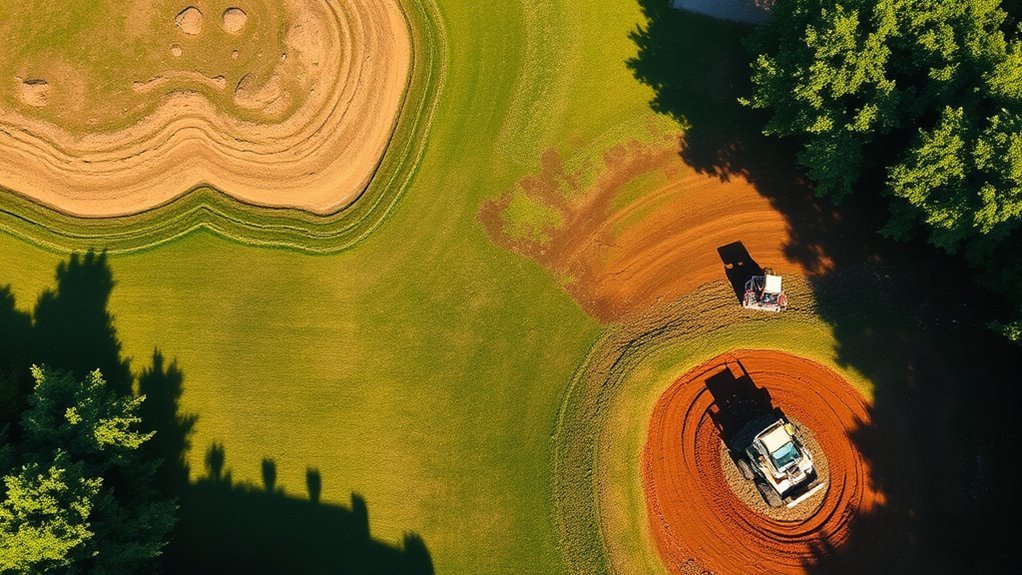
How much your garden costs to level largely depends on its size and terrain. The bigger your garden, the more soil moving and labor it requires, which directly raises costs. If you have a small garden, the job is quicker and less expensive.
Terrain also plays a key role—flat or gently sloping land is easier and cheaper to level than uneven or rocky ground. If your garden has hills or dips, expect more work to create a smooth surface. You might need machinery or extra manpower, increasing expenses.
Why Slope and Soil Type Increase Garden Leveling Expenses
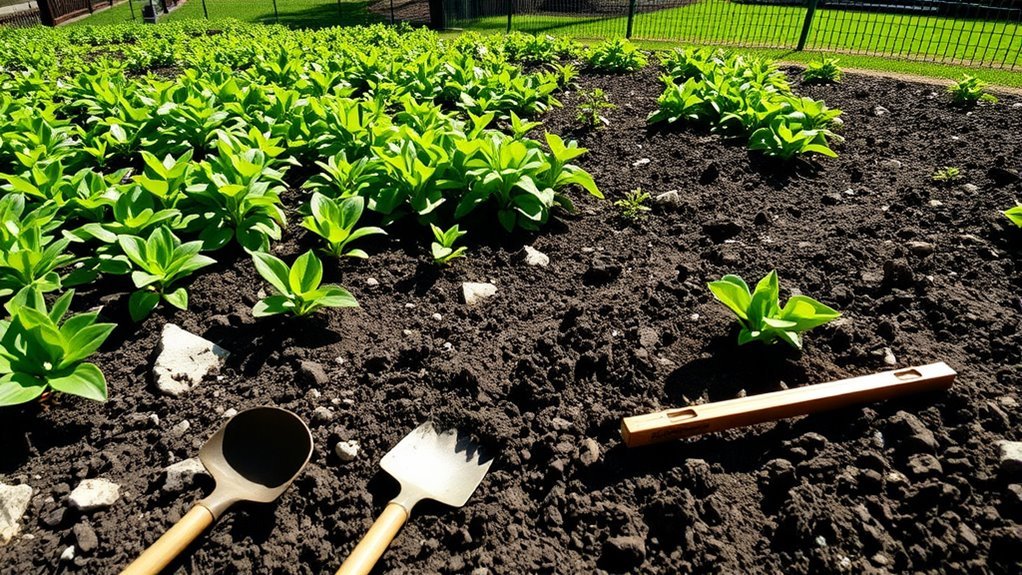
Because steep slopes demand more effort to stabilize and reshape, they substantially increase garden leveling costs. When you work on a steep incline, you need to take extra precautions to prevent erosion and soil movement, which requires additional materials and time.
Soil type also plays a vital role. If your garden has heavy clay or rocky soil, it’s harder to dig and move, which means the job takes longer and may need specialized tools. Sandy or loose soils might require extra reinforcement to keep the ground stable after leveling.
Both slope and soil type affect the complexity of the project, so understanding these factors helps you anticipate higher expenses. Addressing these challenges properly guarantees a durable, even garden surface that lasts.
Equipment and Labor Costs for Leveling Your Garden
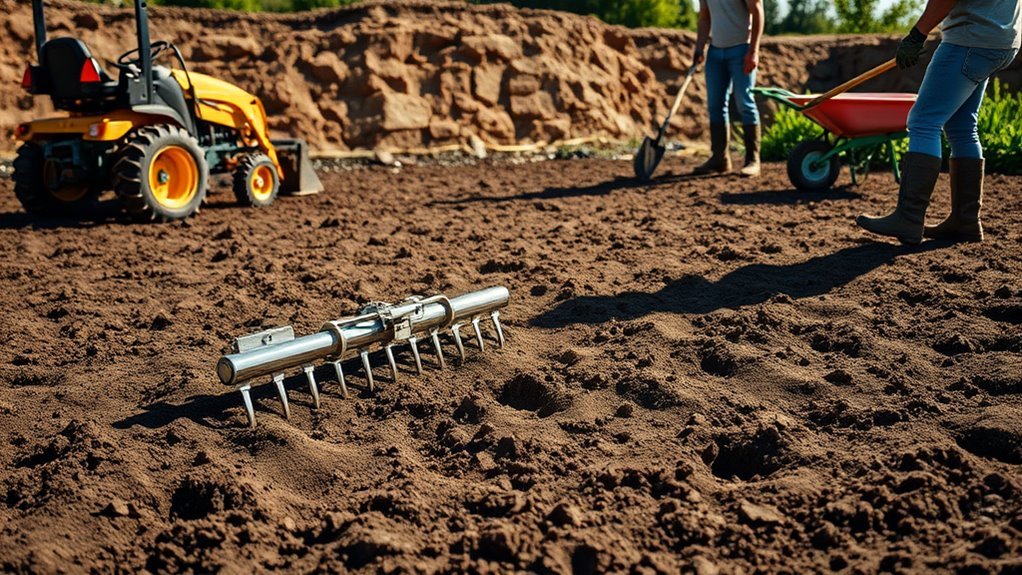
When planning garden leveling, you’ll find that equipment and labor costs make up a significant portion of the budget. Renting or hiring machinery like excavators and skid steers can add up quickly. Labor costs depend on the project size and complexity, so getting multiple quotes helps.
You might also consider DIY options if you have the right tools and experience. Below is a quick cost overview:
| Equipment | Rental Cost (per day) | Labor Cost (per hour) |
|---|---|---|
| Excavator | $250 – $400 | $50 – $75 |
| Skid Steer Loader | $150 – $300 | $40 – $60 |
| Dump Truck | $100 – $250 | $35 – $55 |
| Laborer | N/A | $20 – $40 |
| Operator | N/A | $45 – $70 |
Budgeting wisely here can save you money overall.
Prep Work and Cleanup: What to Budget For
After figuring out equipment and labor costs, you’ll want to take into account the expenses involved in prep work and cleanup.
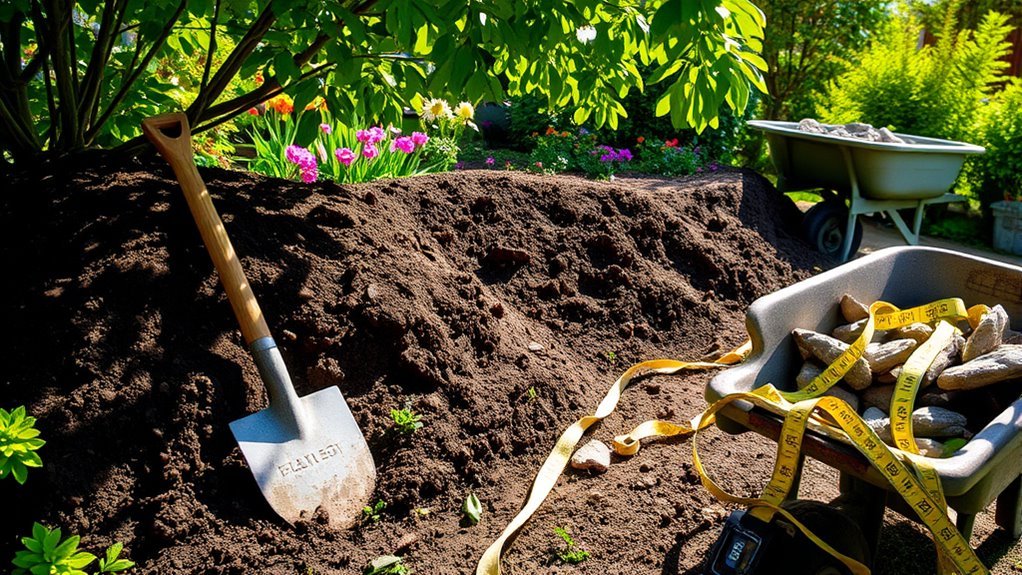
Prep work might include removing rocks, debris, or existing plants, which can add to your budget depending on how much clearing is necessary.
If your soil requires amending or grading before leveling, factor in those costs too.
Cleanup is equally important—you’ll need to budget for hauling away dirt, waste, and leftover materials. Sometimes, rental dumpsters or disposal fees come into play, especially for larger projects.
Additionally, consider costs for restoring areas around the leveled garden, such as reseeding grass or replacing mulch.
Tips to Manage and Reduce Garden Leveling Costs
Although garden leveling can seem costly, you can take practical steps to keep expenses under control. Start by clearly defining the area you want leveled—smaller spaces cost less to work on.
Consider doing some prep work yourself, like clearing debris or trimming plants, to reduce labor charges.
Renting equipment instead of hiring professionals for minor jobs can save you money.
Ask for multiple quotes to compare prices and services.
Scheduling the work during off-peak seasons might also lower costs, as contractors are less busy.
Finally, avoid unnecessary changes mid-project; stick to your plan to prevent extra fees.
Frequently Asked Questions
How Long Does Garden Leveling Typically Take?
It typically takes you one to three days to level a garden, depending on its size and the equipment you use.
You’ll work faster with machinery, but smaller gardens might only need a day or two.
Can I Level My Garden Myself Safely?
Yes, you can level your garden yourself safely if you use the right tools, take your time, and follow proper techniques.
Just be careful with heavy equipment and uneven ground to avoid injury or damage.
Does Garden Leveling Affect Local Wildlife or Plants?
Oh sure, go ahead and level your garden like a bulldozer; local wildlife and plants will just throw a party, right?
Actually, you’ll disrupt habitats and soil life, so think twice before you flatten nature’s home.
Are There Permits Required for Garden Leveling?
You usually don’t need permits for small garden leveling, but if it involves major earthworks or impacts drainage, your local council might require one.
Always check local regulations before starting to avoid fines or delays.
How Often Should a Garden Be Leveled?
You should level your garden every few years or whenever you notice uneven spots, water pooling, or soil erosion. Regular maintenance helps keep your plants healthy and guarantees proper drainage, preventing bigger problems down the line.
Conclusion
Now that you know the key factors that drive garden leveling costs, you might wonder how much you’ll actually spend. But before you jump in, remember: every garden is unique, and unforeseen challenges could arise.
Are you ready to tackle the terrain, soil, and slope while keeping costs in check? With careful planning and smart choices, you’ll transform your garden without breaking the bank—just watch out for those hidden expenses waiting around the corner!
By considering these factors, you can better estimate your garden leveling costs and make informed decisions. Stay aware of potential surprises, and your project will be both beautiful and budget-friendly.