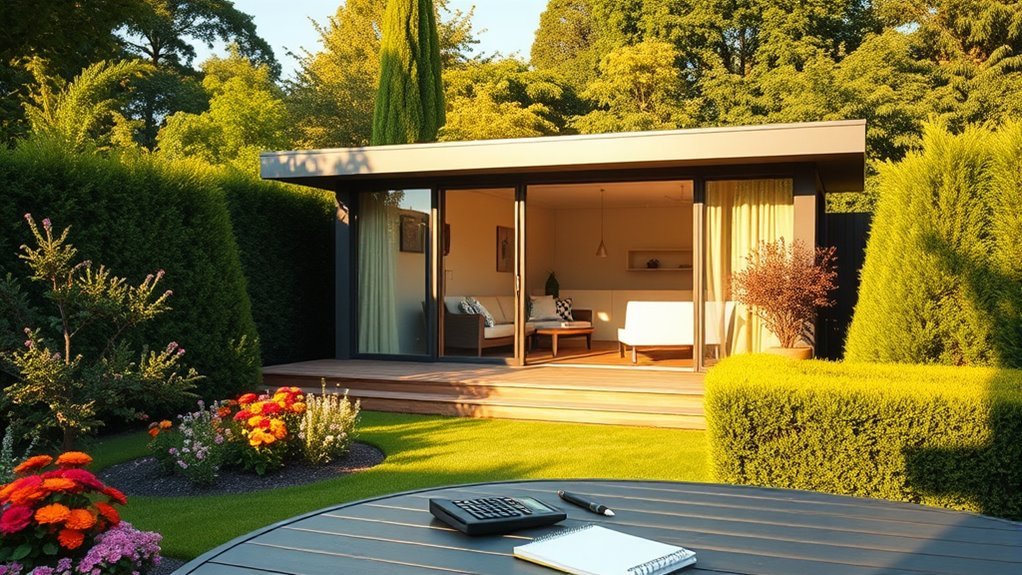
How Much Does a Garden Office Cost: 10 Key Factors
You’ll typically spend between $5,000 and $15,000 on a garden office, with costs depending on size, materials, and added features like insulation or double-glazed windows. Understanding how much a garden office costs is essential for budgeting your project effectively.
Don’t forget site prep, foundation type, and installation fees, which can add to your budget. Utilities like electricity and internet also impact expenses, alongside local planning permissions you may need to take into account.
Understanding these key factors can help you make smart choices for your project’s success. Taking the time to consider each element ensures you get the best value and functionality from your garden office.
How Much Does a Garden Office Cost?
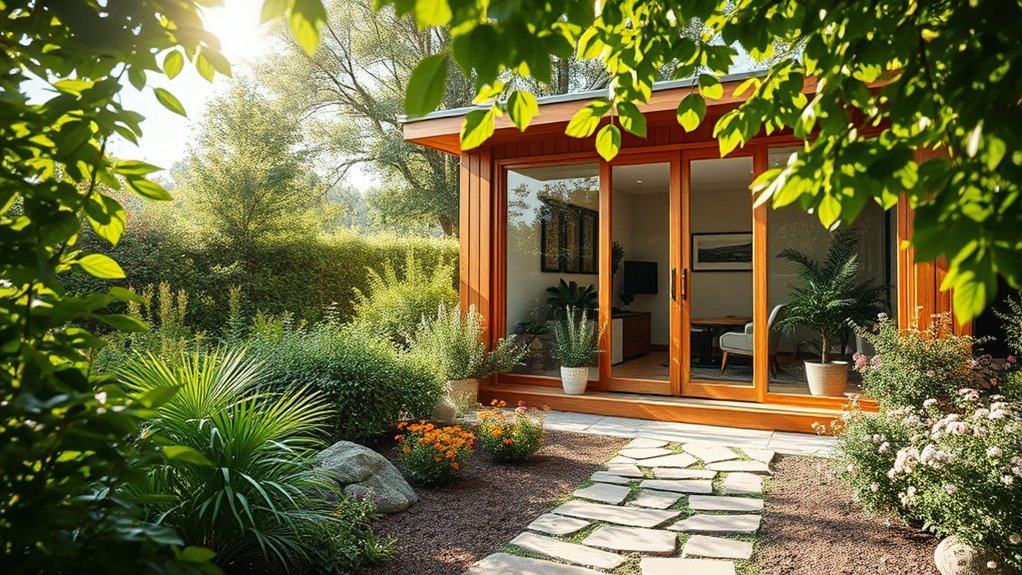
When budgeting for a garden office, you’ll typically spend between $5,000 and $15,000, depending on size, materials, and features. You’ll find that basic models with standard wood or metal frames fall on the lower end, while premium options with insulated walls, high-quality cladding, and double-glazed windows push costs higher.
Don’t forget about installation fees, which can add a few thousand dollars if you hire professionals.
You’ll also want to factor in electrical wiring, heating, and flooring, which can increase your budget.
If you plan to include built-in storage or custom furniture, costs will climb further.
Garden Office Size and Layout
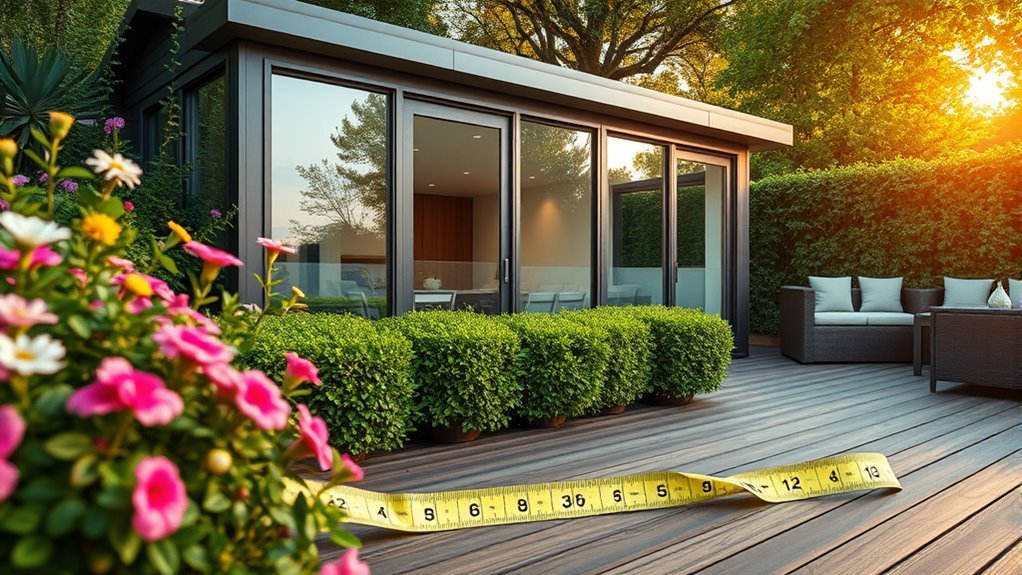
Choosing the right size and layout for your garden office shapes how well it serves your needs and fits your space. You want a design that maximizes comfort without overwhelming your garden. Think about how you’ll use the space daily and what furniture or equipment you need.
Consider these key points when deciding on size and layout:
- Make certain enough room for your desk, chair, and storage.
- Plan for natural light placement to reduce eye strain.
- Allow space for movement to avoid feeling cramped.
- Think about future needs like adding a meeting area.
- Match the layout to your garden’s shape and size.
Getting this right helps balance functionality with budget, making your garden office a productive retreat.
Foundation and Site Preparation
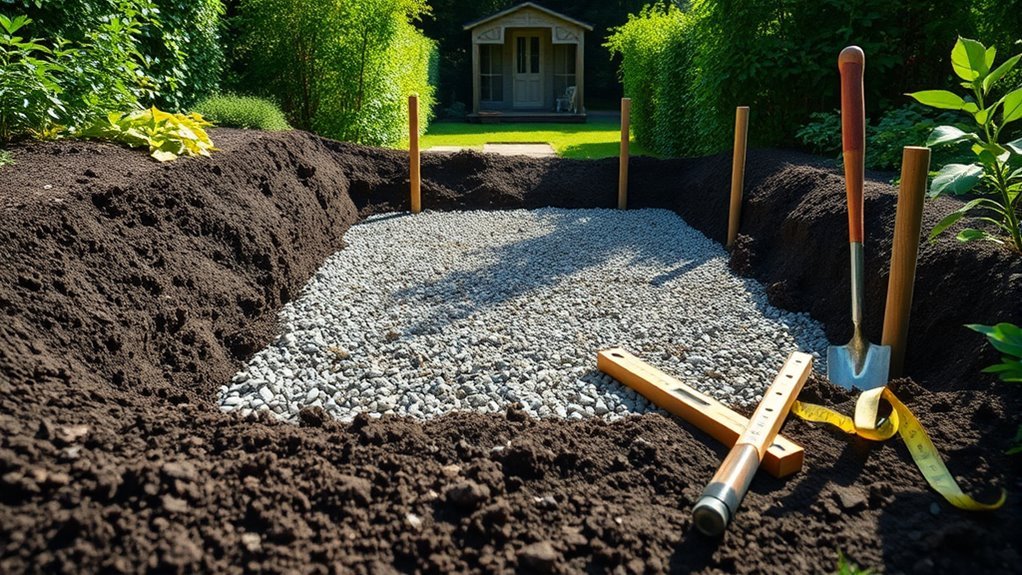
Although it may seem straightforward, preparing a solid foundation and site is crucial to guarantee your garden office stands firm and lasts for years. You’ll need to clear the area of debris, level the ground, and ensure proper drainage to prevent water damage.
Depending on your garden’s soil type, you might require additional groundwork to stabilize the base. Choosing the right foundation type—whether concrete slab, timber frame, or paving slabs—affects both cost and durability.
Don’t forget to check local regulations or permits, as these can influence your site prep. Proper preparation saves you from costly repairs later and guarantees your garden office remains a safe, stable workspace you can enjoy year-round.
Garden Office Building Materials
Since the materials you select directly impact your garden office’s durability, insulation, and overall aesthetic, you’ll want to evaluate your options carefully. Choosing the right building materials not only affects the look and feel but also influences long-term maintenance costs and structural integrity.
Consider these common materials:
- Timber: Offers a natural look, easy to work with, and generally affordable.
- Metal: Provides excellent durability and modern aesthetics but may require insulation.
- Composite panels: Low maintenance and good weather resistance.
- Brick or stone: More expensive but ensures longevity and a traditional style.
- Glass: Ideal for natural light but can increase costs and affect temperature control.
Each material has pros and cons, so think about your budget, style preferences, and maintenance willingness before deciding.
Insulation and Weatherproofing
You’ll need to choose the right types of insulation to keep your garden office comfortable year-round. Weatherproofing materials also play a key role in protecting your space from the elements.
Both insulation and weatherproofing affect your overall cost, so it’s important to budget accordingly.
Types Of Insulation
How do you keep your garden office comfortable year-round without sky-high energy bills? Choosing the right insulation is essential. Different types serve various needs, so you’ll want to take into account factors like climate, budget, and installation ease.
Here are popular insulation types for garden offices:
- Fiberglass batts: Cost-effective and easy to install but can irritate skin.
- Rigid foam boards: Offer high insulation value and moisture resistance.
- Spray foam: Seals gaps well, providing excellent thermal protection.
- Mineral wool: Fire-resistant and soundproof but pricier.
- Reflective insulation: Great for hot climates by reflecting radiant heat.
Picking the right insulation keeps your workspace cozy, reduces energy costs, and protects your investment.
Weatherproofing Materials
Though insulation plays a key role in maintaining your garden office’s temperature, weatherproofing materials protect it from moisture, drafts, and other external elements. You’ll need quality sealants around windows and doors to keep out wind and rain, along with weather-resistant cladding or siding on the exterior walls.
Proper flashing and roofing membranes are essential to prevent leaks, especially in heavy rainfall areas. Don’t forget damp-proof membranes on the floor to stop rising moisture that could damage your office.
Using breathable membranes also helps manage condensation by allowing moisture to escape without letting water in.
Cost Impact Of Insulation
Wondering how insulation and weatherproofing affect your garden office budget? Insulating your space not only keeps it comfortable year-round but also impacts your overall costs.
The right insulation can reduce heating and cooling expenses, but it requires an upfront investment.
Consider these factors:
- Type of insulation material (foam, fiberglass, mineral wool)
- Thickness and coverage area needed
- Labor costs for professional installation
- Additional weatherproofing measures (vapour barriers, sealants)
- Long-term energy savings versus initial outlay
Delivery and Installation Options
When planning your garden office, you’ll need to decide how it gets delivered and installed. Delivery costs vary depending on the size of your office and the distance from the supplier. Some companies include delivery in the price, while others charge separately.
Consider delivery options carefully, as costs depend on office size, supplier distance, and company policies.
Installation options also differ: you can choose self-assembly if you’re handy, which saves money but takes time, or opt for professional installation for convenience and a guaranteed fit.
Keep in mind, complex designs or uneven garden terrain may increase installation costs.
Additionally, consider permits or site preparation, as these might impact timing and expenses. Understanding these factors helps you budget accurately and guarantees your garden office is set up smoothly, ready for use without unexpected hassles or delays.
Garden Office Electrical Setup
How will you power your garden office to guarantee it meets your work needs? Setting up the right electrical system is essential for comfort and productivity. You’ll need enough outlets for computers, lighting, heating, and any other devices.
Think about whether you want a dedicated circuit or can tap into your home’s existing supply. Safety and compliance with local regulations are a must, so hiring a certified electrician is wise.
Here are key factors to consider:
- Number and type of power outlets
- Lighting requirements (ambient and task lighting)
- Heating and cooling power needs
- Positioning of switches and sockets for convenience
- Installation of surge protection and circuit breakers
This setup will ensure your garden office is fully functional and safe.
Garden Office Internet and Connectivity
Where will your garden office’s internet connection come from, and will it keep you reliably online? You’ll need to evaluate if your current home Wi-Fi reaches your garden office with a strong signal.
If not, consider options like installing a Wi-Fi extender, running an Ethernet cable, or setting up a dedicated broadband line.
Each choice affects your budget differently—Ethernet installation can be pricier but offers stable speeds, while extenders are cheaper but less reliable.
Also, think about power sources for any networking equipment you install.
Don’t forget mobile broadband or 5G as alternatives if wired options aren’t feasible.
Prioritizing a stable, fast connection guarantees your productivity isn’t compromised, making your garden office a true workspace extension.
Interior Finishes and Upgrades
Although your garden office’s structure sets the foundation, the interior finishes and upgrades truly define its comfort and functionality. You’ll want to focus on elements that enhance your workspace experience without breaking the bank. Upgrading your interior can markedly impact how inviting and practical the space feels.
Consider investing in:
- Insulation and drywall for temperature control and noise reduction
- Quality flooring like laminate or carpet for comfort and style
- Efficient lighting options, including LED and task lighting
- Built-in storage solutions to keep your office organized
- Fresh paint or wall treatments to create a motivating atmosphere
Each upgrade adds value and improves your daily use, so balancing cost and benefit is key to creating the perfect garden office.
Do You Need Planning Permission?
Once you’ve decided on the interior finishes and upgrades for your garden office, it’s important to check whether you need planning permission before starting construction. Generally, if the office is under 30 square meters, single-story, and not higher than 2.5 meters, you might not need permission. However, local rules vary, so double-check with your council.
Ignoring this step could lead to fines or having to remove your office.
| Situation | Planning Permission Needed? |
|---|---|
| Office under 30m², single-storey | Usually no |
| Office over 30m² | Yes |
| Height over 2.5m | Yes |
| Near boundary or protected area | Often yes |
| Inside conservation area | Usually yes |
Make sure to confirm specifics for your location.
Frequently Asked Questions
How Long Does It Take to Build a Garden Office?
It usually takes you around one to three weeks to build a garden office, depending on size, design complexity, and weather.
If you’re hiring professionals, they’ll handle the process efficiently, speeding things up for you.
Can I Use a Garden Office Year-Round?
Can you use a garden office year-round? Absolutely! With proper insulation, heating, and ventilation, you’ll stay comfortable through every season.
Don’t forget to weatherproof it well so you can work without interruptions, no matter the weather.
What Maintenance Does a Garden Office Require?
You’ll need to regularly clean gutters, check for leaks, treat wood surfaces, and inspect insulation.
Don’t forget to maintain heating and ventilation systems to keep your garden office comfortable and functional all year round.
Are Garden Offices Environmentally Friendly?
Yes, garden offices can be environmentally friendly if you choose sustainable materials, use energy-efficient insulation, and install solar panels or LED lighting.
You’ll reduce your carbon footprint while enjoying a green, cozy workspace right in your backyard.
Can I Convert a Garden Office Into Other Uses Later?
Think of your garden office as a chameleon—it easily changes its colors. You can convert it into a guest room, art studio, or gym later.
Just plan for flexibility during design to make future changes simple.
Conclusion
When you’re planning your garden office, remember it’s like planting a seed—you’ll nurture it with the right size, materials, and finishes to watch it grow into your perfect workspace. Costs vary based on your choices, from foundations to connectivity.
By considering all these factors, you’ll create a comfortable, functional space without surprises. So, take your time, plan carefully, and your garden office will blossom into the productive haven you’ve imagined.
In conclusion, understanding how much a garden office costs involves evaluating key factors such as design, materials, insulation, and technology. Careful planning around these elements ensures your garden office is both cost-effective and tailored to your needs.