7 Reasons Tea Bags Are Good for the Garden
You can boost your garden’s health by adding used tea bags to your soil—this simple gardening hack enriches the soil with essential nutrients, improves moisture retention, and supports beneficial microbes. Using tea bags in the garden is an easy way to promote plant growth naturally without synthetic fertilizers.
Tea bags also suppress weeds naturally and help deter pests like aphids and snails without the need for harsh chemicals. They speed up composting while reducing waste, making your garden more sustainable and eco-friendly.
If you want to discover simple ways to make the most of tea bags in your garden routine, keep exploring these benefits. Incorporating tea bags into your gardening practices can lead to healthier plants and a more vibrant garden overall.
Why Tea Bags Matter for Your Garden Soil
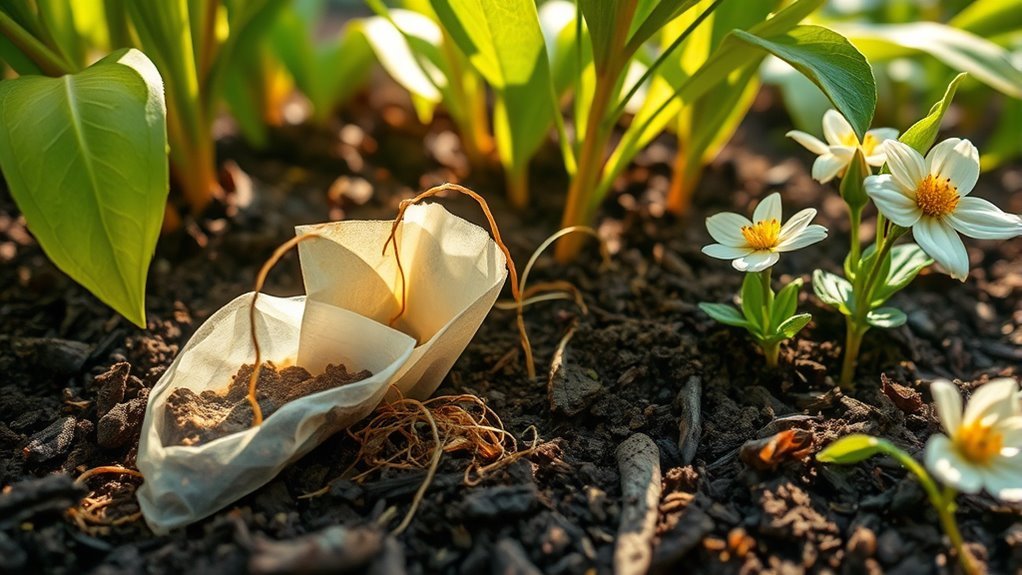
Although tea bags might seem like simple waste, they actually play a valuable role in enriching your garden soil. When you add used tea bags to your garden, you introduce organic material that breaks down and improves soil structure. This helps your soil retain moisture better and promotes aeration, which is essential for healthy root growth.
Plus, tea bags often contain tiny amounts of nutrients like nitrogen, which can support soil fertility in subtle ways. By incorporating tea bags, you also encourage beneficial microbial activity, which helps decompose organic matter and maintain a balanced soil ecosystem.
How Tea Bags Enrich Your Garden Soil Naturally
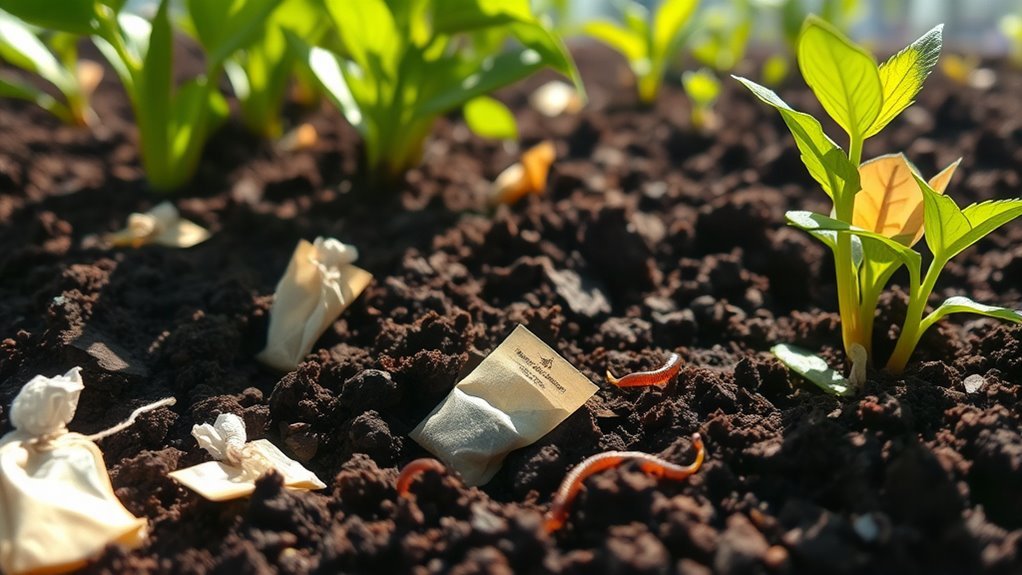
When you add used tea bags to your garden soil, they naturally release nutrients and organic matter that boost soil health. This simple step enriches your soil without synthetic fertilizers. Tea bags break down over time, improving soil texture and fertility.
Used tea bags enrich your garden soil naturally, enhancing texture and fertility without synthetic fertilizers.
They also help retain moisture, making your plants happier. Here’s what tea bags do for your soil:
- Add essential nutrients like nitrogen, phosphorus, and potassium
- Increase organic matter, enhancing soil structure
- Improve moisture retention, reducing watering needs
- Promote a balanced pH, suitable for many plants
How Tea Bags Help Friendly Microbes Thrive in Garden Soil
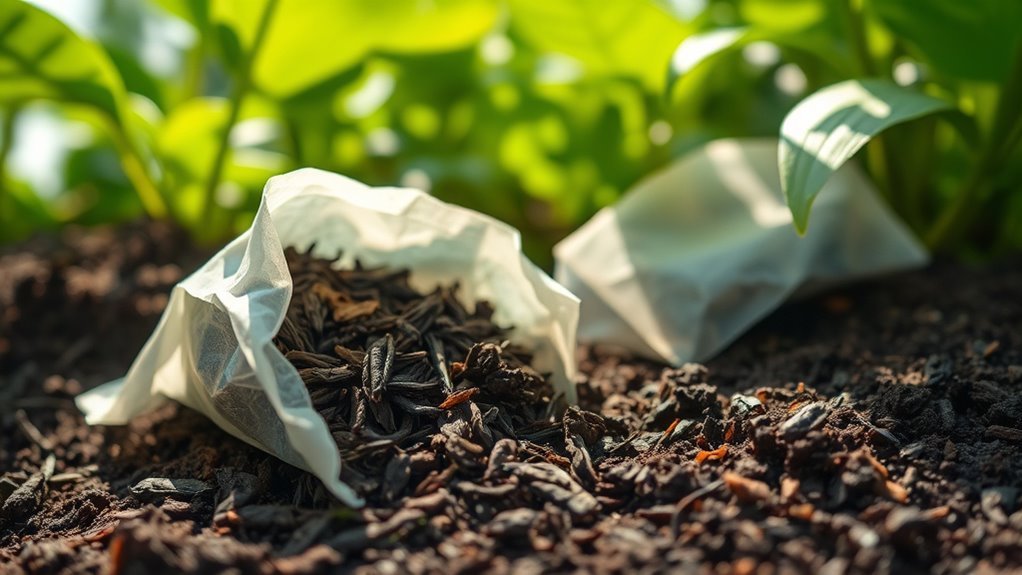
Because tea bags contain organic compounds and nutrients, they create an ideal environment for beneficial microbes to thrive in your garden soil. When you add used tea bags to your soil, the microbes quickly feed on the decomposing material, boosting their populations.
These friendly microbes break down organic matter, releasing essential nutrients that plants can easily absorb.
You’ll notice improved soil structure as microbial activity helps create tiny air pockets, which enhance root growth and water retention.
Plus, the microbes help maintain a balanced soil ecosystem, preventing harmful pathogens from taking over.
How Tea Bags Repel Common Garden Pests Naturally
You can use tea bags as a natural pest deterrent to keep common garden pests at bay. The essential oils in tea leaves release scents that many insects find unappealing.
This method offers a sustainable way to protect your garden without harmful chemicals.
Natural Pest Deterrent
Although many gardeners rely on chemical pesticides, tea bags offer a natural and eco-friendly way to keep pests at bay. You can use spent tea bags to deter common garden invaders without harming beneficial insects or the environment.
The natural compounds in tea create an unpleasant environment for pests, encouraging them to stay away from your plants. Here’s why tea bags work as a natural pest deterrent:
- Tannins in tea disrupt the feeding habits of aphids and beetles.
- The scent masks the aroma of plants, confusing pests.
- Tea leaves can repel slugs and snails due to their texture and taste.
- Used tea bags break down slowly, releasing natural repellents over time.
Using tea bags helps you protect your garden naturally and sustainably.
Essential Oils Benefits
When you place tea bags around your garden, the essential oils within them actively repel pests by disrupting their senses. These oils emit scents that many common garden pests find unpleasant, making your plants less attractive targets.
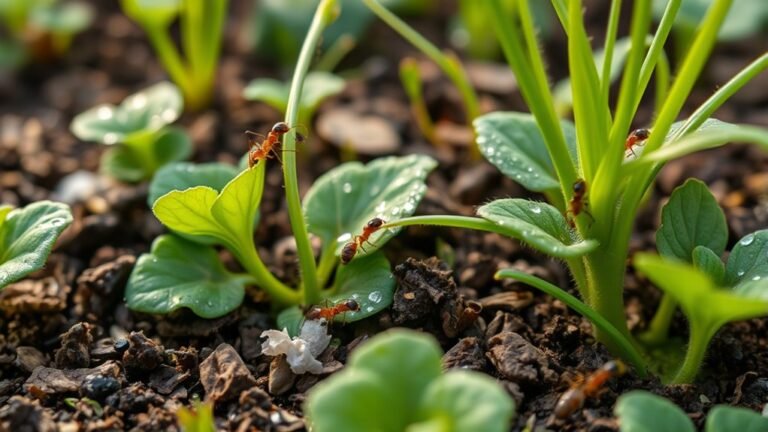
You’ll notice fewer insects like aphids, ants, and beetles invading your space, naturally protecting your garden without harmful chemicals.
Here’s how essential oils in tea bags affect common pests:
| Pest | Oil Effect |
|---|---|
| Aphids | Masks plant scent, deters |
| Ants | Disorients navigation |
| Beetles | Repels through strong aroma |
Sustainable Garden Protection
How can tea bags offer a sustainable solution to garden pest problems? You can use used tea bags as a natural pest repellent, reducing your reliance on chemical pesticides. The tannins and essential oils in tea leaves deter common pests like aphids, ants, and slugs.
Simply scatter or bury tea bags around your plants to create a protective barrier.
Here’s why tea bags work for sustainable garden protection:
- Repel pests naturally without harmful chemicals
- Improve soil health while deterring insects
- Biodegrade quickly, leaving no waste behind
- Safe for beneficial insects and pets
How Tea Bags Improve Your Compost Quickly
Adding tea bags to your compost speeds up the decomposition process by introducing valuable nutrients and beneficial microbes.
When you toss used tea bags into your compost pile, they provide a rich source of nitrogen, which balances carbon-rich materials like dried leaves and paper. This balance is essential for faster microbial activity, breaking down organic matter efficiently.
Plus, the natural microbes found in tea leaves jumpstart the composting process, making your pile heat up and decompose quicker.
Just make sure the tea bags are made from compostable materials; avoid synthetic ones that won’t break down.
Why Tea Bags Are a Green Choice for Garden Waste
You can reduce your garden waste by using tea bags instead of tossing them in the trash. They break down naturally, cutting down on landfill waste while enriching your compost with valuable nutrients.
This simple swap helps you make greener choices that benefit both your garden and the environment.
Eco-Friendly Waste Reduction
Why choose tea bags for your garden waste? Using tea bags helps you reduce landfill contributions by turning a common kitchen item into valuable garden material. Instead of tossing used bags, you give organic waste a second life, cutting down on plastic and non-biodegradable trash.
When you compost or mulch with tea bags, you actively support a circular waste cycle.
Here’s why tea bags are a smart eco-friendly choice:
- They’re mostly biodegradable, breaking down naturally.
- They reduce the volume of household waste.
- They prevent synthetic materials from entering soil.
- They encourage sustainable gardening habits.
Nutrient-Rich Compost Boost
Beyond reducing waste, tea bags enrich your compost with valuable nutrients that help your garden thrive. When you toss used tea bags into your compost pile, they break down and release nitrogen, phosphorus, and potassium—key elements plants need for healthy growth.
The organic matter from the tea leaves improves soil structure, boosts microbial activity, and enhances moisture retention.
Just make sure the tea bags are biodegradable and free from synthetic additives or staples. Avoid plastic-lined bags, which don’t decompose fully and can harm the environment.
By adding tea bags, you create nutrient-rich compost that supports strong roots and vibrant foliage.
This simple habit turns waste into a powerful garden booster, making your gardening routine both eco-friendly and effective.
Simple Ways to Use Tea Bags in Your Garden Routine
Although tea bags might seem like simple kitchen waste, they offer several practical uses that can enhance your garden routine. You can easily reuse them to nourish plants, deter pests, and improve soil health without extra effort.
Here are some simple ways to incorporate tea bags into your gardening:
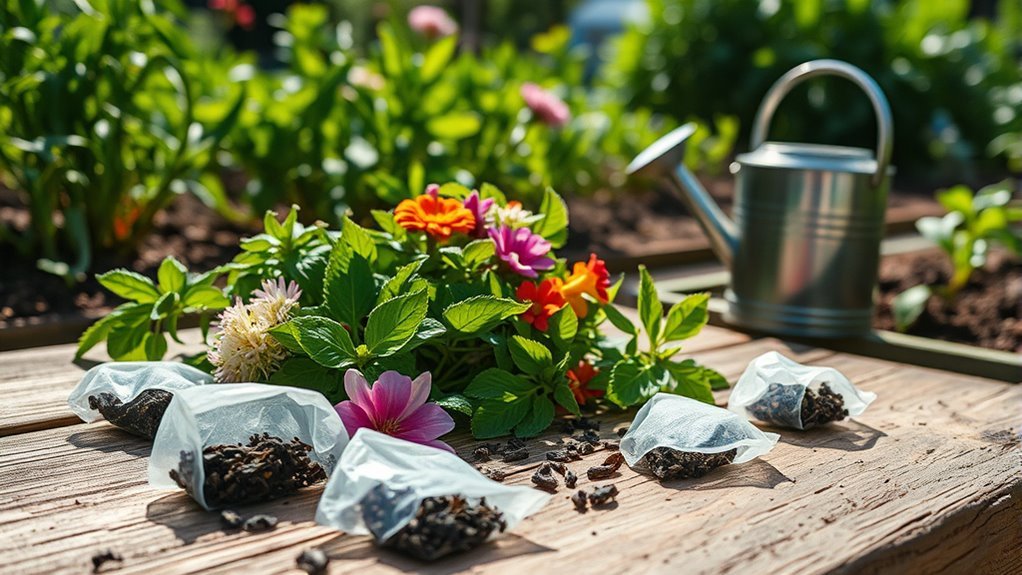
- Add directly to soil: Tear open used bags and mix the leaves into your garden bed for a nutrient boost.
- Make a fertilizer tea: Steep used tea bags in water and pour the infusion around your plants.
- Use as mulch: Place dry tea bags on soil to retain moisture and suppress weeds.
- Repel pests: Scatter used tea bags near plants to discourage insects like ants and aphids.
These easy steps help you recycle tea bags and support a healthier garden.
Frequently Asked Questions
Can Tea Bags Be Used for Indoor Plants?
Yes, you can use tea bags for indoor plants. They add nutrients and improve soil quality.
Just avoid flavored or oily bags, and make sure to remove staples before mixing the tea leaves into your potting soil.
Are All Types of Tea Bags Safe for the Garden?
Not all tea bags suit your garden’s dance floor. Like dancers needing proper shoes, only natural, unbleached tea bags without synthetic additives will help your plants thrive.
Avoid those with chemicals—they’ll trip up your green friends.
How Often Should Tea Bags Be Added to Garden Soil?
You should add tea bags to your garden soil every few weeks, depending on your plants’ needs.
Just avoid overdoing it, as too many can affect soil pH and nutrient balance.
Can Tea Bags Affect Soil pH Levels?
Think of soil pH as a delicate dance, and yes, tea bags can tip the rhythm. Their tannins and organic acids gently lower pH, making soil a bit more acidic, which you’ll want to monitor for balance.
Do Tea Bags Attract Wildlife to the Garden?
Yes, you’ll attract wildlife like earthworms and beneficial insects by adding tea bags to your garden. The organic matter and nutrients create a welcoming environment, encouraging these helpful creatures to thrive and support your plants naturally.
Conclusion
So, next time you toss those tea bags, think twice—your garden’s secretly begging for a cuppa TLC. Who knew your morning brew could double as a soil superhero, pest repellent, and compost booster?
Forget fancy fertilizers; your garden’s new best friend is your leftover tea bag. Don’t let those hardworking little bags go to waste—give your plants the VIP treatment they deserve.
After all, who needs science when you’ve got tea bags? Using tea bags in your garden is a simple, natural way to enrich soil, repel pests, and boost compost. Embrace the power of tea bags for a thriving garden.