Does a Garden Room Add Value to Your Property?
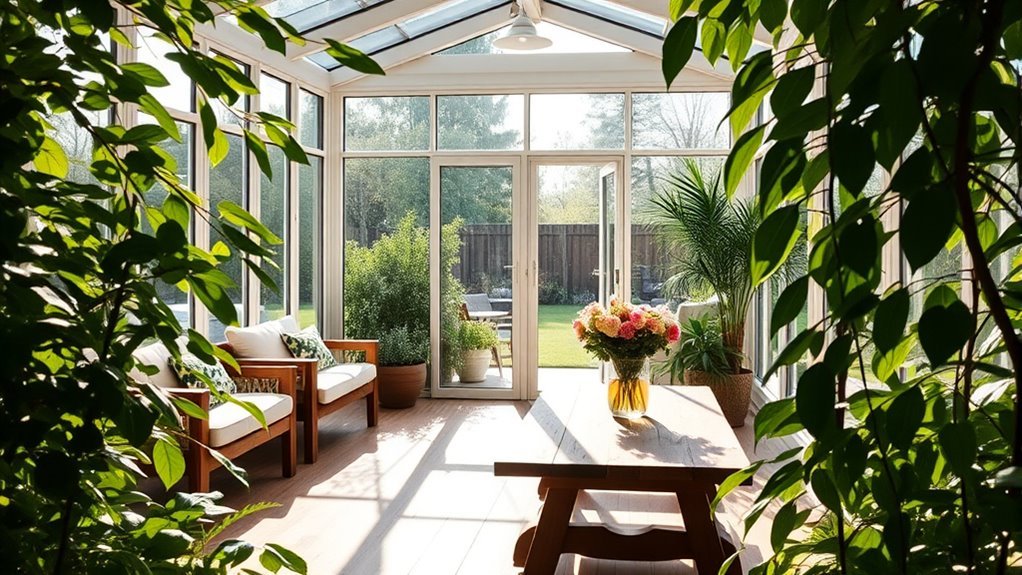
Yes, adding a well-designed garden room can increase your property’s value by expanding your usable living space and enhancing its appeal. Garden rooms create flexible areas for work, relaxation, or hobbies, making your home more versatile. They also connect your living space seamlessly to the outdoors with natural light and scenic views.
However, costs, permits, and design quality matter to guarantee a good return on investment. It’s important to plan carefully and choose the right garden room style for your needs. Keep exploring to discover which garden room types and design tips maximize your home’s value potential.
How Garden Rooms Can Increase Your Home’s Value
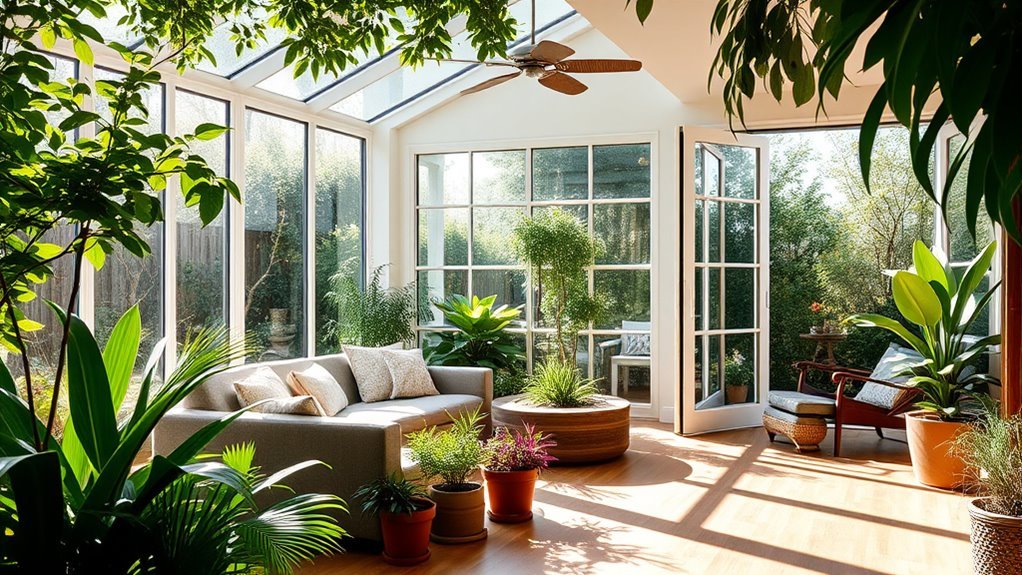
Although adding a garden room requires an upfront investment, it can greatly boost your home’s value by creating extra living space that appeals to buyers. When you add this versatile space, you enhance your property’s overall square footage, making it more attractive on the market.
Buyers often look for flexible areas for work, relaxation, or hobbies, and a garden room fits these needs perfectly.
It also brings natural light and a connection to the outdoors, improving the home’s ambiance. Because garden rooms blend indoor comfort with garden views, they make your property stand out.
This added functionality and aesthetic appeal can lead to higher offers, helping you recoup your investment and increase your home’s resale value efficiently.
Costs and Permits to Know Before Adding a Garden Room
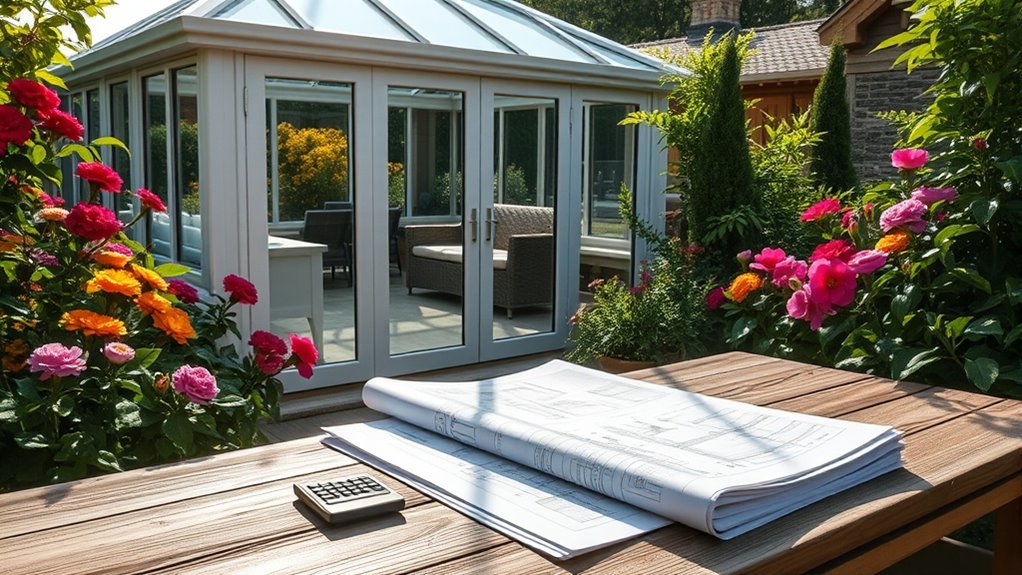
Before you start building your garden room, you’ll want to understand the costs involved and whether you need any permits. Knowing these details upfront helps you avoid surprises and keeps your project on track. Costs can vary widely depending on size, materials, and complexity, so budget carefully.
Understanding costs and permit needs upfront keeps your garden room project on track and avoids surprises.
Here are key points to consider:
- Construction costs: Materials, labor, insulation, and finishing touches can add up quickly.
- Planning permission: Some local councils require permits, especially for larger or permanent structures.
- Additional fees: Utility connections, inspections, and potential landscaping changes might increase expenses.
Check with your local planning office to confirm permit requirements before you begin. Factoring in these costs and permits lets you build your garden room smoothly and legally, maximizing your property’s value.
Garden Room Types That Deliver the Best ROI
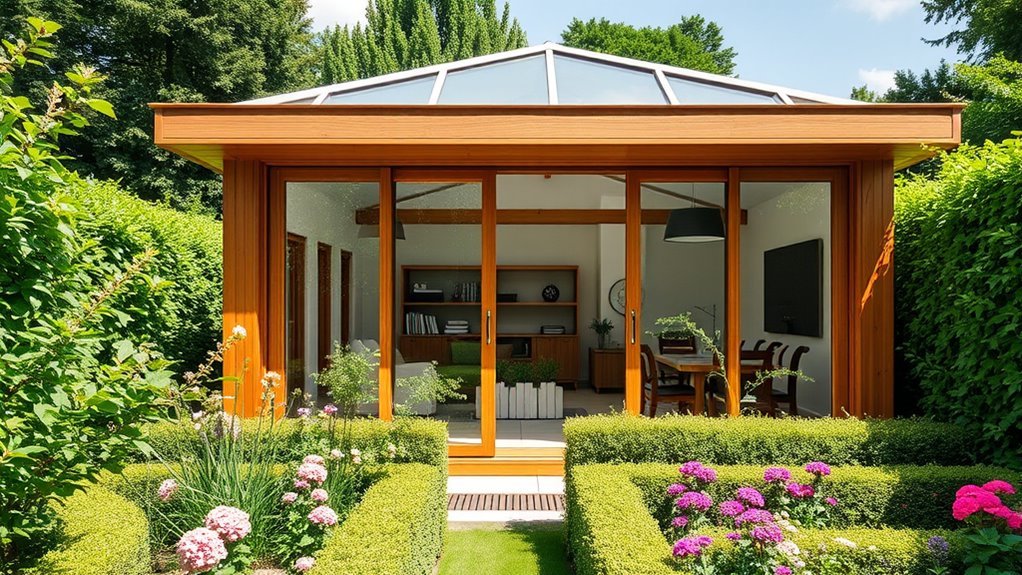
When choosing a garden room, selecting the right type can substantially boost your property’s resale value. Opt for multi-functional spaces like home offices or gyms, as they appeal to a broad range of buyers.
A well-insulated, year-round garden room with large windows and natural light creates an inviting atmosphere that enhances your home’s appeal.
If you want to maximize ROI, consider a garden room with flexible layouts that can adapt to different uses, from a playroom to a guest suite.
Avoid overly niche designs, which can limit buyer interest.
Additionally, garden rooms that seamlessly connect to your main house or garden tend to add more value because they feel like an extension of your home rather than a detached structure.
Design Tips to Make Your Garden Room Buyer-Friendly
To make your garden room truly buyer-friendly, you should focus on creating a space that feels both functional and welcoming. Think about how potential buyers might use the room and design it to appeal broadly. Keep the style neutral to suit different tastes, and guarantee the layout maximizes natural light and flow.
Here are three design tips to help you achieve this:
- Use versatile furniture that can easily adapt to different needs, like a fold-out desk or a comfy daybed.
- Incorporate plenty of windows or glass doors to bring in light and connect the room with the garden.
- Choose durable, low-maintenance materials and finishes that look good and stand the test of time.
These thoughtful touches make your garden room an attractive, practical addition.
When a Garden Room Might Not Boost Your Property Value
While a well-designed garden room can add appeal and function, it doesn’t always guarantee an increase in your property’s value. If your garden room feels out of sync with your home’s style or looks cheaply made, buyers might see it as a liability rather than an asset.
Also, if the room lacks proper insulation, heating, or ventilation, it could be usable only part of the year, limiting its appeal. Overly personalized or niche uses—like a gym or art studio—may not suit everyone’s tastes.
Plus, if your local market doesn’t typically value outdoor extensions, the investment mightn’t pay off. Before adding a garden room, consider your neighborhood trends and assure the design enhances your home’s overall appeal to attract potential buyers.
Frequently Asked Questions
How Do Garden Rooms Affect My Home’s Energy Efficiency?
Garden rooms can boost your home’s energy efficiency if well-insulated and fitted with double-glazed windows. They reduce heat loss and can provide extra living space without substantially increasing your heating bills.
You’ll want quality materials.
Can I Use a Garden Room as a Rental Space?
You can use a garden room as a rental space—over 60% of homeowners do this to boost income.
Just make sure it meets local regulations and has proper amenities to attract tenants comfortably and legally.
What Maintenance Does a Garden Room Typically Require?
You’ll need to clean gutters, check seals, and treat timber regularly. Also, inspect the roof for damage, clear debris, and maintain any electrical or heating systems to keep your garden room in top shape and comfortable year-round.
Are Garden Rooms Suitable for All Climates?
Garden rooms aren’t one-size-fits-all; they’re like chameleons adapting to your climate. You’ll need insulation for cold areas and ventilation for hot spots.
Choose materials wisely to keep your space comfy year-round, whatever weather strikes.
How Long Does It Take to Build a Garden Room?
It usually takes you about two to six weeks to build a garden room, depending on size, design, and weather.
If you choose a prefabricated option, it can be even quicker, sometimes just a few days.
Conclusion
Adding a garden room can be like planting a seed that grows your home’s value over time. Just as a well-tended garden flourishes with care, your investment pays off when you choose the right design, understand costs, and navigate permits wisely.
But remember, not every addition blossoms—sometimes it’s better to let the space stay wild. If you nurture it well, your garden room can become the hidden gem buyers crave.
In conclusion, a garden room can significantly add value to your property when thoughtfully planned and maintained. It offers extra living space, enhances your home’s appeal, and attracts potential buyers, making it a worthwhile investment.