How Do You Winterize Your Garden in 7 Easy Steps?
To winterize your garden in 7 easy steps, start by pruning perennials and clearing fallen leaves to prevent disease. This is a simple way to keep your garden healthy through the colder months.
Harvest any remaining veggies and remove annual plants to avoid attracting pests.
Next, pull weeds and clear debris from your garden beds. This helps maintain a clean environment for your plants to thrive.
Bring tender plants indoors to protect them from frost, and cover garden beds with mulch to insulate the soil.
Don’t forget to drain your irrigation systems and clean your gardening tools before storing them away. These little tasks make a big difference when spring rolls around.
Finally, use what you’ve learned this season to plan a stronger, more vibrant garden next year. There’s plenty more you can do to get ready for winter’s chill!
Key Takeaways
- Prune perennials and clear dead stems to promote healthy growth and prevent disease during winter. It’s a simple step that really helps your garden stay strong.
- Remove leaves and garden debris to prevent mold and pests. You can even use those leaves as mulch if you want to give your plants extra protection.
- Protect tender plants by moving them indoors after acclimating them slowly. Don’t forget to inspect for pests before bringing them inside.
- Drain and blow out irrigation systems to avoid freeze damage. Also, take some time to clean and store your tools properly so they’re ready for next season.
- Mulch perennial plants and tidy up the garden. This helps keep pests and diseases away and gets everything set for healthy spring growth.
Winterize by Pruning Perennials and Clearing Leaves
Start winterizing your garden by pruning perennials before the first frost. Cut back your perennials to about 2-4 inches above the ground, removing dead or damaged stems. This helps prevent disease and promotes healthy growth.
This step supports the plant’s underground structures, setting them up for a strong spring.
Next, focus on clearing leaves from your garden beds. A thick layer of leaves can block sunlight, hinder grass growth, and encourage mold and pests during winter.
Rake leaves into piles and consider using them as mulch. This way, you retain moisture and add nutrients as they break down.
Winterize Your Garden: Harvest Vegetables and Remove Annuals
Gather all remaining vegetables and herbs before the first frost hits to preserve their best flavor and quality. Use a flashlight for nighttime harvests if needed.
Afterward, remove annuals like marigolds and tomatoes since they won’t return and may harbor pests or diseases. Be sure to dispose of any diseased plants carefully—don’t compost them.
Finally, clean up the garden by taking down trellis strings and tomato cages to prevent winter pest problems.
| Task | Reason | Timing |
|---|---|---|
| Harvest vegetables | Preserve flavor & prevent frost damage | Before first frost |
| Remove annuals | Avoid pests & disease buildup | Post-harvest |
| Clean up the garden | Prevent overwintering pests | After removal |
Following these steps helps you winterize your garden effectively and prepare for a healthy spring.
Winterize: Pull Weeds and Clear Garden Debris
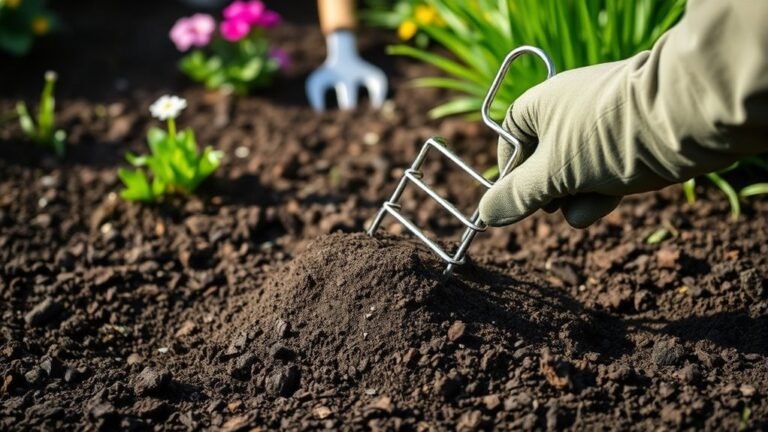
Now’s the time to pull weeds and clear out garden debris to keep your space healthy. Removing weeds stops them from stealing nutrients and hosting pests over winter.
Clearing dead plants and leaves helps prevent disease and makes spring cleanup easier. It’s a simple step that really pays off when the warmer months roll around!
Weed Removal Importance
Pulling weeds and clearing garden debris before winter plays an essential role in protecting your plants and soil. Weed removal helps prevent pests and pathogens from overwintering in your garden, reducing the risk of diseases that could harm your plants come spring.
When you winterize by removing weeds, you also eliminate competition for water and nutrients. This gives your desired plants a better chance to thrive.
Clearing out garden debris minimizes places where diseases can linger, promoting healthier plant growth. Plus, maintaining a tidy garden supports soil aeration and nutrient retention during colder months.
This effort not only improves your garden’s health but also makes spring cleanup easier and more efficient. So, you’ll save time and effort when the growing season returns.
Garden Debris Cleanup
After removing weeds, turn your attention to clearing out garden debris. Get rid of all spent annual vegetables and flowers since their decay can harbor pest eggs and diseases that threaten healthy plants.
Clearing garden debris, including dead stalks and foliage, creates a clean environment that helps protect your garden from disease outbreaks in spring. Be sure to dispose of any infected plants instead of composting them to prevent spreading blight and other issues.
Winterize Tender Plants: Bring Them Indoors for Protection
When temperatures start to drop, you should identify which tender plants in your garden—like succulents and tropical varieties—need to come indoors for protection. Winterizing your garden means giving these plants indoor protection to survive frost and freezing temps.
Before moving them inside, acclimate plants gradually by shifting them to shadier outdoor spots to adjust to lower light. Inspect each plant for pests to avoid bringing unwanted guests indoors.
If needed, transplant tender plants into pots with well-draining soil for easier care. Once inside, adjust watering needs since plants require less water during winter due to reduced light and cooler temperatures.
Following these steps guarantees your tender plants stay healthy all winter, ready to thrive again when spring returns.
Winterize Beds With Mulch to Insulate Soil and Roots
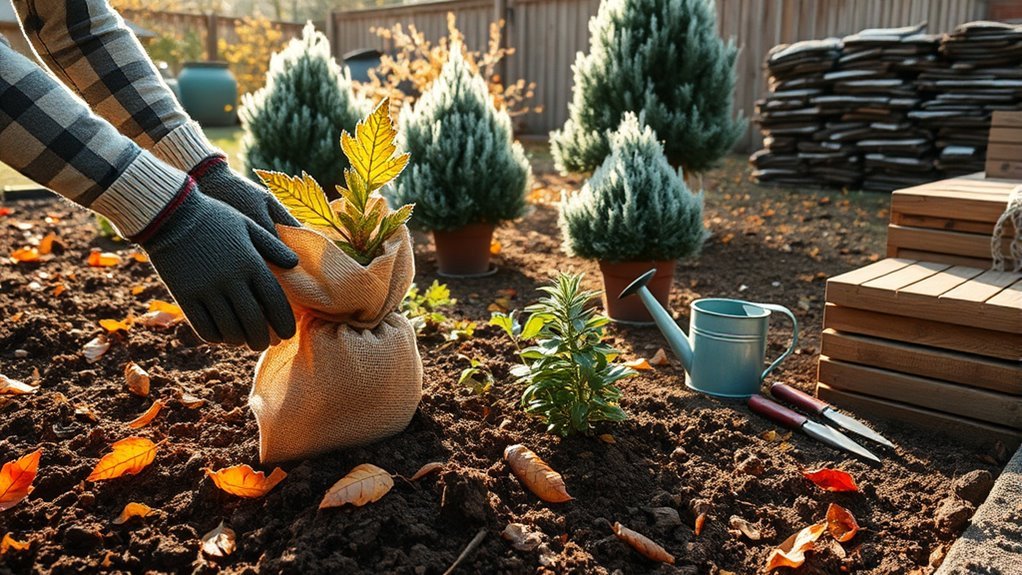
Applying a 2- to 3-inch layer of mulch over your garden beds creates a protective blanket that insulates soil and roots throughout winter. Mulch helps maintain a consistent soil temperature, preventing premature growth during warm spells.
It acts as a barrier against extreme cold and freeze-thaw cycles that can damage roots. Using organic mulch like wood chips or straw not only insulates but also adds nutrients to the soil as it breaks down.
Mulching retains moisture in the soil, reducing the need for extra watering during winter. Additionally, it limits weed growth, so your plants won’t have to compete for nutrients.
Winterize Irrigation Systems and Store Tools Properly
Before winter hits, make sure you drain all the water from your irrigation system to prevent freezing damage. This step is key to avoiding costly repairs later on.
Clean and store your tools in a dry place. Sharpen or repair them as needed so they’re ready to go when spring arrives.
Don’t forget to protect your lawn equipment by draining old fuel. Adding a stabilizer helps keep everything running smoothly next season.
Drain Irrigation Water
Protect your irrigation system from winter damage by shutting it off and thoroughly draining all water from the lines and hoses. To avoid costly repairs caused by freezing temperatures, make certain you drain irrigation water completely before the winter months arrive.
Use compressed air to blow out any leftover water in the irrigation system, preventing pipes and hoses from freezing and cracking. Inspect hoses and fittings for leaks or damage, then disconnect and store them indoors to protect against rust and deterioration.
Giving your irrigation system a little TLC in fall saves you time and money when spring comes. Taking these simple steps guarantees your irrigation system stays in good shape throughout winter, ready to support your garden’s growth next season.
Clean And Store Tools
Once you’ve drained and stored your irrigation system, turn your attention to your gardening tools. First, clean gardening tools thoroughly to remove dirt and debris. This helps prevent rust and damage during winter storage.
Next, repair any broken parts and sharpen blades to maintain effectiveness for the next season. When you store tools, choose a dry, protected area to avoid moisture buildup.
Organize for easy access so you can quickly find what you need come spring. Properly storing tools not only extends their lifespan but also streamlines your gardening routine.
Taking these simple steps guarantees your tools stay in great condition, ready to tackle your garden’s needs when the warmer months return.
Prevent Winter Equipment Damage
When you winterize your irrigation system, shut off the water supply and drain all hoses, pipes, and fittings completely to prevent freezing damage. Use compressed air to blow out irrigation systems, ensuring no water remains that could freeze and crack your pipes during the winter season.
After draining, store hoses and other equipment in a dry, sheltered spot to protect them from cold temperatures and UV exposure. Don’t forget to clean and sanitize tools before storing; a mix of 90% water and 10% bleach works well to prevent rust and disease.
Organize your tools neatly, check for repairs, and store them properly. Taking these steps helps prevent freezing damage and keeps your garden equipment in great shape for spring.
Use Winterizing Insights to Plan Your Next Garden Season
Although winter puts your garden to rest, you can use this downtime to evaluate which plants thrived and which struggled. This helps you make smarter choices for next season.
Winter’s pause is ideal for assessing plant success and planning smarter gardening strategies ahead.
Winter gardening isn’t just about protecting plants—it’s the perfect time to prepare for next year’s success. Use the steps to winterize your garden as a chance to plan ahead by:
- Analyzing plant performance to refine your garden layout.
- Researching your plant hardiness zone to choose the best varieties.
- Ordering seeds and supplies early to secure what you need.
- Creating a planting calendar based on local frost dates and prime times.
Frequently Asked Questions
How Do You Winterize Your Garden?
Pretend your garden’s a diva needing a winter coat—strip annuals, shoo tender plants indoors, swaddle vulnerable ones in blankets, mulch like you mean it, and drain irrigation before frost crashes the party. You got this!
What Is the 70 30 Rule in Gardening?
The 70/30 rule means you dedicate 70% of your garden to vegetables and edible plants, while 30% is for flowers and ornamentals. This balance helps you grow food efficiently and attract beneficial insects naturally.
What Plants Should You Not Cut Back for Winter?
You shouldn’t cut back perennials like ornamental grasses, late-blooming asters, sedums, or early spring bloomers such as hellebores. Also, avoid pruning evergreens like holly and boxwood to protect them through winter.
What Is the 3-Hour Gardening Rule?
You don’t have to spend all weekend wrestling with weeds. The 3-hour gardening rule means you dedicate just three focused hours weekly, making garden care manageable, efficient, and surprisingly enjoyable—no superhero cape required.
Conclusion
Now that you’ve wrapped up your garden like a cozy blanket, you’re ready to face winter’s chill head-on. By pruning, clearing, mulching, and protecting your plants, you’re not just preserving beauty—you’re setting the stage for a vibrant spring comeback.
Think of your garden as a sleeping giant, gathering strength beneath the frost. With these simple steps, you’ll wake it up healthy and thriving when the sun returns.
Happy winterizing! Taking the time to winterize your garden properly ensures your plants survive the cold months and bloom beautifully in spring. By following these easy steps, you’re protecting your garden from harsh weather, reducing damage, and encouraging stronger growth. So, get those gloves on, grab your tools, and enjoy the process of caring for your garden through the seasons. A well-winterized garden means less work later and a more vibrant, healthy outdoor space when warmer days arrive.