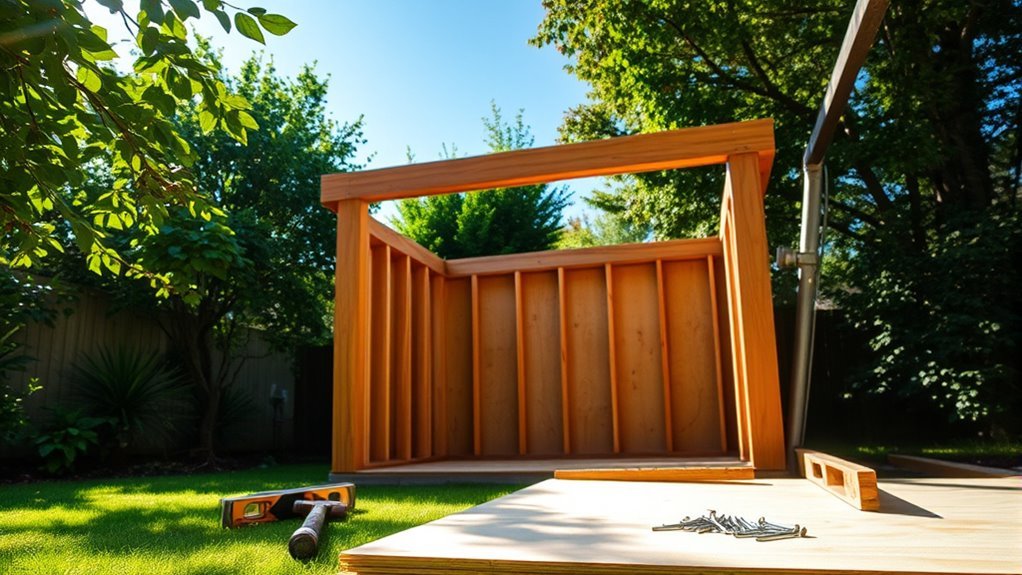
How to Build a Garden Shed in 7 Easy Steps
To build a garden shed in 7 easy steps, start by picking a flat, well-drained spot with good access and sunlight. Choosing the right location is essential for a durable and functional garden shed. Plan your shed’s size and style to fit your storage needs and garden layout.
Gather quality materials and tools before creating a strong, level foundation. Framing the walls and roof carefully is the next step to ensure stability. Add roofing and waterproofing to protect your shed from the elements.
Finish by painting it with weather-resistant paint and installing shelves inside for efficient storage. Follow these simple steps, and you’ll have a sturdy, attractive garden shed in no time. Keep going to reveal detailed tips and tricks for each step.
Choose the Right Location for Your Garden Shed
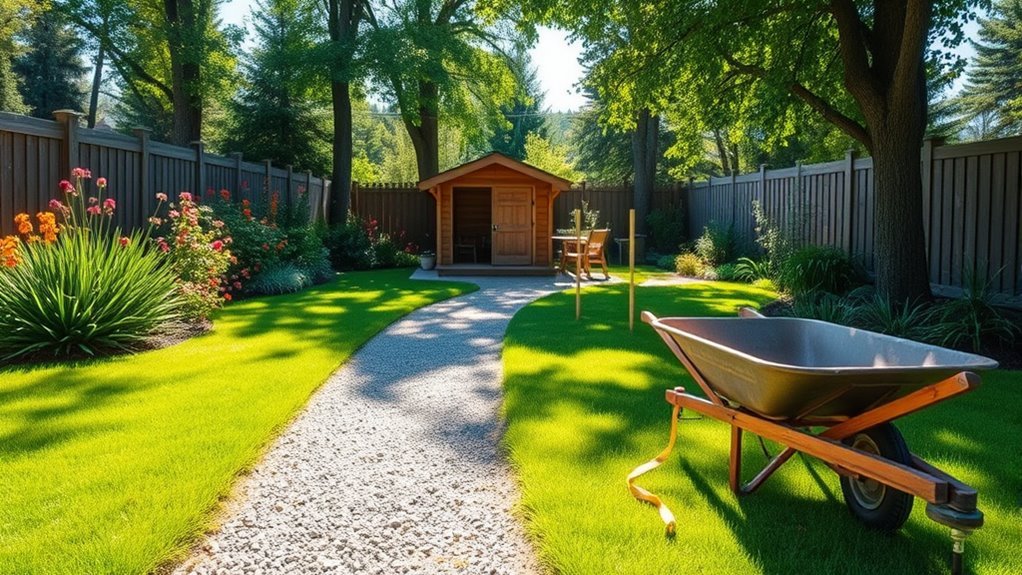
Before you begin building, you’ll want to pick the perfect spot for your garden shed. Look for a flat, well-drained area to prevent water pooling and foundation issues.
Make sure it’s easily accessible from your house or garden paths so hauling tools won’t be a hassle.
Check local zoning laws and property lines to avoid any legal troubles down the road.
Also, consider sunlight exposure—you might want your shed in partial shade to protect tools from extreme heat.
Avoid placing it too close to trees, as roots can interfere with the foundation, and falling branches might damage the structure.
Finally, think about how the shed fits into your yard’s overall look and functionality.
Choosing the right location sets a solid foundation for a hassle-free build.
Plan Your Garden Shed Design and Size
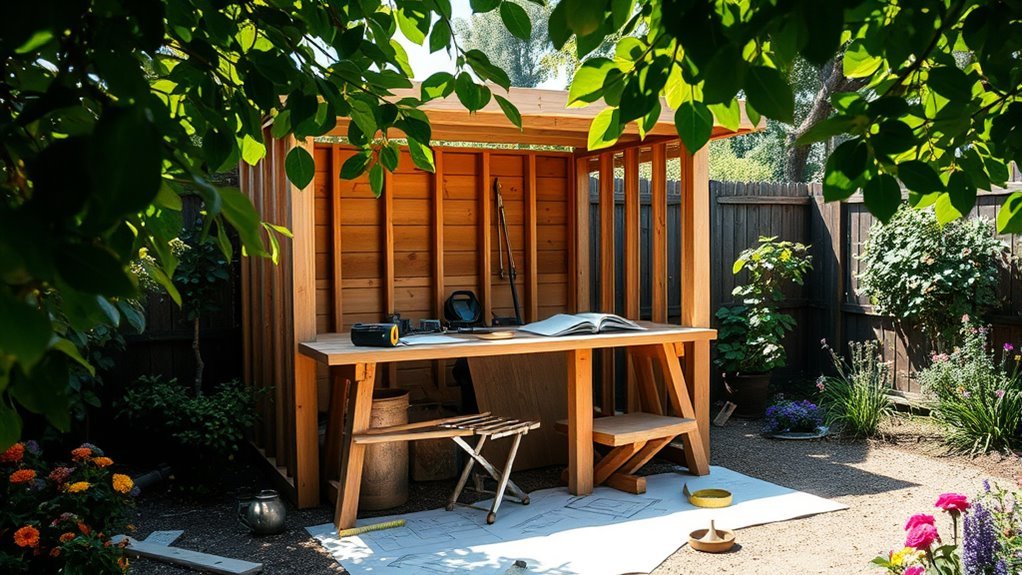
You’ll want to decide on the dimensions of your shed based on the space you have and what you plan to store.
Next, pick a style that complements your garden and fits your needs, whether it’s traditional, modern, or rustic.
These choices will guide the rest of your building process.
Choose Shed Dimensions
How big should your garden shed be to fit all your tools and equipment without overcrowding? Start by listing everything you plan to store. Measure bulky items and consider space for future additions.
Standard sheds range from 6×8 to 10×12 feet, but your needs might require a custom size. Keep walkways and workspace in mind—at least 2 feet of clearance helps you move comfortably. Don’t forget vertical space; adding shelves or hooks maximizes storage without increasing the footprint.
Also, check local building codes and property setbacks to ensure your shed fits legally. By carefully choosing dimensions that balance storage needs, working space, and regulations, you’ll create a practical, efficient garden shed tailored just for you.
Select Shed Style
Which shed style fits your garden’s aesthetic and your storage needs best? Choosing the right style guarantees your shed complements your outdoor space while serving its purpose efficiently.
Consider these popular options:
- Classic Gable: Timeless and simple, with a pitched roof that offers great headroom and easy water runoff.
- Lean-to: Space-saving with a single sloping roof, perfect if you want to place the shed against a fence or wall.
- Barn Style: Features a gambrel roof, providing extra loft storage and a rustic charm.
Think about your garden’s look and what you’ll store inside.
Pick a style that balances function and appearance, making your shed a practical, attractive addition.
Gather Essential Materials and Tools for Your Garden Shed
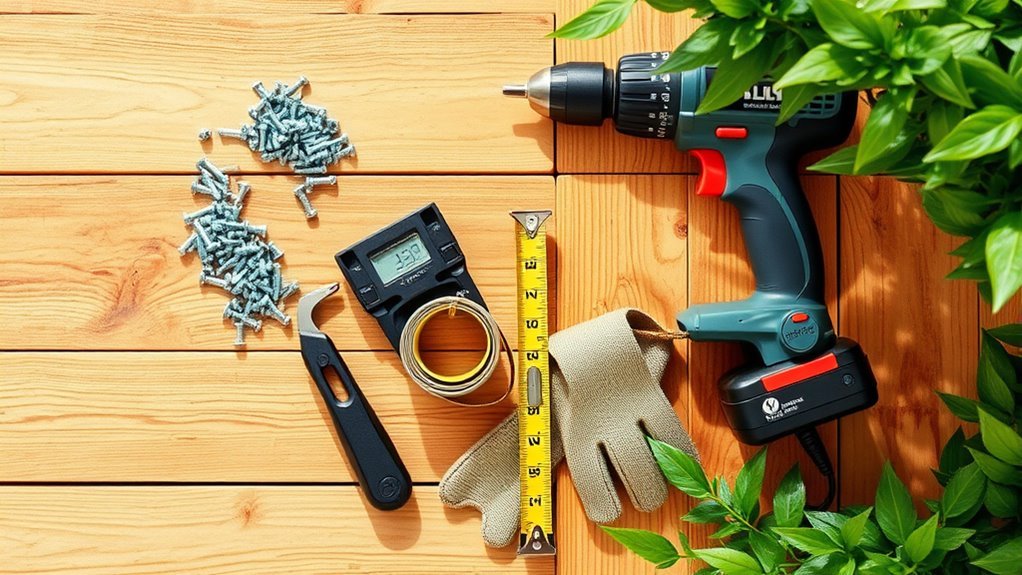
You’ll need to gather all the essential building materials like lumber, nails, and roofing supplies before starting.
Make a checklist of necessary tools such as a hammer, saw, and drill to keep everything organized.
Check local hardware stores or online retailers to find the best prices and availability for your supplies.
Essential Building Materials
Before you begin construction, gather all the essential building materials and tools to keep your project on track. Having everything ready will save you time and frustration as you build your garden shed.
Focus on getting quality materials that offer durability and weather resistance.
Here are the key building materials you’ll need:
- Pressure-treated lumber for the frame and floor, ensuring strength and rot resistance
- Exterior-grade plywood or siding for walls and roof sheathing to protect against the elements
- Roofing materials such as shingles or metal panels to keep your shed dry and secure
Necessary Tools Checklist
Gathering quality materials sets a solid foundation, but having the right tools on hand will keep your garden shed project running smoothly. You’ll need a tape measure, level, and carpenter’s square for precise measurements and angles. A circular saw or handsaw will help you cut lumber efficiently.
Don’t forget a power drill with assorted bits for screws and pilot holes. Hammer, screwdriver set, and a utility knife are essentials for assembly and trimming. Safety gear—gloves, goggles, and ear protection—are essential to protect yourself.
A pencil for marking and clamps to hold pieces steady will also come in handy. With these tools ready, you’ll streamline each step, avoid unnecessary delays, and build your garden shed confidently and accurately.
Where To Buy Supplies
Although sourcing quality materials might seem overwhelming, knowing where to buy your supplies can simplify the process considerably. Start by identifying local hardware stores, where you can find lumber, nails, and paint with expert advice nearby.
Don’t overlook big-box retailers—they often offer competitive prices and a wide variety of tools and materials. For specialty items like weatherproofing products or unique fittings, online suppliers provide convenience and extensive options.
Here’s where to look:
- Local hardware stores for personalized help and immediate pick-up
- Big-box retailers for affordability and broad selections
- Online shops for specialty parts and delivery to your door
How to Build a Strong, Level Foundation
Why does a strong, level foundation matter so much when building your garden shed? Because it supports the entire structure and prevents future problems like shifting, warping, or water damage.
Start by selecting a flat area, then clear away grass and debris.
Next, dig down to a firm base, about 6-8 inches deep. Lay a gravel bed to improve drainage and compact it firmly.
Use a level to guarantee the ground is even.
From here, build a wooden frame or concrete slab, checking again that everything stays perfectly level.
Secure your foundation well, so your shed stands sturdy for years.
Taking time now saves you headaches later, giving your shed a solid, reliable base.
Frame Your Shed’s Walls and Roof
With your strong, level foundation in place, you’re ready to frame the walls and roof of your garden shed. Start by constructing the wall frames on the ground, making sure each section is square and aligns with your shed’s dimensions.
Begin by building wall frames on the ground, ensuring each section is square and matches your shed’s size.
Once the walls are assembled, lift them onto the foundation and secure them firmly.
Next, focus on the roof frame. Use rafters or trusses to create a sturdy skeleton that supports your roof’s shape and weight.
Keep these tips in mind:
- Use quality lumber that’s straight and free of warps
- Double-check measurements before cutting or nailing
- Brace corners and joints for extra stability
Framing is key to a durable shed, so take your time to ensure everything fits perfectly and sits flush.
Install Roofing and Waterproof Your Shed
Once your shed’s frame is secure, you can install the roofing to protect it from the elements. Start by laying down roofing felt or a waterproof membrane to create a moisture barrier.
Next, attach your chosen roofing material, like shingles or metal sheets, ensuring they overlap properly to prevent leaks. Finally, seal all edges and joints with waterproof caulk or tape.
| Step | Action |
|---|---|
| 1 | Lay roofing felt evenly |
| 2 | Secure felt with staples |
| 3 | Install shingles or metal |
| 4 | Overlap edges carefully |
| 5 | Seal joints with waterproofing |
Following these steps will keep your shed dry and durable for years.
Paint Your Shed and Add Interior Shelving
Although the structure is complete, you’ll want to protect your shed from weather damage by applying a quality coat of paint. Choose a weather-resistant exterior paint and apply at least two coats for durability. This will keep your shed looking fresh and guard it against moisture and UV damage.
Next, add interior shelving to organize your tools and supplies efficiently. Consider these tips:
- Use sturdy materials like plywood or metal brackets for strong shelves.
- Plan shelf placement based on your storage needs, keeping heavy items lower.
- Leave space for larger tools or equipment to maximize usability.
Frequently Asked Questions
How Do I Maintain My Garden Shed Year-Round?
You should clean your shed regularly, check for leaks or damage, and repaint or seal wood annually.
Keep gutters clear, guarantee proper ventilation, and store tools properly to prevent rust and pests all year round.
Can I Install Electricity in My Garden Shed?
You can certainly bring a little extra sparkle to your garden shed by installing electricity. Just make sure you follow safety rules and consider hiring a pro to handle wiring,
so your shed stays both bright and safe.
What Are the Best Pest Control Methods for Sheds?
You should seal gaps, keep the shed clean, and use natural repellents like peppermint oil. Setting traps and installing mesh screens also helps.
Regularly inspect for signs of pests to catch problems early and protect your shed.
How Do I Insulate My Garden Shed for Winter?
Think of your shed as a cozy turtle—wrap it with foam boards or fiberglass batts, seal every crack like its shell, then add weatherstripping.
You’ll keep winter’s chill outside while your shed stays warm and snug all season.
Are Permits Required for Building a Garden Shed?
Yes, you often need permits to build a garden shed, especially if it’s large or has electrical wiring.
Check your local building codes and zoning laws before starting, so you don’t face fines or have to tear it down.
Conclusion
Now that you’ve tackled building your garden shed step by step, you’re ready to enjoy the fruits of your labor. With a sturdy foundation, solid framing, and a waterproof roof, your shed will stand the test of time.
Remember, every great project starts with a single nail—so don’t be afraid to jump in and get your hands dirty. Soon, you’ll have a perfect space to store tools and nurture your green thumb. Building a garden shed is a rewarding DIY project that enhances your outdoor space and provides practical storage solutions.