Is Ash Good for the Garden?
Yes, ash can be great for your garden when used correctly. It provides key nutrients like calcium and potassium, which are essential for plant growth.
Plus, it improves soil health and helps balance acidic soil pH, making your garden more productive.
Just make sure to use ash from untreated wood. Wearing protective gear is a good idea when handling ash to keep yourself safe.
Also, apply it in moderation—about 15-20 pounds per 1,000 square feet a year works well.
Keep an eye on your soil and garden needs to ensure your plants stay healthy.
With a little care, ash can be a smart addition to your gardening routine. Keep exploring to discover the best ways to choose and use ash safely!
Key Takeaways
- Wood ash provides essential nutrients like calcium, potassium, magnesium, and phosphorus that support plant growth and soil health. It’s pretty handy for giving your garden a nutrient boost.
- It also helps neutralize acidic soils by raising soil pH, which makes nutrients more available for your plants. So, if your soil is too acidic, ash can really help balance things out.
- But be careful not to overdo it! Using too much ash can make the soil alkaline, which isn’t great for plants that love acidic conditions.
- Also, only use ash from untreated wood. You don’t want any chemicals or toxins sneaking into your garden. Sifting the ash before applying it is a good idea to avoid any unwanted bits.
- Just apply wood ash in moderation and follow recommended guidelines. Keep an eye on your soil’s pH regularly to make sure everything stays just right for your plants.
Benefits of Wood Ash for Garden Soil and Plants
Wood ash offers valuable nutrients like calcium, potassium, magnesium, and phosphorus that can boost your garden’s soil health and plant growth. When you apply wood ash, it helps neutralize acidic soils by raising soil pH, making nutrients more available to your plants.
This is especially useful if your vegetable garden suffers from low pH, which limits nutrient uptake. Because wood ash contains calcium, potassium, and magnesium, it supplies essential minerals that support healthy plant development.
However, wood ash works best in soils prone to acidic conditions and can create alkaline conditions if overused. So, you should monitor soil pH regularly to avoid harming plants that prefer acidic soils.
How to Choose and Apply Wood Ash Safely in Your Garden?
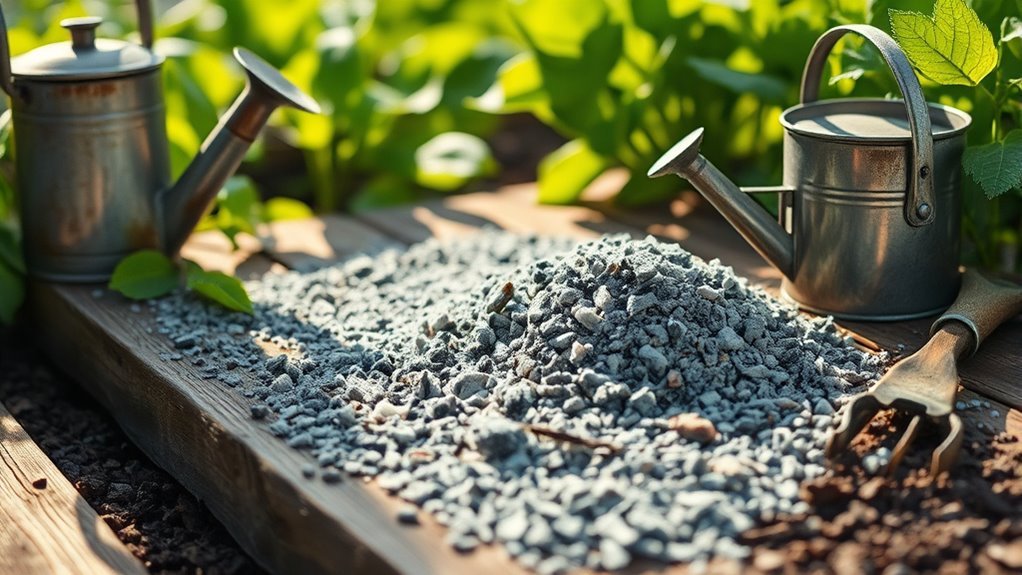
When adding ash to your garden, selecting the right source and applying it correctly can make all the difference. Start by using wood ash only from untreated wood to avoid contaminants. Always sift wood ash to remove large particles and toxins before use.
To apply wood ash safely, wear protective clothing like gloves and a dust mask to prevent irritation. Check your soil fertility tests first—since wood ash raises soil pH, avoid overapplication, especially on alkaline soil.
Limit usage to 15-20 pounds per 1,000 square feet annually. For ideal nutrient distribution, incorporate ash into moist soil in early spring or add it to your compost heap every 15 cm of material.
This careful approach helps balance nutrients and keeps your garden thriving.
Frequently Asked Questions
Which Plants Like Ash in the Soil?
You’ll find asparagus, tomatoes, hydrangeas, broccoli, cauliflower, and roses thrive with ash in the soil. Ash supplies essential nutrients like potassium, phosphorus, and calcium while balancing pH, boosting growth and health for these plants.
When Should I Add Ash to My Garden?
You should add ash to your garden in winter, letting it react with moist soil before spring planting. Avoid applying it directly to seeds, and always monitor soil pH to keep it healthy for your plants.
What Are the Disadvantages of Using Wood Ash?
You risk raising your soil’s pH too much, which can lock nutrients and harm acid-loving plants. Plus, wood ash may contain heavy metals or contaminants, and overuse can encourage diseases like potato scab in sensitive crops.
Is Ash Good for Tomato Plants?
You’ll find ash a gentle helper for tomato plants, boosting their strength with calcium and potassium while balancing soil pH. Just don’t overdo it, or your tomatoes might throw a little temper tantrum in return.
Conclusion
Wood ash can be a powerful ally or a risky foe in your garden. While it boosts soil nutrients and deters pests, overusing it can harm plants and disrupt soil balance.
You don’t want to enrich your soil only to damage it with too much ash. So, use it wisely—test your soil, sprinkle sparingly, and watch your garden thrive without tipping the scales.
Remember, the key to using wood ash in the garden is moderation. When applied correctly, ash improves soil fertility and helps keep pests away. But too much ash can lead to nutrient imbalances and harm your plants.
By paying attention to your soil’s needs and applying wood ash carefully, you can enjoy a healthier, more vibrant garden. Your careful touch makes all the difference in creating a balanced and thriving garden environment.