How Do You Build a Raised Garden Bed in 3 Easy Steps?
To build a raised garden bed in three easy steps, start by picking a sunny, level spot that’s close to water and free of shade.
Choosing the right location is key for a thriving garden.
Next, gather untreated lumber and cut your boards to size.
Then, assemble a sturdy frame with corner supports to keep everything solid and secure.
Finally, attach firm legs to stabilize the bed and fill it with a nutrient-rich mix of native soil and compost.
This helps your plants grow healthy and strong.
Keep going to uncover more tips for creating a thriving garden space that you’ll love spending time in!
Key Takeaways
- Choose a sunny, level spot that has good drainage. Make sure it’s easy to get to, too, since you’ll be working there a lot with your raised garden bed.
- Grab some untreated 2×6 lumber, corner supports, and deck screws. These will help you build a strong, sturdy frame.
- Cut the boards to size and start putting the frame together. Join the long and short boards using the corner supports to keep everything tight and secure.
- Next, attach legs at each corner. This will help stabilize your raised bed and stop it from wobbling around.
- Finally, fill the bed with a good mix of native soil and compost. This combo gives your plants the nutrients they need to grow healthy and strong.
Choose the Best Spot and Gather Materials for Your Raised Garden Bed
To build a successful raised garden bed, start by choosing a level spot that gets 6 to 8 hours of direct sunlight daily. Make sure it’s away from trees or structures that might cast shade. This way, your plants get enough light to thrive.
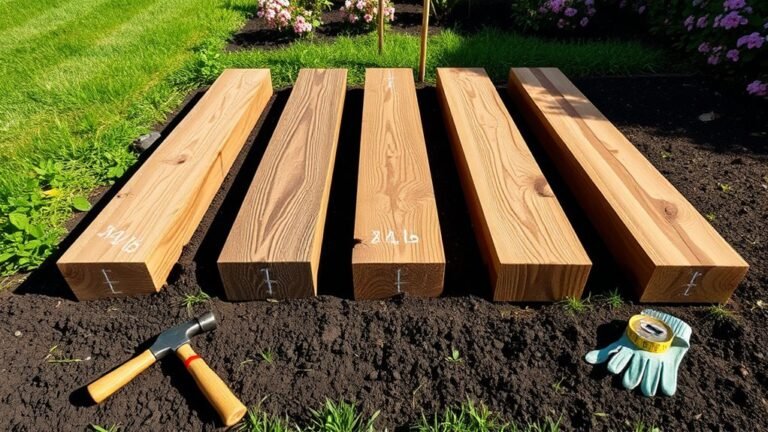
Next, gather untreated lumber, like cedar or redwood, so no chemicals leach into your soil. Use 2×6″ boards for the bed’s sides along with sturdy corner supports. Planning your raised bed around 4×6 feet is a good idea because it offers easy access without stepping into the bed.
You’ll also need deck screws, preferably 2.5 or 3 inches long and at least 8 gauge, to secure the boards. Think about adding hardware cloth underneath to keep pests out. Landscape fabric can help block weeds too, creating a perfect environment for your vegetables.
Cut and Assemble Your Raised Garden Bed Frame
Measure your lumber carefully before cutting to guarantee your raised garden bed fits together perfectly. To build a raised bed that lasts, start by measuring and cutting two 8-foot boards for the long sides and two 4-foot boards for the short sides, keeping the short sides 3 inches shorter for corner connections.
Follow these best practices: Drill pilot holes along edges to prevent wood splitting. Assemble short sides first using 4×4 corner supports.
Then, attach long boards upright to form a sturdy frame. Secure connections with 3-inch exterior screws, adding middle supports if needed.
Keep your raised bed at least 12 inches deep for a healthy vegetable garden. This precise frame assembly guarantees your raised bed is stable and ready for soil filling.
Attach Legs and Fill Your Raised Garden Bed With Soil
Once your raised garden bed frame is firmly assembled, it’s time to attach the legs that will keep it stable and elevated. Use sturdy boards like 1-by-4 or 4-by-4 cuts of the best wood, fastening them securely to each corner with deck screws.
Make sure the legs are flush with the frame’s bottom to create a stable base and prevent wobbling. For extra durability and a polished look, consider V-shaped legs or corner posts.
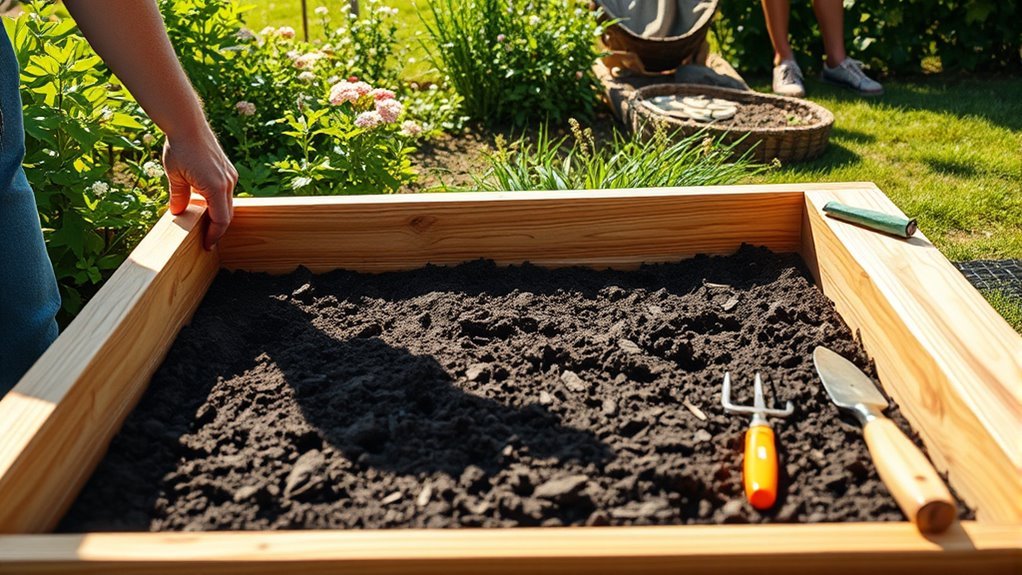
Next, fill your bed with a mix of native soil and compost, combining equal parts to guarantee proper drainage and nutrient retention.
Follow these step-by-step instructions carefully to calculate the right soil volume for your raised bed garden, promoting healthy plant growth and long-lasting support.
Frequently Asked Questions
How Do You Build a Simple Raised Bed?
You start by choosing a level, sunny spot, then build a sturdy 4×6 frame with untreated wood. Screw corners securely, fill with a mix of soil and compost, and plant seeds following spacing instructions.
What Is the Cheapest Way to Build a Raised Bed?
Think of crafting your own Eden using untreated pine or reclaimed wood—it’s the cheapest way to build a raised bed. Keep it small, simple, and fill it with native soil mixed with homemade compost to save even more.
What Vegetables Should Not Be Grown in a Raised Bed?
You shouldn’t grow deep-rooted veggies like potatoes, sprawling plants like pumpkins, or perennials such as asparagus in raised beds. Also, avoid brassicas that attract pests and cool-loving greens unless you can provide shade during hot weather.
What Should You Put in the Bottom of a Raised Garden Bed?
You should put a layer of cardboard or newspaper to block weeds, then add coarse materials like small branches for drainage. Next, include compost to enrich the soil, and optionally use landscape fabric to separate layers.
Conclusion
Now that you’ve built your raised garden bed, you’re ready to watch your garden dreams take root and grow. With the perfect spot chosen, a sturdy frame assembled, and rich soil filling your bed, you’ve created a little patch of paradise.
Gardening doesn’t have to be complicated—just three simple steps, and you’re on your way to harvesting fresh, homegrown goodness. So dig in, get your hands dirty, and let nature work its magic!
Remember, building a raised garden bed is an easy and rewarding way to grow your own vegetables, herbs, and flowers. With the right setup, your raised garden bed will thrive, making gardening enjoyable and accessible. Happy gardening!