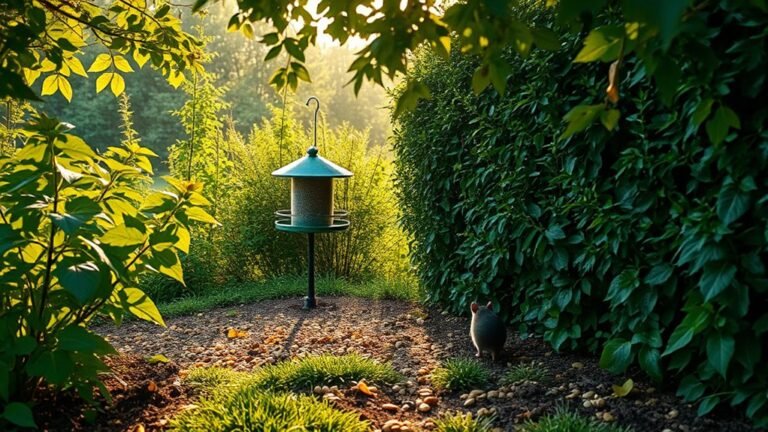
7 Steps to Get Rid of Foxes in Your Garden
To get rid of foxes in your garden, start by removing food sources like pet food, fallen fruit, and unsecured trash. Foxes are often attracted to easy meals, so cutting off their food supply is a great first step.
You’ll want to clear away dense vegetation and debris too, as these provide perfect shelter and hiding spots for them.
Next, think about installing tall, secure fencing with buried mesh to really block their entry. It’s not just about height—burying the mesh helps stop them from digging underneath.
You can also try natural repellents like garlic or vinegar, which foxes tend to avoid.
Motion-activated lights or sprinklers work wonders too, giving foxes an unexpected surprise that encourages them to stay away.
Keep an eye on their activity so you can tweak your approach if needed. If you want to protect your garden even more, there are plenty of detailed tips to explore.
Key Takeaways
- Remove all food sources like pet food, fallen fruits, and unsecured trash to make your garden less attractive to foxes. This simple step can really cut down on visits. Foxes are always on the lookout for an easy meal.
- Clear dense vegetation, brush, and debris piles to eliminate shelter and hiding spots for foxes. Without a cozy place to hide, they’re less likely to stick around. Keeping your garden tidy makes a big difference.
- Install fox-proof fencing at least 6 to 8 feet tall with buried wire mesh to prevent jumping and digging. This creates a strong barrier that foxes can’t easily get past. Think of it as building a fortress for your garden.
- Use natural deterrents such as garlic, vinegar, motion-activated sprinklers, lights, and noise devices to scare foxes away. These harmless tricks can make your garden less inviting. Plus, they’re easy to set up and maintain.
- Monitor fox activity with motion-activated cameras and collaborate with neighbors to adjust deterrent strategies effectively. Keeping an eye on things helps you stay one step ahead. Working together with neighbors makes the effort even stronger.
Why Are Foxes Visiting Your Garden?
There are several reasons why foxes might be visiting your garden, but the most common one is food. Foxes in your yard are often drawn by easily accessible food sources like pet food left outside, fallen fruits, or unsecured trash bins.
They also hunt small animals, so having pets or unsecured chicken coops can make your garden a tempting spot. Foxes tend to be more active at dawn and dusk when your garden is quiet, allowing them to scavenge with little disturbance.
Dense vegetation or overgrown areas provide shelter, making your garden even more appealing. Understanding these factors helps you figure out how to keep foxes away by managing what attracts them in the first place.
How to Remove Food Sources That Attract Foxes
To keep foxes away, start by securing your trash cans and compost bins with tight-fitting lids or animal-proof containers. Don’t leave pet food outside overnight, as it’s an easy meal for them.
Removing these food sources makes your property less inviting to foxes. It’s a simple step, but it really helps keep them at bay.
Secure Trash And Compost
Three simple steps can drastically reduce fox visits by eliminating easy food sources around your home. First, make sure you secure trash with tightly sealed lids. Use animal-proof containers to keep foxes from accessing food scraps.
Second, secure compost bins with tight-fitting lids. Avoid adding meat or dairy products, which are strong attractants for foxes.
Third, regularly clean up any spills or food residue around trash and compost areas. This helps eliminate lingering smells that can draw foxes in.
Remove Pet Food
One of the simplest ways to keep foxes away is by removing pet food from outdoor areas, especially at night. Foxes are attracted to easy meals, so leaving pet food outside can invite them in.
To effectively remove pet food and stop attracting foxes, you should bring pet food indoors after feeding times. Also, clean up any spills or leftovers immediately.
Make sure to store pet food in sealed, animal-proof containers. And it’s best to avoid outdoor feeding stations that lure foxes.
Remove Shelter and Hiding Spots to Deter Foxes
When you clear away dense vegetation and brush, you make your garden less inviting for foxes looking for a place to hide or nest. To deter foxes effectively, remove shelter by sealing off crawl spaces, under decks, and any other potential dens.
Clearing dense vegetation and sealing potential dens makes your garden unwelcoming for foxes seeking shelter.
Clear brush and trim overgrown shrubs to reduce dense, concealed areas that foxes use as hiding spots. Don’t forget to remove debris piles like old logs or leaves, which can provide cover and nesting sites.
Keeping your yard tidy and free of clutter further discourages foxes from settling in. By systematically removing shelter and hiding spots, you make your garden a less attractive and safer space.
This helps keep foxes away without encouraging them to linger. It’s all about making your garden less cozy for them!
Install Fox-Proof Fencing to Block Entry
Clearing shelter and hiding spots reduces foxes’ comfort, but to truly keep them out, you’ll need a strong physical barrier. Installing fox-proof fencing is essential to prevent foxes from entering your garden, especially in urban areas where they adapt quickly.
When you install fencing, focus on these key features:
- Use fencing at least 6 to 8 feet tall to stop foxes from jumping over.
- Bury galvanized wire mesh at the base to block digging attempts.
- Make certain the grid size is no larger than 3 inches to keep young foxes out.
- Consider electric fencing or coyote rollers on top to deter climbing.
Don’t forget to regularly inspect and maintain your fence to close any gaps. That way, it stays an effective fox-proof barrier.
Use Natural Scents and Repellents to Keep Foxes Away
Although foxes are clever and adaptable, you can discourage them from visiting your garden by using natural scents and repellents. Strong-smelling substances like garlic, vinegar, or chili powder work well as a deterrent when applied around your garden.
Citrus peels, such as orange or lemon, also release scents foxes dislike, making them a simple and natural option. To keep these deterrents effective, replace them regularly.
You might also try commercial fox repellents containing natural ingredients, spraying them along your garden’s perimeter for extra protection. Some gardeners use coyote urine as a natural scent deterrent, though its success varies.
Try Motion-Activated Devices for Fox Deterrence
You can use motion-activated sprinklers, lights, and noise makers to scare foxes away without harming them. These devices detect movement and create sudden disturbances that foxes don’t like.
Placing them near entry points will help keep foxes from getting too comfortable in your yard. It’s a simple way to keep your space fox-free without any trouble.
Motion-Activated Sprinklers
When motion-activated sprinklers detect movement, they release a sudden burst of water that startles foxes and keeps them away from your garden. These motion-activated sprinklers provide an eco-friendly way to deter foxes from garden areas without using harmful chemicals or traps.
They work around the clock, automatically activating whenever a fox enters their range, giving you continuous protection with minimal effort. To maximize their effectiveness, position sprinklers in high-traffic spots and maintain them regularly.
Here’s what you can expect from using motion-activated sprinklers:
- Instant water spray that surprises foxes
- Deterrence of various wildlife, not just foxes
- Continuous, hands-free garden protection
- Safe, eco-friendly operation using only water
This smart method helps keep your garden fox-free efficiently. It’s a simple, effective way to protect your outdoor space.
Lights And Noise
If foxes frequent your garden at night, motion-activated lights can startle them and disrupt their usual activity. These lights deter foxes by illuminating the area suddenly, making your garden less appealing after dark.
Adding noise-making devices like ultrasonic repellers or wind chimes further discourages foxes, as the unexpected sounds create an unpleasant environment. Using both lights and noise together boosts your chances of keeping foxes away effectively.
To maintain their impact, regularly change the placement or types of motion-activated devices, so foxes don’t get used to them. Position motion sensors strategically to cover common entry points, maximizing deterrence.
Monitor Fox Activity and What to Do If Foxes Return
Tracking fox activity with a detailed log and motion-activated cameras helps you pinpoint their patterns and peak times, usually at dawn and dusk. To effectively monitor foxes, note each sighting’s time and location to tailor your deterrent strategies.
Maintaining detailed logs and using motion-activated cameras reveal fox activity patterns for targeted deterrent strategies.
If foxes return despite your efforts, consider stronger repellents or better barriers. You might also contact your local animal control agency for guidance.
- Keep a consistent record of fox appearances to identify trends.
- Use cameras to track movement frequency and routes.
- Collaborate with neighbors to exchange observations and tactics.
- Adjust deterrent methods based on peak activity times.
Frequently Asked Questions
How to Get Rid of Foxes Quickly?
You can get rid of foxes quickly by installing motion-activated lights or sprinklers to scare them off immediately. Also, remove food sources and secure trash cans to discourage their return. Act fast and stay consistent.
What Happens to Foxes in October?
In October, foxes start eating more to build fat for winter, become more territorial due to breeding season prep, seek warm dens near homes, and shift hunting to daylight, so you’ll notice increased fox activity around you.
Will a Fox Keep Coming Back?
Yes, a fox will keep coming back if it finds food or shelter in your garden. You’ll need to remove attractants and use deterrents to discourage it from returning repeatedly.
What Smell Do Foxes Hate the Most?
Foxes hate the smell of coyote urine the most because it signals a natural predator nearby. You’ll also find that strong scents like garlic, vinegar, and citrus peels work well to keep them away from your garden.
Conclusion
By clearing out scraps and sealing hideouts, you’ll watch your garden transform from a fox’s playground to a peaceful retreat. Picture the soft rustle of leaves without the stealthy padding of paws, the vibrant blooms thriving undisturbed.
With sturdy fences and natural scents in place, you’ll reclaim your space, feeling the calm settle like morning dew. Stay vigilant, and your garden will bloom safely, a sanctuary where only the breeze and birds roam free.
Getting rid of foxes in your garden takes patience and consistent effort. But by following these simple steps—removing food sources, blocking den sites, and using natural repellents—you can protect your plants and pets. Your garden will become a safe haven, free from fox disturbances, where nature’s beauty flourishes peacefully.