7 Effective Tips to Get Rid of Pigeons in Your Garden
To get rid of pigeons in your garden effectively, start by identifying and removing things attracting them like dense shrubs or nesting spots. Eliminating food and water sources is crucial, so clean up spills and secure bins to prevent easy access.
Use physical barriers such as netting and spikes to block their roosting areas. Adding visual deterrents like reflective tape or motion-activated devices can also help scare pigeons away.
Try safe repellents and encourage natural predators like hawks to visit your garden. Keeping your garden tidy and well-maintained will reduce the chances of pigeons returning.
There’s more to explore for lasting pigeon control, so consider combining these methods for the best results.
Find Out What’s Attracting Pigeons to Your Garden
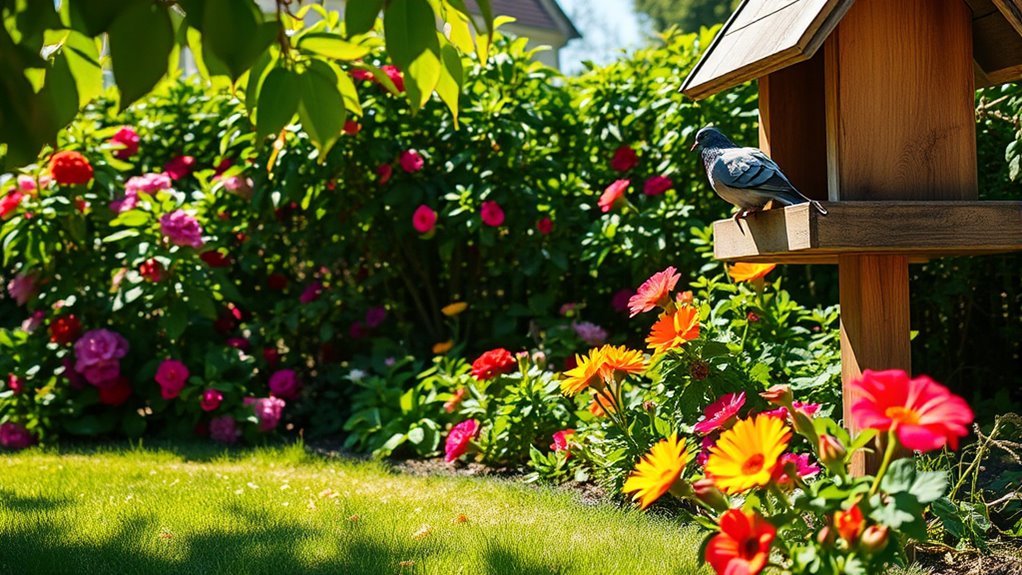
Before you can effectively get rid of pigeons, you need to identify what’s drawing them to your garden in the first place. Look closely at your garden’s features: are there sheltered spots where pigeons can roost safely? Pigeons often seek out ledges, eaves, or dense shrubs that provide cover from predators and harsh weather.
Also, check if your garden has open spaces offering easy access for them to land and take off. You might notice nesting materials like twigs or feathers, signaling that pigeons have settled in.
Identifying these attractants helps you target your efforts more effectively.
Remove Food and Water Sources That Attract Pigeons
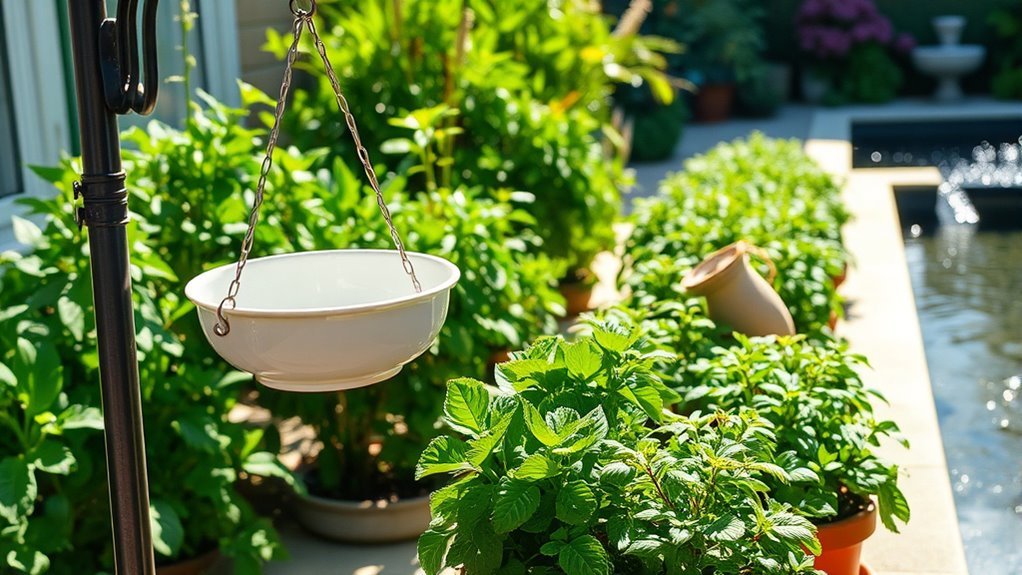
One of the most effective ways to discourage pigeons is to eliminate the food and water sources that keep drawing them to your garden. Pigeons are attracted to easy meals and fresh water, so cutting off these supplies makes your garden less inviting.
Make sure you remove leftover pet food dishes after feeding. Keep bird feeders clean and avoid spilling seeds on the ground. Secure garbage bins with tight lids to prevent access.
Fix leaking outdoor taps and remove standing water. Harvest ripe fruit promptly to prevent pigeons from snacking.
Block Pigeons With Physical Barriers
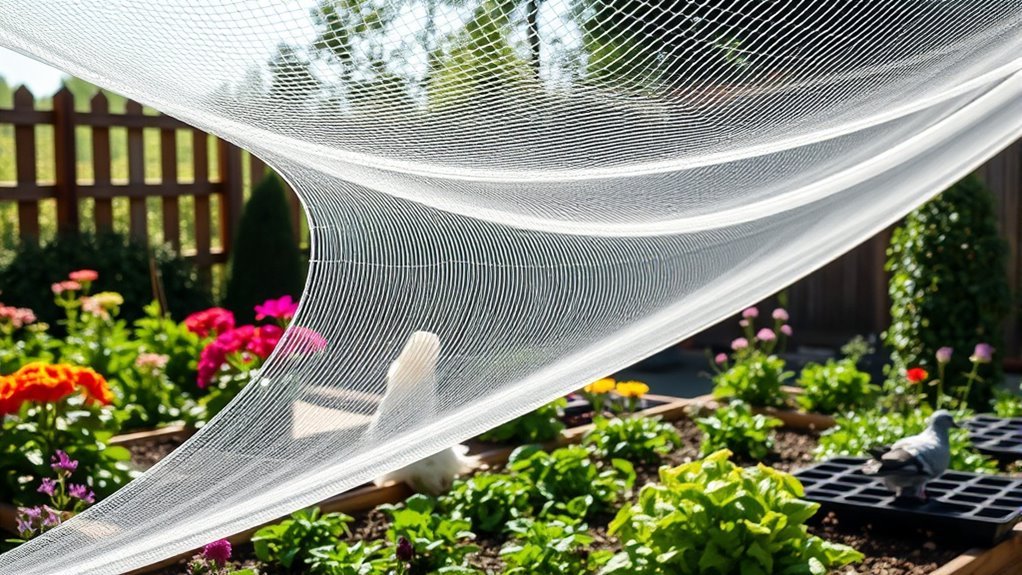
Although pigeons are persistent, you can keep them out of your garden by installing physical barriers. Start by sealing off entry points where pigeons like to roost or nest, such as gaps under eaves or in sheds.
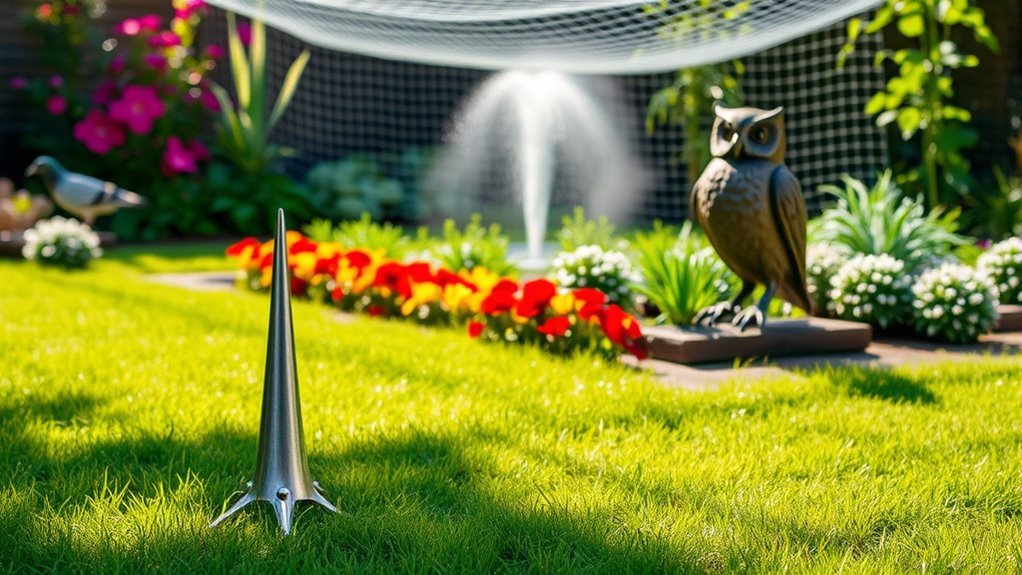
Use bird netting to cover fruit trees or vegetable patches, preventing pigeons from landing and feeding.
Spiked strips on ledges, fences, and window sills discourage pigeons from perching without harming them.
You can also install wire cables or tensioned lines above garden structures to disrupt their landing spots.
Make sure barriers are secure and regularly check for damage to maintain effectiveness.
Use Visual Deterrents to Scare Pigeons Away
You can use reflective objects like CDs or aluminum foil to catch light and keep pigeons at bay.
Motion-activated visual devices also work well by startling birds when they approach.
These simple tools can make your garden less inviting to pigeons without harming them.
Reflective Objects Effectiveness
How can reflective objects help keep pigeons away from your garden? Pigeons are easily startled by sudden flashes of light and moving reflections. By placing reflective items around your garden, you create an environment that feels unsafe for them, encouraging them to fly elsewhere.
These objects catch sunlight and produce glints that confuse and deter pigeons effectively.
Consider using:
- Shiny aluminum foil strips fluttering in the breeze
- Old CDs or DVDs hanging from branches
- Reflective tape swaying on fences or poles
- Mirrors angled to catch the sun’s rays
- Wind spinners with reflective surfaces
Rotate or move these items regularly to maintain their effectiveness. Reflective objects work best as part of a combined strategy, making your garden less inviting for pigeons.
Motion-Activated Visual Devices
When motion-activated visual devices detect movement, they startle pigeons by triggering sudden flashes or moving lights that mimic threats. You can install these devices around your garden where pigeons frequent. They work best at dawn or dusk when pigeons are most active.
The unpredictability of the lights keeps pigeons wary and less likely to settle.
Here’s a quick comparison to help you choose the right device:
| Device Type | Activation Range | Best Usage Time |
|---|---|---|
| Flashing Lights | Up to 10 feet | Early morning |
| Moving LED Beams | Up to 15 feet | Late afternoon |
| Strobe Lights | Up to 20 feet | All day |
Using these devices consistently will discourage pigeons effectively.
Apply Safe Repellents to Deter Pigeons
Although pigeons can be persistent, applying safe repellents can effectively discourage them from settling in your garden. These repellents create an uncomfortable environment for pigeons without harming them or the plants.
You can choose from various options that suit your garden’s needs and your preferences.
Here are some safe repellents to try:
- Non-toxic bird gels that create sticky surfaces pigeons avoid
- Natural essential oils like peppermint or eucalyptus sprayed around
- Reflective tape strips that shimmer and confuse pigeons
- Ultrasonic devices emitting sounds unpleasant to birds but inaudible to humans
- Homemade chili pepper spray deterring pigeons with its strong scent
Using these repellents regularly will help keep your garden pigeon-free safely and humanely.
Encourage Natural Predators to Control Pigeons
You can reduce pigeons by encouraging their natural predators in your garden. Start by identifying local predators like hawks or owls and attract them with birdhouses or perches.
Keeping your garden predator-friendly creates a balanced environment that helps control pigeon populations naturally.
Identify Local Predator Species
Since natural predators play a crucial role in managing pigeon populations, it’s important to identify which species are native to your area. Knowing these local predators helps you understand your garden’s natural balance and encourages you to protect their habitats.
Common pigeon predators vary depending on where you live, but typically include birds and mammals that naturally keep pigeon numbers in check.
Here are five local predator species to look out for:
- Hawks, such as Cooper’s hawk or red-tailed hawk
- Owls, including barn owls and great horned owls
- Falcons, like the peregrine falcon
- Snakes that may prey on eggs or chicks
- Domestic cats or foxes in suburban or rural areas
Recognizing these species is your first step toward leveraging nature’s pest control effectively.
Attract Birds Of Prey
When you create a welcoming environment for birds of prey, you tap into a natural and effective way to control pigeon populations in your garden. To attract these predators, focus on providing perching spots like tall trees or sturdy poles where hawks and owls can survey your area.
Avoid using pesticides that could harm their food sources.
You might also consider installing nest boxes suited for owls or kestrels, encouraging them to settle nearby. By inviting these natural hunters, you let nature handle pigeon control without chemicals.
Remember, the key is to offer safe, suitable spots rather than direct feeding.
This strategy not only reduces pigeons but also promotes a balanced garden ecosystem, keeping your outdoor space healthier and more vibrant.
Maintain Predator-Friendly Habitat
Although attracting birds of prey is important, maintaining a predator-friendly habitat guarantees these natural hunters stick around to keep pigeons in check. You want to create an environment that supports their hunting and nesting needs.
Make sure your garden offers shelter, food sources, and safe nesting spots to encourage their presence.
Avoid using pesticides or chemicals that can harm these beneficial predators. Here’s how you can maintain a habitat that supports them:
- Plant tall trees or install nesting boxes for owls and hawks
- Provide perching spots like dead branches or poles
- Keep a diverse insect population for smaller bird prey
- Avoid excessive lawn mowing to preserve ground cover
- Limit artificial lighting that can disrupt nocturnal predators
This way, natural predators will help control pigeons effectively.
Keep Your Garden Tidy to Stop Pigeons Returning
Keeping your garden tidy plays an essential role in discouraging pigeons from settling in. You should regularly remove fallen fruits, seeds, and food scraps that attract these birds. Clear away dense shrubbery or clutter where pigeons might roost or nest.
Trim overgrown plants and mow the lawn frequently to reduce hiding spots. Make sure your compost bins are secure and not accessible to pigeons looking for food. Store birdseed in sealed containers and clean up spilled feed promptly.
Frequently Asked Questions
Are Pigeons Protected by Law in My Area?
You’re unlikely to find pigeons fully protected by law, but local regulations may restrict harming them.
Check your area’s wildlife rules to avoid fines or penalties before taking action against pigeons in your garden.
Can Pigeons Carry Diseases Harmful to Humans?
You might not notice, but pigeons can carry diseases harmful to you, like histoplasmosis and psittacosis.
When their droppings accumulate, they create a health risk, so you’ll want to keep them away for safety.
How Quickly Do Pigeons Adapt to Deterrents?
Pigeons adapt to deterrents pretty quickly, often within days to weeks.
You’ll need to regularly change your methods to keep them guessing and prevent them from becoming comfortable with any single deterrent you use.
Is It Safe to Use Chemical Repellents Around Pets?
No, you shouldn’t use chemical repellents around pets as they can be harmful. Instead, choose pet-safe alternatives like ultrasonic devices or natural deterrents to keep both your garden and pets safe while managing pigeon problems effectively.
What Plants Naturally Repel Pigeons From Gardens?
You can plant lavender, marigolds, or rosemary to naturally repel pigeons. These plants emit scents pigeons dislike, helping keep them away without chemicals.
You’ll create a fragrant, bird-resistant garden that’s safe for pets too.
Conclusion
Getting rid of pigeons in your garden is like closing the door to uninvited guests—you control who stays and who leaves. By removing food and water sources, blocking entry points, using visual deterrents, and encouraging natural predators, you create an unwelcoming space for pigeons.
Keep your garden tidy and consistent with these steps, and you’ll enjoy a peaceful, pigeon-free outdoor space where your plants and flowers can truly thrive. Implementing these effective tips to get rid of pigeons will ensure your garden remains beautiful and healthy.